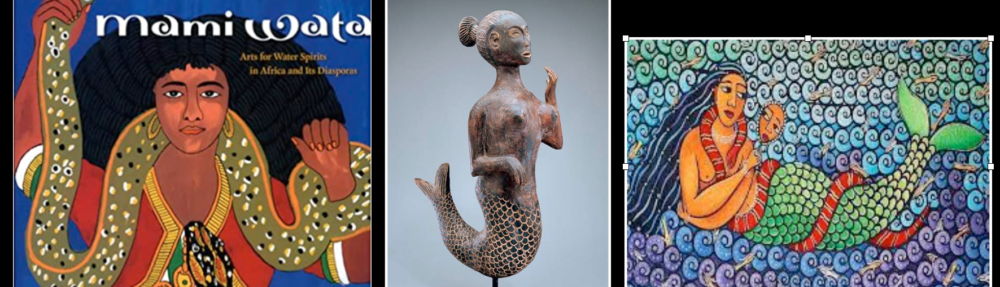
Edna Pontilier: How A Modern Selkie Incarnate Contests Terracentric Epistemology

Ranya Tobin

Professor Pressman

ECL 305

Final Essay 

05/09/2024

Edna Pontilier: How A Modern Selkie Incarnate Contests Terracentric Epistemology

The land exists at the forefront of our minds as the arbiter of our existence. It is where we stake our claim and build our homes—and the law that governs it, governs us, in turn. That is what makes the myth of the Selkie so alluring. The selkie has both a home on land and within the Ocean, granting it the privilege of fluidity, both in physical form and lifestyle; it has the freedom to exist in its truest state, regardless of what the society on land demands. Societal pressures impose on us land-dwelling humans insecurities, inequities, and systemic oppression that selkies and other sea creatures are immune to. The longing to escape the suffocating reality of these demands is encapsulated by the novel The Awakening (1898), by Kate Chopin, with the protagonist Edna Pontilier desperate to break free of 1800s American gender roles. Edna finds her situation unlivable to the degree that she swims into the Ocean with the plan to never return, which is commonly read as her suicide, however, reading Edna as a selkie, and one robbed of her pelt, offers a different interpretation of the ending. If Edna is a selkie, the Ocean is her home, so instead of a tragic suicide, her choice to enter the water is an escape from the man-made institutions of the land that kept her bound to her husband’s house. Through this lens, the ending becomes a beginning. This alternative way of reading the novel’s ending offers a means of circumventing terracentric epistemology by recharacterizing the Ocean as a transformative place that offers new opportunities for existence, rather than the unsurvivable void Western ideas previously believed it to be (see Vast Expanses). Reading The Awakening as a selkie story awakens readers to the limits a terracentric outlook imposes on their imaginations and invites reading beyond the constructed boundaries this paradigm enforces.

A Selkie is a mythical creature with roots stemming from Viking Ballads of 793 AD to Ancient Ireland and the Northern Isles of Scotland (McEntire). The Selkie is traditionally a woman, and most iconic for her thick, beautiful coat of fur. When hooded, selkies roam the sea freely as seals, but when their coats are removed, they become beautiful humans able to tread upon land. These coats exist as a symbol of the woman’s autonomy, as she decides what form she takes. However, this liberty is too easily usurped; Many Selkie stories follow a similar plotline, where a Selkie’s coat is stolen from her by a pirate or leering land-born man and held ransom against her will. Without the pelt, the Selkie is barred from returning to her natural form and is forced to conform to human life as her assailant’s wife. Her existence on land is in service to her captor, as she is obligated to bear him children and keep his house, however, each retelling of the myth gives the seal woman the chance to make a great escape. Their husband is bound to make a mistake, accidentally revealing the location of where he has hidden the coat through a slip of the tongue or a failed hiding spot, and she seizes the opportunity to steal it back and regain her access to the sea. The selkie will always return to the Ocean at the end of these stories, as she is an animal, not meant to exist within the confines of human constructs. Without looking back, she hastily abandons the life she was made to live on land, including the children she was forced to bear, in exchange for her freedom—which she desires above all else.

The Awakening, by Kate Chopin, written in 1898, coincidentally follows the classic Selkie plotline. The story centers around the character Edna Pontillier, a 28 year old housewife in Louisiana, with two young boys and a husband named Léonce Pontellier who is a forty-year-old, wealthy New Orleans businessman. Edna is a victim of the 1898 status quo, where a woman’s only purpose in life and typically only option is to serve a husband and bare him children. Some women happily take to this role, as observed in her friend Adele Ratignolle, but Edna is not one of these women. Edna is different, and something deep within her violently rejects the role that was forced upon her. She feels “an indescribable oppression, which seemed to generate in some unfamiliar part of her consciousness, [and] filled her whole being with a vague anguish.” (Chopin 16). Nancy Cassle McEntire’s article, “Supernatural Beings in the Far North: Folklore, Folk Belief, and the Selkie.”, explains the emotions of the Selkie housewives, stating that “[The selkie] often longs for the sea, but she resigns herself to her fate and becomes a dutiful wife and mother.” (McEntire 8). Edna and the Irish Seal Women share each other’s anguish, forced to be wives to husbands they do not love and mothers to children they never wanted to have. They live in despair, wishing to escape the oppression keeping them tethered to their husband’s homes. Edna resents her role as a housewife, knowing she cannot fully be herself when acting within the confines of the gender role imposed on her. Despite feeling a natural maternal affection for her children, she is unable to abandon the desire to exist as her truest self, stating, “I would give up the unessential; I would give my money, I would give my life for my children; but I wouldn’t give myself.” (116). The core of Edna’s being longs to be free; she yearns for independence and the opportunity to explore a life beyond the house she was made to keep and the men she is forced to serve. This is very similar to how a Selkie, no matter how long she remains on land or how much she may care for her children, will always long for the sea above all else. The Awakening also features frequent symbolism of the Ocean as a place of freedom and revitalization, and Edna’s draw to it mirrors the connection between Selkies and their home. Edna ponders how, “the voice of the sea speaks to the soul. The touch of the sea is sensuous, enfolding the body in its soft, close embrace.” (39). The novel’s fixation on the Ocean and how it calls to Edna is uncannily similar to what a Selkie would experience in her situation. The Ocean acts as a refuge, warm and inviting like the home Edna did not have on land. It is a space that welcomes her and promises to revitalize her soul. This puts Edna on track to reaching the sea as an inevitable destination.

Understanding Edna’s connection to the mythical Selkie drastically changes the ending of her story. The Awakening ends with Edna deciding to commit suicide by walking into the Ocean and swimming as far as she possibly can until her body eventually gives in to exhaustion—drowning her. By interpreting The Awakening as a selkie story, Edna’s final act is not one of self destruction or a result of an untreated mental health crisis. Instead, if Edna herself is a selkie, this end is not a death, but a return. Before this return, she transforms in a reverse-Selkie fashion; “she cast the unpleasant, pricking garments from her, and for the first time in her life she stood naked in the open air, at the mercy of the sun, the breeze that beat upon her, and the waves that invited her.” (268). Where a selkie would throw on her hood to return to her seal form before diving in, Edna strips off the clothes she is made to wear within the rules of the human world and enters the water in only her natural, naked body. She goes on to describe that “she felt like some new-born creature, opening its eyes in a familiar world it had never known.” (269). The novel takes care to describe that this is an encompassing transformation of self. Edna is no longer existing within the body governed by stringent societal expectations. She shifts much like her Selkie predecessors into a form with which she can enter a new life. The most curious thing about Edna’s “death” however…is the novel never actually states that she passes away. The final sentence of the novel is “there was the hum of bees, and the musky odor of pinks filled the air.” (270). This is the final Earthly sensation Edna experiences, but she does not perish within the water—at least, the text never states so. This ending is left up to interpretation, with readers operating under a terracentric lens assuming she dies. This assumption makes apparent the limitations terracentrism imposes on our imaginations. When knowing nothing other than life on land, we neglect to envision life anywhere else. Observing this conclusion through the lens of a Selkie story opens readers to a new paradigm of thought: looking beyond the constructed reality of land-based society and conceptualizing our own reality.   The ending where Edna transforms and escapes into the sea to live out the free existence she was always meant to achieve invites us to picture our own transformations and self-determined existences outside of what land-based society tells us is acceptable or possible. 

This new lens through which The Awakening may be read contrasts the terracentric beliefs that dominate our social consciousness. Terracentrism, as defined in The Ocean Reader, written by Eric Paul Roorda, “refers to people’s tendency to consider the world and human activity mainly in the context of the land and events that take place on land.” (The Ocean Reader, Roorda). Because humans cannot breathe within the water, nor colonize or terraform it, many European-based cultures have mistakenly believed it to have no history or meaning. It is important to understand that terracentric stems from early European culture, as a vast amount of cultures such as the Inuit or religions such as the Yoruba tradition actually worship the Ocean and intertwine their cultural identity and society with it intimately. The rejection of the Ocean’s worth as an archive and our place in it, persisting from early European colonization of the world, ultimately limits us in what we imagine is capable of our existence. Traditional Terracentric values gravely mischaracterize the Ocean as an arbiter of death—a void unwelcome to human life (see Vast Expanses). In this case, the Ocean is devoid of stories, of history. However, reading The Awakening through an Ocean-centric perspective offers readers a new hope; when met with stories that extend into the water, the restrictions we experience on land become arbitrary.  Life is difficult on land; our constructed, land-based society is corrupted with values that are oppressive to not only women, as experienced by Edna, but also minorities, those whose identities are not deemed acceptable by the status quo, and those without wealth. An Ocean-centric point of view allows us to recognize a world outside of these constructed boundaries—a space where life persists and life forms evolve without regulation. In the Ocean, we could be free to transform into our truest self, just as Edna did…which leads us to question why the same can’t be done on land. Steve Mentz’s “Deterritorializing Preface”, a snippet of his greater work, Ocean, emphasizes the opportunities an Ocean-centric perspective can offer us, claiming that “The great waters open up a dynamic environment, fluid, saline, moving, and moved… Watery transformation deterritorializes.” (Ocean xv). Mentz goes on to explain that the Ocean’s ever-changing nature is conducive to humanity’s ability to change, and scuttles the importance of predetermined, “grounded”  reality. When we take inspiration from the flow state of the Ocean, embracing fluidity, we see that change is not only positive, but occurring continuously, and a rigid state of thought inhibits development. This rigid state is what kept life on land unlivable for Edna and others like her, but instead of retreating to the Ocean, we can bring the acceptance the Ocean offers onto the land. 

The Awakening by Kate Chopin was a monumental text of its time, with its ending leaving a lasting, sorrowful impression on its readers. To end the story with a suicide was a powerful choice, insisting to the novel’s readers that the social norm of a woman’s role being defined for her creates an uninhabitable existence for women who desired more. However, The Awakening as a Selkie story offers a peek into the Ocean’s reality, where there are no institutions to abide by the rules of, allowing us to recognize the obtuse nature of terracentric, stagnant ideologies. Edna’s Selkie ending encourages us to transform as we wish and push for a state of change on land that mirrors that of the Ocean. When reflecting with an Ocean-based ideology, the way in which we govern ourselves on land shifts, and we become free mould our society in a way inclusive to all states of being.

Citations: 

Chopin, Kate. The Awakening. Penguin Classics, 2018.

Cristina Bacchilega and Marie Alohalani Brown, “Introduction: The Stories We Tell about Mermaids and Other Water Spirits” (Penguin, ix-xxii)

Mentz, Steve. Ocean, Bloomsbury Academic & Professional, 2020. ProQuest Ebook Central, https://ebookcentral.proquest.com/lib/sdsu/detail.action?docID=6036857.

Nancy Cassell McEntire. “Supernatural Beings in the Far North: Folkore, Folk Belief, and the Selkie.” Scottish Studies (Edinburgh), vol. 35, 2010, pp. 120-, https://doi.org/10.2218/ss.v35.2692.

Rozwadowski, Helen M.. Vast Expanses : A History of the Oceans, Reaktion Books, Limited, 2019. ProQuest Ebook Central,

https://ebookcentral.proquest.com/lib/sdsu/detail.action?docID=5631456.

Naomi Mireles

Professor Pressman

ECL 305

May 9, 2024

Ocean-Centric Maternal Identities

The Deep by Rivers Solomon is a thought-provoking fiction novel published in 2019. Drawing inspiration from the song of the same name by the group Clipping, Solomon crafts a novel that explores the lives of the Wajinru, descendants of African slave women thrown overboard during the Middle Passage, who then adapted to living underwater as Mermaids. The Deep presents a transformative narrative that illuminates and challenges Western, terra-centric paradigms of motherhood by incorporating a diverse array of maternal identities, including the Ocean itself, whales, and pivotal characters like Amaba and Yetu. Through this rich combination of maternal figures, the novel challenges narrow perceptions of motherhood as exclusively human or tied to terrestrial realms.  

The novel follows the Historian of the wajinru: Yetu who holds the memories of her ancestors for her community. Yetu embodies a profound form of motherhood as the keeper of memories for the wajinru. Yetu carries the collective history of both joys and sorrows of all the people before her. Yetu ensures that these memories are never forgotten, while her role also serves as a connection between past and present as she holds the heritage of her people. Maternal love manifests in Yetu’s deep empathy for the wajinru, specifically in her decision to return and save her people from the overwhelming burden of their memories. As the keeper of the memories, she intimately understands the pain that comes with carrying these memories. “The wajinru were her people, and for now they were held captive by the History, living lives of the ancestors from beginning to end.” (Solomon, 39). Yetus’s act of returning to her people showcases her deep sense of responsibility and love, as she prioritizes the health of herself and her people as a collective. Her selfless actions exemplify a form of maternal care, as she momentarily shoulders the weight of the memories, and in turn, the memories are shared as a collective, challenging the terra-centric idea that maternity is synonymous with sacrifice without personal gain, “They were two, Historian and her subjects. It was time for the two to be merged.” (Solomon, 148).  In Western narratives, motherhood is often depicted as a selfless act of giving, with no emphasis on agency or empowerment. However, Yetus’s journey subverts this notion by showcasing that after all she endured while being the Historian, she gained something much greater, her own identity and personal growth. Rather than perpetuating the idea that benefits after sacrifice is one-sided, the narrative challenges the terracentric idea that motherhood, while encompassing sacrifice can also be a source of personal fulfillment, growth, and empowerment. 

The Ocean serves as a central maternal figure in The Deep, though not explicitly mentioned until the end of the novel, “ In this remembering, there is a lone wajinru pup floating, alive and content. It was the ocean who was their first Amaba,” (Solomon, 149).  Solomon highlights the Oceans nurturing role as the first Amaba for the pup, which emphasizes that maternal care and protection can transcend human boundaries. The pup floating happily in the Ocean’s embrace presents a deep sense of security, belonging, and nurturance, one that is not seen in Western perceptions of the Ocean. The wajinru people, being born to African slave women thrown overboard, were born to dead mothers, the society and culture of the wajinru shifted so that anyone and anything could be their mother and share a deep sense of caring and joy for one another. Before the eighteenth century, if the perspective of the Ocean as a safe place of comfort and nurture was mentioned, it would have been surprising and disagreeable news. But, the Ocean was and had always been a constant for the wajinru, a place of safety and care, the way one misses a mother, Yetu often missed the deep Ocean when in the shallow water with the two legs, “..coveting the deep sea, its blanket of cold and dark.” (Solomon,71). The idea of the Ocean’s cold and darkness being comforting is a newer perspective, and one not seen too often in Western depictions of the Ocean. As seen in John Gillis’ The Blue Humanities, published in 2013, “The sea was portrayed as dangerous and repellant, ugly and unfit for literary or artistic representation.” (The Blue Humanities, n.d.). The lack of difference between the womb and the Ocean is shown throughout the novel, “..there is very little difference between a bornt pup and one still encased in the womb.” (Solomon, 150). The emphasis on this idea, that the womb and the Ocean are the same, breaks the barrier that the womb is strictly tied to individual human birth. The Ocean taught the wajinru how to breathe, and how to survive, the portrayal of the Ocean as mother serves as a reminder of the wajinrus interconnectedness of all life forms and shows why they share this idea of collectivity and community. The Ocean does not go through painful transformations or sacrifices to nurture the pups, nor does it struggle or lose anything by doing so. Terracentric views (and I must admit my own) on motherhood, tend to believe the idea that motherhood comes with the pain of losing a past self, and the struggle to become someone new. The Ocean remains the same before and after birthing and raising the wajinru, not having to lose their identity while being a mother, it remains constant regardless. Focusing on the Ocean as a mother challenges key factors seen in terracentric views on motherhood while simultaneously showing that motherhood can look different in different cultures, races, and ethnicities. 

Aside from the Ocean and Yetu as a mother, The Deep holds significance as it challenges anthropocentric ideologies by acknowledging maternal qualities inherent in non-human entities, in this case, whales. Whales are more than just marine creatures but as nurturing, protective, and essential maternal figures within the wajinru community, “We live only by the graciousness of the second mothers, the giant water beats… who feed us, bond with us and drag us down to the deepest depths were we are safe.” (Solomon 42). Whales are seen as, “second mothers,” which carries layers of meaning, considering that their first mothers died tragically. The first mother’s physical presence was lost to the Ocean, but the spirit and resilience live on through the wajinru and their connection to the whales. In Western perspectives, motherhood is equated with biological mother-child relationships that emphasize genetics and reproduction. The connection with whales as the mother goes beyond biological ties. The idea that whales nurture and protect not through genetic connection but through emotional bonds, guidance, and communal care. The whales in their guidance challenge the idea that motherhood is only defined by genetic lineage. Whales mother as a community, in contrast to Western views that motherhood is individualistic, the wajinru have an array of mothers and share a communal approach to maternity. 

Yetu and Amaba share a complex relationship characterized by an interplay of love, and tension. Their initial bond is displayed with a lack of understanding while they navigate their roles within the wajinru community. They constantly find themselves at odds because of their differing perspectives and experiences.  When Yetu returns to the deep, their relationship is shifted as Yetu is determined to save Amaba. There is Yetu’s willingness to challenge roles of dependence and protection, where mothers are seen as the central roles of protectors and saviors. Amaba’s response reflects her shift in perspective and a recognition of Yetu’s strength that she had before undermined or overlooked. Amaba stands by Yetu and reassures her that this is not something she can do alone, “I would sooner die than let you suffer this alone.” (Solomon, 147). After having lived through the rememberings, Amaba is now more understanding than ever of all her daughter endured. Rather than a one-sided dynamic of protection and sacrifice, this mother-daughter relationship evolves to showcase mutual support and understanding. They share their burdens and sorrows, challenging the notion that mothers must bear the weight of caregiving alone. Rivers Solomon’s The Deep presents an exploration of motherhood that challenges traditional Western paradigms and anthropocentric ideologies. Through the several identities of the Ocean, whales, Amaba, and Yetu, the novel illuminates a transformative perspective that expands our understanding of maternal roles beyond terracentric customs. The Deep contradicts that motherhood is solely defined by sacrifice, pain, and genetic ties. It does so by recognizing the diversity and complexity of maternal experiences. The Ocean as the first mother, showcases a nurturing role that transcends human boundaries while also contradicting the Western perspective of the Ocean as devoid and dangerous. Yetu’s role as Historian embodies a deep form of motherhood that pushes the idea that maternity is not synonymous with sacrifice without personal gain. The significance of whales as maternal figures allows us to recognize maternal qualities in nonhuman entities. Motherhood is much more than biological ties, motherhood transcends a multitude of human standards to encompass a complex web of emotions and connection. Motherhood is not just pain, guilt, trauma, and sacrifice as seen in a terracentric human perspective. Motherhood is a multifaceted experience that encompasses love, resilience, and a shared journey of mutually shaping and guiding each other’s lives and futures.

Citations

Solomon, R., Diggs, D., Hutson, W., & Snipes, J. (2019). The deep. Hachette UK.

The Blue Humanities. (n.d.). The National Endowment for the Humanities. https://www.neh.gov/humanities/2013/mayjune/feature/the-blue-humanities

Human Sadness due to a Loss of Identity Through Tradition

Rigo De Leon

Professor Pressman

ECL 305

April 7, 2024

Human Sadness

The Voidz are an American band comprised of six members: Julian Casablancas (vocals), Beardo (lead guitar), Amir Yaghmai (lead guitar), Jake Bercovichi (bass/keys), Alex Carapetis (drums), and Jeff Kite (keys). They are known for their experimental and long songs, which they’ve created with the expectation that their music will be appreciated far into the future. The song that prompted the creation of the band is the first single off their first album called “Tyranny”. The song is called “Human Sadness”, which was released in 2014. It was originally going to be released as a solo project for Julian Casablancas, but he enlisted the help of the band he toured with to make the song greater. Their love for the song they created inspired them to create an album. The name “The Voidz” was picked because the effects that they primarily used for their music sounded like what they believed a black hole, or void, would sound like. Both Julian Casablancas and Stephanie Burt challenge the idea of cultural and societal traditions by prompting readers/listeners to consider how and why we conform to societal norms as a result of trying to survive in the culture we have inherited, and how that affects personal identity and the need to be useful. Julian Casablancas uses metaphors and symbolism in the song “Human Sadness”, as well as vivid sounds throughout the song to emphasize the experiences that traditions have created in order to make people question how they conform. Stephanie Burt, on the other hand, uses contemporary poetry, specifically the second and sixth stanza of her poem “We Are Mermaids” to portray that people do not need to be useful to survive.

Throughout the song, “Human Sadness” simplifies basic concepts that are normal in everyday life, but in a way that truly shows the struggle of external pressures conflicting with personal identity. For example, the song begins with the singer whispering the line “Put money in my hand, and I will do the things you want me to” (Casablancas 1). The way Casablancas presents this line is almost degrading. He is willing to sacrifice his own morality and time for the sake of receiving currency that will help sustain him in the society that he was born into. Assuming he has enough to sustain himself, this line could also be seen as an example of blatant greed. Sacrificing morality still applies, yet this time it’s for the sake of wanting more than needed. Casablancas implies that the separation of the natural world has only caused people to be dehumanized. In the natural world, actions are not governed by monetary values. Casablancas’ implication of dehumanization is complimented by Stephanie Burt’s use of mermaids in her poem. Burt writes, “when what would become, us was just trying to get through the day” (Burt 2). Societal norms have conditioned humans to live in routines that can feel meaningless. Wake up, go to work, run errands, go home, sleep, repeat. While there can be variation, society has developed in a way that prioritizes order over individuality and identity. People are expected to be useful and are unable to just exist.

Casablancas uses his desire of existential freedom throughout the song further his criticism of societal norms. A reoccuring line throughout the song is “Beyond all ideas of right and wrong, there is a field. I will be meeting you there” (Casablancas 3). This line is an altered version of a quote by the philosopher known as Rumi, who believed that the soul should be nurtured in order to live a happy life. Casablancas wishes to transcend beyond the concepts of good and bad that society has trained people to conform to, and reconnect with nature. Artificial constructs such as right and wrong are ideas that put pressure on people to be useful. The field itself can be seen as symbolism, a representation of the natural world, a place untouched by humanity. A field is a natural part of the world that just exists. Therefore, there can be no right or wrong, a field is a place where anything can just be. The field that Casablancas wishes to visit is a place where people can choose to have an identity however they would like, or it can be a place where people just exist. Stephanie Burt’s poem touches on a similar idea, by having mermaids be the main focus. Mermaids are creatures that are forced to exist between the ocean and land. The ocean represents the natural world, while land represents living among a society that follows traditions. Burt’s ideas add depth to Casablancas’ ideas in the way that Burt is a lot more realistic and blatant with her message. By analyzing “We Are Mermaids” before “Human Sadness”, you get a much more literal sense of what Casablancas intends to portray about identity and traditions. The Voidz’s song can be interpreted to be about corruption within the system that has been established, but with the frame of Stephanie Burt’s poem, it grounds the song by helping observers interpret the lyrics and music about human fundamentals.

Throughout the song, symbolism is used in order to further the message about societal traditions consuming the identities of people. A notable use of symbolism in “Human Sadness” is in the fourth verse, where Casablancas states “The moon’s a skull, I think it’s grinnin’” (Casablancas 4). This symbolism can have many different meanings, but in the sense of identity and societal norms, it can be interpreted as a reflection of mortality. Skulls are symbols of death. They are a reminder of the fate that all of humanity shares. The personification of the skull that is grinning gives it a sinister twist. A grinning skull could almost be a form of mockery, as the moon that hangs over the entire world every night is not only a reminder of death, but also a reminder that people are wasting their precious time by blindly following along with the traditions they’ve inherited. This idea is built upon by Stephanie Burt’s use of symbolism through mermaids. Mermaids are symbols of duality. They are half human and half fish. It is hard for mermaids to exist on land without there being trouble that prevents them from being authentic. The only true safe place for mermaids is in the ocean, which reflects Casablancas idea about the only safe place where humans can be their authentic selves is in a field beyond right and wrong. Another key use of symbolism that relates to authenticity in “Human Sadness” is the use of the word “tie” later in the same verse. Casablancas sings “And I don’t need your tie, I don’t need to, tired of saying it” (Casablancas 4). Much later in the song he also sings “Hits you on the head when nobody’s there, Then he says, ‘Come here, can you fix my tie?’” (Casablancas 10). The use of the word “tie” adds to the concept of identity in multiple different ways. For one, a tie is a direct connection to societal norms that have been created by our ancestors. Ties are professional attire, things that need to be worn when proving worthiness to traditions. They are worn at job interviews, weddings, courtrooms, and any other place that may need to be seen as professional. Casablancas directly rejects the tie in his first use of the word. He even mentions that he is tired of saying he doesn’t want it. The tie not only takes away from his ability to be himself, but wearing it is also a submission to the constructs he desires to escape. In his second use of the word, he uses it as a quote within the song itself of one person asking another to fix his tie. To fix another person’s tie is an intimate thing, usually done by fathers to sons. This could be an anecdote to fathers passing down the system that has plagued people to conform to it. This brilliant use of the tie alone can summarize the problems that traditions create against identity. By observing the song this way, people can reflect on whether or not they are okay with living without a sense of personal identity. 

One aspect about “Human Sadness” that is important to consider when analyzing the song is the actual music itself. The band samples Mozart’s “Requiem in D Minor”, which is a song that was written during the late 18th century. It is fascinating to think that a song about breaking traditions is sampling a song that was written during the early stages of the civilization that has been built to tear down individuality. It provides a sense of irony to Casablancas’ message but also goes to show how hard it is to actually break free from the societal norms we have built. One key difference that can be obtained by listening to the song rather than just reading it is the breakdown at the bridge. There is a guitar solo that begins exactly at the 7 minute mark. The Voidz has two lead guitarists rather than a lead guitarist and a rhythm guitarist, which is what is normal in bands. The bridge has both guitars play conflicting melodies at the same time, and it can almost be interpreted as if the guitars themselves are having a conversation. Because the guitars align with the melody of Casablancas’ singing, it can be inferred that the solo is actually a “conversation” between both lead guitars. Perhaps the guitars are pleading to break away from the social norms and traditions that people face, but without actual words it is almost like the pleading is hopeless because it is unable to be understood. Observing the music adds to Casablancas’ message significantly as it amplifies how hopeless it can feel to think this way but have no solution at all.

Casablancas presents a double meaning later in the song in which readers can interpret the same sentence in polar opposite ways. He states “Soft skin, weak chin, Just walk me through it, tell me what to do, I’ll do it, Hurry, hurry, that my baby, do what you can” (Casablancas 10). Casablancas uses “soft skin” and “weak chin” to display the innocence and wonder of his newborn child. By asking to be told what to do and promising that he will do it, it can be interpreted in two ways. Either Casablancas is asking how to change the system in order for his child to grow up in a better situation than he did, or he is a brainwashed version of himself asking how to make sure the baby conforms the way he did. If it is the former option, it can be furthered by the following line where he asks whoever he is speaking with to do what they can for his child. Considering this line happens near the climax of the song, it can be a line of hope that is offered in order to leave the audience with hope that there can be a solution to the problem of conforming to societal norms by sacrificing identity. Judging by the title of the song, it is likely the ladder option. Casablancas is asking whoever he is speaking to to do what they can and teach him how to raise the baby in a way where they will fit in with the rest of society. Regardless of the meaning, these lines provide similar outcomes for the listener. They either feel a glimmer of hope that they can break free from the system if they question it the way Casablancas implies he is doing, or they see Casablancas conforming in the end and see it as a cautionary tale that should be worked towards being avoided. Burt has a similar line at the end of her poem, where she states, “Some of us are going to be okay” (Burt 10). By stating that specifically some people are going to be okay but not necessarily stating who, readers are likely to question it deeper in order to find out if they themselves will be okay. Lines like these are sometimes vital to literature as they provide much deeper thought that is triggered by a semi-selfish form of thinking. 

Overall, “Human Sadness” is a song that pushes people to question the state of living they are in. The song can be analyzed in multiple different ways, but when reading with a certain frame in mind, people can find meaning that they never would have thought to look for. By reading this with Stephanie Burt’s poem “We Are Mermaids” as a frame, dissecting the idea that Casablancas and Burt emphasize the experiences that traditions have created in order to make people question how they conform. People do not need to be useful, and should celebrate having their own identity. Just because this world and its systems were inherited, it does not mean change cannot occur. By analyzing “Human Sadness” and “We Are Mermaids”, people can question for themselves whether or not they are okay living the way they are, and potentially changing the norms and traditions as they see fit.

FINAL PAPER: LOOKING AT WOMEN THROUGH THE LENS OF MERMAID TALES

Giselle Lee Hosler

Professor Pressman

ECL305

May 9th, 2024

The Pisces, written by Melissa Broder,  is an unconventional love story that turns the standard tropes in the mermaid story on their heads, displaying how the stereotypes and gender roles presented within the mermaid story are a product of their time. This story is contemporary and relies upon, in order to over turn more traditionally patriarchal, misogynistic views of the mermaid s displayed in earlier texts The unconventionality of The Pisces centers female sexuality, as opposed to stories such as The Little Mermaid, written in the 1840s by Hans Christian Andersen,  and Melusine, written in the19th century by Jean d’Arras , which neglect the female and focus on male desire . The Pisces is special because the woman is not the sexual object, but it also doesn’t objectify the merman. These two characters are allowed to mess up and be messy, and therefore portray more realistic experiences.

To begin, a synopsis of The Pisces is in order; our protagonist, Lucy, is a 38 year old woman who is stuck in a rut- writing a dissertation on Sappho and grappling with a failing relationship as well as her own wants and needs, she is asked to house sit for her sister. It is here that she meets Theo, a merman who lives in the ocean right by the house, and the two start a romance and sort-of relationship with each other. Lucy grapples with herself, what she wants out of men, and what she wants out of Theo. She comes out of the end of the book with more assurance about herself and her path, even though she doesn’t quite get her happily-ever-after. 

In contrast, The Little Mermaid has a much younger and unnamed protagonist. She is a mermaid princess, who yearns for the surface and for her human prince, after she saves him from a storm. This yearning is so great that she willingly drinks a magical potion that gives her legs, in exchange for her beautiful voice. The little mermaid suffers for her love of the prince until it eventually leads to her untimely demise. She, too, does not get a standard happily-ever-after. Granted, this story is a product of its time- being written in the eighteen forties. 

The Pisces was written in the 21st century, as evident by much of the modern references scattered throughout the book. But it was also evident in the way that the characters were portrayed. Lucy is a woman who seemingly defies a lot of what society thinks of women- she is promiscuous, she is messy, not put together, unsure of herself, but she is also defiant in her quest to finding herself. She frequently pushes the boundary of the sort of womanly standards society seems to have, and pushes back against the societal norms for men, as well. This is evident in how her relationship to the merman Theo is portrayed; “I felt great and noble, like a woman coming to claim her man in battle, or perhaps a man who was coming to rescue his woman. I had to be the rescuer, because he was more handicapped than I was.” (192) The stereotype of the merperson-human relationship is flipped here, as she is the one who has more control and power, in a way. She is the one who goes to him, yes but she is the one who can help take him to shore. Theo is more at her whims than she is to him

This is heavily contrasted with The Little Mermaid, too- then again The Little Mermaid has the “canonical” mermaid-human relationship seen in a decent chunk of mermaid stories. To even get close to her prince, the little mermaid gives up a lot of what she has to go to the surface; “ ‘Now, you must give me this beautiful voice. I choose to have the best of all you possess in exchange for my valuable potion’.” (122, Penguin Book) And so the little mermaid gives up her voice, her tail and her place amongst her people in order to ascend to the surface and live amongst the humans and her prince. When she first arrives to the surface and meets the prince again, one of her main feelings is the pain; “Every step she took was, as the witch had warned her it would be, like reading on the points of needles and sharp knives; but she bore it willingly…” (123) Already there is a vast difference between her and Lucy, who doesn’t suffer as much as she does in her relationship with the unknown. 

There’s also something to be said about how Lucy and the little mermaid are sort of foils to one another. The little mermaid, while she is with the prince on land, does not have her voice and cannot properly vocalize any of her feelings to him. While Lucy, who does struggle with her inner wants, has no problem with talking to Theo or trying to reason out some of her own emotions. Granted, the two books were written across a large gap- in between both of their publications, women’s suffrage took place, and some of the waves of feminism also happened. Women at the time of The Little Mermaid, and Melusine,  had less of a voice within their society as they do against women at the time of The Pisces

On the subject of women and the female, The Pisces centers more on female sexuality than other mermaid mythos. This could be argued that the time period is relevant, which is correct. In The Pisces, Lucy is almost rewarded and validated for her sexuality, or going through the trials and tribulations in having relations with different men before she settles on Theo. “The way I felt when we kissed or when he went down on me- I wanted to create that feeling and live in that for as long as I could.” (one5one). She is constantly having sex with Theo- there is mutual attraction between them for a good chunk of the novel. Her wants are placed above his, in a way- Theo indulges her in coming into her home to spend time with her, away from the ocean, even though that in itself is a task. They fuck on the beach a lot, too. Other mermaid mythos are not so kind to the woman in the relationship; the Legend of Melusina, written by Jean d’Arras, for example, is a fine display of how female sexuality was not a priority. All she had asked of him was for him to “never desire to see her on a Saturday” (87). And even when she had given him everything, and endured ridicule for their hybrid children, he still could not oblige her. The one day a week could be interpreted as Melusina obliging herself, which she could not even have due to her husband’s mistrust of her.

At the very end of The Pisces, Lucy finds out that Theo had brought down more women with him in the past, and she rejects his offer to go under the depths with him. While she doesn’t have such a happily ever after, she still retains herself and her autonomy, a far cry from Melusine (who flies around in pain and suffering, 88) and the little mermaid (who becomes an air spirit dependent on the behavior of children, one 30). And yes, she is a woman, but she is not dependent on men, nor is her life absolutely ruined by them. Stories like The Pisces, that pull away from the canonical mermaid story, can help teach better lessons to future readers.

Mermaids and Marketing: Final Essay

Casey Meyer

Professor Pressman 

9 May 2024

Literature and the Environment: Mermaids

Mermaids and Marketing

The study of mermaids over various cultures and histories provides a brilliant perspective to analyze the interconnection between Marketing and Literature. Christian allegories of mermaids have served as a physical embodiment of lust and temptation as Scribner shows in Merpeople: A Human History, and later, Barnum capitalized on the Feejee mermaid as a source of exotic entertainment through strategic marketing. Furthermore, ‘The Little Mermaid’ shaped social norms and values in young American girls, while Starbucks utilizes a mermaid as its brand image to symbolize indulgence and desire.  Considered together, these case studies highlight the intertwined nature of storytelling and persuasion influencing societal norms and cultural values. 

Merfolk–and more-specifically mermaids–have been hypersexualized throughout Western Literature. Before the conception of science, humans believed and had faith in much of the mythical and unknown as it was presented in the media. This was further exploited through the invention of the printing press, as people could study the unknown and unexplored lands through mass-produced news and published papers (Scribner, 59). Scribner questioned the exponential boom in mermaid stories as to, “whether such obsession fueled, or was fuelled by, Westerners’ push into unknown worlds in the fifteenth century,” (Scribner, 59). As these lands were unknown, it was a fair assumption that mermaids and other beings could exist in untraveled and ‘unconquered’ lands. “Europeans thus found merpeople in every new land they explored, thereby fuelling the Christian Church’s centuries-old narrative surrounding these monstrosities, while also validating Westerners’ interest in them” (Scribner, 60). The fact that mermaids were considered monstrous capitalizes on the idea that they are something wrong, scary, and evil. The term “monster” has always been used negatively, and its origin in the Latin roots monstrum, bares the idea that it is a deformity or made wrong. In Chrisian tales, merfolk were predominantly baring female characteristics, and hypersexualized with bare breasts and long, luscious hair. Considering the time period of these works, in western cultures, women were expected to be entirely covered with clothing from head to toe, and mermaids were depicted in the exact opposite light with much visible skin and nudity. Scribner even says that in the sixteenth-century, prostitutes were referred to as ‘mermaids’ or ‘sirens’ (Scribner, 61), further exemplifying the idea that these women were considered monsters and horrific, and surely something to be avoided. Continuing on the narrative of gender norms, the Christian Church was determined to market the concept that women were less important than men and simply there to bear and raise children, limiting their roles in society. In Scribner’s words, “the Christian Church had spent the last ten centuries equating femininity with inferiority,” (Scribner, 60) making it the norm that women were useless and ultimately something one might not wish to identify as. Although blatantly ignorant and disrespectful, the Christian Church used stories and symbols of mermaids to represent temptation, which is generally related to sin. Temptation is an inherent part of life, thus making mermaids a powerful attraction to men at the time. Furthermore, it is important to draw attention to the fact that the typical ideation of a mermaid is a white, possessing blonde hair, and female. Mermaids of color have been marginalized across Western literature and cultures. This goes to show that the church used mermaids to frame ideas about women and how they should behave and be portrayed, influencing social norms which reflected in the way that women were treated and how they dressed. 

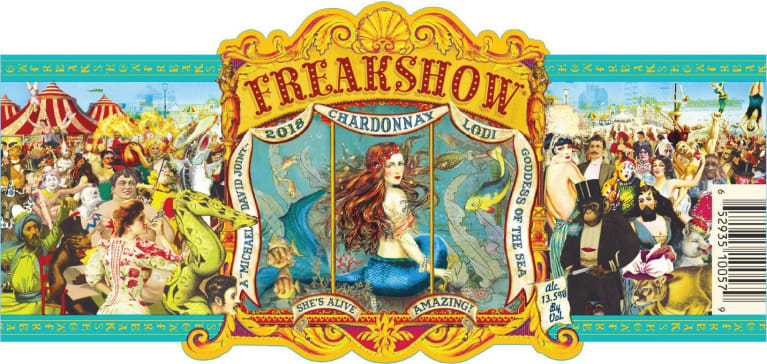
Mermaids have been economically capitalized on for various marketing purposes over the years, but one particular and direct example comes from Barnum’s Feejee Mermaid. In 1842, Phineas Taylor Barnum created a scheme to monetize what was presented to him as the first and only captured mermaid (Bacchilega and Brown, 239). Barnum wrote various letters to numerous publishing companies detailing that he had possession of a mummified mermaid and that he had the renowned, Dr. Griffin, confirm that Barnum did indeed have a real mermaid (although it was simply a lie and his friend pretended to be Dr. Griffin). Barnum’s message soon made it into a plethora of news publications, reaching many audiences and gaining widespread awareness. From there, many visitors came to see the mermaid, willing to pay top dollar for just a simple glimpse. Upon arrival, most visitors found themselves distraught at its sight being that it was the top-half of a monkey attached to the tail-end of a fish by metal wiring. One news publication about the Feejee Mermaid stated that, “some naturalists have declared that there is too much evidence of the existence of these animals to warrant them in pronouncing the mermaid to be a mere creature of fancy” (Bacchilega and Brown, 241). This is one example of how far this fabrication got out of hand in that Barnum had reputable sources declaring this hoax legitimate. After inaccurately describing the mermaid, most articles proceeded to detail many other mermaid sightings with the intent of convincing the audience that this mermaid was indeed real. This mass-production of media from what people believed to be honest sources was all a scheme created by Phineas Barnum to create hype and generate money for himself. He ultimately used deceptive marketing techniques to draw in consumers with the utilization of a mermaid for his own personal benefit. To further advance this point, Barnum’s idea of the Feejee Mermaid has been further extrapolated into marketing methods like the Michael David Freakshow Chardonnay. This wine label depicts a mermaid in a display case, with labels stating, “SHE’S ALIVE” and “AMAZING!” directly connecting this image to the Feejee mermaid with the concept of false advertising in mermaids. To continue this idea, similar advertisements and verbage was used to draw consumers into Barnum’s scheme, comparative to the way that consumers are attracted to the statements on the wine bottles. Even more interesting is the thought that had Barnum been alive today, his advertisements for his mermaid might look something similar to this label. The Michael David Winery marketing team deliberately made these references to increase wine sales by embodying the concepts of differentiation and freakishness as a tourist attraction. 

Another narrative that has shaped societal norms and a way of thought is Hans Christian Andersen’s The Little Mermaid published in 1837. Although similar to the Disney version, this story is much darker and lays the groundwork for the way in which young women were ‘supposed’ to behave in Western societies. This story conveys a coming of age, a loss of innocence, and obedience in young girls. The story opens with an explanation that once a mermaid turns fifteen, they are allowed to go to the surface. After the little mermaid turns fifteen in one of her visits to the surface, she saves a young prince from certain death and soon falls in love with him, making her strive to be human so she can have his hand in marriage. In order to become human, the Sea Witch says she must give up her voice. For starters, the fact that she is only allowed to go to the surface after she turns fifteen is important because this is the average age of puberty, establishing her potential ability to bear children which reflects her coming of age. Another aspect reinforcing this is that at the age of fifteen in Mexican culture, this is the age at which a girl transitions into womanhood, celebrated in what is referred to as a Quincenera. During the Little Mermaid’s celebration, her mother pins large oyster shells to her tail which bring pain to the mermaid. Her grandmother responds saying, “‘Pride must suffer pain,’” (Bacchilega and Brown 113), which bears a similar ring and meaning to the saying “beauty is pain”. This quote indicates that girls have to act and portray themselves in a particular way, reflecting obedience and creating an idea for how girls should see themselves and act in order to fit into society. Another aspect of this story that promotes and advertises the way girls should behave is that in order for her to gain a soul, she must be chosen by the prince for marriage, further adding to the idea that she has to portray herself in a certain demeanor in order to be presentable and accepted by her potential future husband. This again adds to the subliminal message advocating that young girls must behave a certain way, and with it being such a mass-produced book and film, this message has shaped and influenced societal norms and gender roles. 

Lastly, another example of a mermaid in marketing is the well-known logo of Starbucks coffee. The logo, if looked at closely, is a mermaid with long hair, a crown, and holding her split tail in each hand. Referring to some of the above claims, this logo is relatively subductive. The crown, which is universally understood as a symbol of royalty, created the idea in the consumer’s mind that perhaps if they consume their products, they too might be of an upper-echelon and high class. Considering some of their high prices of coffee, this concept is again reinforced because it sure isn’t sustainable to purchase coffee from here on a day-to-day basis. Being that it is a female, it makes it relatable to women and serves as an attraction towards the male audience. Looking at her split tail is a sign of suggestion, prompting the question of what might be below the cutoff of the picture. This concept plays on some of the topics discussed earlier in this essay in that it can be perceived as temptation. Being that coffee possesses caffeine, an addictive chemical, many people believe that they need their daily dose, and without it some can experience headaches, irritability, and other withdrawals. The split tail suggests that consumers should indulge in their addictions and give into their temptations for their needs. However, at the end of the day, one can very easily live without caffeine in their life. Overall, this logo is convincing and plays on consumers’ subconscious wants and desires that are reflected through the image of a mermaid. 


In conclusion, there are many different meanings and interpretations of what the symbol of a mermaid is and can be that vary across cultures and time. Many authors and professional marketers have found that this symbol and heuristic can be utilized to convey a particular message or convince consumers into purchasing something. These examples are highlighted in ancient Christian allegories described in Scribner’s writings, Phineas Taylor Barnum’s monetary capitalization of the Feejee Mermaid (which is reflected in modern times with Michael David’s Chardonnay wine label), Hans Christian Andersen’s story, The Little Mermaid, and through the subliminal marketing in the universally understood logo of Starbucks coffee. Together, these symbols and heuristics are able to convince audiences to think or purchase something. After reading this essay, consider all of the locations that you see mermaids, and ask yourself: what is the reasoning behind this mermaid in this particular location? Reflect upon what a mermaid is to you, and whether or not the message you are viewing aligns with or contradicts your mental vision of a mermaid.

Works Cited

Bacchilega, Cristina, and Marie Alohalani Brown. The Penguin Book of Mermaids. Penguin Books, 2019. 

Scribner, Vaughn. Merpeople: A Human History. REAKTION BOOKS, 2024. 

Final Essay

Emmanuel Alvarez

Jessica Pressman

ECL 305:Literature in the Environment

8 May 2024

Mermaids as Allegorical Tools in “The Bestiaire Divin”

In “The Bestiaire Divin” by Guillaume le Clerc de Normandie (1210), mermaids serve as a potent allegorical tool, reflecting the medieval Church’s use of mythological creatures to illustrate the dangers of succumbing to sinful temptations and the moral vigilance necessary for spiritual salvation, thereby highlighting the complex interplay between folklore and clerical/church-related doctrine in shaping societal values during the Middle Ages.

Prior to exploring the mermaid symbolism in “The Bestiaire Divin,” it is important to comprehend the historical background of the work. Guillaume le Clerc de Normandie composed his bestiary during the High Middle Ages, a period marked by the dominance of the Christian Church in Europe. The Church was crucial in forming society ideals since its teachings had an impact on many facets of medieval life, such as literature and art. At this period, the Church’s influence encompassed not only issues pertaining to faith but also areas like morals, ethics, and social order. Literary works and arts often used religious themes and symbols to teach spiritual and moral teachings, demonstrating the Church’s widespread influence.

As noted by Vaughn Scribner in his book, Merpeople, A Human History, “During the medieval period, merpeople defined – and reflected – Westerners’ understanding of religion, sex, and power. The Christian Church led this charge, simultaneously adopting, transforming, and harnessing ‘pagan’ (that is, non-Christian) ideas of merpeople in an effort to denigrate the feminine and, in turn, bring as many followers to Christ as possible” (Scribner, page 29). Guillaume le Clerc de Normandie’s “The Bestiaire Divin” describes mermaids as enticing and seductive, frequently luring sailors to their doom with mesmerizing songs. This portrayal of temptation and sin emphasizes the appeal of worldly pleasures and the perils of deviating from the path of righteousness, reflecting the Church’s teaching on these topics. Guillaume le Clerc emphasizes the Church’s teachings on the significance of restraining oneself from immoral cravings and holding fast to one’s faith by employing mermaids as symbols of temptation.

Furthermore, mermaids’ appeal goes beyond their physical attractiveness; they also symbolize the temptation to put worldly wants ahead of spiritual aspirations. The sailors’ readiness to forgo their responsibilities and follow the mermaids is a metaphor for how easily humans are seduced and how difficult it is to fight against immoral impulses. This topic reminds readers of the value of spiritual alertness in the face of temptation and is consistent with Church teachings on the sinful nature of worldly pleasures.

Scribner goes on to say, “The Church’s efforts were almost too effective. As more followers interpreted Christian Church leaders’ message as creed during the Middle Ages, they also increasingly understood the Church’s carefully cultivated collection of merimagery as proof of the legitimacy of merpeople’s existence, not to mention the dangers of the feminine flesh” (Scribner, page 29). As depicted in “The Bestiaire Divin,” mermaids stand for the significance of moral awareness and spiritual redemption; the sailors who resist the allure of mermaids are rewarded with safe passage, while those who give in to temptation meet a tragic fate. The Church places a strong emphasis on living a moral life and resisting temptation, and this illustration serves to prove this. As a result, the mermaids thus serve as guardians of moral order, by embodying the Church’s teachings about the importance of abstaining from sin and abiding by divine rule. 

Additionally, the idea of moral vigilance is emphasized by the mermaids’ duty as defenders of moral order. People need to be cautious and unwavering in their devotion to moral beliefs when faced with temptation. The repercussions of giving in to temptation, as portrayed in mermaid art in the Church, serve as a sobering reminder of the value of moral strength in the quest for spiritual redemption. 

Scribner as well,  notes that the church had an influence on his writing’s use of mermaid imagery by stating, “The Church created our modern understanding of mermaids and mermen in addition to nurturing popular belief in these mysterious hybrids. Ultimately, the Church’s adoption of mermaids and tritons not only demonstrates its willingness to hybridize itself in a bid for relevance but reveals churchmen’s ongoing efforts at using myth and wonder to assert the Christian creed” (Scribner, page 29). The Church was able to make its teachings accessible and interesting by incorporating mermaid imagery into Christian doctrine. By utilizing well-known mythological creatures to impart moral precepts, the Church increased public accessibility to its teachings and strengthened its hold over medieval society. The incorporation of folklore into Christian doctrine is a reflection of the Church’s attempts to remain authoritative and relevant in the face of shifting cultural environments.

According to Vaughn Scribner,  “Looking at these ancient interpretations of female sea monsters, one has to wonder how – and why, for that matter – the early Christian Church adopted such hideous beasts in its holy spaces. How could such monstrosities fit into the Christian narrative of salvation, and why would an entity that prided itself on improvement and civilization want to associate with such supposedly savage, pagan creatures? The answer rested with the hybridity of these strange monsters” (Scribner, page 31). Vaughn Scribner’s examination of ancient interpretations of sea monsters raises intriguing questions about the early Christian Church’s adoption of such creatures into its religious imagery. He questions how and why the Church allowed these seemingly pagan and monstrous creatures into its hallowed halls. Thus, we investigate the connection between Christian theology and the inclusion of creatures like mermaids in Christian iconography as a result of this curiosity. Understanding “hybridity” is essential to comprehending this phenomena. According to Scribner, the Church’s acceptance of sea monsters was greatly influenced by their hybrid nature; the early Christian Church used mermaids as hybrid beings to spread its message to a wider audience, much as ancient peoples customized them for their own needs. Through this hybridization, the Church was able to unite disparate cultural and religious traditions, increasing the relevance and accessibility of Christianity for a wide range of people.

The way that mermaids have evolved from being icons of paganism to being contemporary symbols of sex, religion, and authority is an example of how religious symbolism is always changing. According to Scribner’s research, mermaids have evolved into intricate symbols with numerous meanings in addition to being representations of seduction and danger.  This development shows how religious imagery may change with time and adapt to reflect shifting society attitudes and ideals, as Guillaume le Clerc de Normandie’s illustrates in the “The Bestiaire Divin”.

Moreover, Scribner’s reference to early Christian associations with fish symbolism, “Roman Christians utilized the symbol of the fish as a marker of their religious affiliation – still today visitors to the Roman catacombs will come across carved fishes scattered throughout those close tunnels,” provides context for the acceptance of mermaid imagery within Christianity (Scribner, page 32). The use of fish symbols as indicators of religious affiliation opened the door for the Christian iconography to incorporate additional aquatic imagery, such as mermaids. The relationship between Christianity and the sea was further cemented by tales like Jonah and the Whale and Noah’s Ark, which increased the plausibility of mermaids appearing in religious literature and art.

In conclusion, Guillaume le Clerc de Normandie uses mermaids as an allegory in “The Bestiaire Divin” to convey spiritual and moral teachings. The narrative mirrors the teachings of the medieval Church on redemption and holiness by using mermaids as symbols of immoral temptations and the significance of moral vigilance. In addition, the blending of church doctrine with folklore draws attention to the complex interplay between religion and social mores in the Middle Ages, highlighting the Church’s lasting impact on medieval ideas and culture. The mermaids in “The Bestiaire Divin” are more than just mythical beings; they symbolize the conflict between redemption and temptation and serve as a helpful reminder to viewers of the value of perseverance in the face of difficulty. The way that myth and doctrine interact, highlights the complexity of medieval civilization, in which religious beliefs influenced every part of life, including literature and the arts.

Works Cited 

Bedworth, C. (2023, November 30). Siren song: History of mermaids in art. DailyArt Magazine. https://www.dailyartmagazine.com/mermaids-in-art/ 

SCRIBNER, V. (2024). MERPEOPLE: A human history. REAKTION BOOKS. 

My Final Takeaway

This class was by far the best class I have ever taken. I loved everything about this class, mainly the confusion I experienced. There were so many moments in this class where I thought “What the heck does that even mean,” but in hindsight, I loved the confusion because it pushed me to dive deeper and think about why it confused me. I learned to be confident, in myself and my voice, but more than that I learned to be confident in my ideas and thoughts. So many times in our discussions I felt as if things I thought or wanted to say were irrelevant or pointless, but with the help of our amazing professor, I learned that thoughts and ideas are always worth sharing. Of course, confidence is a neverending thing you must work on but I am glad this class opened my eyes to sharing and having an open discussion and recognizing that each idea and thought you have can add a lot to a discussion

On top of this, this class made me have a huge mindset shift regarding mermaids and our environment. I have always loved and cared for the Ocean, but so many stories regarding mermaids and the Ocean made me grow an even deeper appreciation for the Ocean and how other cultures view and perceive it.

This class made me question things, to not just listen and accept what you are told or reading. It also taught me that we are all interconnected, there is no separation between humans and nature, and the Ocean does not belong to us, we belong to the Ocean. Every single person in this class has taught me something, and for that, I am extremely grateful.

We are Mermaids

“You don’t have to be useful. You are not required to come up with something to say.” In reading this poem, this line stuck out to me. For mainly one reason, some humans, spend a lot of our lives trying to figure out our purpose, and I have struggled with this. Trying to think why and what we are supposed to do with our lives. Many times I have felt that you are only important for actions that set you apart from others, that you have to be this huge important person and change lives and pave the way for millions of people. While those people are important, the ones who don’t make “revolutionary” changes are just as important. I don’t need to rush myself to be someone or do something huge to recognize the value and importance of myself. Maybe our purpose isn’t to be “useful”l or to change the world, maybe our purpose is to just enjoy life and love one another. Changing the world doesn’t have to start or end with changing a million people, it can be changing yourself, your community, and your loved ones. I am sure this line can and has been interpreted in many different ways but this line and the last one were extremely comforting to me, there’s no need to rush in life or stress over things we cannot control, because as Stephanie Burt says, “Some of us are going to be okay,” and I know I will be one of them.

Week 15: We are Mermaids

Stephanie Burt’s poem We are Mermaids is the perfect reading to close off the semester. We have been studying our relationship with the environment throughout the mythology of the mermaid but this poem proposes the idea that our very nature is that of mermaids and this provides a thought provoking exploration of how we can imagine a different relationship with the natural world that is in harmony with our nature and against the capitalist model that has been taught to us.

Within the first stanza Burt establishes that our very tears, often a reflection of human emotion, are composed of the same substance as that of the ocean. Thus we are not beings separate and superior to the natural world but rather an extension of it. If mermaids are the bridge between the human and the natural world then it must follow that we are also mermaids. Her second stanza assures us that life has existed long before the presence of humanity and life was simply a matter of survival, in other words “to get through the day”. Within her third stanza she claims that there is stability to be found in this simple way of life. To try to depend on the machine of fortune is much less certain and provokes doubt. Given that we are mermaids we have the gift of choice; to try to fit into the life modeled to us by society or we can choose the stability of a life of simplicity. Her fourth stanza shows us that we would be wrong to think a simple life dull or meaningless. She shows us this by describing different organisms and how they thrive when following their nature, “The thermophiles…whose sulfur would kill a human being. They love it here”. Jumping onto the sixth stanza it made me think of our discussion in class about the modern world’s demand for originality to be seen as someone of importance. Such a thing does not exist in the natural world and, if the mermaid can live in and out of water, then we, we being mermaids, can live with or without the need of originality or usefulness. The first line of the seventh stanza reads, ” You can spend your life benthic of brackish.” Benthic means in the deep ocean whilst brackish water can be found within estuaries which are a threshold between river and open sea. So too can we as mermaids live within this threshold without sacrificing our role in the natural world.

This is a beautiful piece that I will be taking and perfectly encapsulates one of the most important things that this course has taught me.

Week 15: Breaking Away of Terracentric Pressures

The poem “We are Mermaids”, by Stephanie Burt, offers us insight into how the matter of our worth changes when we reevaluate our impact and life choices outside of a terracentric lens. Terracentrism inherently associates worth and status with ownership and visibility, whereas an Ocean-centric view of measuring our worth functions to circumvent the idea of social permanence, as the water is ever moving and fluctuating. The line, “you don’t have to be use- / ful. You are not required / to come up with something to say.”, alleviates the ingrained societal pressure that to be affirmed or seen, you need to provide some sort of profitable contribution. A terracentric view of life argues that simply existing is not only not enough, but actually leaves a net negative impact on the society around you, because you are taking up space, land, and resources. By stepping out of this rigid, constructed reality, and instead looking to the flow state by which the ocean progresses, we can dissociate from the imaginary demands terracentrism places on our worth and feel worthy just being. The poem moves ahead to communicate that even a life spent “benthic or brackish” inherently has worth, as it is still a life of exploration, of persistence. This challenges the terracentric idea that a meaningful life is weighed by the mass you can claim. The land determines your worth by how much of it you own, but the ocean allows you to own your worth alone––as nothing can be owned in the Ocean, since nothing changed in the Ocean stays.