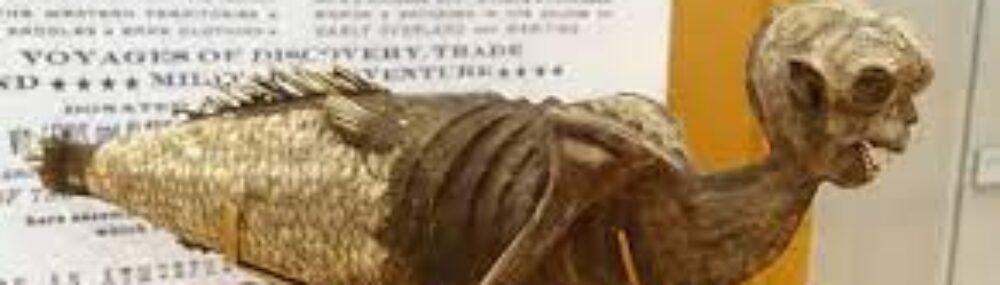
I found both the stories of Oannes and Sedna fascinating this week. They both alter what we normally believe mermaids to be and their abilities. Oannes completely changes the modern concept of a mermaid from the start because he is a man rather than a woman and he is not a typical half-human half-fish hybrid. He is more fish than man and is more of what we would consider a “monster” to physically be. However, instead of fearing him and dreading the sight of him, the people in the myth are appreciative of him. Oannes gave the people order and a way to structure their society when they were lost. The myth clearly states that Oannes “instructed them in everything which could … humanise mankind” (p.4). This is so interesting to me because the myth hints that an animal being helped humans to become “civilized”. These actions are not what is normally portrayed of mermaids. They are normally seen as hybrid beings who lack humanity and can be animal-like, they are not seen as representations of civilization and the development of the world as we know it. Oannes completely challenges the perception of modern mermaids because he is an intelligent and giving creature.
Sedna, on the other hand, is close to what we think of as a modern mermaid. She is half-human on the upper part of her body with a tail like a fish on the lower half. Sedna differs from the expectation of a mermaid by taking on a more active role in the ocean. She is called the “mother of all sea creatures” (Lindeman) and is the one who allows sea creatures to be used by humans. She controls how fruitful hunts can be and what animals are available to humans which has historically not been an ability mermaids have. The role she takes in the sea is a much more protective and maternal role than I have seen of mermaids before. In nature, it is known that you do not mess with an animal cub because the mother could attack and to me, this is almost the role I understand Sedna is playing. She protects the sea creatures from being hunted like a mother would protect her cub from predators.