The text that really caught my attention in this week’s reading is on page 84. “They organized the world as two sides of a war, the two-legs in conflict with everything else. The way Suka talked about farming, it was as if they ruled the land and what it produced, as opposed to… existing alongside it” (Solomon 84) It’s a great passage about the human condition delivered through the point of view of Yetu. Throughout the semester we have been discussing the relationship between us and our natural environment. We see that the attitudes have certainly changed over time but for many societies they have truly seen it as something separate from us. i like that the passage also describes human history as one that is constantly at war. That is certainly how history is commonly taught to us. We can orient ourselves within a point of time based on the wars that were being fought and of course, the way that history is taught is commonly taught through the perspective of the conqueror of these wars. We then treat our relationship with the environment as if waging a war against it for our own means of profit. It is something we come in contact with only under our terms. Through these mermaids the book has shown us what living alongside our environment, as a part of it, might look like. I like that later on Yetu comments on her dislike of how the rain breaks water apart, she is so used to it operating as 1 whole body. The Wajinru are simply one more organism forming a part of this one body of water. This again reinforces the ideas of unity that are so prevalent in her community that most of the westernized world does not possess.
Literature and the Environment: Mermaids
Professor Jessica Pressman. Spring 2024
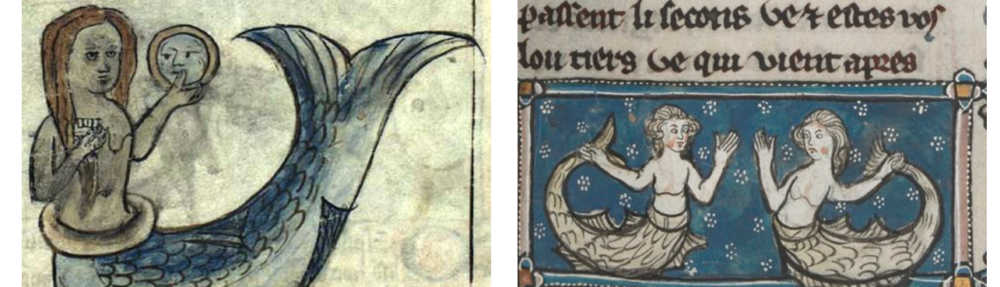
Wonderful point about this novel being an inviation to eco-critical thinking and even eco-criticism: “We then treat our relationship with the environment as if waging a war against it for our own means of profit. It is something we come in contact with only under our terms. Through these mermaids the book has shown us what living alongside our environment, as a part of it, might look like.” Let’s talk more about this perspective and way of viewing the text, in class today!