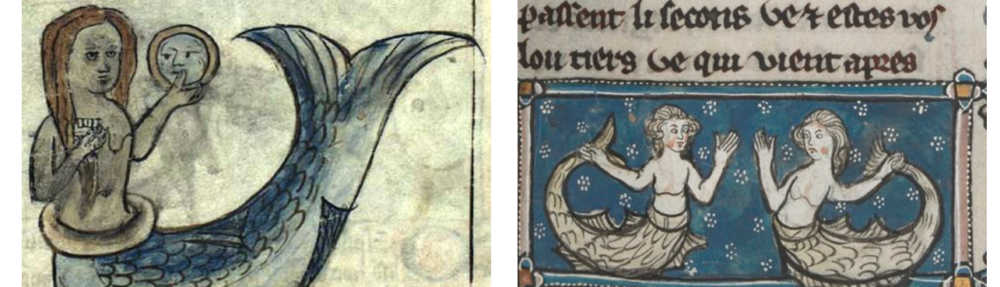
It was interesting to read about African mermaids and water spirits in comparison to the other Western or European mermaids we’ve read previously. One thing that stood out to me was what the African spirits personify nature or the sources of water that they reside in, rather than personifying human concepts or religion. Aganju and Yemaja, and they’re parents, Odudua and Obatala, personify land, water, air, etc. While mermaids such as Melusine, Undine, and the Little Mermaid personify Christian belief. Such as Undine and the Little Mermaids need for a (Christian) soul.
In Ti Jeanne, Maman Dlo, “mother of the water”, protects the forest and its waters. If “mortal men who commit crimes against the forest… could find themselves married to her for life” (277). While Maman Dlo, protects the forest, she also seems to condemn vanity, though one of her own forms is an elegantly dressed woman. She even is a seductress herself and “not above sleeping with her devotees” (274). Despite this, she condemns Ti Jeannes vanity, turning her into a mermaid to serve her forever after. This story presents moral warnings against harming nature, but also against vanity. Compared to other stories we’ve read, some Western texts warn against vanity and encourages humbleness, but not harming nature, and vice versa.
Wonderful point: ‘One thing that stood out to me was what the African spirits personify nature or the sources of water that they reside in, rather than personifying human concepts or religion. ” You are showing the relevance of comparative literature reading practices. Eager to hear more!