The Trouble with Wilderness

A point that stood out to me interesting and almost a reality check was, “It is a place of freedom in which we can recover the true selves we have lost to the corrupting influences of our artificial lives. Most of all, it is the ultimate landscape for authenticity. Combining the sacred grandeur of the sublime with the primitive simplicity of the frontier, is the place where we can see the world as it really is, and so know ourselves as we really are — or ought to be.” (16). This stood out to be as is makes me question how invested people are with their lives that we forget who we are. We live in this almost fake world where main priorities are how many likes you get on a post, how many people saw what you were doing, and where essentially capturing your entire life by phone defines who you are as an individual, when in reality it does not. As defined the wilderness is “a place of freedom” and that is something we lack in our day to day lives, it is something we aren’t able to reach because we are being consumed by so many other factors like relationships, family conflict, managing personal schedules and so many other things that pile on top of each other that we forget who we are. The ending of the sentence “ought to be” makes me wonder if it was intended to leave the reader question who they really are? Have they lost themselves? It’s a real reality check as to question if you are still the same person you thought you were.

I enjoyed the idea that nature is the only place “in which we can recover the true selves we have lost” as I believe it is true. Almost majority of the places in which you believe you are free to yourself is not entirely true as there can be interruptions, distractions, and ultimately feeling that there is a time clock on how much you can be to yourself before the constant worrying of getting back to day-to-day life comes into place. Compared to being in nature you purposely set that time apart for yourselves, to have a peace of mind, and reset yourself internally so you are not being consumed with the life you are constantly living and that is slowly taking over you each and every day.

Week 8: The Trouble with Wilderness

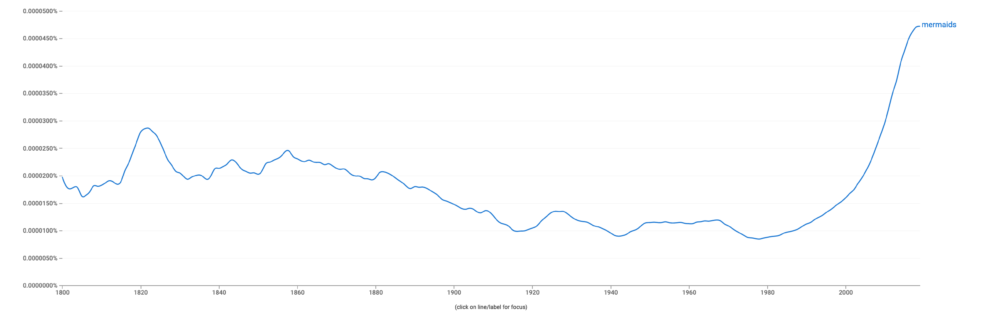
This week’s reading was interesting because of all the new context it gave me about what our perception of the wilderness is, and how it came to be. What I found most interesting was the part talking about Native Americans, dubbed ‘Indians’ in the text–which also reveals the environment in which this was written. What the people saw as wilderness, was also the homes of the Native Americans, and was their land first. Once the Native Americans were driven out of their land, the land was seen as safe and peaceful, and not dangerous and savage. This goes to show what they viewed as civilized–people don’t make it civilized; rather one’s own perception of what society should be is what makes something civilized. How we view the wilderness and its safety can be connected to the changing views on the ocean as we discover more and more about it. In some older tales we’ve reviewed in this class, the sea creatures were seen as dangerous (Sirens), but more current literature shows a more productive/romance based relationship between the humans and sea creatures (the Little Mermaid). Through artistic depictions in the Victorian age and current depictions of the sea, we can see the difference in mankind’s thoughts of the sea. 

I also found it interesting how Cronon talked about how we lose sight of the importance of protecting where we live since we are so focused on environmental preservation in the ‘wilderness’. This isn’t something I have thought about much, but I see how it applies. In my hometown, there’s a lot of push for urban development (as there is in many towns and cities nowadays), but with that urban development comes the loss of nature and beauty. Perhaps this partially stems from our curiosity in things that are not like us, or not something that is part of our day to day, but there is value in what seems so ordinary to us.

Cognitive Dissonance and the Wilderness

There is no doubt that humans and their relationship with the wilderness and environment is constantly changing both positively and negatively. These relationships throughout time demonstrate different connections and approaches to the way this relationship will function which is influenced by the people and their motives at a given time. Something that stood out to me in this reading is these transitions how we as humans apply morals to the wilderness, and how we justify conquering and destruction towards the environment. Humans tend to excuse behavior, especially when it comes to something that they believe ¨had¨ to be done or went along with their morals. It is human nature to justify behavior with the mindset of superiority; when it comes to the wilderness some individuals believe that it is our right as superiors to dominate the wilderness. The text specifically states, ¨-We as humans tend to excuse our behavior and attempt to justify it. By imagining that our true home is in the wilderness, we forgive ourselves for the homes we inhabit.¨ (Page 12) With this in mind, I wanted to look into the psychology behind justification and how we use self-justification to permit us to harm the environment continually. The psychological theory behind this is cognitive dissonance, which causes us to justify regardless of the severity of our actions when experiencing two inconsistent cognitions. Cognitive dissonance is particularly felt when inconsistent beliefs and behaviors are pressurized and conflict with our ¨self-image, positive view of self, or worldview.¨ ( Psych Central) Humans will develop a way to ignore and dismiss data that dismisses their beliefs as a way of maintaining and strengthening their thought process. We do this when it comes to the environment when we are completely aware of our harmful effects in terms of carbon emissions, deforestation, biodiversity extinction, etc. Being aware and staying aware is extremely important in improving our relationship with the wilderness. 

https://psychcentral.com/blog/healing-together/2014/12/why-we-justify-regrettable-actions-a-psychological-perspective