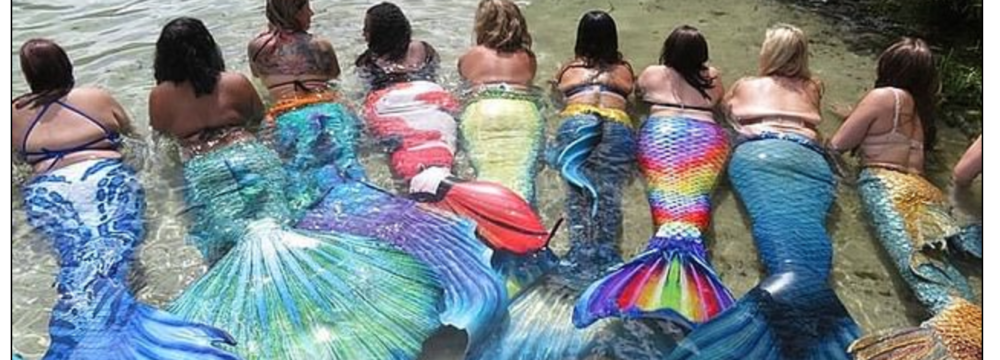
Week 13: The Ones Who Swim Away from Omelas

A short story that’s stuck with me for years since reading it for an English class is Ursula K. Le Guin’s “The Ones Who Walk Away from Omelas.” It’s a story describing the fictional city of Omelas as a utopia. Everyone is happy, everyone is educated, everyone is housed, everyone is well-off, everyone is fed. If there’s one place you’d want to go and stay, Omelas is the place.

There is, however, one caveat to this paradise: everyone in Omelas knows of the child. The child is miserable, kept locked away in a windowless room that’s more akin to a broom closet and is tormented by those who would dare to look upon it. It begs to be let out with the promise that it will be good, holding onto the memory of its mother and the light that it was born into like every other citizen of Omelas. The child has a purpose: to bear the burden and experience of misery so that no one else in Omelas has to experience it. It serves as a reminder for the people of Omelas, especially for the children, that at least they are not the ones trapped alone in a dark room sitting in their own waste and abused constantly. It reminds the people of Omelas that they have it easy, that the source of their joy comes at the cost of the child’s misery. It would be easy to pull the child out of the room and into the light, to care for it and treat its wounds. But taking the child out of that room and letting it live amongst the people of Omelas exposes the fact that their joy has been at the expense of the child’s misery.

I noticed how similar this dynamic is in Rivers Solomon’s The Deep between the wajinru and the historian. Unlike the child, who is reviled and abused, the historian is lauded and praised for their duties towards the wajinru. The historian bears all of the memories of their ancestors, no matter how mundane or painful. Every year, all of the wajinru gather and allow the historian to share their ancestors’ and their collective memories before separating once more into their mostly-solitary lives, able to forget those memories but leaving the historian to remember it all. Yetu, the historian we are introduced to, bears the burden of holding all of these memories but is extra-sensitive to it, constantly torn between the pain of the past and the pain of the present while also bearing the burden of being seen as a guide amongst the wajinru.

Like the child of Omelas, Yetu the historian has a duty to fulfill. The wajinru forgetting their ancestors’ memories enables them to live peaceful lives in The Deep without the burden of remembering that their peaceful existence was born from pain. Yetu, on the other hand, cannot live as freely as they can because she must chronically experience the pain that their ancestors went through and remember that the wajinru only exist because of that pain.

Week 13: Aganju and Yemaja

This week’s reading was enlightening due to the fact that even though both Yemaja and Aganju are “gods”, Aganju’s role has fallen into “disuse”.
First and foremost, Yemaja being raped by her son was very unexpected. I found that her body “exploding” the birth of other gods was a symbol of the children that replace the pain she endured from her son. It was nature’s way of compensating her for her son ruining her life. I found this article that briefly summarizes the story of Yemaja, and I like how the author mentions that her ‘waters protect her children from a predatory world.” This story is inspiring because it shifts the idea of victimized women being broken and vulnerable, and instead paints them to be hero’s of their own narratives. Rather than being depicted as a pained and emotionally devastated women, her rage turned her into a powerful protector of the sea.

https://mythopedia.com/topics/yemaja

Week 13: Yemaja “Mother of Fish”

The reading regarding African Mermaids was very interesting and telling of how interconnected the African people are with their environment as all of their gods and deities are linked to some part of nature. The story I wanted to focus on specifically is the one regarding Yemaja the “Mother of Fish”. When we are first introduced to her we are told that she is a water goddess who married her brother Shango, God of Thunder, and that she is associated with women, family, motherhood, and the arts. When the people of Yoruba were taken into the transatlantic slave trade, they took their beliefs about Yemaja with them and she is not worshiped in Brazil, Uruguay, Dominican Republic, Haiti, Cuba, and the United States. I found that to be very impressive, but also shocking due to the fact that she is very well known across many lands, even my own, yet this is the first time I am hearing her story; yet I’ve heard of the little mermaid a myriad of times. It simply goes to show the selectiveness in which stories are told and which are not. It’s important to represent every culture in the media so the rich history they bring with them are not forgotten.

On another note, I wanted to speak on the unsettling subjects within her story; maybe this is why Disney did not pick up this myth? In Yemaja’s story it is said that she marries her other brother, Aganju, and bores a child, Orungan. If the incest wasn’t unsettling enough, her son ends up having a lustful crush after her, and when her husband leaves, he takes advantage of her by force. She then runs away and he pursues after her, convincing her that he should be her husband sort of like the modern day side piece. Then basically with so much fear turns into an entire body of water which saves her from the current situation that she was in. I feel like as bizarre that it kind of does the same thing as when the women were thrown into the water were also saved by the water spirit. Although, Yemaja is the water spirit in this case, I can see how the water is a cleansing and safe environment through these lenses.

Aganju and Yemaja

The god of smallpox? As someone raised on a monotheistic religion, reading this story certainly brought forward some ideas that I’m not used to. I wonder why there might be a god of smallpox in this culture.

This wild story recounts the origin of a town and its religion, using some quite graphic imagery to portray it. I see a possible theme of fertility, with Yemaja as the mother of all things in this town.

What I find interesting is that when I tried to find the origin of the story online, I found multiple spellings of the story and even different recounts of it in different languages. It’s cool that the story was brought over to the New World from Africa, and survived many iterations. This again emphasizes the difference between traditional Western stories and ones that have been passed down orally, instead of on paper. It’s also cool that there’s some variation and individuality to each storyteller’s version. I would like to hear different versions of the story, I’m curious how this mother nature mermaid character is depicted in different cultures between Africa and Latin America.

I wonder if the god of smallpox has anything to do with the transmission of smallpox between enslaved people in cramped and unsanitary conditions.

Aganju and Yemaja

In this weeks reading, we learned about the origins and some of the stories of African spirits that fit in well with the stories we have read so far about mermaids and other natural spirits. For this reading, I found a lot of it interesting but I want to focus my close reading on the story of Aganju and Yemaja. The idea that so many different gods came from Yemaja, especially considering she is the “mother of fish”, is such a fascinating concept. I would have thought that her extremely traumatic experience with her son Orungan would lead to death and destruction, but instead, it led to creation. From her came fifteen gods that provide, whether it’s water, air, natural resources, or food. When reading the story, I thought it was comparable to the story of Jesus Christ. He was brutally sacrificed for the betterment of humanity. Although the intention wasn’t necessarily the same, the outcome basically is the same, humanity gets “saved” whether it’s from being given more resources to live, or to avoid Hell.

The fact that these Gods are still worshiped is a beautiful teller of how much respect African culture must have for nature. In the previous story of “African Mermaids and Other Water Spirits”, we learn a lot about the beliefs that are still extremely prominent in Africa. Although tribes preside in areas that are not close to each other, they share a love and respect for nature which has “remained strikingly relevant” (3) throughout the generations. People believe in spirits that provide, and avoid building where Mermaids have been thought to potentially seen to live. I think that faith is the best thing that people can have in respect to nature. Faith teaches people to live a certain way, and when people believe something hard enough, they are willing to set aside their wants and needs for the greater good of their faith. By faith being intertwined with nature, people show more respect to it, as we have seen in this reading. This makes me wonder why people do not treat nature better despite it being such a prominent concept in almost every religion.

Week 13: Aganju and Yemaja

In the reading of African Mermaids and Other Water Spirits as well as Aganju and Yemaja, I found it extremely interesting how strong the belief in water spirits is. I noticed that there is a lot more emphasis placed on water spirits than land spirits. Though I am sure land spirits hold importance in African culture, it is repeated that water spirits are still worshipped a bit more than the land spirits are. In Aganju and Yemaja, it’s mentioned that “the worship of Aganju seems to have fallen to disuse, or to have become merged in that of his mother” (p.168). Granted it is mentioned that this story was collected from the 1800s, so this may not be relevant to today’s beliefs but at this time it seems that the belief in Aganju was not made as clear as the belief in Yemaja. Aganju is said to represent Land and his mother represents Earth, so it is understandable that the worship would be tied together, but the fact remains that the belief in Yemaja has expanded to many different countries and is still relatively prevalent. 

This story also makes me think about how in indigenous cultures the respect given to water and land was equal and how all aspects of nature were celebrated, not just the aspects that benefit the people. It reminds me of the discussion we had about the blue humanities and how indigenous people are not given consideration when we discuss the creation of the field. These stories about water spirits show a culture centered on respect and acknowledgment for the environment as a whole. There is both something to fear and to appreciate about the water spirits which represents a fear and admiration of the bodies of water that these water spirits represent or inhabit. 

Blogpost Week 13 – Aganju and Yemaja 

The reading I wanted to write about this week was ‘Aganju and Yemaja’. I found it particularly interesting and quite frankly depressing. The first part that stood out to me was in the first line that, “[t]he name Aganju means uninhabited tract of country, wilderness, plain, or forest” (Penguin, 168). This reminds me of our class discussion around the definition of nature, but again it is something that we have made up and created through the use of literature. I think it is something important to recognize, but at the end of the day each and every part of the world has been inhabited by some person or animal at one point in time; everything has been habited. However, I do find a large amount of beauty in the name, it resembles a sense of purity and beauty in the natural world. The second part of the story that I found interesting was the fact that Orungan means, “[i]n the height of the sky” (168, Penguin), which typically resembles a higher power similar to the Christian/Catholic belief in God being in the sky, or Zeus the god of the sky being the most powerful as well. However, Orungan commits a serious and awful crime in sexually advancing on his own mother. This is quite contrary to what I would believe a god of the sky would be portrayed as, but might serve as a reflection of different perspectives that I have grown up and understood in the west. What I also found to be particularly disturbing is that after the fact, he unveiled some weird Oedipus complex towards his mom, which is rather weird from my perspective. However, this might have been a bit more ‘typical’ in historic times as the idea of an Oedipus complex is quite old and to my knowledge, not necessarily socially acceptable in today’s day and age. The next part that I found a bit confusing was how if she was running away from her son, she fell backwards. I have fallen a million times while running and never have I been able to fall backwards, your momentum typically drives you forward and hence the idea of ‘eating concrete’. My confusion lies around the fact as to whether she stopped and fell backwards, or perhaps as he reached out he pulled his mother backwards, but either way I am a bit confused and curious as to if that confusion might mean or symbol something as I have realized it typically does. Although maybe this is just a simple misunderstanding or perhaps something that got confused in translation. 

week thirteen: african water spirits

we had two different cultures- african and then Afro-caribbean water spirits. while they had their differences, it was very interesting to see how similar they were to one another. Both of the main water spirits were mothers, which I felt could be connected to how water itself is a source of life, and how mothers / the feminine is also connected to life because birth.

and then that leads into a segway about Yemaja being a mother and then giving birth (after being raped) to all sorts of bodies of water, among other things like gods of diseases and iron and war, but also vegetables and lightning. But you could argue that water is necessary for all of these things to thrive (war im not so sure about)… water is necessary for life. water had to be created out of somewhere, much like how women bear children (which one could argue is like making something out of nothing), so there’s that parallel. to be honest (and sorry another tangent) there’s something kinda fucked up about how “woman suffers at the hands of a man and gives birth to a bunch of interesting demigods” because we see a similar parallel with medusa being decapitated and giving birth to pegasus and someone else.

weird how mermaid stories are so quick to go to women suffering for the sake of others… then again i think that’s more tied to how femininity is viewed in the lens of the patriarchy? its a little different because you have maman dlo, who seems to thrive in spite of her femininity (but then also takes pretty young women to become pretty mermaids…) interesting bits of folklore this week.

Week 13: Ti Jeanne and Maman Dlo

One of this week’s reading was the story of Ti Jeanne and I wish the story was longer or that more stories like this would appear. I grew found of Maman Dlo in this story as I can relate her back to Mother Nature in a way, a mythical being who serves a purpose to teach humans lessons. My first read through I didn’t see anything wrong with what Ti Jeanne was doing but taking a moment to process what I was just and then reading it for a second time I can see how what she did was not okay. Maman Dlo was the “mother of the water” in Caribbean island folklore, and I think it is important to tell the story of her as the islands are surrounded by the Ocean so at some point there should be a better teaching for generations to come about the importance of not polluting the water as it is what surrounds the island people. The part I thought was interesting was when Ti Jeanne was realizing that doing laundry in the river pool was bad and is what caused her worry, “For the girl knew that punishment awaits the one who offends the forest creatures, the plants or the animals,..” (pg 275), but yet this was nothing that was thought of before she began washing. This story teaches the importance of smaller actions can and will still do harm to our environment, even if it’s unintentional or intentional but humans need to do better in realizing such. The story of Maman Dlo is one that should be told as it resonates with our current state of global warming and climate change, it advocates for the Ocean and Earth about the punishments that will be given to humans for the deconstruction of the natural environment.

Week 13: Nature is Violent

Good afternoon, everyone. For today’s blog post, I want to discuss a crucial theme I noticed reading Aganju and Yemaja, nature is violent.

Aganju and Yemaja is a perfect example of a creation myth. Aganju and Yemaja are the children of Odudua and Obatala. The story says, “The name Aganju means uninhabited tract of country, wilderness, plain, or forest, and Yemaja, “Mother of fish” (yeye, mother; eja, fish). The offspring of the union of Heaven and Earth, that is, of Obatala and Odudua, may thus be said to represent Land and Water.” (Penguin pg. 168). The siblings marry and have a child named Orungan (Air), who falls in love with Yemaja and assaults her, which causes the creation of 15 new Gods.

This is where I believe the theme that Nature is violent really shines through. After Orungan sexually assaults his mother, she attempts to flee from him. “Orungan, however, rapidly gained upon her and was just stretching out his hand to seize her when she fell backward to the ground. Then her body immediately began to swell in a fearful manner, two streams of water gushed from her breasts, and her abdomen burst open…” (Penguin pg. 168). These two sentences depict truly jarring body-horror. Yemaja explodes after her being savagely taken advantage of – and her annihilation birthed deities representing natural occurrences like vegatables and different African rivers – but also human ideas like wealth and war.

This made me ask myself why, like so many other creation myths I’ve read in the past, the myth of Aganju and Yemaja depicts the creation of the world as we know it as such a disturbing event. I’ve mentioned in blogs of the past that the natural world exists under an equal parts chaotic and serene state. The natural world lacks the order we crave in human civilization; the “wild” isn’t governed. I mean, there’s a reason why we call it “the wild” or “wildlife.”

I apologize because I don’t have a clear enough idea of the relationship between violence and nature to end the post on a clear and concise note, but I do believe that we should ask ourselves to make a distinction between human violence and the violence of the natural world. For centuries, Americans alone have been using terms like “beasts” and “animals” to describe their enemies or people “below” them. The violence that humans commit on other humans is different than the violence that occurs in the natural world – but the comparison has done nothing to help us understand the world better. If anything, this type of language only works to solidify the absurd ego imbalance we are all accustom to.