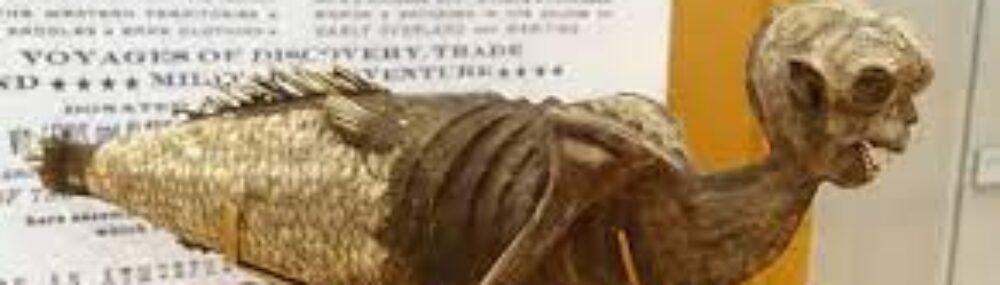
This week’s poem “We are Mermaids” by Stephanie Burt was an interesting read. There’s a lot to dissect from the poem, but one main theme I found was human connection to nature. The first stanza makes a clear comparison between humans and the Ocean, it reads, “The salt of the ocean is always the salt of tears, melancholy but at the right dilution, or concentration, life giving.” In this quote, salt serves as a commonality between the Ocean and human tears. Both are bodies of water, and this suggests they both carry sadness that can fruit new opportunities. I found this very interesting, if I had read this quote before this class I would have wondered “how is the Ocean melancholy?” I knew the ocean had power; I see it in the crashing waves when I visit the beach, but I had never associated it with having feelings. Now having the context of this class, I understand the Ocean not only as an archive that holds history but also emotions. Overall, Burt prompts a reevaluation of human relationship to nature to recognize the symmetry between the two.
Tag Archives: We Are Mermaids
We Are Mermaids
I didn’t know what a thermophile was, but after looking it up I see that it is a bacteria that thrives in high temperatures. I wonder if Burt included this to show how the Ocean is a harsh place, yet a place of origin. The fumaroles that the thermophiles feed on are arguably some of the earliest catalysts for human life. Burt then references more Ocean dwellers like zoarchids, known for being sluggish and consumptive. To me, Burt is highlighting the fertility of the Ocean. They want readers to know that the Ocean is the birthplace of humanity. The first stanza also hints at the origin of life on Earth, calling the Ocean “life-giving.”
Later in the poem, Burt references the liminal spaces of the “harbor” and the “estuary.” Why did they surface liminal spaces? The estuary, between fresh and salty waterways. the harbor, a place between the human world on land and the Ocean.
I wonder if this poem serves as a reminder that if mermaids exist, then we evolved from them. Burt repeatedly hints that the Ocean is the origin of all living things, and the title of the poem “We Are Mermaids” furthers this idea. Maybe this is a calling for us to acknowledge all that has come before us, all the species that lead to humanity.
What does Burt mean when they say, “Some of us are going to be okay.”
Week 15 — We Are Mermaids
This week’s poem, ‘We Are Mermaids’ by Stephanie Burt was super epic. Upon my first reading, I believe the author is trying to say to simply live your life on your own terms and do what makes you happy. In the first stanza, Burt compares the salt of human tears to the salt of the ocean, and in the second line relates both to the concept of sadness, but without sadness there would be no space for happiness. The third line goes on to relate the ocean to birth, which is typically a pretty incredible and happy time in someones life. On top of that, if we trace back the origin of the human race, it came out of the water a long time ago. And to further that, animals are constantly being birthed in the ocean every second of every day. To really hammer in this comparison, the ocean is often referred to as mother nature, which again relates back to the idea of birthing and motherhood. One part that got me super stoked was the part about the thermophiles. Although not entirely the same, it made me think of the extremophiles that we saw living in the radioactive waters in Sirenomelia. The introduction of thermophiles in this poem relates to the idea of being different, and being different does not mean bad, it really just means different. It goes on to say that these thermophiles live in the ocean too, and inhabit the same big old Ocean that mermaids, sharks, and all other aquatic beings do as well. “They are both predators and prey” (Burt, Line 19) means although they are different, they still fit in and actively participate in the food chain. And to be completely honest, if they didn’t exist it would throw off the balance of the food chain in the ocean. “You don’t have to be useful. You are not required to come up with something to say” (Burt, Lines 21-23) reinforces the original claim I made that this poem is about being you for the sake of being you and being happy with that decision. I think she is trying to say that you don’t have to conform or always have an idea, it’s simply okay to be who you are.
Week 15: Home Sweet Home
There’s something so–for lack of a better term–poetic about a poem describing an inhospitable land and the kind of creatures that would call it home, especially with the context of the poet Stephanie Burt’s identity as a trans woman and an advocate for the LGBTQIA+ community.
The setting of the poem describes the underwater sea vents where microbial and aquatic life has adapted to the harsh, sulfuric waters that could kill anything unprepared–or rather, unadapted–for the environment they live in. The phrase, “They love it here” resonates with me because it serves as a sort of reframing for me as I read the poem. This class has taught me so much about narrative, perspective, and the reframing of it. To me, these underwater sea vents are inhospitable. If the pressure from going so deep underwater doesn’t kill me, then the sulfur streams will. But to the thermophiles, the zoarchids, and the eelpouts, this environment doesn’t just give them life–it sustains them. They live in this environment, not just survive. Because they live in this environment, why wouldn’t they love the life that this environment brings? These organisms wouldn’t thrive in a different depth zone than the one they live in now.
But of course, Burt isn’t talking about strange-looking deep sea creatures and hardy microbiomes. Not really. This poem takes on an outsider’s perspective, the perspective of a person who exists on the fringes of society rather than existing in the midst of it, the perspective of someone who is considered freakish to others simply because of their existence, the perspective of someone who lives in an “inhospitable” land, has “adapted” to it, and “thrives” in it, despite this land’s and its people’s marginalization.
It’s a very powerful metaphor for the members of the LGBTQIA+ community who have been ostracized by the cisgender, heterosexual, societal norms for their existences outside of perceived societal binaries but have thrived in their communities and spaces and revel in their differences instead of reviling them.
Week 15: Stuck at the Bottom
I really enjoyed reading Stephanie Burt’s poem, We Are Mermaids. The poem is ripe with brilliant imagery and metaphor that do a great deal to describe the internal struggle of being a transgender person.
The ocean is presented almost like a landscape in the poem, which hones in on terracentric language to describe those who subscribe to beliefs and lifestyles they are familiar or comfortable with. The full potential of the waters between the surface and the ocean floor are ignored, with the speaker often reassuring the reader that they do not have to leave the water they are comfortable in.
“You can spend your life benthic, or brackish,
subsisting and even thriving where a fingertip
comes away saline and still refreshing,
exploring the estuary, the submerged lip
and congeries of overlapping shores
on the green-black water, the harbor, the bay.” (Burt Pg. 1-2, 24-29)
This is followed by the sentiment that it’s okay to be scared to go into the vast, open ocean; the rest of us will be all right out here.
I think this poem has two target audiences. One is transgender people who are afraid to embrace their true identity – in which case the poem is a kind and welcoming invitation to a better, more belonging life. The other is people who are transphobic and who are choosing to keep out of the issue of transgender rights. Either way, the poem paints the ocean (or this more free way of living, unrestricted by the rules and patterns of the land) as a sanctuary thats in reach and ready for you to embrace it.
Embracing the mermaid as a symbol of transgender people is a beautiful way of showing someone who comes from the constraints of land (society) and has embraced the water and turned it into their home (identity). This was a really powerful piece to end the semester with.