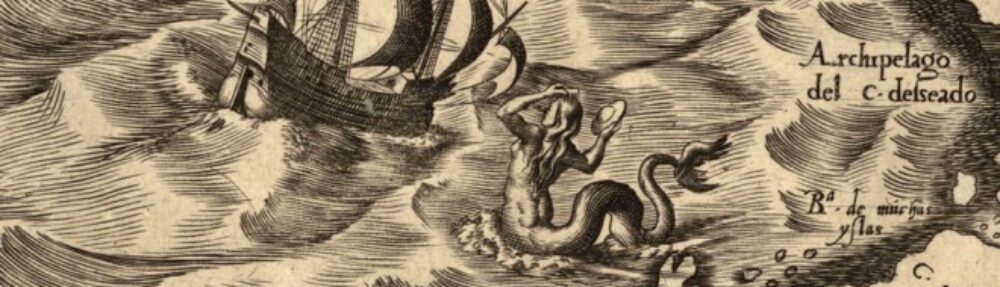
The story of Ti Jeanne brings us back to the ideas and beliefs around vanity. Ti Jeanne’s story serves as an exploration of the themes surrounding vanity and its consequences. The story revolves around Ti Jeanne, who in a moment of solitude indulges in the seemingly harmless act of admiring her reflection in the water. However, her actions attract the attention of Maman Dlo, who scolds Ti Jeanne for her vanity. “‘Vanity, vanity, my child,’ said Maman Dlo, who was now fully seven feet erect on her snakebody, swaying from side to side. ‘Looking at yourself in the water’s reflection. But beautiful you are, ssssssso beautiful! Mmh, mmh!” (Penguin, 276). Maman Dlo admires Ti Jeanne’s beauty but does not think she has the right to admire it herself. In many stories, mermaids are depicted as creatures obsessed with their beauty, spending amounts of time gazing at themselves in mirrors or water reflections. By transforming Ti Jeanne into a mermaid, the story draws a parallel between her actions and the archetype of the vain mermaid, suggesting that her preoccupation with her appearance aligns her with mermaids. This story also highlights the interconnectedness between human nature and merpeople. The connection of Ti Jeanne’s actions to a characteristic commonly associated with mermaids creates a blur of the boundary between humans and mythical creatures. This idea suggests that human behaviors and traits can take on those of mythical stories. Vanity is a trait that is often seen as a negative. It is often associated with not only mermaids but also women in general. Placing a negative connotation with looking at oneself should not only be told through the tales of women. This creates a negative narrative around women loving themselves and their appearance. Tales of men and mermen admiring themselves are not often told because they do not have the same connotations, similar to how in present-day society women are ridiculed for enjoying their appearance while men are not.
Ti Jeanne – Vanity
3