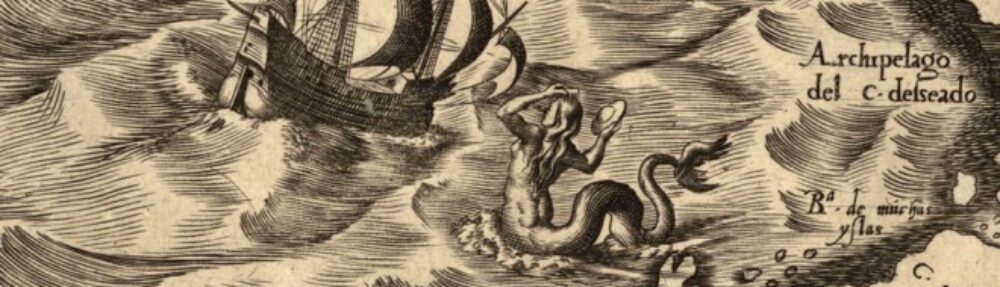
One thing I found really interesting in Derek Walcott’s poem “The Sea Is History” is the notion he introduces that, as humanity developed and began spreading its territory on land, the sea remains this immovable force that is ever present throughout all these eras of turbulence. It seems to act primarily as an observer, only stepping in to swallow that which gets lost in it. One line from the poem that got me to read and reread it a couple of times over reads as such,
“Then came the men with eyes heavy as anchors
who sank without tombs,
brigands who barbecued cattle,
leaving their charred ribs like palm leaves on the shore,” (Walcott, lines 26-29)
These lines gave me chills.
It paints the picture of the ocean being used as a macabre means of waste disposal. We’ve seen the ocean (or any body of water, at that) being used as a means of body disposal in countless movies, TV shows, books, etc. – like the old Mobster term “sleeping with the fishes”. The act of throwing a body in water to sweep it under the rug and leave it somewhere where it won’t be traced is a familiar yet sinister practice to us surface beings. The poem does a good job of reminding us that discarding something in the ocean doesn’t erase it from existence. The ocean remembers. It holds onto our waste like a ledger mapping the geological reaches of our control and depravity. The next bit about the barbecued cattle and the comparison between rib bones and palm leaves just filled my head with images of shapes along the coast, dripping with seafoam and obscured by a marine layer. The poem is a very good read.