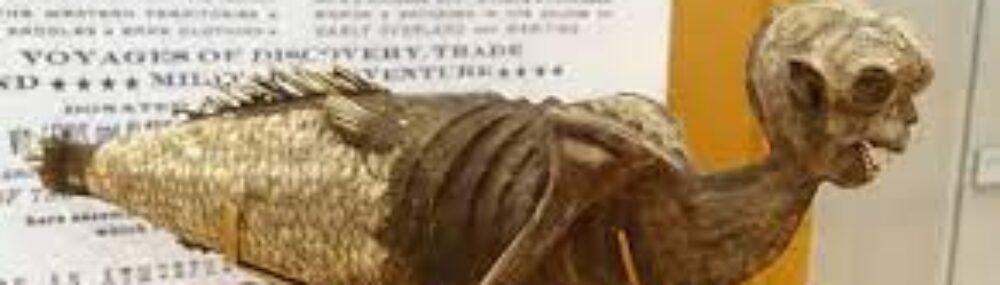
The Legend of Sedna the Sea Goddess is a story told all throughout the Arctic region, where it experiences new interpretations, names, and details depending on the region. The Inuit tale is an origin and creation tale that details the story of a young girl and the trials she faces in her young life. The story follows, Sedna, who is promises herself into a potential loving marriage; she later discovers that her husband is a bird dressed up as a man and that he cannot fulfill the promises he had previously made, causing her to flee with her father. When fleeing, her father murders her husband out of anger, to which the husband´s friends seek revenge against Sedna and her father in response. During their escape on the boat, the friends who are also half human-half birds, fly above their boat and viciously cause a storm to kill her and her father. Sedna´s father throws her off the boat in hopes that they will stop but they do not. Sedna clings onto the boatside for her life after being thrown overboard, yet her father cuts off her fingers one by one to prevent himself from drowning as well. She sinks to the bottom of the sea where the segments of her fingers turning into sea mammals, and she becomes the Sea Goddess, who has the power to control these animals and their abundance to man. The specific scene of Senda’s fingers being cut off joint-by-joint by her father is a pivotal scene that may be interpreted to represent the trauma she experiences as a transformational experience of her soul and strength to persevere. There is both a literal detachment through her father cutting off her fingers and her figurative detachment from family, comfort, and social constraints. Spurring from her fingers are marine animals, which exhibits Sedna´s strength against her life that was holding her back from her soul´s transformation. For Sedna to experience her true soul in the form of a goddess, it was necessary for her to both figuratively and literary detach from her past constraints. Through the close examination of the cutting of the fingers scene, it is evident that transformational growth is only possible if one detaches from past trauma/ties. Whether the detachment is forcible or voluntary, individuals must disconnect and dissociate from their constraints in the form of comfort, family, societal ideals, etc. to experience a full transformation of the soul and body.
First and foremost it is important to understand the content of the story and understand the initial traumas that Sedna´s growth spurs from. Sedna is a defiant girl who leads herself by her self-determined laws, which is communicated directly in the story where it states, ¨She liked the comfort of her parent’s home and refused to marry.” While she is defiant of the idea of marriage, she does so for the betterment of her people and family, which later on benefits no one involved. This is the traditional suffering that she experiences in the form of the societal expectations of being a woman and a woman’s role to marry. It is clear that Sedna is a woman of choice and leads her life intending to make independent choices, although she is not given the opportunity to choose when it comes to the boat scene. Following the idea of trauma, a key part of the boat scene is Sedna’s father and that it is him who throws her overboard into the icy water to prevent his boat from filling with water. It is no mistake that the boat is her father´s boat and that she is physically cut from the side, after grasping on to save her life. The father´s boat serves as a representation of her family as a whole and he is the sole controller of her fate, just as he was in her life. Typically fathers are modeled as a family´s protector, dedicating themselves to the safekeeping of their family’s life; yet the situation is entirely upside down in this scenario. Her father is the perpetrator and betrays her just as her husband does, causing a strong traumatic experience between Sedna and her father. All the trust is lost in their relationship as she is sacrificed to the ocean at the hands of her father who is supposed to be the one man who dedicates himself to her protection. This is a literal and figurative detachment that is forced upon her by her father´s choices, as he sentences her to death and attempts to prevent her from being able to swim to the surface. There is a strong importance in the fact that he does not simply push her off, but chooses to individually cut each one of her fingers off, ¨one joint at a time.¨ This action would inflict the most physical and emotional pain to her body and mind cruelling detaching her from this familial and societal trauma in a literal and figurative sense. Although only after these forms of dissociation and her body sinking to the very bottom, is Sedna able to fully transform herself. The cutting of her fingers prevents her from reaching back to grab onto the boat or in a figurative sense her past comfort abilities, she is unable to save herself and is forced to the very bottom of the ocean to transform herself. It is important that after this action Sedna ¨sank to the bottom of the ocean ̈ and established hesr new self and home on the ¨ocean floor.¨ Sedna is forcibly pushed into the detachment that allows her to grow, as she is sent to the deepest part of the ocean where she is required to think in the deepest of thoughts. She is not only mentally at her lowest point but she is physically at the lowest point on Earth, due to the deep trauma she experienced in her life. As for society, people often fear deep thought and detachment from a comfortable life, but in Sedna’s case, the choice is not for hers to make. She is only able to experience her highest potential as a Sea goddess once she is released from the torment and trauma that held her back. The cutting of the fingers scene holds importance through its presence in the text, through its situation, length, etc. Observing not only the content but also the presentation of the content is key to understanding how the story follows the argument that literal and figurative detachment is a fearful necessity. The word fearful is key in this statement, as detachment is a fearful concept and people are often extremely uncomfortable when they are forcibly removed from the comfort of their lives. The only details the reader is given about the scene are a mere eleven words long, ¨ the father cut her fingers off, one joint at a time.¨ This length is intentional and provides the reader with little to no details on the exact scene before it progresses to the next scene in the story. The story avoids the uncomfortable but is a story entirely about embracing and pushing back against being uncomfortable and pressured. The shortness of the scene allows the reader to apply their own imagination and perspective to the scene, making the lesson/story more personable to the reader and the reader´s experiences. Details and complexity can act as limiting factors to creativity, which is a huge factor in this story to understand its deeper meanings. This short scene is also situated in the center, not the beginning and not the ending of the story. It is perfectly in the center with exactly four paragraphs above and three below, making this scene the most central part of the text. This is the main climax and placing it in the middle allows for there to be a background to her life and the future of her life after her psychological and physical transformation. Her story does not have a happy ending and this scene is not intended to be anything less than pain and torture. In Inuit culture death is viewed as rebirth and the transformation of the soul, which is the exact experience of Sedna in her story of transformation. She becomes the Sea Goddess, and is no longer controlled in life, and rather is turned into the controller of animals and man. Sedna is no longer a woman who must rely on people for comfort, rather people rely on her to obtain life and sustenance. The specific scene of Senda’s fingers being cut off by her trusting father is a pivotal scene that causes this drastic change from having to rely on people to being relied on. This transformation stems from her literal and figurative detachment from her past traumas, which gives Sedna the strength to experience transcendence. To experience her soul´s transformation, she needed to dissociate from her past constraints. Although Sedna’s disconnection was not voluntary it was important in her journey of detaching from her former constraints in the form of comfort, family, societal ideals, etc., and was necessary for her to experience a full transformation of the soul and body.