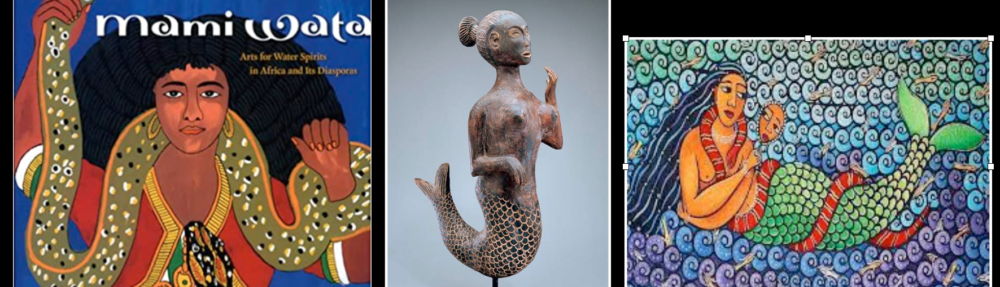
I found all of the chapters we had to read this week extremely interesting. I think that the discussion about history and its relation to personal identity was particularly fascinating because it is very applicable to contemporary discussions about history. As Yetu struggles with her identity as the historian of the wajinru, the readers are encouraged to think about their personal experience with history, both the history taught in school and personal/familial history. In Chapter 5, there are many moments where Yetu is trying to come to terms with her lack of remembering past events but the moment that stood out to me most was when she thinks that, “The emptiness inside her stretched far and wide in every direction like a cavern. It was lonely. She had thought herself unmoored when she was the historian, but this did not compare. She was a blip” (Solomon, p. 53). Without the history of her people, she felt as if she was unimportant and was adrift. Even though being the historian for her people was hard for her, without that knowledge Yetu was left confused and felt the absence of that history even more intensely. This emphasized how important it is to know and understand the history of your culture, country, etc. because without knowing the events and people that came before you, there is a void in your knowledge that can lead to dangerous repetitions of history.
There was also an interesting discussion about personal history in Chapter 7 when Oori’s past is mentioned. As the last person alive of her people, Oori has a deep commitment to honoring her culture’s practices and history. In Chapter 7 when the storm begins to build, Oori leaves to protect her homeland and the people who live on the land Yetu found herself on said that “that the place Oori was from wasn’t really a homeland anymore because a homeland needed a people. Without a people, it was just a patch of earth” (Solomon, p. 82). This made me think about how important personal history is and how one single person can preserve their culture. This also raised some questions for me because who decides what a homeland is? Oori is still alive and she comes from that place, so would that not still be considered her homeland regardless if she is the last of her people?
One common theme I saw in chapters 5 and 7 was the importance of knowledge and history. When Yetu and Oori are talking about their histories, they come to a disagreement about the importance of history. Yetu says: “‘If the past is full of bad things, if a people is defined by the terror done to them, it’s good for it to go, don’t you think?… It was a very holy thing for my kind. It meant I held onto all the memories so no one else had to, generations and generations of them. Six hundred years of pain.’” (p.94). In contrast, Oori says: “‘I would take any amount of pain in the world if I meant I could know all the memories of the Oshuben. I barely know any stories from my parents’ generation. I can’t remember our language. How could you leave behind something like that?’” (p.94). These are two very different perspectives. One knows all, and one lives without knowledge. If you compare Oori and the wajinru, both live in ignorance of their past, but the wajinru are able to live in the present, while Oori seems consumed by questions of her history and unable to move forward. Is it because the wajinru have the Remembrance? Or is there another difference? Would Oori really want to know her people’s history? As they say, curiosity killed the cat. In addition, this comparison between knowing history and not knowing mirrors the relationship between Yetu and her mother, as her mother often said that Yetu could not understand what it was like, when in reality, Amaba was the one who struggled to realize the pain Yetu underwent. Similarly, Oori is struggling to realize how traumatizing a history can be, especially when relived in such detail. Often, when we consider trauma, we see it as an event that happens to a person, and that person is the one who is traumatized. However, there are some theories that people who are close to the person who is traumatized (partnerships, parental, etc) can be traumatized just by hearing what has happened to someone they care about. Yetu has been repeatedly traumatized by these memories, but no one will acknowledge it because it is ‘history’ and decidedly over with, and because it has happened, they believe one cannot be traumatized by the pure memory. I think this end of the chapter raises the question of the importance of history, as well as how we choose to define ourselves. Do we define ourselves by history, by culture, by community? These two characters show sharp differences in where they find identity; Oori has no culture, community, or history to lean on to shape her identity, while Yetu feels very defined and shaped by her culture and community, and the history she was forced to bear.
I was working on my discovery assignment and thinking about yesterday’s in-class discussion when a realization dawned on me.
When talking about The Sea Is History we talked a lot about how the ocean preserves what’s lost in it. We talked about Moby Dick and its last line and how it gives the impression that the ocean is (literally) filled with stories and artifacts of events that we can’t memorialize by building a statue in its place.
To try to illustrate why I think this reality is so significant, consider a battle at sea versus a battle on land for a moment. Both fights share a few characteristics: each will result in a massive expenditure of money, resources, and troops, and each will have a winner and a loser. Beyond that, the two are completely independent. The winner of a land battle is entitled to the territory on which they fought. They get to change the way the area is governed and build monuments and museums filled with art and propaganda sympathetic to their cause. They are free to discard any proof that their acquisition of the land was any more violent or hateful than was necessary in order to remain benevolent to its governed peoples.
At sea, we are more than likely left to take the winner’s word on how their victory is achieved. You can’t claim the water, really – you definitely can’t build memorials to commemorate it. And while, yes, there is no presentable evidence to show malice or the true moral ambiguity of the conflict – the evidence DOES exist. Its under the water, untouched by men – resulting in what I would safely refer to as TRUE history.
It’s history without a consciousness; ultimately, it’s a dead history – having avoided the post-mortem manipulation that events on land face to keep the propaganda alive. But personally, I don’t want history to have a narrative. I do not want there to be good guys and bad guys, and I don’t believe in generational hate. I value the ocean for its ability to be honest with us and hold a mirror to our shitty behavior because the first step to improving at anything is to take accountability for the fact that you need to improve to begin with.
Sorry if I essentially reworded the conclusion we came to in class, I just felt like this was a revelation for me. I definitely dabble in true crime and conspiracy thought a bit too much and I totally could be predisposed to this line of thinking – but I do think that the history books we are all made to read growing up were largely dishonest promotions of “*Insert Country Name* Values and Reasons For Being Superior”, so I enjoy getting the chance to take a more critical look at human history.
For this week blog, I found it really interesting to the idea that through mermaids cultures are able to tell stories and as well how different cultures have different perceptions of mermaids. The stop motion film, “The Water Will Carry Us Home,” unveils the ocean’s diverse cultural perceptions and uncovers the idea of the legacy of black mermaids in contemporary society. The narrative is rooted in the harrowing tale of Africans abducted and cast overboard during the Middle Passage during a period of slavery, only to be rescued by the aquatic deities of Yoruba mythology, suggesting the sea’s duality as both a menacing unknown and a source of salvation across different cultures. This depiction challenges the idea of fear associated with the ocean, instead presenting it as a realm of protection and reverence, particularly for those cultures directly touched by its saving grace. As we have often seen that many different cultures have different meanings and ideas towards the ocean and mermaids. This representation invites viewers to contemplate the personal bonds each individual can forge with the sea, this film can aid in changing the ideals of individuals and seeing the ocean as not something to be scared of but something we should be curious about; and as a source of healing that has recently been seen in society as the ocean being a place that can provide peace and tranquillity. So in the sense of the class, this film aids in having a different point of view in the face of the ongoing environmental crisis, the film provides a new idea, suggesting that a personal and communal appreciation for the ocean could bridge the gap we’ve placed between ourselves and the aquatic world, encouraging a more harmonious interaction with water and all it has to offer, and how it can be used to better our everyday life and our planet.
One thing I found really interesting in Derek Walcott’s poem “The Sea Is History” is the notion he introduces that, as humanity developed and began spreading its territory on land, the sea remains this immovable force that is ever present throughout all these eras of turbulence. It seems to act primarily as an observer, only stepping in to swallow that which gets lost in it. One line from the poem that got me to read and reread it a couple of times over reads as such,
“Then came the men with eyes heavy as anchors who sank without tombs,
brigands who barbecued cattle, leaving their charred ribs like palm leaves on the shore,” (Walcott, lines 26-29)
These lines gave me chills.
It paints the picture of the ocean being used as a macabre means of waste disposal. We’ve seen the ocean (or any body of water, at that) being used as a means of body disposal in countless movies, TV shows, books, etc. – like the old Mobster term “sleeping with the fishes”. The act of throwing a body in water to sweep it under the rug and leave it somewhere where it won’t be traced is a familiar yet sinister practice to us surface beings. The poem does a good job of reminding us that discarding something in the ocean doesn’t erase it from existence. The ocean remembers. It holds onto our waste like a ledger mapping the geological reaches of our control and depravity. The next bit about the barbecued cattle and the comparison between rib bones and palm leaves just filled my head with images of shapes along the coast, dripping with seafoam and obscured by a marine layer. The poem is a very good read.
During the latter half of the 19th century, Japan made the transition from a feudal military country to a colonial power under the Meiji Era. Along with the adoption of Western ideas came the industrialization of the country (“A Brief History”). The Meiji Era ushered in coal and chemical plants, mills, refineries, copper mines, and pollutants (Seagrove 2). These new technologies brought new language too–the coining of the word “kogai” which Seagrove (1) describes as “industrial pollution that damages human health and the environment” (p.1). Despite the awareness of the negative environmental costs of industrialization, Japan continued to prioritize economic development as they gained global power. In the Japanese tale The Mermaid, the middle-aged man’s decision to release the mermaid reflects this human-first attitude adopted during the industrial revolution in the 1890s.
The Mermaid follows the story of a middle-aged man who lives by himself, having never married. When fishing one day, the man catches a mermaid. On page 206 of The Penguin Book of Mermaids, the passage reads: “ ‘Desinit in piscem mulier formosa superne.’ The mermaid’s face was tearful, for the hook was in her cheek, and there was also the shame of being forcibly dragged out of her native element; and the angler was a man of tender heart” (p. 206). The strong use of imagery in this quote, of the hook in the cheek and forcible dragging, represents the strong hand of the Japanese in trying to conquer the environment through technological advances. The usage of the phrase “native element” also reveals the use of a mermaid as a symbol for the environment, and the relationship between this man and mermaid represents interactions between Japanese and the environment. The Latin words, at the beginning of this quote, and presumably stated by the man, loosely translates to ‘the beautiful woman ends in a fish’s tail’. The structure of this sentence (and in the quotation) reveals how he sees the mermaid as a human first, and then secondly an element of nature, reflecting the human-first frame of mind this story was written in.
The man then contemplates what to do with the mermaid. The way that he ponders about what to do with her represents the commercialization of the environment that Japan was undergoing: “Gently extracting the hook from her jaws, he held her in his hands and meditatively speculated on the money which he could gain by selling her to an itinerant exhibition, or the long life which he might obtain by eating her flesh” (p.206) Many new technologies, such as power plants and mines were sources of economic gain from the environment in Japan. Not only does this quote represent commercialization and the commodification of nature, but it also illustrates the tensions in the transitional period that the Meiji Era brought. Choosing to sell the mermaid to an exhibition may have resulted from the newfound international trade brought in by the new era, while eating the mermaid comes from a Japanese belief involving immortality, and is more connected to the traditional eras of Japan. The man’s struggle between this choice represents the economic tug of war between an isolated, feudal Japan and the new, colonial Japan that was developing. In addition, the imagery of the man holding her in his hands contributes to the idea of Japan dominating and controlling nature, through how small and powerless it makes her appear.
Despite the two initial choices presented, the man decides to release the mermaid back into the water. However, his reasoning behind the release is not of respect for nature, or pity. The author states: “But his soul revolted at the thought of eating this fair creature, that whimpered and cried like a human being, and so after another long gaze he threw it back into the waves, when the mermaid, waving its grateful adieux, speedily dived out of sight” (p.206). The man does not choose to release the mermaid for any reason but that it reminds him of himself. This reflects the human-first attitude that the Meiji Era brought as it prioritized human advancement over preservation and respect for the environment. Had the mermaid not “whimpered and cried like a human being”, the man would not have returned her to the water, and would have made the choice between selling or eating her. Although the text describes the man as “a man of tender heart”, it seems his tenderness only extended to those who look and act like himself, not to all living beings in the world. This description of the mermaid also reflects how nature is at the mercy of the industrialization of Japan, since the man is the one in control. The mermaid’s gratefulness also contributes to this power dynamic.
Interestingly enough, this tale was published in English in a magazine in Tokyo. This decision to use the English language, as opposed to Japanese, may be another hint toward the Westernization of Japan at this time–as many citizens were sent to Europe to learn about how their country operated. Whether this story can be considered propaganda for the government and modernization, or perhaps a tale created from integration of European ideas and the story of Melusine, is unknown, but it does comment on many concepts of the Meiji Era–of modernization, power, transition. This developmental era in Japan’s history brought about much change for all of Japan, and this tale is an important representation of the attitudes toward nature in Japan during the Meiji Era.
Works Cited
Bacchilega, Cristina. Penguin Book of Mermaids. Penguin Publishing Group, 2019.
Japan, Heartland. “A Brief History of Japan from the Late 19th Century to the Early 20th
Century. – Heartland Japan.” Heartland Japan – Your Gateway to the Heartland of Japan.
Heartland Japan Offers Unforgettable Experiences for Walking, Cycling, Hiking, and
In this weeks reading of “Merpeople: A Human History” by Vaughn Scribner, I was completely fascinated by the Catholic Church’s involvement in the use of mermaids to manipulate the general public. When I began reading, I mostly expected the reading material to mainly feature the evolution of mermaids throughout different cultures. I had no idea that mermaids were instruments of manipulation for the Catholic Church, which intended to use mermaid imagery to “dethrone femininity” (Scribner 12). Painting mermaids in an overly sexual light, the church used mermaids to symbolize seductive beings that made men fall into their lustful desires. Ultimately, the Church was using these creatures to spread their propaganda about sinning.
The Catholic Church benefited from the globalization of mermaids in Western, Eastern, and African folklore, because it further pushed their agendas. Sailors across the world would make claims about interacting with mermaids, and their “encounters resonated with the Christian Church’s imagery” and further pushed the Church’s “efforts to denigrate the feminine” (Scribner 56). My focus on the Catholic Church with these chapters comes from the idea that mermaids could not possibly be the only things that the Catholic Church used to manipulate people. By studying how effective the use of mermaids was, it gives me the ambition to look into what else the Church has used to maintain relevancy. Science has only been a generally accepted concept for a couple centuries, yet society has existed for thousands of years. Even in modern media that I can recall, mermaids are still commonly sexualized, which could still subconsciously push the old agendas of the Church.
I grew up going to Catholic Church, and I cannot recall ever seeing any mermaids, or any mythical creatures besides angels and demons in paintings inside of the church. It is extremely fascinating to me to see how the same Church I grew up attending used manipulation tactics to push their agenda. It is also interesting to me to see what the church’s agendas were as the church was developing. It makes me wonder if this type of behavior is still happening in the Church, but with more modern methods.
In Merpeople: A Human History, Chapter 1, Medieval Monsters, discusses how the mermaid evolved throughout the Medieval period. During this period, the mermaid defined and reflected Western ideas of religion, sex, and power. This chapter specifically focuses on the Christian churches use of the mermaid. The Christian church and its symbols adapted from the ones of pagan, including mermaids. Similarly, the representation and appearance of Jesus was as well. Because many pagan Gods were both male and female “many early Christian images of Jesus appeared androgynous, with Jesus boasting feminine hips, suggestions of breasts and a beautiful face” (36). The image of a male Jesus we recognize today was created in the Middle Ages as the church tried to distance itself from pagan pasts.
Mermaids became a symbol of the church and evolved from a more hideous creature to an enticing and female creature. Mermaids became overly feminine, for the church women representing lust, weakness, and mens falling from grace, and now so did mermaids. But why would illustrations of mermaids be present in a church? As the book says “What better way to demonstrate the titillations of the flesh than to display an enticing image in the holiest of spaces?” (39). The beautiful, female mermaid served as a warning against flesh and desire in the church, which derived greatly from some of the oldest images of mermaids as sirens or half birds. Still, both were made to remind men “of her ability to steal their souls” (41). Like many symbols, the representation and meaning of them changes depending on who controls them, or obtains the “power”.
Before reading, I was unaware of the history behind how mermaids were represented, and how we’ve come to know them today. I was even shocked at how the image of Jesus was changed and used, similar to the mermaid.
For this week’s reading I found it fairly interesting in regards to the idea that through the different stories of mermaids and how humans have always had a fascination towards them, we are able to understand the history at the time and the beliefs at the time. The fascination of mermaids and the stories being told were not of fairy tales or fiction, “But as myths and legends,” with that being said individuals, “believed or believe in the material and/or symbolic truth of the tale” of mermaids (Cristina, page 16). Along with this idea of our constant fascination with mermaids throughout the years, it brings up the question of “What does our fascination with this dangerous yet desirable other suggest about us” (Cristina, page 14)? To answer this question one can look back to past stories where it is said that, “Beauty can be a powerful weapon – a lure that draws us nearer, a temptation that we are unable to resist … They (as in mermaids) reflect our fascination with and fear of female bodies” (Cristina, page 14). These misogynistic views of mermaids have been used in the past during times when women were associated with such a negative connotation, and it aids in conveying the history of how women and mermaids were thought of and treated, “The appellation of prostitutes as “mermaids” in early modern British culture likewise attests to how a woman who oversteps the boundaries of gender propriety has, over centuries risked being defined as monstrous” (Cristina, page 13). But as time goes by and looking at a different location, individuals are able to see the growth of what mermaids are representing and viewed in a more positive light, for example in hawaiian stories, “There are no tales of men who try to tame their mo’o (mermaid) partners because the mo’o like the features of water they embody; cannot be contained or domesticated. Thus, the confluence of anthropocentrism and misogyny often found in European tales is absent” (Cristina, page 20). The idea of mermaids thus is seen as more an embodiment of nature and beauty and not in a negative sense as seen in early British culture. The hawaiian stories of mermaids in a sense uplift mermaids, and in a way women, and in the stories turn the tables to the men to control their desires because these beings are beautiful, “Rather than cautionshing men against the dangerous power of powerful female beings in the European tales, these tales enjoin respect for nonhuman life and divine power” (Cristina, page 20). So as the years go by the idea of mermaids has grown to be more of an uplifting idea and a way to express oneself and the reimagined figure allows for, “ Fluid feminine self-possession or playful queerness. If the mermaids overstepping the boundaries of gender or sexual propriety is transgressive, it is embraced as such, and not punished” (Cristina, page 22). Thus again, through the foretelling of stories throughout the years and in different cultures about mermaids, individuals are able to see the timeline and progress of society that was occurring.