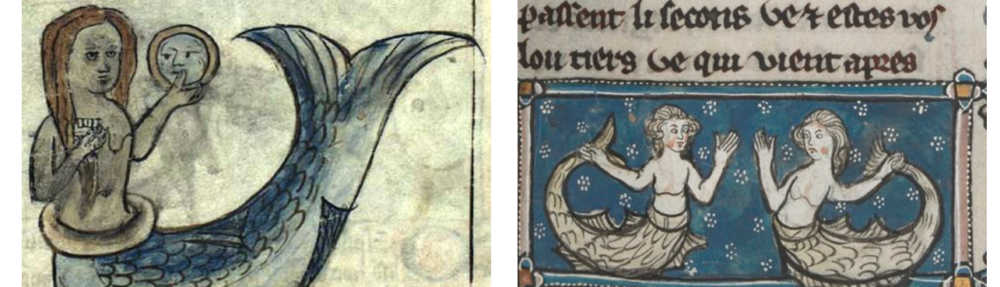
DISCOVERY ASSIGNMENT: The Mermaid and Human Nature in The Lighthouse (2019)

Robert Eggers’ 2019 film The Lighthouse follows two lighthouse keepers, Thomas Wake and Thomas Howard, who are stranded on a secluded island due to a severe storm. The movie’s narrative is presented from Howard’s point of view, and it explores themes like isolation and the fragile condition of human sanity. These concepts are accompanied by hallucination, including encounters with a mermaid and a man from his past. The film is rather avant garde: there are only two characters with spoken lines, it takes place in one location for a vast majority of the films runtime, and it’s shot with black and white film on a 1.19:1 aspect ratio – making the screen appear almost like a square. That all being said, The Lighthouse is more comparable to a novel than the run-of-the-mill suspense thriller film, which means the audience should look at the components of the narrative more for what they represent rather than what is actually being shown. Through editing and use of symbolism, the mermaid in The Lighthouse represents human nature and man’s inability to suppress it.

To understand the mermaid’s symbolic significance in the film, it is essential to define what the island represents to Howard. In a conversation with Wake, Howard reveals that he used to be a timber man on the American mainland, but he wanted to start fresh and earn a living as a “Wickie.” The script says, “Nothin’ wrong with a man startin’ fresh, lookin’ to earn a living… Soon enough, I’ll raise my own roof, somewheres up country, with no one to tell me ‘what for’…“ (Eggers Pg. 29-30). This statement alone implies that Howard feels the need to escape his past; add to that, the fact that Howard killed a man and took his identity previous to the events of the film – it is almost blatantly obvious that Howard being a lighthouse keeper is an attempt to distance himself from guilt. The island becomes a symbol of escapism.

There are two mermaids in The Lighthouse, one, a wooden figure, and the other being a seemingly real mermaid that washes up on the beach. The audience is introduced to the wooden mermaid relatively early in the film’s runtime, but it is not until near the end of the first act that Eggers presents the real mermaid. While Howard is out doing his chores on the island, he sees lumber floating off its shore. He goes to investigate it, and as it gets closer, the logs move and reveal the body of a bleach-blonde man (Ephraim Winslow). He approaches the body in a trance, and the tide rises, submerging him underneath the water. In the direction of where the man used to be, there is a mermaid in the depths – its face obscured by its hair and its screeching song muffled by the water’s density. This editing succeeds in establishing a thematic connection between the mermaid and Howard’s murdered or possibly fatally neglected ex-coworker. The two symbols do not exist independently from one another in the film – every time the audience is shown the mermaid, she closely follows the appearance of the late Ephraim Winslow.

The next significant appearance of the mermaid is during a scene where Howard attempts to pleasure himself, using the scrimshaw as inspiration. It seems like he has a really difficult time accomplishing this because his mind is clouded with thoughts of the white-haired Winslow. During this scene, three events are inter-spliced with one another: Howard matsurbating, Winslow dying (having been stabbed or shoved with a stake, and then drowned), and Howard engaging in sex with the mermaid. These events are cut together hastily, never spending too much time on one shot. His interaction with Winslow and the mermaid are happening simultaneously in his head, indicating that the two activities are equal to one another. On first viewing, it can be easy to assume that the editing in this scene is meant to show us that Howard is haunted by the action or inaction he committed on Winslow. However, the last thing Howard imagines before reaching climax is Ephraim Winslow sinking under a log. Having achieved his goal, he throws the wooden carving to the ground, breaks it, and wails like a wild animal in anguish. The editing of this sequence leaves little doubt that the death of Winslow is what peaked Howard’s arousal, underscoring his violent human nature and implying a disturbing sexualization of death. To Howard, killing Winslow and dominating the mermaid are on and the same, and the distress in his tone at the end of the scene is generated by his inability to escape his own depravity.

The last place where the mermaid is utilized as a symbol of human nature is in the last act of the film when Howard and Wake get into a fist fight over the old man’s ledger. Wake calls Howard a dog, a term used earlier in the film by Howard as he recounted the death of Winslow to Wake – “but Winslow that goddamned Canady fool bastard… always callin’ me a dog. A filthy dog.” (Eggers Pg. 51). In response to Wake’s insult, Howard attacks him and the two wrestle around the lighthouse’s living quarters until Howard looks at Wake and sees a hallucination of Winslow. He mounts the old man, still seeing Winslow, who lands a punch on him, staggering him. When he looks down again, Winslow is replaced by the mermaid – who caresses his neck before strangling him and turning into Wake again, but this time with a crown of barnacles and brine and a set of tentacles. 

Because of the rapid pace at which this scene unfolds, the audience is presented with a great deal of visual information to process and evaluate in a brief period of time. Howard is reminded of his earlier aggressions by Wake’s calling him a “dog,” and his desire for violence is promoted by the alluring image of the mermaid. This is similar to the situation in the two examples that came before it, in which the mermaid did not appear until after Winslow is present in Howard’s psyche. The fact that Howard is able to see the mermaid while he is impulsively beating Wake is a clear sign that he is taking pleasure in this assault.

The most astounding aspect of The Lighthouse is Eggers’ ability to establish Howard’s murderous intent without using words. Although it is logical to believe that Howard was responsible for Winslow’s death because he stole his name and identity, Howard never acknowledges this in the film, and he is not required to do so. From the time the mermaid appears on screen – when Howard discovers the body in the sea – it achieves its goal of establishing a link between Howard and death without disclosing the specifics of that relationship. In the scrimshaw scene, the spectator can deduce that Howard is responsible for Winslow’s death. Winslow’s death is practically a fantasy for Howard, heightening his excitement. Finally, in the fist fight scene, Howard unwittingly admits to killing Winslow. He sees the mermaid in front of him; she appears genuine to him at that moment, and he indulges in his inner darkness. His reaction to the mermaid shatters any doubt that Howard is a violent human being. Thomas Howard’s story in The Lighthouse is jam packed with mystery. In the end, he wasn’t able to escape the violence embedded within him – and although most people aren’t secretly evil like Howard, the feeling of not being able to escape your negative traits is a widely human experience. It is easy to say the past is in the past, but without taking the right steps to take accountability and improve, these undesirable features remain dormant until provoked. The mermaid shows the audience that running away is not the answer to moving past trauma or consequences, and that human nature prevails if left neglected.

The Fisherman and the Siren-Inescapable Temptation as a Religious Rebellion

Literature extends far beyond hardcover books and represents itself across multiple media including artwork. Artwork has been used for centuries to communicate and share messages of the time and additionally serves as a timestamp of opinions, teachings, and knowledge. Knut Ekwall’s, “The Fisherman and the Siren,” 1858, extends a compelling story that demonstrates the intensity of male desire and the inescapable consequences of yielding to temptation through a religious lens. During this time Luthern was the key religion in Sweden, where they believed that God would not allow his people to be tempted, and if he did he would save them, although God does not save the man in the painting. Ekwall utilizes the circle as a focal point, where everything from the water currents, the clouds, and even the figures themselves are based on a circular and revolving motion. These circular-based composition and imagery techniques used in the painting serve to demonstrate his cautionary lesson about the continuous loop of dangers involved in succumbing to the allure of forbidden desires. This painting is a religious rebellion that focuses on circularity and showcases the inevitable repetitive nature of desire/ temptation and the consequences that even God cannot save you from. 

In this painting, the fisherman is facing a moral dilemma as he fails to avoid the temptation of the Siren and succumbs to the power of her knowledge and voice. This failure to disregard temptation and the soon-to-be failure to survive is underlined with defiance towards the religion at the time, as Ekwall projects the anti-Luteran belief that God will not always provide a savior. Knut Ekwall depicts the exact moment after temptation strikes as the man is unwillingly being dragged beneath the water, reaching for an opportunity to save himself from his mistake. His hope for refuge is demonstrated in the straining of his arms which form a half circle on the outer layers of the whirlpool, that seeks to overtake him. With his arms in a half-circle shape and the position of his body, as being partially consumed by the Ocean, the painting showcases that he has not reached the totality of the endless temptation cycle. He reaches out but there is nothing to hold onto; at this moment his faith has left him, and powers that want to take him down are the only things left for him to reach for. This is Knut Ekwall’s rebellion in the form of circularity, the depiction of an endless cycle with vanishing hope for a man and his desires, circling one another down into death.  

In terms of positionality, the two figures’ bodies are wrapped around one another, as the Siren’s arms wrap around his underarms and her body swirls around him, where he is trapped underneath her. The concept of his body not just being within the water but being underneath her provides him no escape, where his only choice is to fall into the endless circle and into the depths of the ocean. Her hair becomes the water and begins its circulation of his body in movement with the water that seeks to overtake him. The swirling of the water begins to turn into a dangerous whirlpool that is unavoidable for the fisherman. She remains in control and floats gracefully above the water, luring him further and further into his death, where she grabs at his body as if she is attempting to release him from his grasp for safety. The position of their bodies in this encapsulating motion is critical to the argument which demonstrates the repetitive nature of desire and how powerless one is in the face of “successful” temptation. There is a contrast in how the beings connect to one another; the fisherman avoids her gaze as he is still attempting to find hope and the Siren fixes her eyes onto him showcasing her dominance and power, as she has won. 

The color choices in the artwork add additional evidence to highlight the rebellious argument of the circulatory-based behavior of temptation. The color of the fisherman’s shirt blends into the deep blue/grey colors of the water and the viewer is unable to see his lower half, as it has been submerged. The water slowly owns him and becomes a relic of its possession, as his body loses its separation from the dangerous ocean. This is highly contrasted in the way the Siren is depicted with her idyllic beauty and pale skin color, separating her from the water, and placing it above its grasp. Due to the contrasting colors, the Siren immediately becomes the main focus, which then leads the eye to the circular patterns in the water, then continuously wields the fisherman to his death. Her vibrant hair follows this circular pattern demonstrating the power she possesses within the water and her ability to control it, in contrast to the fisherman’s inability to avoid it. Her nude body alludes even more to the idea of temptation and the power of a woman to tempt a man, even to the extent of his death. By creating a juxtaposition between the idyllic beauty of the siren with the eery landscape, Ekwall develops an inescapable environment of danger that warns viewers that God may not save them from the tempting dangers within the Ocean. 

Ekwall’s painting holds a central claim that warns viewers that the pursuit of forbidden desires leads to inevitable destruction, and further cautions that God is incapable of saving one from such temptations. Ultimately, Ekwall’s “The Fisherman and the Siren”, 1858,  is a religious rebellion against the Luthern church and a defiance of the idea of God as a savior. Through his portrayal of the fisherman’s inner and physical struggle cast against the backdrop of the seas and Sirens, Ekwall highlights the destructive nature of succumbing to desires that have the potential to lead individuals to their deaths. This painting is a timeless reminder and warning of the importance of exercising restraint and resistance in the face of forbidden temptations.

Discovery – Harry Potter and the Goblet of Fire

Ashley Rubin 

14 April 2024

Discovery

Pressman

https://www.google.com/search?q=harry+potter+mermaid+scene&oq=harry+potter+mermaid+scen&gs_lcrp=EgZjaHJvbWUqCQgAEEUYOxiABDIJCAAQRRg7GIAEMgYIARBFGEAyBggCEEUYOTIGCAMQRRg7MggIBBAAGBYYHjINCAUQABiGAxiABBiKBTINCAYQABiGAxiABBiKBagCALACAA&sourceid=chrome&ie=UTF-8#fpstate=ive&vld=cid:34f5d935,vid:QSqNJVR8blE,st:0

The mermaid scene from Harry Potter and the Goblet of Fire displays the main character Harry Potter feeling fearful of the mermaids and then shifts to the mermaids being fearful of the sharks. This creates a connection between humans and merpeople by displaying the emotion of fear through both species. Creating a similarity between the species upholds the idea that people are not so different from mermaids as both species experience emotion. This idea proves that the boundaries between humans and oceanic life have been created by mankind from a place of fear. These boundaries can be broken by connecting humans with nature through further discovery and research of the ocean. 

The scene begins with Harry Potter jumping into the depths of the lake to complete the second task of the Triwizard Tournament. As he is swimming he encounters a group of mermaids, a creature he has never seen before. The sight of these mermaids wielding spears fills Harry with fear. It is a fear born of the unknown as he doesn’t understand their intentions or capabilities, and the threat they pose adds to his sense of vulnerability. Just as Harry fears for his safety in the presence of these beings, the mermaids in turn react with fear when a shark suddenly appears. The group instantly swims away as they are now in fear for their life and want to escape the potential danger. The mermaids’ reaction to the shark mirrors Harry’s initial fear, emphasizing the unpredictability of the underwater environment and the instinctual response to perceived threats. 

The importance of both Harry Potter and the mermaids experiencing fear in this scene lies in the fact that the species are more similar than different. When Harry initially encounters the mermaids he is experiencing fear not only because his life is being threatened, but also because it is being threatened by an unknown species. Harry does not know much about these creatures, which leaves him questioning what they are capable of. When the scene shifts and shows the mermaids also experiencing fear the creatures are humanized, creating a similarity with Harry. Both species are trying to survive in this circumstance. While they differ in the fact that the mermaids tried to harm Harry and he had just been completing a task for the tournament, they have the same end goal which is to make it out alive. Humans see unknown creatures, especially those of the ocean, as a threat due to their potential to inflict harm. The lack of knowledge surrounding these creatures is what poses them as a threat. This scene specifically shows the mermaids threatening Harry but it could have been out of fear that he would harm them. Mermaids are shown to experience the same feelings as humans in terms of the unknown. Just as Harry did not know their capabilities, they did not know his nor the sharks. Their initial instinct with Harry was to defend their own lives and when a more apparent threat showed up, they chose to leave. This feeling of fear is what makes these species so similar. By portraying fear as a common thread that connects disparate beings there is an emphasis on the similarities between individuals, regardless of their species or background. Both species are trying to survive in this circumstance and experience the same feeling of fear. 

The similarities created between these species serve as a powerful commentary on the artificial boundaries that humans have created between themselves and the natural world, particularly the underwater world. The fear experienced by Harry and the mermaids underscores how these boundaries have been shaped by human perception and apprehension, rather than inherent differences between species. This prompts a deeper reflection on the origins of these boundaries and the potential for breaking them through greater understanding and connection with the ocean. Only around 5 percent of the ocean has been explored by the human species. This lack of knowledge and understanding creates a sense of mystery surrounding the water, leading to boundaries between life on land and life in water. As humans evolve in advancements of technology and scientific research there is great potential to break these boundaries down and create a world where we live in harmony with nature. Through initiatives such as marine conservation efforts, educational programs, and ecotourism, humans can create a deeper sense of connection with the ocean and its inhabitants, leading to empathy and respect for marine life. While it might not involve the discovery of mermaids, the understanding of the ocean can allow for a healthier environment and appreciation for the water which takes up 71 percent of the Earth. The fear of the ocean by mankind has stemmed from the lack of discovery. Humankind has been capable of exploring space for years due to the amount of money and effort that has been put into research. While there might still be technological advancements to be made before the ocean can fully be explored, there should be a more consistent effort put into these explorations. There is technology that is capable of exploring deep depths of water and it should be prioritized. Due to the current climate crisis, it is important to emphasize understanding the ocean and the impact these waters have made on humans along with the impacts humans have made on these waters. Putting the fear of the unknown aside here is extremely important to understand both history and the current state of planet Earth. 

The mermaid scene in “Harry Potter and the Goblet of Fire” serves as a reminder of the interconnectedness between humans and the natural world, particularly the ocean. The shared experience of fear portrayed by both Harry Potter and the mermaids highlights the similarities between species, challenging the artificial boundaries that humans have imposed between themselves and marine life. While only a fraction of the ocean has been explored, there is potential for humanity to break down these barriers through technological advancements and concerted efforts in research. In the face of the current climate crisis, prioritizing the exploration and understanding of the ocean is important. By overcoming the fear of the unknown and embracing curiosity, humanity can uncover the mysteries of the ocean and create a harmonious relationship with the natural world. This discovery is not only essential for the preservation of our planet but also for our understanding of history. 

Discovery Assignment: ‘She Told Me the Earth Loves Us’

Thavanh Pais

ECL 305

Professor Pressman

14 April, 2024

She Told Me the Earth Loves Us

In the poem “She Told Me the Earth Loves Us,” Anne Haven McDonnell delves into the profound link between mankind and the natural world, exposing the Earth’s ability for love and compassion. Through vivid imagery, emotive language, and subtle shifts in perspective, McDonnell encourages readers to reassess their relationship with the environment and acknowledge the reciprocal bond that exists between humanity and the Earth. 

The title of the poem, “She Told Me the Earth Loves Us,” captures the poem’s fundamental idea and establishes the tone for the speaker’s narrative journey. By giving the Earth an identity and speech through the pronoun “she,” the title personifies the natural world, implying a reciprocal link between humanity and the environment. This personification gives the Earth a sense of action and autonomy, contradicting traditional views of nature as passive or inactive. Furthermore, the verb “told” conveys a sense of communication and intimacy between the speaker and the Earth, implying an ongoing dialogue or revelation. Overall, the title evokes a sense of intimacy, familiarity, and mutual fondness between humans and the Earth, establishing the groundwork for the investigation of love, interconnection, and environmental stewardship that unfolds throughout the poem.

In the first stanza, McDonnell writes: “She said it softly, without conviction or romance.” After everything? I asked, embarrassed.” McDonnell’s portrayal of the speaker’s reaction to the Earth’s pledge of love depicts a complicated emotional terrain marked by bewilderment and shame. The speaker’s response, “After everything? I asked, ashamed,” reveals a deep sense of incredulity and unworthiness in the face of the Earth’s unchanging compassion. This reaction reveals the speaker’s internal conflict and fragility as they grapple with their personal relationship to the Earth and the consequences of embracing its love. The passage’s tone is introspective, inviting introspection and self-examination as the speaker considers the tremendous implications of the Earth’s pronouncement. 

As we continue, McDonnell presents a subtle shift in viewpoint, urging readers to examine their position as inhabitants of Earth. The remark “That’s not the kind of love she meant” is a watershed moment, highlighting how humans frequently anthropomorphize the environment, regarding it as “mother nature” and expecting loving, maternal love in exchange. However, McDonnell’s subtle shift in perspective calls into question this romanticized notion of love, forcing readers to examine humanity’s impact on the Earth as well as their own role in environmental destruction. This moment of reflection asks us to evaluate our relationship with the natural environment, acknowledging the interconnectedness of all living things and our shared responsibility as Earth stewards. By highlighting the reciprocal nature of our relationship with the environment, McDonnell urges readers to reevaluate their actions and recommit to fostering a more sustainable and harmonious coexistence with the Earth.

Throughout the poem, McDonnell employs rich sensory imagery to evoke the Earth’s love and embrace. In the fourth stanza, she writes, “Today I learned that trees can’t sleep with our lights on. That they knit a forest in their language, their feelings.” She paints a poignant image of trees unable to sleep because of human interference, conveying a profound sense of vulnerability and disruption in the natural world. The metaphor of trees “knitting a forest” not only conveys the intricate interdependence of ecosystems, but it also implies a collective consciousness and communal spirit among living beings. This visual urges readers to reflect on the significant relationship between humans and the environment, emphasizing the interconnectedness and mutual reliance that sustains life on Earth. By characterizing trees and attributing them with “language” and “feelings,” McDonnell gives the natural world agency and emotional depth, encouraging readers to see the Earth as a sentient and responding being worthy of care and devotion. The rich sensory imagery serves to deepen our understanding of the Earth’s love and embrace, while underscoring the urgent need for environmental stewardship and conservation efforts to preserve the delicate balance of the natural world.

In the final line, McDonnell conveys a message of hope and redemption, implying that, despite humanity’s flaws, the Earth’s love endures. The image “I walk through the dark gates of the trees” evokes a profound sense of forgiveness and acceptance, similar to returning to a maternal and protective hug after admitting past faults. McDonnell generates a sense of humility and appreciation by depicting the Earth as welcoming mankind with outstretched arms, encouraging readers to reconnect with the natural world. This last image is a stunning reminder of the Earth’s enduring potential for compassion and renewal, emphasizing the poem’s primary themes of love and reconciliation. It invites us to consider our relationship with the environment and embrace a sense of responsibility and reverence for the Earth’s boundless generosity and resilience.

Anne Haven McDonnell’s poem, “She Told Me the Earth Loves Us,” depicts the intricate tapestry of humanity’s relationship with the natural world, exposing the Earth’s tremendous ability for love and compassion. McDonnell takes readers on a voyage of introspection and environmental awareness using rich imagery, evocative language, and nuanced shifts in viewpoint. The poem’s title, “She Told Me the Earth Loves Us,” captures its fundamental subject and sets the setting for a narrative examination of love, interconnectedness, and environmental stewardship. As the poem develops, McDonnell encourages us to evaluate our position as Earth’s occupants, challenging romanticized conceptions of nature and calling for a more in-depth investigation of humanity’s impact on the ecosystem. McDonnell’s rich sensory images and expressive language invite us to consider the Earth’s enduring affection and embrace, while highlighting the critical necessity for environmental conservation and preservation initiatives. Ultimately, McDonnell’s poem serves as a painful reminder of humanity’s reciprocal relationship with the natural world, asking us to love and safeguard the Earth’s unlimited generosity and resilience for future generations.

Discovery Assignment

Lixia Peña

ECL 305

Professor Pressman

March 2nd, 2024

Considering Environmentalism in Ponyo

            Thesis: In his 2008 movie, Hayao Miyazaki, re-imagines the deceptively simple story of the little mermaid to consider our current with the natural world. His movie uses the children as a device to consider a different way to co-exist and respect the natural world.

The plot of the story would not be kickstarted without the presence of a man meddling with the natural world. It is the father of this little mermaid, initially named Brunhilde, who has forgone the human world in order to become a wizard focused on healing the ocean from human destruction. Ponyo is his child and the sea goddess’s child. Immediately it is explained that her magic ability comes from the human and the natural world coming together. Ponyo acts, like so many mermaids in folklore, as a bridge between the human and natural world. This little mermaid is brought within proximity of the human world after being caught in a human fishing net and being hurt by trash polluting the sea. Here Miyazaki immediately begins his criticism of the detrimental effect that human presence has had on the ocean. This daughter of the environment is partly exposed to the human world by human’s presence and destruction of the ocean.

Ponyo is then saved by a little human boy Sosuke who immediately aids and takes her into his care, declaring that he is responsible for her. I found this interesting because Miyazaki immediately does away with the Christian tones of so much mermaid folklore. Sosuke takes her in exactly in her fish’s form and never turns on her for being of the sea. Much of the folklore that we have studied, the man comes into contact with the mermaid when she is not in her true form. When the man and the mermaid come into the marriage contract we are often told of the riches that the mermaid provides for the man and his curiosity and need to control this being of the natural world inevitably lead to the man’s betrayal. It is important that Miyazaki imagines his own male and female characters as children. It’s is because of innocence that Sosuke readily accepts Ponyo, an extension of nature, wholeheartedly as she is without feeling the needs to control her. Ponyo is impulsive, adventurous and free and Sosuke never tries to change this. This is contrasted with Ponyo’s father who immediately snatches her back into the ocean against her wishes. He tries to, quite literally forces Ponyo back into the shape of a fish and trap her; hear reaction is to run away and create a Tsunami so she can find Sosuke. I believe that here Miyazaki is stressing the importance of doing away with thinking that nature is something that has to be controlled. Harmony can exist when we cohabitate with the environment and nature. To try to dominate it is useless and detrimental to all.

I found Miyazaki’s decision to depict a Tsunami to have been a very conscious choice. Only four years before this movie was released a Tsunami had devastated coastal cities of Japan. Japan has a long history with Tsunamis and so it was interesting that he would present a natural disaster within this children’s story. It is not presented with the horrifying images that we imagine when we think of tsunamis. This could be easily explained away with saying that this is a children’s movie. I believe that he chooses not to display the destructive power of the ocean so overtly because he is trying to comment on the nature aspect of the natural world. Nature after all, is functioning exactly as it is in its nature to do so. Instead the weight of destruction is mostly blamed on humans. It is used to depict the carelessness in how humans treat their environment. Through Sosuke, Miyazaki proves that it is possible for humans to interact in a more harmonious manner with the natural world. If we accept it as it is, without trying dominate it.

I also noticed, throughout the movie, that the figures of power within the story were were mostly women. Ponyo, her mother the sea goddess an Sosuke’s mother. These three figures all draw their power from nature itself. This is most noticeable with Ponyo and her mother given that they are magical creatures. Lisa’s power is not as noticeable initially. As a woman mostly raising her son alone, her husband is a ship captain, Lisa is often thrust into the position of, not just a nurturer but also a protector thereby subverting our expectations of gender roles. She is just as willing as Sosuke to take Ponyo into her care. Miyazaki is clearly commenting on the power of women to influence younger generations. It is interesting that Ponyo’s wizard father, for all his magic, is unable to exert his power over any of these women.