Casey Meyer
Professor Pressman
9 May 2024
Literature and the Environment: Mermaids
Mermaids and Marketing
The study of mermaids over various cultures and histories provides a brilliant perspective to analyze the interconnection between Marketing and Literature. Christian allegories of mermaids have served as a physical embodiment of lust and temptation as Scribner shows in Merpeople: A Human History, and later, Barnum capitalized on the Feejee mermaid as a source of exotic entertainment through strategic marketing. Furthermore, ‘The Little Mermaid’ shaped social norms and values in young American girls, while Starbucks utilizes a mermaid as its brand image to symbolize indulgence and desire. Considered together, these case studies highlight the intertwined nature of storytelling and persuasion influencing societal norms and cultural values.
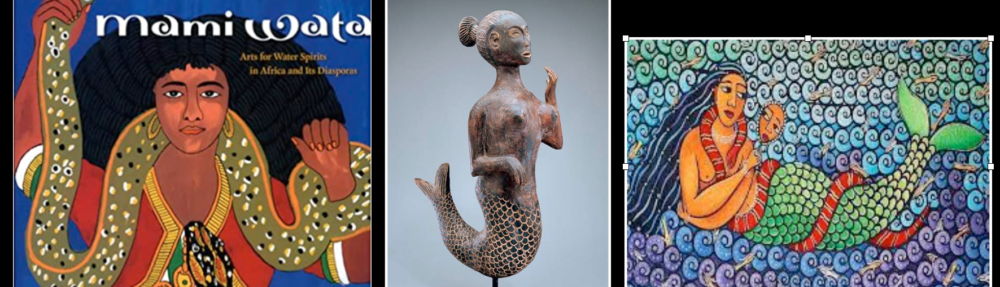
Merfolk–and more-specifically mermaids–have been hypersexualized throughout Western Literature. Before the conception of science, humans believed and had faith in much of the mythical and unknown as it was presented in the media. This was further exploited through the invention of the printing press, as people could study the unknown and unexplored lands through mass-produced news and published papers (Scribner, 59). Scribner questioned the exponential boom in mermaid stories as to, “whether such obsession fueled, or was fuelled by, Westerners’ push into unknown worlds in the fifteenth century,” (Scribner, 59). As these lands were unknown, it was a fair assumption that mermaids and other beings could exist in untraveled and ‘unconquered’ lands. “Europeans thus found merpeople in every new land they explored, thereby fuelling the Christian Church’s centuries-old narrative surrounding these monstrosities, while also validating Westerners’ interest in them” (Scribner, 60). The fact that mermaids were considered monstrous capitalizes on the idea that they are something wrong, scary, and evil. The term “monster” has always been used negatively, and its origin in the Latin roots monstrum, bares the idea that it is a deformity or made wrong. In Chrisian tales, merfolk were predominantly baring female characteristics, and hypersexualized with bare breasts and long, luscious hair. Considering the time period of these works, in western cultures, women were expected to be entirely covered with clothing from head to toe, and mermaids were depicted in the exact opposite light with much visible skin and nudity. Scribner even says that in the sixteenth-century, prostitutes were referred to as ‘mermaids’ or ‘sirens’ (Scribner, 61), further exemplifying the idea that these women were considered monsters and horrific, and surely something to be avoided. Continuing on the narrative of gender norms, the Christian Church was determined to market the concept that women were less important than men and simply there to bear and raise children, limiting their roles in society. In Scribner’s words, “the Christian Church had spent the last ten centuries equating femininity with inferiority,” (Scribner, 60) making it the norm that women were useless and ultimately something one might not wish to identify as. Although blatantly ignorant and disrespectful, the Christian Church used stories and symbols of mermaids to represent temptation, which is generally related to sin. Temptation is an inherent part of life, thus making mermaids a powerful attraction to men at the time. Furthermore, it is important to draw attention to the fact that the typical ideation of a mermaid is a white, possessing blonde hair, and female. Mermaids of color have been marginalized across Western literature and cultures. This goes to show that the church used mermaids to frame ideas about women and how they should behave and be portrayed, influencing social norms which reflected in the way that women were treated and how they dressed.
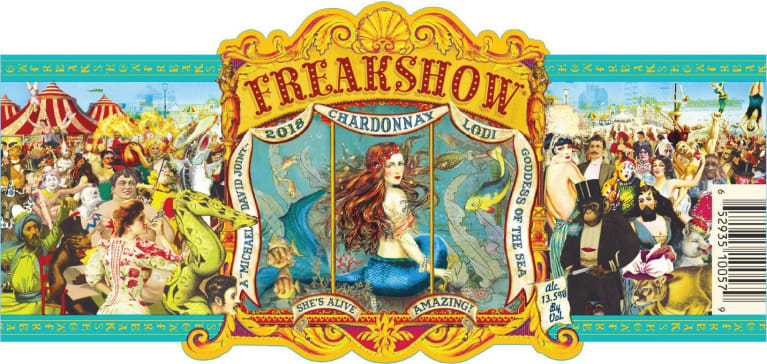
Mermaids have been economically capitalized on for various marketing purposes over the years, but one particular and direct example comes from Barnum’s Feejee Mermaid. In 1842, Phineas Taylor Barnum created a scheme to monetize what was presented to him as the first and only captured mermaid (Bacchilega and Brown, 239). Barnum wrote various letters to numerous publishing companies detailing that he had possession of a mummified mermaid and that he had the renowned, Dr. Griffin, confirm that Barnum did indeed have a real mermaid (although it was simply a lie and his friend pretended to be Dr. Griffin). Barnum’s message soon made it into a plethora of news publications, reaching many audiences and gaining widespread awareness. From there, many visitors came to see the mermaid, willing to pay top dollar for just a simple glimpse. Upon arrival, most visitors found themselves distraught at its sight being that it was the top-half of a monkey attached to the tail-end of a fish by metal wiring. One news publication about the Feejee Mermaid stated that, “some naturalists have declared that there is too much evidence of the existence of these animals to warrant them in pronouncing the mermaid to be a mere creature of fancy” (Bacchilega and Brown, 241). This is one example of how far this fabrication got out of hand in that Barnum had reputable sources declaring this hoax legitimate. After inaccurately describing the mermaid, most articles proceeded to detail many other mermaid sightings with the intent of convincing the audience that this mermaid was indeed real. This mass-production of media from what people believed to be honest sources was all a scheme created by Phineas Barnum to create hype and generate money for himself. He ultimately used deceptive marketing techniques to draw in consumers with the utilization of a mermaid for his own personal benefit. To further advance this point, Barnum’s idea of the Feejee Mermaid has been further extrapolated into marketing methods like the Michael David Freakshow Chardonnay. This wine label depicts a mermaid in a display case, with labels stating, “SHE’S ALIVE” and “AMAZING!” directly connecting this image to the Feejee mermaid with the concept of false advertising in mermaids. To continue this idea, similar advertisements and verbage was used to draw consumers into Barnum’s scheme, comparative to the way that consumers are attracted to the statements on the wine bottles. Even more interesting is the thought that had Barnum been alive today, his advertisements for his mermaid might look something similar to this label. The Michael David Winery marketing team deliberately made these references to increase wine sales by embodying the concepts of differentiation and freakishness as a tourist attraction.
Another narrative that has shaped societal norms and a way of thought is Hans Christian Andersen’s The Little Mermaid published in 1837. Although similar to the Disney version, this story is much darker and lays the groundwork for the way in which young women were ‘supposed’ to behave in Western societies. This story conveys a coming of age, a loss of innocence, and obedience in young girls. The story opens with an explanation that once a mermaid turns fifteen, they are allowed to go to the surface. After the little mermaid turns fifteen in one of her visits to the surface, she saves a young prince from certain death and soon falls in love with him, making her strive to be human so she can have his hand in marriage. In order to become human, the Sea Witch says she must give up her voice. For starters, the fact that she is only allowed to go to the surface after she turns fifteen is important because this is the average age of puberty, establishing her potential ability to bear children which reflects her coming of age. Another aspect reinforcing this is that at the age of fifteen in Mexican culture, this is the age at which a girl transitions into womanhood, celebrated in what is referred to as a Quincenera. During the Little Mermaid’s celebration, her mother pins large oyster shells to her tail which bring pain to the mermaid. Her grandmother responds saying, “‘Pride must suffer pain,’” (Bacchilega and Brown 113), which bears a similar ring and meaning to the saying “beauty is pain”. This quote indicates that girls have to act and portray themselves in a particular way, reflecting obedience and creating an idea for how girls should see themselves and act in order to fit into society. Another aspect of this story that promotes and advertises the way girls should behave is that in order for her to gain a soul, she must be chosen by the prince for marriage, further adding to the idea that she has to portray herself in a certain demeanor in order to be presentable and accepted by her potential future husband. This again adds to the subliminal message advocating that young girls must behave a certain way, and with it being such a mass-produced book and film, this message has shaped and influenced societal norms and gender roles.
Lastly, another example of a mermaid in marketing is the well-known logo of Starbucks coffee. The logo, if looked at closely, is a mermaid with long hair, a crown, and holding her split tail in each hand. Referring to some of the above claims, this logo is relatively subductive. The crown, which is universally understood as a symbol of royalty, created the idea in the consumer’s mind that perhaps if they consume their products, they too might be of an upper-echelon and high class. Considering some of their high prices of coffee, this concept is again reinforced because it sure isn’t sustainable to purchase coffee from here on a day-to-day basis. Being that it is a female, it makes it relatable to women and serves as an attraction towards the male audience. Looking at her split tail is a sign of suggestion, prompting the question of what might be below the cutoff of the picture. This concept plays on some of the topics discussed earlier in this essay in that it can be perceived as temptation. Being that coffee possesses caffeine, an addictive chemical, many people believe that they need their daily dose, and without it some can experience headaches, irritability, and other withdrawals. The split tail suggests that consumers should indulge in their addictions and give into their temptations for their needs. However, at the end of the day, one can very easily live without caffeine in their life. Overall, this logo is convincing and plays on consumers’ subconscious wants and desires that are reflected through the image of a mermaid.

In conclusion, there are many different meanings and interpretations of what the symbol of a mermaid is and can be that vary across cultures and time. Many authors and professional marketers have found that this symbol and heuristic can be utilized to convey a particular message or convince consumers into purchasing something. These examples are highlighted in ancient Christian allegories described in Scribner’s writings, Phineas Taylor Barnum’s monetary capitalization of the Feejee Mermaid (which is reflected in modern times with Michael David’s Chardonnay wine label), Hans Christian Andersen’s story, The Little Mermaid, and through the subliminal marketing in the universally understood logo of Starbucks coffee. Together, these symbols and heuristics are able to convince audiences to think or purchase something. After reading this essay, consider all of the locations that you see mermaids, and ask yourself: what is the reasoning behind this mermaid in this particular location? Reflect upon what a mermaid is to you, and whether or not the message you are viewing aligns with or contradicts your mental vision of a mermaid.
Works Cited
Bacchilega, Cristina, and Marie Alohalani Brown. The Penguin Book of Mermaids. Penguin Books, 2019.
Scribner, Vaughn. Merpeople: A Human History. REAKTION BOOKS, 2024.
It’s fascinating how much psychology impacts gaming! Seeing platforms like MegaPerya emphasize strategic play & verification is smart – builds trust & unlocks benefits. Curious to explore how behavioral patterns play a role – check out megaperya apk for a different approach!
Pattern recognition in baccarat is fascinating – it’s about observing trends, not predicting the future! Seamless integration like with claim ph makes getting in the game so easy, especially with mobile access & quick deposits. KYC is a smart security step too!