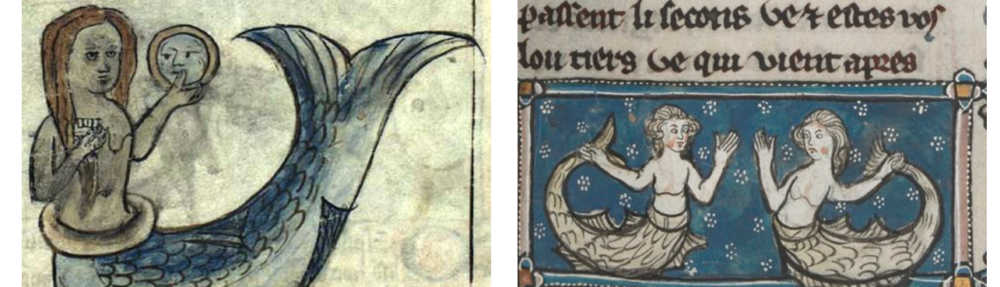
In this week’s reading of The Romance of The Faery Melusine, I found myself surprised by the empathy and warmth the story showed towards the female belonging to the natural world. In the stories of sirens/mermaids we’ve examined that were told through a Christian lens, not only the creatures, but women as a species, have been scorned and made to be seen as inherently wicked or “the world’s most imperfect creature(s)…” (Merpeople, a Human History, Scribner). The female visage was exposed and warped by the church into a symbol for debauchery and sin, and the stories they peddled of feminine monsters were anything but kind.
However, Melusine’s story is the first exception we’ve come across in this course.
Melusine is a holy woman, asserting multiple times in the text that she “is as faithful a Christian as you are” (25), that she “will conduct [herself] honestly and in a Christian manner.” (26), and even claims that she, “next to God,” (25), can help Raymondin best out of his precarious situation.
In this way, Melusine goes from a wicked woman to be wary of, to a lady who acts under the watchful gaze of God, deserving of empathy and love. The story makes emphasis of this piety to fashion a bridge between mythical scaly women and Christianity; once made to be the antithesis of one another, now taken into acceptance—conditionally.
Melusine’s heed of God’s will is what makes her acceptable, otherwise, she would be just another siren.
But this begs the question: Why did the author seek to design a derivative of a mermaid that is now deserving of reverence and sympathy?
Great point about the conditionality and transactional nature of this story… and its morals. Let’s start here today! I hope you’ll lead us!