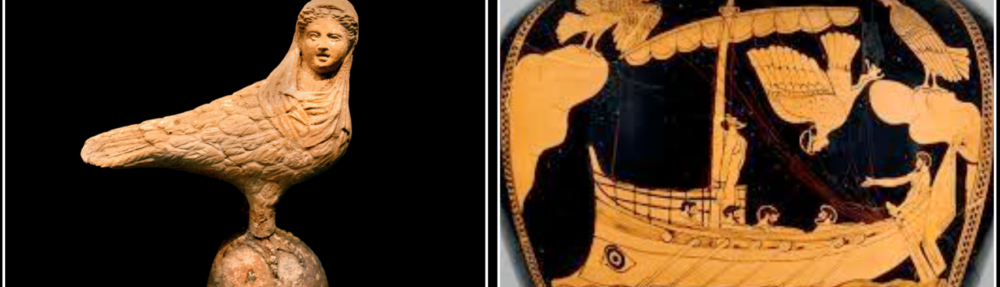
Reading chapter one of Merpeople by Vaughn Scribner was eye opening. I would’ve never thought how much mermaids were associated with religion during the Medieval period. I can’t seem to understand how “denigrating the feminine” (Scribner 29) brought more people to Christianity and why it worked. Chapter one continues by explaining the first depiction of mermen around 5000 BCE. Acadians worshipped a mermen named Ea, who was adopted by Babylonians as a god of light, wisdom and civilization by the name Oannes. How and why did Oannes become a deity of wisdom? As mentioned in page thirty, Oannes “gave men an insight into letters and sciences, and every kind of art…” (Scribner 30) In opposition to the well intended wise mermen, mermaids were seen as creatures that emerged from ugly forms “seeking to bring human men to agonizing deaths”. (Scribner 31) It’s no secret that with the help of these ancient myths of mermen being good hearted leaders and mermaids/sirens being wicked beings looking for men’s demise helped the Christian church to belittle the feminine as “females symbolized a carnality linked to vice”. (Scribner 35).
As I mentioned to my peers in past class discussions I believe that even thought the image of mermaids has changed, unfortunately, the meaning behind it has not. Mermaids are still to this day seen as a symbol of lust and demise or straight up vile monsters (as seen in Hollywood movies). This image of fault and evil is sadly not limited to mermaids, for example, in Christianity, Eve is seen as the one at fault for the expulsion of the Garden of Eden by commiting the act of sin. In the Greek pantheon, if not all, most feminine deities are depicted as extremely jealous and evil towards humans if crossed. On the bright side, in today’s world the mermaid aesthetic has been claimed by women all over the world, giving mermaids a new and empowering meaning which I’m looking forward to learning how the evolution to today’s modern world came to be.