Week 15: We are Mermaids

I really enjoyed reading this poem because it forced me to reconsider the way that society tells us we have to live. The use of the ocean in this poem creates a peaceful image that encourages readers to slow down in their lives and not feel pressured to be as on the go as society tells us we need to be. The stanza that starts with “You can spend your life benthic, or brackish,” created this image of existing underwater and when I think of being underwater, I think of how quiet everything gets. There is no noise from cars or people, just the sounds of the ocean which are calming. In the ocean, there is only nature and the natural cycles of life. There is nothing that would show “success” in the eyes of society. This stanza made me consider how society puts pressure on us to be successful, but who gets to decide what being successful looks like? Maybe for one person success looks like being content with their life and for another person, it looks like having a certain lifestyle.

The third stanza also made me think of society’s rules or expectations. There is a very specific timeline that society tells us that we need to achieve certain milestones by and this stanza challenges that. The lines that say “sacrificing their poise for their careers, / need not be the only mode of living” make the reader think of their life beyond what society encourages. Working is important and necessary, but there is more to a person’s life than their career. These lines emphasize the need to not sacrifice so much of your life for something that does not reward or fulfill you. We are not bound by the limits that society places on us and this poem reminds readers of that. 

Week 15: Home Sweet Home

There’s something so–for lack of a better term–poetic about a poem describing an inhospitable land and the kind of creatures that would call it home, especially with the context of the poet Stephanie Burt’s identity as a trans woman and an advocate for the LGBTQIA+ community.

The setting of the poem describes the underwater sea vents where microbial and aquatic life has adapted to the harsh, sulfuric waters that could kill anything unprepared–or rather, unadapted–for the environment they live in. The phrase, “They love it here” resonates with me because it serves as a sort of reframing for me as I read the poem. This class has taught me so much about narrative, perspective, and the reframing of it. To me, these underwater sea vents are inhospitable. If the pressure from going so deep underwater doesn’t kill me, then the sulfur streams will. But to the thermophiles, the zoarchids, and the eelpouts, this environment doesn’t just give them life–it sustains them. They live in this environment, not just survive. Because they live in this environment, why wouldn’t they love the life that this environment brings? These organisms wouldn’t thrive in a different depth zone than the one they live in now.

But of course, Burt isn’t talking about strange-looking deep sea creatures and hardy microbiomes. Not really. This poem takes on an outsider’s perspective, the perspective of a person who exists on the fringes of society rather than existing in the midst of it, the perspective of someone who is considered freakish to others simply because of their existence, the perspective of someone who lives in an “inhospitable” land, has “adapted” to it, and “thrives” in it, despite this land’s and its people’s marginalization.

It’s a very powerful metaphor for the members of the LGBTQIA+ community who have been ostracized by the cisgender, heterosexual, societal norms for their existences outside of perceived societal binaries but have thrived in their communities and spaces and revel in their differences instead of reviling them.

We are Mermaids

Right away at the beginning of this poem I get a bittersweet feeling. The first stanza says that the salt comes from tears and is melancholy yet it is the producer of life. The poem begins to describe humans as a tragedy by the following line, “The beginning of a tragedy, when what would become us was just trying to get through the day” maybe because the daily activites of humans causes harm to the environment in forms of carbon emission, dumping, over fishing, etc.

The poem then mentions thermophiles feeding off fumaroles and how they love it at the depths. My interpretation of this is that these organisms love it there because it is far away from humans as that environment alone would kill them with the crushing pressure and the deadly sulfur exposure from the fumaroles.

One interesting part in the end is that the poem changes from using “they” to “you”. Though I am a bit confused on what the ending is trying to say. It talks about living in a deep or salty environment exploring different bodies of water “exploring the estuary, the submerged lip and the congeries of overlapping shores on the green-black water, the harbor, the bay”. Then it mention how we can live with doubt. My interpretation of this is we will all go through different adventures in life and experience tough times and times of doubt, but what matters is that we have the strength to live with or through it. if we can do that then we will be okay.

Concluding Thoughts

This was by far the best college classroom experience I’ve had thus far.

I was a little nervous about starting this semester. I had no idea what a course about mermaids in literature would entail. I had never been interested in the subject, and I had no idea how enthralled I would become by it. I believe that if the class had been given by another professor, I would have missed the underlying relevance of these stories. Professor Pressman did an excellent job of making the class an engaging one to be a part of, and this was the first class in which I actually wanted to participate. Getting to know the text with you all has been fantastic, and it’s a shame it’s coming to an end.

One thing I didn’t expect from a Literature and Environment course was to learn so much about myself and my views. I didn’t anticipate to delve as deeply into human history as we did, and my perspective on the world changed as a result of our global studies of human values. This class, like any other history course, taught me to look at topics like sexism, religion, and capitalism from different perspectives. A quote I frequently thought about during these readings came from Detective Rust Cole in season 1 of True Detective, who says, “Certain linguistic anthropologists believe that religion is a language virus that rewrites the pathways in the brain, dulls critical thinking.” I believe this remark, while pessimistic as hell, accurately captures the mental state that many of these readings have put me in. Religion has spread many of our outdated beliefs, and religious populations have had the same societal framework for millennia. I’m rambling a lot, but I just wanted to highlight how deeply this class struck a chord with me, and I’m thankful I got to share this experience with you.

Thank you everyone!

Week 15: We Are Mermaids

“You don’t have to be use-

ful. You are not required 

to come up with something to say

You can spend your life benthic, or brackish,

subsisting and even thriving where a fingertip

comes away saline and still refreshing, 

exploring the estuary, the submerged lip 

and congeries of overlapping shores 

on the green-black water, the harbor, the bay. 

You can live with your doubt, 

and that’s why it’s yours.”

I like this second half of the poem. The idea of not having to be useful, not having to say something when prompted, feels very different than how our Western society operates. There is a lot of pressure to be useful, to contribute and make a meaningful impact on society, but this poem presents the idea that nature, in its purest form, does not feel these pressures. If we are truly part of nature, then why do we feel these pressures to perform, to contribute, to be useful. It is also interesting when she says “you can live with your doubt, and that’s what it’s yours”. I wonder what this doubt is. Is it about how society works? Is it about the existence of mermaids? Is it commenting on the general state of worry our country lives in? But it also makes the doubt personal, through the use of the word ‘your’, and the following line of “that’s why it’s yours”. It’s yours because doubt is a subjective experience, based on belief systems and experiences. 

There is also a strong use of imagery in the second stanza of this quote. It transports the reader to a place where they are the being underwater, giving the reader a glimpse into what it would be like to be an aquatic being, with no worries or pressure to be useful. Instead, they are simply exploring their surroundings, being one with nature. 

Week 15: Stuck at the Bottom

I really enjoyed reading Stephanie Burt’s poem, We Are Mermaids. The poem is ripe with brilliant imagery and metaphor that do a great deal to describe the internal struggle of being a transgender person.

The ocean is presented almost like a landscape in the poem, which hones in on terracentric language to describe those who subscribe to beliefs and lifestyles they are familiar or comfortable with. The full potential of the waters between the surface and the ocean floor are ignored, with the speaker often reassuring the reader that they do not have to leave the water they are comfortable in.

“You can spend your life benthic, or brackish,

subsisting and even thriving where a fingertip

comes away saline and still refreshing,

exploring the estuary, the submerged lip

and congeries of overlapping shores

on the green-black water, the harbor, the bay.” (Burt Pg. 1-2, 24-29)

This is followed by the sentiment that it’s okay to be scared to go into the vast, open ocean; the rest of us will be all right out here.

I think this poem has two target audiences. One is transgender people who are afraid to embrace their true identity – in which case the poem is a kind and welcoming invitation to a better, more belonging life. The other is people who are transphobic and who are choosing to keep out of the issue of transgender rights. Either way, the poem paints the ocean (or this more free way of living, unrestricted by the rules and patterns of the land) as a sanctuary thats in reach and ready for you to embrace it.

Embracing the mermaid as a symbol of transgender people is a beautiful way of showing someone who comes from the constraints of land (society) and has embraced the water and turned it into their home (identity). This was a really powerful piece to end the semester with.

Conclusion

I have learned a variety of lessons and information from the ECL 305 course! When we first began this class I was not expecting to be learning about different mermaid tales each week. While it has been fun learning about these mythical creatures, I have also taken away many skills from this course. I am now much more confident in my close reading skills, essay writing, and thesis writing skills. The prompt of what, why, and how to write a thesis is something that I will always remember while writing it in the future. I have seen an immense improvement in my ability to close read since the beginning of the semester. I used to get confused while reading the passages and I can now analyze and understand the deeper meanings. I have also improved my speaking skills through this class. I am usually not the type to raise my hand in classes but this class brought that out of me. I have been able to express my thoughts and gain feedback which has been very helpful for me in not only this class but also other aspects of my life. Overall I really enjoyed this course and have learned a lot. I have made friends, learned real-life lessons, and learned academic skills that I will carry out through the rest of my time as a student.

Final Thesis Proposal

Hello all,

In “Finding Oannes,” the quest for the missing ship The Oannes, as a sign of intellectual harmony with nature, ultimately serves to highlight the disastrous implications of our faulty relationship with the natural world, as demonstrated by the shipwreck, pointing to a broader reflection on human-nature bonds.

Conclusion

As I reflect on this semester and this class, I feel like I have truly learned and grown a lot. I am a business administration major so a majority of my classes are not structured like this one nor are they as engaging as this. When I signed up for this class, I was just filling a requirement but I am so glad that I chose it, as it has been very eye opening for me. I didn’t know about or hadn’t actually thought about most of the information that we read and discussed about. Diving into the topics of environmental literature, ecological themes in storytelling, and the symbolism of mermaids has been enlightening. It has challenged me to look at the interconnectedness between literature, culture, and the natural world in ways I would have never before. The ideas and different perspectives the people in this class have brought up in discussions have broadened my own perspective and have allowed me to learn in such a different way. This class has deepened my appreciation for literature and I now am able to look at text in a different way. My close reading skills have definitely been improved as I really didn’t have much experience before this. I love that now I am able to notice the deeper meaning when I read and can question the why’s and the so what’s. My writing has also gotten a lot better as a result of this class and I am excited to end the year a stronger writer. This class did challenge me a bit though as it was out of my comfort zone, but I found myself actually wanting to go to class and learn. Overall, I really enjoyed the time I had in this class and I am sad it’s coming to an end.

What I have learned in this class

I do not even know where to start my reflection on what I’ve learned this semester. Even though I am an English major, none of my classes have ever helped me improve my writing skills as much as this one. But that’s not the only thing I’ve learned in the past few weeks.

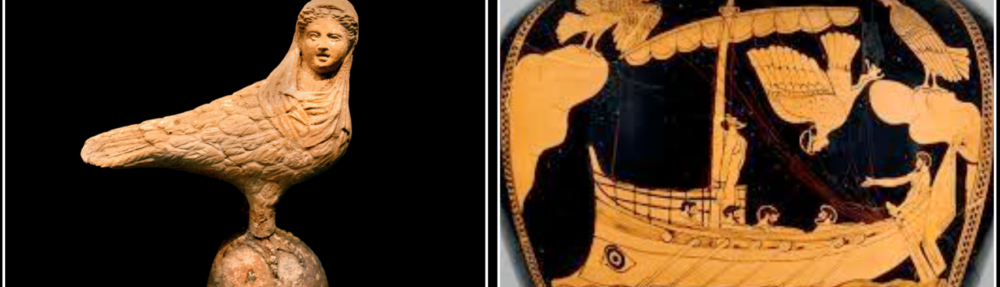
My learning process certainly began in the first two weeks of the semester when we studied sirens and Christianity. Who would have thought that the beautiful image of Ariel I had in mind before taking this class would be changed forever?

Apart from that, I encountered so many different narratives about mermaids that I would never have discovered without this class. Mama Wati, Oannes, and others brought many new perspectives to the surface that I will never forget.

Through this class, I have learned a lot about how we perceive wilderness and the ocean. The narratives we’ve read have taught me how closely literature is connected to, for example, environmental crises—and that they offer lessons on life!

Literature and storytelling have always been important for diving into the archives of different cultures. Why did I grow up so narrow-minded as to forget about other histories? Thanks to this class, I now know that in the future, I want to incorporate narratives into my geography lessons when I become a teacher.

I could continue writing at length about the aspects I’ve learned in our class, but I feel I should stop before I start to get sad that my semester abroad is about to end. Thanks to everyone in that class, I feel like I have broadened my horizon. I got to know so many wonderful people and will surely keep the class atmosphere and even how to teach with such passion in my memories!