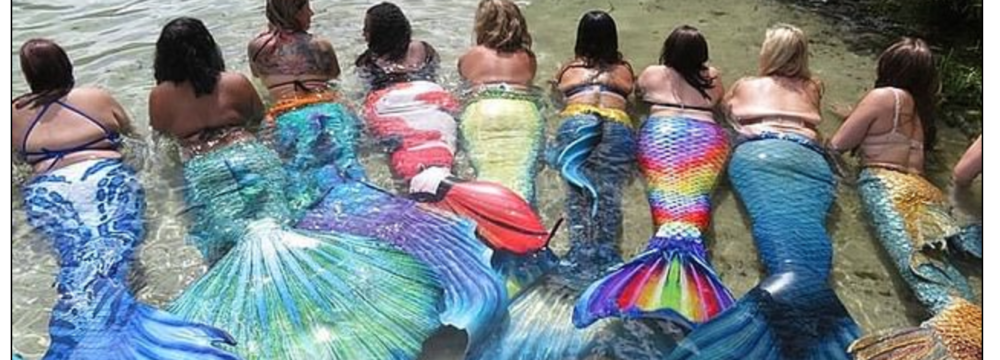
Week 10: Oceanic Thinking

Previously, the ocean was viewed as a place of changeless space, and one without any history. “The Ocean Reader: Theory, Culture, Politics”, by Eric Paul Roorda, and ” Vast Expanses: A History of the Ocean”, by Helen M. Rodzadowski, discuss how the ocean is place of vast history, guaranteeing “that we see reflected back from its surface our fears and desires” (Rodzadowski, 12). Rather than simply land, the ocean is also at the center of human history.

Our past views of the ocean have often been two dimensional, horizontal. Events that occurred at sea were were often narrated as though the ocean was flat, similar to land, having only 2 dimensions instead of three. The two dimensional view changed with the First World War. Submarine warfare introduced the three dimensional and vertical perspective in global geopolitics (Rodzadowski). It is interesting that the ocean became viewed as three dimensional when it became a place useful for warfare, a battlefield. “Because the Ocean can’t be plowed, paved, or shaped in ways the eye is able to discern, it has seemed to be a constant, while the land has changed drastically over the centuries” (Roorda, 1). In many of the early stories we read, the mermaids/creatures come out of the sea, the unknown, to live on land. Rarely are the oceanic worlds explored in these stories.

Rodzadowski explains that “Dry land is the presumed norm. Even coasts and coastal dwellers have been viewed as marginal and exceptional, as have swamps, marshes, cays, reefs and other littoral areas that are neither entirely wet nor dry” (7). As we have previously discussed in class, cultures have been connected and using the ocean throughout history, though some of these histories have often been overlooked or ignored. I find it particularly interesting that “areas that are neither entirely wet nor dry” have been viewed as “marginal and exceptional”, since mermaids are of the same classification, neither wet or dry, neither human or fish, but a hybrid.

Rodzadowski also points out that “Humans make their appearance as part of nature, within the natural history of the planet rather than separate from it, and ocean-oriented activities of early hominids and of Homo sapiens appear to have played an important role in the evolution of our species” (9). Human view and relation to he ocean is ever changing, and varies between cultures. Through learning the history of the ocean, we can learn about ourselves. However, in brief studies of early hominids and homo sapiens, I have learned very little about their relation to the ocean and the role it played in the evolution of our species, this is something I’d like to learn more about.


Week 10 Blog — Stepping Away from Terracentrism

This week I found both readings to be pretty interesting because I feel like I have taken classes on a variety of the oceanic topics pertaining to the currents, winds, the amount of energy each possess, and how together they can impact food chains, coastlines, and much more. The main points of these papers are to shift away from our land-oriented/terracentric perspective of history to be inclusive of (if not centered around) our oceans. I personally like this idea and mindset because when thinking of the past it prompts consideration for the future. As stated in the reading, this perspective shift has already started to reinforce and make way for trends promoting responsibility towards our oceans and impacts on climate. What was both reinforcing of this concept and personally empowering was when the author says, “[t]o capitalize Ocean is to challenge the conventional wisdom that the seas can be taken for granted. They cannot.” (Roorda, page 4).  When we take a step back and consider everything that has been happening with the history of our oceans we can see some incredible correlations relating to climate change. The ocean holds a vast amount of the carbon we emit and is supposed to to an extent, but when it captures too much it starts impacting the shells of many animals and creatures at the bottom of the food chain. This can then throw off what balance there is in the food chain and is all rather visible through studying oceanic patterns/trends. If we can encourage and pass on this perspective change to future generations, we can start proactively making amends to our lifestyles that are not conducive of a sustainable future which is what I believe the author might have been trying to prompt in the readers. One way or the other, I am on board and support this view!

The Ocean Reader

When completing this week’s reading, I really liked the descriptions used in The Ocean Reader Theory. Not only did it outline the separation between Humans and the Ocean, but how the Ocean is seen as deep, dark, and scary to most people. The separation between the ocean and the land, for humans, is solely because the ocean is harder to “conquer” or develop than land is. It explains this aspect in the text when it says “It has always been difficult for humans to think of the ocean as a place. Those who have considered the watery majority of the planet on its own terms have often seen it as a changeless space, one without a history. Because the ocean can’t be plowed , paved, or shaped in ways the eye is able to discern, it has seemed to be a constant, while the land changed drastically over centuries.” (page 1) I liked how this paper outlined the separation between the ocean and the land, because of how humans view it as not having a history. Although the fish and marine population have history in the ocean, and the ocean is just as changeable as the land even if us humans cannot see it. I thought this was a very interesting description of how the ocean and the land are different and the same all at once. Now that I am thinking about it I have never really thought much about the history of the oceans, we are taught about Geology, earthquakes, land change, etc in school but I have never learned much about the history of the oceans. There are more opportunities and options now to learn about the Ocean, but it is just not as important to humans as land history is. Just because we are not living in the Ocean doesn’t mean its protection and history isn’t just as important as the lands. This makes me think about how not only do we claim to have explored the Ocean (only about 5 percent), but also how humans disregarded the importance of other things if it does not affect them. We see this with social justice issues, gender, race, and etc all the time. If you do not fall into a category it isn’t important.” I thought it was interesting how this idea applies to the ocean, land, humans, and more. Moving to other parts of The Ocean Reader, I thought the term “Terracentratism ” was quite interesting, a term that is referring to people’s tendency of considering the world’s activity only taking place on land, excluding the Ocean. This is the whole theme of this paper, which I find to be super interesting to read about. Overall, I focused on this paper out of the readings because of how I feel it strongly applies to today, and how we are terrestrial focused and how the Oceans history is commonly bypassed.

The Ocean Reader: Theory, Culture, Politics

Eric Paul Roorda’s introduction from “The Ocean Reader: Theory, Culture, Politics” provides further explanation of the idea of boundaries and human’s impact on nature. Roorda explains how while each ocean of the world is different in terms of depth, temperature, etc., they are all interconnected. He says how each of the Seven Seas shares the same currents and H2O molecules, technically meaning there is one large ocean. This brought me back to the idea of boundaries and what they really mean. A boundary marks the limit of an area, meaning the boundaries of each sea are just separating a specific spot of this one big ocean. These boundaries do depend on environmental factors of the seas themselves but have been created by human beings. Humans are the ones who have decided where the seas should be separated and why that decision was made. This relates to the idea that everything on our planet is created by mankind. While people did not decide what nature looks like and how it acts, they have decided where the boundaries of nature exist.

Humans have also decided where the boundaries of how we interact with the ocean are. There has been a long fear of the ocean due to how much of it is undiscovered. As explained in the reading, humans have not yet colonized the ocean. Humans might not live in the water yet but have found ways to live with it. The creation of watersports such as surfing, jet skiing, and paddleboarding allows people to break the boundary between land and the ocean. People are able to use the ocean for entertainment and exercise and live in harmony with the ocean that was so often feared in the past. I am interested to see how the future will change these boundaries with the ocean. Through further exploration and discovery, the ocean could hold an even larger role in human life.

The Ocean Reader History

There is so much to the ocean that is undiscovered. We only know life on land, but there is an entire ecosystem that is undiscovered in the ocean. Eric Roorda makes this apparent in his “The Ocean Reader…”, by pointing out that 71% of the world is water, meaning, that there is more life in the water than on earth. The discoveries that we have made on land— on 29% of this world, have been phenomenal. Roorda highlights how little us humans know compared to the world as a whole. The Ocean has been a feared concept because as humans we fear the unknown. We don’t know if the unknown exists to hurt us or benefit us. Reading Roorda’s introduction made me think of the Bermuda Triangle because yes there are many things for us to learn, but when you think of the risks that accompany discovery it makes you question whether or not it is worth it. We don’t know much about the Bermud, but we know airplanes and ships have disappeared. Our curiosity is peaked, but would we risk flying or sailing across the Bermuda Triangle to learn? I’m not agreeing or disagreeing, it’s just something that Roorda had me questioning especially when he noted that the pacific is the largest (64 million miles) and deepest body of ocean. I can’t even fathom the depth of that.

Week 10: Vast Expanses

What I found most interesting in the readings this week was the second article, Vast Expanses: A History of the Oceans. In the article, the author discussed how knowledge has played a role in our changing perspective of the ocean. Through new knowledge, we have strengthened the connection between mankind and the ocean. But, this knowledge is a double edged sword, as this knowledge has also given more opportunity for exploitation of the ocean, control, expansion of power, and increased accessibility. As the author states: “Knowledge about the ocean–created through work and play, through scientific investigation and also through the ambitions people have harbored for using the sea–has played a central role in mediating the human relationship with this vast, tackless, opaque place” (p.4). The ocean has been discovered through both scientific investigation, and ambitions for use, as Rodzadowski states. This is important to note because it reveals that while we have what appears to be a scientific, objective interest in the ocean, we also have a deep urge to capitalize and dominate the ocean. Perhaps we can chalk this up to differences in people–scientists versus entrepreneurs and capitalists–or perhaps we can argue that every person will face a similar struggle at some point in their lifetime. Even the scientific approach has selfish reasons, humans crave to understand everything in this world; of themselves, of the other, of the distant. One can argue that science is objective, and studying the ocean is purely for the attainment of objective knowledge, yet, as this passage argues, this knowledge can have a negative effect. I do not believe that scientific investigation and ambitions for use are different; they tend to overlap far too much. Rodzadowski also describes the ocean as ‘vast, tackless, opaque’. In this way, he almost makes the ocean less human, less personified than many other texts we’ve read. Tactless is to be without manners or rude, and this word creates an ocean that has little regard for the rest of nature, including us humans. His use of the word opaque also makes the ocean mysterious, separate and hidden from us. 

Week 10: The Ocean and Humans as One

This week’s reading I decided to focus on Helen M. Rodzadowski, Vast Expanses: A History of the Oceans (Reaktion Books, 2018), “Introduction: People and Oceans” as it was an interesting reading but also played like a wakeup call in my head. A part that really stood out to me was, “Even events that took place at sea are often narrated as though the ocean is a flat, land-like place without its underlying depths, having two dimensions instead of three.” (Rozwadowski, 7), and in this I thought was important as the ocean is constantly portrayed as something so small and tamable that humans forget the reality of the ocean as something so deep and untamable that has played a role in human history for so long. This part of the story took me to another reading for this week, which is Steve Mentz, Ocean (Bloomsbury, 2020): “Deterriotarializing Preface” as it is giving seven words that change our view and understanding of the ocean. The one word that caused this parallel thinking between both readings was the word “Distortion” as Mentz states, “Water’s tri-dimensionality sometimes orients us on the buoyant top and at other times closer to the irresistible bottom.” (Mentz, xvii). Both citations contain the word “dimension” which sparks something in my head as viewing the ocean as layers, and why do we still view the ocean as something flat? Why can’t we see the ocean as what it truly is? Why can’t we accept that we cannot tame the ocean? It is a place of nature that continues to make up majority of the Earth and provide for living creatures. If we were able to grasp the concept of the ocean as three dimensional, I believe there will be more of a further understanding between the ocean and maybe ocean world along with human history.

Another point of the text that resonated with me was, “People have exploited the ocean for many reasons, starting with food and transportation, but also as the focus of myth and culture.” (Rozwadowski, 7). This put in perspective how much we rely on the ocean as much as we do land, the ocean is able to provide many of the things we seek for and depend on for constant living just as land does. I also thought it was interesting to add in “myth and culture” as many do not acknowledge this but there is a significant number of stories about mythical beings that come from water, but also many cultures who view themselves as one with the ocean. Going back to Mentz’s reading makes me see the different words this small passage is able to go along with most if not all the words he defines, but the one word that specifically stuck with my thinking was “Flow” as he states, “Thinking in terms of cyclical flows rather than linear progress makes historical narratives messier, more confusing, and less familiar. These are good things.” (Mentz, xvi). I thought the way flow was defined fit with my citation of Rozwadowski as it takes enough to acknowledge ocean as a part of our history, but more so if we realize our history isn’t something that is going to be constant, but it is changing as much as the ocean does and there isn’t a correct starting and ending point.

Both of these readings really struck me as makes me reflect on the class and how we are able to go from the history of mermaids, then to the environment, and back to the ocean. There is a constant change between all topics but there somehow always a shown connectedness between all three, almost as if it was a cycle. I think it is important not just in this class, but to the Earth as a whole to acknowledge the points being made in which we understand our history has always involved the ocean and that it is always changing, but to also see the ocean as a place that has been depended on for so long not just by humans but by all living creatures.

Week 10: The Ocean Reader: Theory, Culture, Politics

Eric Paul Roorda’s The Ocean Reader: Theory, Culture, Politics was for sure an interesting read. Instead of categorizing the Ocean into the different oceans we know right now (e.g. the Pacific, the Atlantic, the Mediterranean Sea…), Roorda suggests to rather see the ocean as one place (cf. p 1). Moreover, Roorda critiques that we humans “have often seen it as a changeless space, one without history. Because the Ocean can’t be plowed, paved, or shaped in ways the eye is able to discern, it has seemed to be a constant, while the land has changed drastically over the centuries” (p.1). Looking at this statement made me think about the definition of wilderness once again. When wilderness is something the humans have constructed and thus put a certain value to it for their own enjoyment, Roorda’s statement suggests that humans have not put value to the ocean for a long period of time. As it was not socially constructed to be a place with a long period of history, the ocean was so to say ignored to be ”changeable” (p.1). Nevertheless humans have always tried to exploit the ocean and to conquer it through using it as a road or through exploiting it by fishing because humans have just taken it for granted (cf. p.4). Just like in times of imperialism, humans have claimed the ocean to be something for their own purpose without actually understanding how powerful it is. By capitalizing Ocean, a new value is put onto it: “The deviation from conventional style is intended to claim a formal name for that vast place within the realm of World History, as if it were a country or a continent […] To capitalize Ocean is to challenge the conventional wisdom that the seas can be taken for granted. They cannot”. (Taking that in for a bit longer, I really feel like through this class I really start to question every concept existent on this planet. I never wondered why Ocean was not capitalized even though it makes up the biggest area on the Earth?!).

Side Note:

This reading reminded me of Disney’s Moana. The semigod Maui stole Te Fiti’s heart out of a selfish desire for recognition and power so that Te Fiti was no longer able to create life. The Ocean was later filled with darkness and life outside of the water was destructed. I wonder at this point if there is Polynesian folklore that is teaching humans about the exact same thing above??!

Week 10: Introduction to Oceanic Thinking

For this week’s reading I found it quite satisfying because we were finally able to understand and recognize the importance and history of the ocean, and how it is as important as what’s happening on land. Similar to what a classmate said during lecture last week, political individuals do not see the importance of the ocean because you cannot claim it or “stick a flag in it” and since; “The ocean can’t be plowed, paved, or shaped in ways the eye is able to discern … it is thus difficult for humans to think of the Ocean as a place” compared to land (Roorda, page 1). But individuals are starting to see the issue in this and have come to the enlightenment that history can be seen in the ocean and now Ocean is spelt with a capital O (as seen throughout this article) to recognize that the Ocean is a place and should be treated as such like anything on land. The article looks to change individuals’ ideals of terracentrism, where it “Refers to people’s tendency to consider the world and human activity mainly in the context of the land and events that take place on land” (Roorda, page 1). With trying to change these ideals the goal is for hopefully a “growing consensus that we need to take concerted action to avoid the devastating consequences of having ignored the Ocean for too long;” because we are able to see the oceans history for example by climate change and its effects of it on the coral reef and the longevity of it all (Roorda, page 1). As well I really liked the articles clarification on the Ocean and the term “The Seven Seas” and how that term is a mutable concept and “In reality, there is only on interconnected global Ocean, with currents that exchange water widely among its different regions, with the same molecules of H2O moving from one todays seven Oceans to another, and then another, over the course of ageless and endless cycles of circulation” (Roorda, page 1). Also, with having so little knowledge on the Ocean compared to what we have going on on land and space, the shift of mindset to realizing that the Ocean holds history and carries the same importance if not more from that of on land may be what we as a society need for understanding our earth even more and possibly with the issue of climate change. 

Constant, Conquering, and Claiming ( The Ocean)

The Ocean Reader: Theory, Culture, Politics. ‘Introduction” by Eric Paul Roorda explores the pivotal societal changes around the ocean in language and action. “Because the Ocean can’t be plowed, paved, or shaped in ways the eye is able to discern, it has seemed to be a constant, while the land has changed drastically over the centuries.” This quote is extremely important when understanding the concept of conquering the ocean and how modern scientists, explorers, etc. constantly desire to claim something as their own. The difference between the word “constant” in connection to the ocean and the phrase ” changed drastically” with the ocean is based upon false realities. The ocean is one of the most non-constant regions in the world yet it is marketed as a place that is “constant” and “without history.”

The ocean is difficult to claim as it is constantly moving yet claiming the ocean and discovering it is a huge pursuit of our modern-day explorations. The text states, “The stylebook spelling of “ocean” diminishes it as a geological reference. To capitalize on Ocean is to challenge the conventional wisdom that the sea can be taken for granted. They cannot.” I like this quote because it specifically showcases the wording and how we use the word “Ocean” to represent the world’s relationship to it. Throughout history, society has led through the action of claiming and conquering and has never failed to attempt to establish boundaries and borders. It is in human nature to want to claim something as “mine,” it is one of the first few words we are able to say as children. The issue or should I say upside is that the ocean cannot be conquered, it is almost physically impossible as it is so large and so fluid. I added the image down below due to the theme of conquering through “flags,” we discover something and we place a flag, the moon landing, place a flag… but in the ocean, there is nowhere to place a flag. How do we conquer something that is constantly shifting and moving? Is it possible to truly establish boundaries in the ocean?