Hiba Aljawad
“Oannes” And Human Development
To progress as a human civilization, we must look beyond ourselves for progress and future development. Earth and its non-human attributes existed before humans did, and there is a lot to be learned from non-human creations that would significantly impact human existence. “Oannes” teaches us to view and respect nonhuman creatures to gain knowledge and wisdom that is necessary for human existence, progress, and development.
As a society, it has been instilled in us to be fearing of non-human creatures. Looking at human civilizations, order and progress have been necessary to further the expansion of human development. The role that nature plays in this expansion is vital to the progress of our societies. This is significant because nature is what pushes order and progress in our universe. Furthermore, we define nonhuman creatures as part of the natural ecosystem that keeps the “order” in our universe. By learning from nonhuman creatures instead of fearing them, we can gain further knowledge and wisdom that will broaden our understanding and advance our learning in the world.
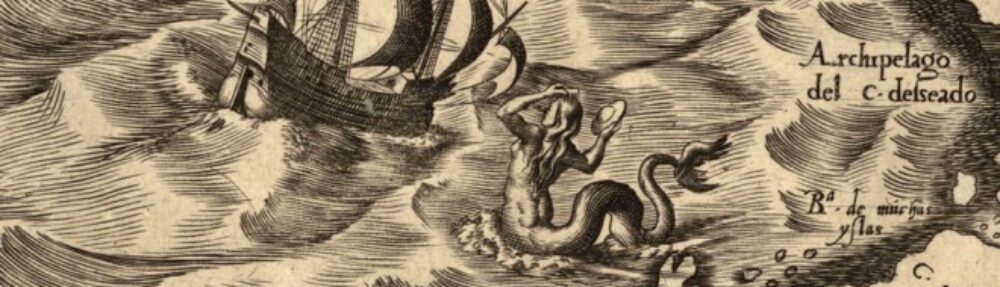
“Oannes” expands on the idea that humans are in need of help from nature to advance and improve the world. In the introduction to “Oannes”, The Book of Mermaids reports that Oannes, as well as other hybrid creatures, are characterized as “holders of knowledge” (pg. 3). This emphasizes the point that nonhuman creatures are a source for a deeper understanding of the world. This concept is significant because by respecting nonhuman creatures as “holders of knowledge”, we gain a deeper understanding of how our world is connected which fosters the acceptance of wisdom that is present in nonhuman creatures. Moreover, “Oannes” makes it apparent that people need guidance by pointing out that in Bayblon there was” a great resort of people… who inhabited Chaldea, and lived without rule and order, like the beasts of the field” (pg. 3). This idea highlights that human nature is to act beastly. To be specific, we commonly fear nonhuman creatures for their animalistic behaviors and sporadic tendencies; however, through natural kingdoms, we learn a lot about the rule and order in our ecosystems which helps foster a better understanding of our environment. Through this understanding, these ecosystems are replicated to a certain extent to create a balance between humans and other nonhuman entities. We can derive wisdom from nonhuman creatures and “Oannes” illustrates this by noting that the appearance of “an animal endowed with reason” surfaced the land (pg. 3). This hybrid creature– Oannes, encompassed the body of a fish with a second head underneath the fish head and legs like that of man (pg. 4). This illustration draws the differences between the hybrid creature and humans which foreshadows the idea that despite the differences, this creature holds an abundance of knowledge. To expand on this, Oannes would “converse with men, but took no food at that season; and he gave them an insight into letters, sciences, and every kind of art” (pg. 4). This example highlights the selflessness of Oannes as a teacher of valuable knowledge that does not ask for anything in return. This is significant because it teaches humans that through empathy, collaboration is fostered which enables growth and societal progress. Furthermore, Oannes taught many things that would help push a society forward such as to “construct houses, to found temples, to compile laws…” and “everything which could tend to soften manners and humanise mankind” (pg. 4). This example suggests that without nature being our teacher and source of knowledge, humans would not have been able to shape human civility. This notion is significant because it molds the idea that through valuing and respecting nonhuman creatures, we progress as a society through compassion and esteemed civility. To highlight the respect that is deserved to Oannes, the writer notes that “when the sun set it was the custom of this Being to plunge into the sea… for he was amphibious” (pg. 4). This emphasizes his nonhuman nature to demonstrate that nature is a human ally, working with us and shares the common goal of progression and advancement in this world. This encourages the suppression of fear in nonhuman creatures and fosters trust to be built to expand the goal of seeking knowledge.
To conclude, the myth of “Oannes” teaches us that human progression and the craving for knowledge and wisdom can be accomplished by learning from nonhuman creatures, which is possible through respect and value. Our fear of anything nonhuman sets us back as a civilization and prevents our growth. In other words, the wisdom gained from nature could outweigh the fears we have.
Works Cited
Bacchilega and Brown, The Penguin Book of Mermaids, Penguin books, 2019
Oannes