Discovery Essay: Close Reading of “Music for a Sushi Restaurant”
Reply
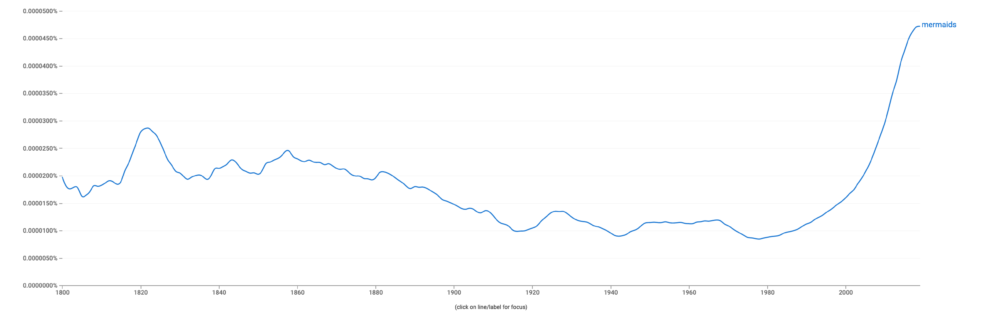
Art and literature harness a transformative power that shapes perceptions, provokes emotions, and ignites revolutions by standing as catalysts for change. By challenging norms such as the land being the center of human discovery, art and literature shift thoughts and cultural stigmas by offering glimpses of human experiences through visual and vicarious depths to explore alternate possibilities of what we deem to be reality. John Gillis, in “The Blue Humanities”, an article that explores the conceptual emergence of the sea in human lives and sciences, argues that art and literature have inspired the birth of oceanic curiosity and culture in post-eighteenth-century Western society. Through literature and art, oceanic creativity has inspired exploration of sea-oriented thought which has created a shift in the cultural dynamics and attitudes towards the ocean.
Although discovery surrounding the ocean is limited, art and literature have constructed a reality of the undersea world that has not been explored. The cultural shift from land to sea has influenced various avenues to explore further oceanic curiosities. John Gillis reveals that Archaeology, Anthropology, Maritime history, and environmental history are beginning to focus on the history of the ocean and how it is indistinguishable from historical phenomena on land. To be specific, bodies of water began merging into sciences when scholars examined how life on land and other factors such as the weather is impacted by the sea (par. 3). Considering the ocean in account of various scientific histories, has led to productive discoveries such as “the damage that invasive species of plants and animals could do on small islands…” (par. 3). The scientific shift in focus from land to sea was pioneered through literature and art, and will continue to open the doors to further discoveries.
Sea stories and art are not new to literature; however, Gillis points out a shift in attitude following the eighteenth century, within artists depicting the sea as a utilitarian source of life to “a space within to imagine modernity” (par. 4). To be more specific, Gillis provides examples from the works of Robinson Crusoe, Moby-Dick, and Jules Verne, who have created modern novels that reached new heights of “metaphysical sophistcation” oriented around the sea (par. 4). Through what is now known as ecoliterature, various scientific angles have been discovered from classic writers such as John Steinbeck.
Prior to the ocean being a popular topic, early modern science did not explore the depths of the ocean. In fact, as Gillis points out, “The Deep– was thought to be an unfathomable abyss… a dark dead zone… never revealing its secrets” (par. 6). Following the second discovery of the sea, the ocean became entangled with history and geography. The ocean was revealed to have a life of its own. Unexpectedly, when the use of the ocean by different nations was minimized, writers and painters gained a vast interest in creatively exploring the endless depths of the sea. This “spiritual and physical recreation” of the sea created a romanticized oceanic aesthetic amongst Western culture (par. 7). For example, Gillis provides Thomas Cole’s four-part painting The Voyage of Life as an example of how art has influenced and shaped cultural thought around the sea. Gillis expands on this by highlighting that the ocean is a metaphor for hope that people like to use. Cole’s painting inspired people to look at life beyond the limitations of the land. Furthermore, Gillis notes how the Industrial Revolution inspired different aquatic activities to take form– how the water is now being used in ways it never was before. This is significant because it demonstrates how water was once feared and is now used as a means of entertainment.
Oceanic attitudes have shifted in Western culture following the eighteenth century, and Gillis points out the fascination and excitement centered around the sea by illustrating how people who have no physical touch or access to the sea embrace this oceanic-hype by dressing their children in sailor suits or incorporating sea-oriented details, such as aquariums or wall talismans, in their homes (par. 10). Moreover, the ocean has inspired a shift of fear from the supernatural to the sea considering its endless depths that have not been explored or discovered. Gillis emphasizes that the endless limits of the sea introduce boundless limits of creation, such as supernatural creatures. These endless boundaries in the sea inspire unlimited creations of literature and art. This allows artists and writers to not only explore endless possibilities when it comes to creativity but also allows them to consider the sea as a malleable creative entity to take any form necessary for thought. This became prevalent during the industrialization when sea was projected and intertwined into the lives of people as a result of events occurring during that period. As Gillis notes “the sea became a mirror that landlubbers used to reflect their own condition”; this concept highlights that attitudes towards the ocean not only shifted, but they became a metaphorical escape for struggles during those times.
Rising interests in the oceans and seas are intertwined within the lives of people who have and have not experienced the endless boundaries of the seas. The vast creative exploration of the ocean has ignited a shift in Western cultural thoughts and discovery. Through the use of art and literature, writers and artists have made it possible to not only impact change, but also lead to discoveries in various scientific avenues. This goes to show the immense impact that literature has on the environment.
Sierra Suelzle
Dr. Pressman
ECL 305
April 14, 2024
In Hans Christian Andersen’s short story, The Little Mermaid, the audience follows a young mermaid through her journey of adolescence. Andersen wrote this story in 1836 Europe when Christianity was the dominant religion and people were just beginning to question the scientific validity of said religion. Christianity’s main teaching is that in order to achieve eternal life and reach heaven, a person must believe in God and follow His commandments. Hans Christian Andersen’s The Little Mermaid (1836) utilizes religious symbolism in its ending to subvert the religious belief of the time that to achieve eternal life one needed to believe in God. Instead, Andersen sought to convince children readers that the key to eternal life is selflessness.
The Little Mermaid contains a lot of Christian imagery and ideology throughout the story because Andersen understood that many parents at the time would have some association with Christianity and would therefore want their children to hear stories that perpetuate similar teachings. In this story, mermaids are a symbol of hell where souls are not present. Mermaids are described many times as not having an immortal soul which signifies that they cannot live in an afterlife. For instance, the grandma of the little mermaid explicitly tells the little mermaid that their “souls are not immortal. [They] shall never enter upon a new life” (Andersen, p. 116). This means that a mermaid’s soul is returned to the earth and is not meant for anything further than that. In Christianity, a person who has been “saved” by Christ is seen as having an immortal soul that will continue to exist in another plane after death. However, people who are not saved by Christ are not allowed to experience eternal life. In this way, mermaids represent those who were considered unholy and destined for hell at the time. Their souls will never be able to experience the “greatness” of the “unknown and favoured regions” (Andersen,p. 116) humans enter after death. Andersen includes these explanations of creatures without immortal souls as a way to introduce children readers to the idea of eternal life and to entice parent readers to continue reading this story. If parents did not believe that this story contained Christian teachings, Andersen ran the risk of parents deeming it immoral and a bad influence on their children. By including these teachings, Andersen increases his audience and cements himself as a credible children’s author.
Following the establishment of the Christian ideology in the main portion of the story, Andersen then begins to challenge all of those ideas. The story ends with the mermaid protagonist being presented with a choice regarding her future. The mermaid’s sisters plead with her to “plunge [a knife] into the prince’s heart” (Andersen, p.127) and inform her that “He or [the mermaid] must die before sunrise” (Andersen, p. 127). The little mermaid then goes on to jump overboard, committing suicide. The lack of souls in mermaids should have made this decision easy for the little mermaid because she should have been able to murder a man who never loved her and return to her family to live happily for the remainder of her life. However, she is unable to cause that unhappiness to the prince’s wife and instead chooses to sacrifice herself. Since mermaids are a representation of hell and nonbelievers in Christianity, they lack immortal souls which should allow them to do what they want in “mortal” life as there will be no consequences for their actions. They should not worry about the feelings of others or how their actions could impact other people. Andersen wields this conflict to demonstrate to readers that a person’s religious background does not indicate whether or not they will be able to obtain eternal life. He showcases that assuming people who are nonbelievers of Christianity are destined for hell is wrong and naive because good/selfless actions are not limited to those who believe. This pushes children to reframe their opinions of people who differ religiously from them because it creates an understanding that people cannot be confined to just one box.
Furthermore, Andersen continues to challenge the religious ideals of the time by introducing a new creature to the audience: aerial spirits. The aerial spirits are a clear representation of heaven and godliness. The imagery of the aerial spirits resembles angels who are messengers of God in Christianity. The aerial spirits exist to do good deeds for humans and are given the chance to live in the human afterlife. It is explained to the little mermaid that “the daughters of the air, although not possessing an immortal soul by nature, can obtain one by their good deeds” (Andersen, p. 128). This opportunity to get an immortal soul is the closest that un-human entities can get to being human. The little mermaid did not believe in a higher power that would save her when she sacrificed herself, she planned on turning into seafoam and ending her life. Andersen’s decision to make her an aerial spirit highlights how all people have an opportunity to obtain an immortal soul that would allow them to have eternal life, not just people who are believers of God. The idea of eternal life being available to all is emphasized when Andersen explains what aerial spirits exist to do. The existence of an aerial spirit is a completely unselfish one, as the spirits solely exist to ease the pain and suffering of humans. The spirits “fly to warm countries, and fan the burning atmosphere” (Andersen p. 128) to get rid of diseases that kill humans and also “diffuse the perfume of flowers through the air to heal and to refresh” (Andersen, p. 128). Everything that the spirits do is to serve someone other than themselves which teaches them how to be selfless and how to better the world. Andersen uses these actions to educate children readers on how they can become selfless and thus achieve eternal life.
Along with all that Andersen does before to enlighten his readers, he leaves the children reading the story with one last lesson. Andersen includes a warning by the aerial spirits to the little mermaid at the very end of the story as a way to remind children to be mindful of their actions. The aerial spirit reveals to the little mermaid that when the spirits “have met with a good child, who is the joy of his parents, and deserving of their love” (Andersen, p. 128) the time of their trial before they reach eternal life is shortened but if they meet “an ill-behaved or naughty child” (Andersen, p. 128) their trial is extended. While these descriptions of children being naughty or good are vague, with all that Andersen had previously hinted at, readers can understand that naughty means being selfish and uncaring of others’ feelings. One can then interpret that being a good child who is deserving of their parent’s love means being a selfless person who is willing to do tasks to assist other people. Andersen employs this last warning to encourage children to be selfless people because that will help them achieve eternal life. The concept of harming nice mythical creatures is a frightful one to most children, so when this is used as a warning children are more inclined to follow the advice of the author. This also appeals to the parents choosing to read this story because it promotes behavior that most parents of the time hope for: obedience.
The religious symbolism in this short story is crucial to effectively convincing children that eternal life does not depend on religious beliefs but rather on actions. The little mermaid only can obtain an immortal soul and reach eternal life after refusing to commit a harmful action and being altruistic. Andersen imparts to the audience how important this decision is, as the mermaid sacrifices her life to save someone else. Children who read this story are forced to think crucially about the religious values being taught to them and instead understand the importance of selfless actions.
Work Cited
Andersen, Hans Christian. “The Little Mermaid.” The Penguin Book of Mermaids, edited by Christina Bacchilega and Marie Alohalani Brown, Penguin Books, 2019, p. 107-130.
Paige Harrisberger
Professor Jessica Pressman
ECL 305: Literature & Environment
14 April 2024
The Sea is History
In Derek Walcott’s poem The Sea is History, the sea serves as more than just a physical entity; it embodies an archive of collective memory, a symbol of both hope and tragedy, and a metaphor for the complex history and identity of the Caribbean people. Rather than focusing solely on written records or official accounts, Walcott suggests that the sea itself holds valuable insights into the past, offering alternative perspectives and voices that may have been marginalized or silenced.
Derek Walcott’s poem The Sea is History delves into the belief that the sea embodies more than just physicality; it represents a reservoir of collective memory and a repository of untold histories. The title of the poem itself suggests that the sea is an archive of history, challenging traditional methods of historical documentation and interpretation. The lines “there was the sound/like a rumour without any echo” from the poem evoke a sense of mystery and ambiguity, inviting his readers to contemplate the complicated nature of historical truth and the complex relationship between memory and silence. The metaphor of a rumour, with its implications of hearsay and uncertainty, reflects the idea that history is often shaped by subjective interpretations and selective recollections. Like a rumour that spreads through word of mouth, historical narratives can be distorted or manipulated over time, leading to a snowball effect of conflicting accounts and obscured truths. Rumours are often unsubstantiated, subject to distortion, and easily forgotten, mirroring the malleability and fragility that is mirrored by historical narratives. This metaphor holds a significance in terms of Walcott’s cultural context, particularly within the Carribbean context, where oral tradition plays a crucial role in shaping collective memory and identity. In Caribbean history, colonial powers exerted significant control over the narratives that shaped perceptions of the region and its people. European colonizers, such as the Spanish, Portuguese, British, French, and Dutch, sought to portray their colonization efforts as aimed at civilizing and uplifting indigenous populations. They imposed their cultural, economic, and political dominance over the Caribbean islands, shaping the collective understanding of the region’s history in accordance with their own interests. Colonial powers often depicted their colonization efforts as noble endeavors. However, beneath the false appearance lay a blunt reality of exploitation, oppression, and domination. Colonial powers systematically stripped the natural resources of the Caribbean, exploiting indigenous labor and forcibly displacing entire communities to work on plantations and in mines. The transatlantic slave trade further intensified the exploitation and dehumanization of African peoples, who were forcibly transported to the Caribbean to work under brutal conditions on sugar, cotton, and tobacco plantations. Moreover, colonial powers implemented systems of racial hierarchy and discrimination that sustained social, economic, and political inequalities long after the end of formal colonization. Indigenous peoples and Africans were marginalized, disenfranchised, and subjected to violence and discrimination, while European settlers and their descendants enjoyed privilege, wealth, and power.
The second part of the line I mentioned earlier, “without any echo,” further reinforces the idea of silence and erasure, suggesting that certain voices and perspectives may be lost or disregarded in the retelling of history. In the context of the poem, this silence may represent the voices of marginalized or oppressed communities whose experiences have been overlooked or silenced by dominant historical narratives. Moreover, the comparison to an echoless rumour implies a sense of hopelessness in attempting to uncover the full extent of historical truth. Just as an echo fades into silence, leaving behind only traces of its existence, so do the voices and memories of the past gradually disappear over time, leaving behind fragmented and incomplete accounts of history. The final line of the poem reads, “of History, really beginning.” The capitalization of the “H” in History holds significance, signaling to the gravity and universality of the concept being referred to. Capitalizing “History” raises it to a proper noun, giving it a sense of importance and authority. It suggests that History is not simply just a series of events but a profound and meaningful entity that shapes the trajectory of human civilization. Walcott may also be implying that History is an ongoing and evolving process, with each moment of time contributing to the overall narrative. In this sense, History is not static but dynamic, constantly being written and unwritten by different generations.
Derek Walcott’s poem The Sea is History offers a deep reflection on the multifaceted role of the sea in shaping Caribbean history and identity. The poem is an invitation to reconsider conventional narratives of history and to explore the sea as a storage of collective memory and untold stories. Challenging the traditional modes of historical studies that often prioritize written records and official accounts is important to foster a more inclusive and comprehensive understanding of history. By doing this, we can open up space for alternative sources of knowledge and interpretation. Oral histories, folklore, art, and cultural practices can provide valuable insights into the lived experiences of marginalized communities and offer nuanced perspectives on historical events. Ultimately, Derek Walcott’s poem The Sea is History reminds us of the importance of listening to the stories that lie beneath the surface, of recognizing the value of alternative perspectives, and of honoring the resilience of those whose voices have been marginalized or silenced. In doing so, it offers a powerful testament to the enduring significance of the sea as a symbol of hope, tragedy, and collective memory in the Caribbean and beyond.
Works Cited
Walcott, Derek. (2007). The Sea is History.
Myles Wright
Professor Pressman
ECL 305
14 April 2024
The Romance of the Faery Melusine: Not a Romance
The Romance of the Faery Melusine, written by Andre Lebey, retells the medieval France legend of the Faery Melusine. The legend follows Raymondin who accidentally kills his uncle while hunting. Fleeing deep into the forest, Raymondin encounters Melusine, who promises to help him evade his fate by marrying him, making him the greatest and wealthiest lord of his time. However, Raymondin must swear to Melusine that on “each Saturday, from sundown to dawn on the following day, never must (he) try to see (Melusine) in any way whatever” (Lebey, 27). Eventually, Raymondin is driven to break his sacred promise to Melusine, causing her to leave him and never return. The legend is originally dated back to 1393, and many variations of the story have been told. Across many countries and cultures we see recurring stories of supernatural or shapeshifting women marrying human men. The medieval French legend of Melusine, being one of the most widely known. Why is this narrative so common? What ideas might these stories across lands, seas, and cultures share? Through diction and imagery, The Romance of the Faery Melusine, reveals the ways in which female sexuality was abused and persecuted in Medieval Europe.
Chapter 14, “Betrayal”, best shows how even in marriages built on trust, women were abused and taken advantage of sexually during this time. The descriptions in the chapters serves as an allegory for marital rape. In this chapter, Raymondin, ridden with both guilt and an insatiable desire to know what Melusine does on Saturdays, forces his way into her chambers. As Raymondin first makes his way towards Melusine “The little door violently broke down…He climbed quickly in his eagerness to strike” (Lebey, 121). This is not a scene of discovery, it is a scene of violence, first setting the tone as he breaks down the door, as Raymondin violates his wife’s privacy and trust. The use of the word “strike” further implicates the use of violence in his planned encounter with Melusine. Upon finding the final obstacle to Melusines chambers, it is described as an “almost imperceptible line between two of the thick polished planks of which the door was made. Even though they were mortised into one another to make one seen like all the rest, there was a tiny space visible at the point of joining” (Lebey, 122). Oxford English Dictionary defines mortise as “a cavity, hole, or recess into which the end of some other part of a framework or structure is fitted so as to form a joint”. These planks, which Raymondin must break through, serve as a symbol for the female genitalia. Later, his knife as a symbol for the male counterpart. Forcing his way into the planks, “He pulled out his flat knife… held his breath as he started to slide in the blade and push it slowly, leaning on it with all his strength and weight. The blade entered a little, so slowly that he almost began to despair” (Lebey, 122). The next few pages of the novel center around Raymondin breaking through the planks, though not innately sexual, the word choice and detailed descriptions contribute to the sexual undertones. “As he inserted a little more of the thin blade to enlarge the space he had with such difficulty obtained, it snapped with a dry, clear, crystal sound” (Lebey, 123). The word choice of “inserted” and “enlarge” emphasizes the sexual tone. The planks finally begin to give way with a sharp, violent sound. Raymondin’s efforts, and the sexual connotations continue, “his efforts against the wood… feeling the sweat on his brow and down the length of his body” (Lebey, 123). Raymondin feels that he has “struggled well”, again adding to the sense that this is a struggle, he is unwelcome, and violating privacy (Lebey, 123). The descriptions further: “The blade entered better, and engaged the length of three angles already. He had raised it, and putting it back he leaned against it with all his might. Then, wedged against it to get more leverage, he felt the wall suddenly give, heavily and slowly behind him” (Lebey, 123). Finally, Raymondin breaks through, the wall giving with heavy, slow reluctance.
As Raymondin creeps towards Melusine, “in the moonlight that made his coat of mail glisten, he had the appearance of a strange serpent with iron scales” (Lebey, 124). This hints that he himself is in the wrong, rather than Melusine who, even in concealing her identity, provided for Raymondin. “He slid”, as a serpent, as he violated Melusine’s promise. As he recognizes the wrong he has committed against Melusine, he reflects on the life that has been given to him, “it shone sweetly, polished like a mysterious otherworld fruit. But then the fruit disappeared, as if it had ever been only a dream” (Lebey, 125). The symbol of the fruit stands out. The religious connotation is relevant during this time in medieval France, and the characters of the novel hold Christians beliefs. In this case Raymonid beholds the fruit, but instead of Eve or Melusine, it was him who takes a bite of the apple. His promise to her broken, her trust violated, forcing her to leave him forever. When Raymondin first views Melusine in her natural form, she is described as holding “a mirror, its crystal reflecting the moonlight on her face, which despite the life that animated it as she slowly smiled to herself, gave it an almost lifeless quality” (Lebey, 125). Female sexuality was persecuted during this time, seen as unholy or unnatural, and mermaids were often a symbol of sexual temptation. This scene can be viewed as a female pleasure moment, Melusine enjoying or taking pride in herself. Raymondin views Melusine’s private moment of pleasure as lifeless, reflecting the common beliefs of this time.
Across cultures, women have endured brutalities, even in marriages built upon trust. This could be one possible explanation for the recurring supernatural bride across a variety of cultures. These stories are so common because they reflect a shared sense of violation for women throughout various histories. This particular novel, The Romance of the Faery Melusine, reveals the ways in which female sexuality was abused and persecuted in Medieval Europe.
Lixia Peña
Professor Jessica Pressman
ECL 305
14 April 2024
Close Reading Essay
The path of mermaid folklore across time takes us into the story of The Little Mermaid and Melusine in the 19th century. Here we see the mermaid form the desire to acquire a human soul through marriage with a human man. It is worth analyzing how the introduction of a human soul within mermaid folklore reflects the hierarchy by which the industrialized western world of the 19th century was structured. This is a hierarchy in which humans, specifically Christian, are at the top and dominate over nature. Through the analysis of this theme we can gain a better understanding of the Western understanding of what makes someone human and how it has shaped our current relationship with nature.
The text we are studying for our purposes is found on page 118. This is the scene in which the grandmother of our unnamed protagonist explains to her the difference between the life of humans and mermaids. The texts reads as follows, “-the term of their life is even shorter than ours. We can live to be three hundred years old; but when we cease to be here, we shall only be changed into foam and are not even buried below amongst those we love. Our souls are not immortal. We shall never enter upon a new life… human beings, on the contrary, have a soul that lives eternally – and that rises up through the clear pure air to the bright stars above…So do they rise to unknown and favoured regions, that we shall never be privileged to see.” In considering that the text reflects a western hierarchy of value we have to pay attention to some key details in this conversation. The story so far has established that the underwater kingdom parallels the same structures to be found on land. The environment is very similar and a monarchy also exists under water. The only difference lies then on the possession of a human soul. Where the mermaids only become an organic part of the natural world, humans have a soul with which they can ascend to heaven. We have previously discussed in class how western thought, shaped largely by Christianity, places emphasis on up v. down. Up being considered more favorable as it is in closer proximity to God whereas down is considered to be a realm much closer to hell. Humans live their mortal lives in a place already closer in proximity to heaven but their immortal soul is granted the “privilege” of ascending further. Mermaids by living in a realm below humans are not even given permanence through remembrance, they are not memorialized with a burial. Humans, when they ascend, are also privy to the privilege of knowledge. Here the myth of the mermaid possessing unknown knowledge is transposed. Humans are now the possessors of privileged knowledge and it is our mermaid who is drawn onto land hoping to one day acquire this same knowledge. The reader, so far, can surmise that being human is a far more privileged position than to be a being that would eventually just form part of nature. If we understand the mermaid to be a representation of nature then we have to surmise that under western ideas the natural world is not as important as the human world. So far, we can also presume that all humans have this advantage but the text goes on to provide further specificity.
The little mermaid’s grandmother goes on to explain to her under what conditions one could acquire a human soul. “Unless a human being loved you so dearly that you were more to him that either father of mother; if all his thoughts and his love were centred in you, and he allowed the priest to lay his right hand in yours…then would his soul glide into your body…he would give you a soul without forfeiting his own. But this will never happen!” We are no strangers to the presence of the contract of marriage in mermaid folklore. This text emphasizes that marriage, a Christian marriage specifically, is necessary for the mermaid to have a hope of sharing a soul with her partner. By making the requisite of a Christian marriage we can assume that not all humans have the privilege to having an immortal life in heave. Given that this is a story written for a Christian audience we can safely infer that it is the Christian God that the text is referring to. To understand how the story reflects the values of a western hierarchal society we must understand what is happening historically at this time. Colonization is in full force and indigenous peoples of the lands being exploited are being driven out of their homes; African natives are being kidnapped and trafficked into slavery and both groups of oppressed peoples are being forced into abandoning their religions and being converted to Christianity in the name of “righteousness”. In America western expansion is driving indigenous people’s out of their ancestral homes under the banner of “Manifest Destiny” and western settlers view the wilderness as land ready to be worked into production on Tobacco and cotton. Considering this history and the idea proposed by Andersen’s story, we have to wonder if the text implies that non-Christian peoples are then subhuman. This is certainly the understanding that colonial literature would present of enslaved and indigenous people as literature of the time will often use the word “savages” as a descriptor. It is worth mentioning that the origins of the word savage come from the French word Sauvage which means wild and from the Latin word Sivaticus which translates to “of the woods”. We can see here that under this Christian way of understanding, to live in a close relation to the natural world is to be less civilized and thereby less human. It is under this belief that the western world both justified its exploitation of non-christian peoples and forced them into converting to Christianity, so as to have a hope for their soul’s salvation and ascension into heaven. We could then understand the little mermaid as being the story of non-christian desiring a place at the top of the hierarchy, moving upwards into becoming a human i.e. Christian. The reader of the time in which this story is published is then taught that not only are they privileged above others but that these indigenous people are grateful to westerners for providing their souls salvation through conversion.
Through the focused exploration of this passage in Andersen’s The Little Mermaid, we can conclude that the story functions as a conversion story and further reinforces the idea that the natural world is in subservience to humans. It is something that ought to be used for the benefit of our own production and consumption. Even now as we work our way into de-colonizing our own thoughts and ideas it is clear that in order to do so our relationship with the environment is also something that needs to be re-examined. We need to understand our relationship the environment not as something to be dominated but as something to have a symbiotic relationship with. After all, when we put religion aside, the human body does eventually come to form a part of the natural world just as the mermaid becomes sea foam.
Kayla Poland
ECL 305
Pressman
24 March 2024
Dual Reality
In Sirenomelia by Emilija Skarnulyte at 4:32, framing the mermaid in a small canal then immediately the vast ocean creates a drastic divergence between the two moments. These binary spaces contrast each other to reiterate the dual reality of the environment and the life it holds while being mistreated by humans. This alludes to creating a separation between human and nonhuman, in other words natural viruses not. This malalignment of visuals and sounds tells us we have created a separation power amongst these worlds.
While understanding the first frame, it is important to recognize that she is moving through a canal that is manmade, and contains metal barriers. She is surrounded by the remains of what once were a NATO base, which is now fully decommissioned. One could say the remains being left here is presumptuous, as they could have been removed or properly disposed of. This scene itself can identify where the line is drawn between human and nonhuman. She continues to wear goggles throughout, in this polluted space that is becoming more unnatural with time because of human acts. It is important to note how the sounds accompany this scene and how they are somewhat eerie. The power of humans is seeming to overtake the natural form of the environment, making us separate from it. Humans left the remains, polluting the entire ecosystem that resides there while trying to maintain its biodiversity.
In the following clip she is welcomed into the open ocean, while the sounds take a drastic shift to become calm and relaxing. As she becomes free from the small, enclosed area she demonstrates how marine life ought to be free and uncaged. This again highlights the separation between human and nonhuman whilst emphasizing the power that humans have granted themselves over the natural world. The sound of the open ocean is peaceful and inviting, while the enclosed space with manmade parts blares. This allows us to feel different emotions during each moment, and have the noise be the words that were not said aloud.
It is important to note that the mermaid herself was not in a realistic costume, but clearly a human dressed up while she was swimming through the water. This provides another moment where it is made clear that humans try to remain in control in a place that is meant to be natural. Also noting that she wears a mask for the sake of protecting herself from the toxicity of the water from the remains.
Having these binary scenes parallel to each other brings forth alternating perspectives of the environment. The one that is altered to fit human needs, and on the other hand the one that is in its natural form. These next to each other allows us to compare the two worlds and see how we have separated them from each other. Emphasizing the ability that humans have to create and destroy as we wish and build while breaking down the natural world.
There is this strange power dynamic that humans have taken on, but there is an aspect where Sirenomelia reminded us how big the ocean is and how much life can be held within. Almost in a way warning us to proceed with caution, because the environment can regrow itself around our destruction. The constant comparison, especially in literary work we have studied, goes to show how humans comprehend this power dynamic. When really there is clearly a lack of knowledge, and maybe even misunderstanding when it comes to other creatures and the depth of the ocean. This film allows us to take a step back and recognize how we treat the environment and understand its effects, but also that human and nonhuman do not have to be parallel, and can work together.
Lina Rau
ECL 305
Prof. Pressman
14. April 2024
Resilience in The Water Will Carry Us Home
The Middle Passage is part of one of the most brutal chapters in human history and is marked by the transatlantic slave trade, which resulted in the forced migration of millions of Africans to the Americas. During the video, the viewers are faced with the African diaspora through the lens of African rituals, sculptures and drawings in clash with the slave ship “Brooks”. In the video it is depicted, that the Water Spirit Omambala has brought the people there and that the Water Spirit will also bring them home (cf. 1:23 min). The depiction of the Middle Passage that is facilitated by the above-mentioned Water Spirit Omambala, demonstrates the strength the Africans had, to be able to endure and go through it. By highlighting that, the video serves as a testament of the resilience of the human spirit of African people, and it raises questions on which particular histories are being told in today’s time.
During the 16th and 19th century, almost 13 million African people were kidnapped from their homelands and forced onto American and European slave ships. The Atlantic Ocean is famously known as the Middle Passage and is known for greed, exploitation and dehumanization of the African people who often faced unspeakable horrors on their journey across the ocean. It is believed that on the journey, nearly two million people lost their lives, as many starved, got sick or endured violence in the form of throwing humans over sea. The number of unreported cases is nevertheless, presumedly, higher. Those people who have survived the slave ships were denied basic human rights and had to live under white supremacy (cf. Equal Justice Initiative, 2022). The Middle Passage moreover makes the ocean look like something that can easily be crossed over like a road and lets oneself forget that it holds history and voices.
The film opens with a powerful quotation of the Water Spirit Omambala (cf. 1:23 min). Omambala, who has brought the African people here and who can also bring them back home, can be seen as the liminal figure of both suffering and also salvation. In general, Omambala brings a different perspective on culture and the ocean to the surface. Different groups of people have different perspectives on the ocean: it needs to be stressed that there is no singular relationship to the ocean, as it is based on history, culture and on storytelling. Needless to say, those perspectives change the way oneself treats the ocean. In this particular case, the Water Spirit’s dual ability to bring both salvation and suffering, lets the Middle Passage symbolically look like as if it is a journey of trauma and transcendence. Even though African people were faced with the unbearable on the slave ships, a slight spirit of resilience shines through: the African people were still showing endurance and strength during hard times.
Additionally, Tesfaye introduces her video with a portrayal of realism through a human character that engages in a ritual ceremony with colorful and bright painted art and painted skin (in particular her hands) (cf. 0:00 – 1:17 min). In the latter, an artistic world is shown through a paper world with stop motion animation that is painted with watercolors. The viewer sees a man that opens the lock of a door with a key he has in his hands (cf. 1:26 – 2:15 min). The importance of that aspect is, that it lets the viewers dive into a particular history that is often “locked” away. It is a history that is uncomfortable to be told and is thus hidden away by Westerners who do not want to face reality. But by unlocking that door into the history, a sense of faith and pride towards continuing the traditions is underscored. It is resilience that pushes African people to engage with the history that is formerly hidden: it is makes the people be even stronger.
Another recurring figure is the eye that is painted onto the hands of the human character and the artistic character of the man. Eyes supposedly see everything and are believed to know everything. Therefore, the eye also knows everything about that particular history that is being told. But if the eyes are believed to know everything, it can be assumed that there are even more histories that are not told yet and still need to be recounted, existing deep in the ocean. That point is directly linked to the second part of the debatable claim presented in the beginning of the essay. If in that video only a singular history is documented, one can pick-and-choose which history is being told and which in particular is not. This pick-and-choose mentality has, one can assume, a severe impact on what archives are being built. It is thus an active decision on what to erase in the history and what to put out in order to built an archive. The archive that existed prior to this video has therefore erased the history and stories of the people that are presented now, leading to the assumption that a lot of other archives exist and are possibly lost in the ocean.
Another interesting aspect is the scene where enslaved people are pushed into the water (cf. 3:37f.). The Water Spirit turns the pregnant women that are thrown overboard into mermaids that are nurtured by fish (cf. 3:37- 5:06). By turning those who have tragically lost their lives into mermaids, the Water Spirit is giving them immortal qualities. It makes the impression that the voices and stories of those people are preserved and are not forgotten. It is those people Tesfaye endows extra values. Those people might be forgotten on land but are never in the sea; they are now resilient characters whose legacy continues on and whose voices can be heard through echoes through the waves.
At the end of the video, the perspective is shifted back to the real world and the character starts listening to something through shell headphones that are connected to the sand (cf. 5:07- 5:54). The shift serves as a bridge between the past and present and somehow connects back to live and to the spirits. By listening through shell headphones, a special tribute is given to the voices and stories of the past that have preserved now and will preserve in the future, which ultimately highlights strength and resilience once again.
To put that into a nutshell, Tesfaye has masterfully created a thought-provoking piece of art. The switch between art and reality invites viewers to unlock hidden truths and tribute those who have tragically lost their lives. Besides that, the Water Spirit Omambala stresses the resilience of African people up until today. By embracing traditions and performing rituals, the collective memory is honored and stories are told which are tried to be hidden up until today.
Works Cited:
Equal Justice Initiative. “The Transatlantic Slave Trade”, 2022.
Tesfaye, Gabrielle. “The Water Will Carry Us Home.” Vimeo, 10 May 2018, vimeo.com/269045173.
Ana Dilan
ECL 305
Professor Pressman
13 April 2024
A Tale of Tails: A Close Reading of Melusine and “Monstrosity”
Andre Lebey’s The Romance of the Faery Melusine reveals the role of a monster within literature and within society, which align with the seven theses of Jeffery Jerome Cohen’s Monster Theory. These seven theses stem from observations of modern Western culture and literature, a long ways away from the medieval origins of Melusine’s story, but still ultimately reflect the etymological role of the ‘monster’ as a “reminder,” an “instruction,” or a “warning.” Melusine’s external monstrosity acts as a mirror to Raymondin’s internal monstrosity, as his discovery of his wife’s true form as a half-woman, half-serpent is also a discovery of his true form as an insecure and doubting man. In this way, both Melusine and Raymondin become monsters, fulfilling their roles as reminders of their deepest desires and their greatest fears. The Romance of the Faery Melusine, in turn, challenges the dynamic between the hero and the monster and how blurred the lines between these roles are.
The first thesis of monster theory that Cohen presents is that the monster’s body is a cultural body. The monster “incorporates [the] fear, desire, anxiety, and fantasy” of the culture that created it. (Cohen, 4) When we are introduced to Raymondin, the “hero” of the story, he is essentially a murderer awaiting trial, running through the woods riddled with guilt after inadvertently killing his uncle while out on a hunt. As he makes his way through the forest, he comes across an enchanting fountain and it is there where he first encounters Melusine. The form she takes on is that of a woman so beautiful, Raymondin questions if he’s in another world. (Lebey, 24) Not only is Melusine beautiful, but she also comes with the reassurance that she is as “faithful a Christian” as Raymondin is and that, as someone “next to God,” she can bring him great fortune. (Lebey, 25) This spells well for the young Raymondin, as her power to grant him greatness and the commonality of their Christian faith mean that she would make a wonderful wife to have at his side. Here, the monster not only shows friendship and camaraderie with the hero, but the hero expresses romantic desire for the monster. The hero has no need to antagonize the monster, nor does he wish to on the grounds that the monster shares the same Christian values as his. The monster, in turn, bears no ill will towards the hero because she finds him and his intentions pure, deciding to place her trust in him and his word in the same way that he trusts in her promise to clear his name and bring him greatness. For the medieval, predominantly-Christian audience hearing this story, they too would find no need to fear Melusine, despite her otherworldly nature and her uncanny abilities of reading mind and granting riches. Her magical abilities, though grounds to accuse her of sorcery and conspiracy with the Devil for the inquiry of those powers, are immediately nullified by her Christian faith. In fact, her faith and abilities combined would only make her more desirable and sympathetic, as her powers are aligned with God rather than the Devil. Melusine’s identity as a self-proclaimed Christian woman reflects the faith and its tenets that were valued at the time of the story’s telling; in identifying as such, Melusine garners the sympathy and trust of Raymondin and the medieval audience taking in this tale.
The second thesis of Cohen’s Monster Theory is that “the monster always escapes.” (Cohen, 4) The monster’s “escape,” according to Cohen, is not an act of defeat, but rather an act of recuperation and restoration, as “each reappearance and its analysis [of the monster] is still bound in a double act of construction and restitution.” (Cohen, 5-6) The monster always escapes and leaves something of itself behind, but hidden in their act of absconding is the promise that they will return in another shape and form. The change in the monster’s form reflects the change in time within the culture of its creator, as Cohen posits that monster theory must follow the:
“…strings of cultural moments, connected by a logic that always threatens to shift; invigorated by […] the impossibility of achieving…the desired ‘fall or death, the stopping’ of its gigantic subject, monstrous interpretation is as much process as epiphany, a work that must content itself with fragments (footprints, bones, talismans, teeth, etc.)…” (Cohen, 6)
In Melusine, after lamenting Raymondin’s broken promise and the cruelty of fate, Melusine transforms into a winged serpent, “about fifteen feet long,” and flies away from her family, her castle, and the riches she granted to her husband, leaving nothing of her but her footprint on the windowsill from where she took off. (Lebey, 144) Before she leaves, Melusine makes Raymondin promise that although she would never take the form of a woman again, she would still watch over their two younger children and make sure that they are raised well. (Lebey, 143) Like in Cohen’s thesis, Melusine leaves the life she built as a human woman and is now forced to live out her days as an immortal winged serpent, never to return to the form that Raymondin fell in love with and never to attain a human soul with which she can die and join God. This departure is not a result of Melusine’s fear at her true form being discovered, but rather Raymondin’s betrayal of her trust in him. Earlier in the story, Melusine asked Raymondin to “‘swear by all the sacraments [he] hold[s] holy as a Christian that on each Saturday, [he]…must never…try to see try to see [her] in any way whatever, nor seek to know where [she is].’” (Lebey, 27) By attaching the Christian virtue of honesty to this promise, as it is one of the Ten Commandments to never lie, Melusine not only shows her knowledge of the Christian church’s catechism but also understands just how serious violating this promise is for her. To break a promise made in the name of God, for a medieval audience, is a perverse sin–one that Raymondin has committed by doubting his wife and breaking the promise that marked their union in the first place. It is the sin of doubt and dishonesty that makes Raymondin the cause of Melusine’s departure.
Monster Theory’s third thesis is that “the monster is the harbinger of category crisis.” (Cohen, 6) The reason for the monster always escaping, according to Cohen, is because “it refuses easy categorization.” (Cohen, 6) The existence of monsters as a sort of “third-kind,” creature that is neither human nor animal, acts as a defiance of the perceived laws of nature or any preconceived notion of logic, blurring the lines between opposing binaries. Because they are not easily categorized, monsters inherently question how its cultural creator organizes knowledge and information of the world around them and opens up the discussion of what makes something good or bad, right or wrong, normal or abnormal. The opening of these discussions and the blurring of these lines erases the knowledge upon which the creator’s culture and society is built, inspiring fear of the crumbling norm for its participants and rage at the monster for even daring to exist as a question towards those norms. The reveal of Melusine’s true form as a woman with a serpent’s tail sends Raymondin into a category crisis:
“He [sic] said nothing, but thought apart to himself: ‘And so she accepts, just like a woman, that which is but should never be! …Ah Siren!…or woman? What does it matter? Women do not know, know nothing of what we call Honour!’” (Lebey, 138)
Here, Raymondin falls prey to the misogynistic thought of the Church, which posited women as liars, temptresses, and secondary beings in opposition to men. How could his wife not tell him the truth of her true form? Could it be that Melusine’s serpentine tail, an attribute of the creature that tempted Eve into bringing sin into the world, combined with the weak nature of women like her caused her to tell nothing but lies to her own husband? In retaliation, Raymondin becomes more monstrous than heroic, verbally abusing his wife by calling her a “false serpent” and cursing at even his own children, saying that “none of those who have come from [her] cursed womb know how to come to a good end, because of the sign of reprobation with which [she] [sic] marked them by her sins.” (Lebey, 139). He forgets that it was he who promised Melusine that he would never seek her out on Saturday nor to doubt her commitment to him. He allows the eyes of society to overtake his own and to see not his good and faithful wife who brought him and their family prosperity, but a monster who made its home in his and lied by omission of its monstrous nature.
The fourth and fifth theses of Monster Theory respectively state that the monster “dwells at the gates of difference” (Cohen, 7) and “polices the borders of the possible.” (Cohen, 12) These two theses do not just dwell on the physical attributes of the monster that make it a monster, but also its position in a culture as a foreigner, the Other. More often than not, monsters in literature tend to have otherworldly origins. Whether their origins are from across the sea to the sea itself, from Mars to the next galaxy over, from the other side of the universe to a completely different, alternate universe, the literature that tells their tales make it abundantly clear that we must be wary of what did not come from our backyard. That these foreigners seek nothing but to disrupt the peace and order of our home for their own gain. That it is the foreigners’ presence that upsets the power structures and hierarchies erected for the care and safety of all that is good and familiar. That it is their foreignness that makes them monsters. There is, however, one caveat that makes the monster less monstrous: the fetishization and the exploitation of the Other. Melusine’s pretty and powerful presence in Raymondin’s life brings about nothing but prosperity, as they are able to “[form] relations and friendships all over the East,” (Cohen, 119) form an alliance with “the descendants of [sic] Obeid Allah, the Mahdi, who founded the Fatimid Dynasty,” (Cohen, 120) as well as establish enough trade with other countries to be able to decorate their castle with gold, mosaics, and Islamic writings. (Cohen, 120) It is because of Melusine’s otherworldly (and admittedly, foreign) influence that Raymondin is able to make these connections with foreign lands and help his town and family flourish into prosperity. The descriptions of their displays of wealth act as an advertisement, an invitation to its medieval audience to broaden business and cultural horizons outside of Europe. The foreigner and the unknown are terrifying, yes, until money is involved. The Other is only accepted as far as what it can offer, what it brings to the table. Though capitalism had yet to exist at the time of Melusine’s telling, the grounds for a person’s use, or their capital, was already taking root through what they traded along trade routes. The exchange of vows between Melusine and Raymondin can be seen as a marriage proposal, which in turn can also be seen as a business contract, as many marriages essentially were during that time period: Melusine’s privacy for Raymondin’s prosperous future. As long as each side keeps their promise, Melusine fulfills her role as his beautiful and powerful Christian wife and Raymondin fulfills his role as a knight presiding over a prosperous city. If that is the case, then Raymondin’s betrayal can then be seen as a breach of contract, ultimately severing the ties between the foreign and the familiar, the monster and the man.
Monster Theory’s sixth thesis states: “Fear of the monster is really a kind of desire.” (Cohen, 16) Although the monster can be seen as revolting, there is an undeniable aspect to them that is also revolutionary. The monster’s fluid state of being between the familiar and unfamiliar attracts just as much as it reviles. Its fluidity and inability to be boxed into one category can be seen as a freedom from societal constraint, allowing the consumer the feeling of liberation through fascination of the monster:
“This simultaneous repulsion and attraction at the core of the monster’s composition accounts greatly for its continued cultural popularity, for the fact that the monster seldom can be contained in a simple, binary dialectic (thesis, antithesis, …no synthesis). We distrust and loathe the monster at the same time we envy its freedom, perhaps its sublime despair.” (Cohen, 17)
We see this paradox of attraction and repulsion best through the discovery scene, where Raymondin breaches the tower and room where Melusine spends her Saturdays. Raymondin seeks to know why Melusine asks to spend her Saturdays alone because of the seed of her infidelity planted in his head by his brother. When Raymondin catches a glimpse of Melusine’s true form, he goes through a dizzying train of thought, oscillating between the fear of discovery and death and the desire to take another look:
“The memory of his oath and of all his preceding life forgotten, he slid, fascinated, toward the unknown source of his misfortune and loss…But hardly had he seen than he closed his eyes again, retreating so as not to be seen himself, and in an impossible light, to dream of what he had never seen before, ever. A vision that he carried within him eternally until the end of his days…But before he died, he wanted to see it again.” (Lebey, 124)
Raymondin forgets that the reason he and Melusine are married is because of his promise to never seek her out and try to see her on Saturdays. (Lebey, 27) Melusine’s request for a single day of freedom is immediately held into suspicion by Raymondin because of her nonhuman nature. Monsters do not adhere to human norms, after all. According to him, what would a monster wife know about fidelity and faithfulness to her husband? What kind of spirits is she conspiring with alone without any supervision? It is strange to Raymondin that his wife would desire any amount of time to herself, rather than attending to her children or even to her husband. Even if Raymondin is warned twice about what he must do to keep Melusine as his wife till the end of his days, he ignores these warnings by looking twice at Melusine’s true form: just once to see the monster, then twice to confirm that the monster he is beholding is truly his wife.
Finally, the seventh thesis of Monster Theory is that “the monster stands at the threshold…of becoming.” (Cohen, 20) The role of a monster is to “ask [sic] how we perceive the world, and how we have misrepresented what we have attempted to place. They ask us to reevaluate our cultural assumptions…our perceptions of difference, our tolerance toward its expression.” (Cohen, 20) Raymondin learns about the dangers of intolerance and mistrust towards the monster the hard way. When Melusine sees that Raymondin sees her in her true form, she does not even see the pure-hearted man she fell in love with at the fountain, “that he who had been Raymondin had ceased to exist,” “glaring at her with a look of hatred.” (Lebey, 138) The discovery scene also becomes a transformation scene not just for Melusine, but for Raymondin as well; he just “becomes” a “monster” of a different kind. His jealousy, mistrust, and insecurity cause him to intrude on his wife in a vulnerable state of nakedness and transition, perverting the image of him as a steadfast knight by turning him into something much more perverse. By becoming a monster, Raymondin becomes a cautionary tale himself. Whether it be for insecure men who would rather break promises at the suspicion of their significant others’ broken promises or as warning for those who fetishize and idealize their partners rather than appreciate them as a whole, the audience will undoubtedly find that the line between hero and villain is just as arbitrary as the line between monster and man.
Works Cited
Cohen, Jeffrey Jerome, and Jeffrey Jerome Cohen. “Monster Culture (Seven Theses).” University of Minnesota Press, 1996, pp. 3–25. Reading Culture, http://www.jstor.org.libproxy.sdsu.edu/stable/10.5749/j.ctttsq4d.4. Accessed 13 Apr. 2024.
Lebey, André. The Romance of the Faery Melusine. Translated by Gareth Knight, Skylight, 2011.
Sophia Fugazzotto
ECL 305
Dr. Pressman
April 13th, 2024
Hybrid Stories of the Sea
The 2018 film The Water Will Carry Us Home by Gabrielle Tesfaye tells a story of the Middle Passage and the horrors that Africans faced on this journey. During this film, pregnant African women are thrown off of the ship, but instead of falling to a tragic fate, they are saved by the presence of Yoruba Orishas, and turn into mermaids. Using art as a medium to recount an appalling part of history allows us to see the past through a new lens, instead of just the one we have been taught. To tell this story, Tesfaye uses two different formats of film–modern film making and stop motion animation. This is one of many hybrid elements used in this film. The use of hybridity in The Water Will Carry Us Home connects past and present, by revealing the harrowing journey of the Middle Passage and the people who are connected to it. It is this type of creative storytelling that allows audiences to see that history is not just stories; it is lives that were lived by people, just like us.
One important element of hybridity in The Water Will Carry Us Home is the use of both modern film making and stop motion animation. The film begins with modern film making, with many shots focused on small details of Tesfaye and what she is doing–such as the henna on her hands, the stretched ear lobes, the tattoos, the smoke from the candles. These small details slow down the film and force the viewer to pay attention to these details, rather than a complex scene. For instance, consider the close shot of the eye henna on her hands, which is later also seen on the boat in the stop animation portion of the film. Had the shots had been wider and not focused on these details, the viewer may have missed the eye on the woman’s hand. This symbol being in both parts connects these two mediums, and connects past and present. In addition, by having modern film making sandwiching the stop animation, it first allows the viewer to relate to something in the beginning (this looks familiar) and then brings the viewer back to reality at the end (this is part of someone’s culture, this is a story told by these people). With this personal touch, the viewer is able to see that this story is not just a tale for the history books, but it is deeply connected to a culture and a people.
Another element of hybridity is the stop motion aspect. There are two important parts of this format that contribute to the structure and story of this film. The first is, quite simply, the choice to use stop motion animation. Stop motion is the process of taking multiple pictures of the same items, and moving them slightly between each shot, and then combining the photographs to create a moving picture. It is the basis of film, but is not commonly used now due to how time consuming it is. The stop motion portion of this film takes only four minutes; yet Tesfaye most likely spent weeks, if not months, creating these scenes. The quick consumption of this media can be compared to our similarly quick consumption of the Middle Passage in history. The Middle Passage was a harrowing journey that lasted around eighty days on crowded slave ships (“The Middle Passage”). Yet, we do not even spend half of that time discussing the Middle Passage and the horrors that were imposed on the enslaved people on these ships. This creative choice by Tesfaye is important commentary on our consumption of history.
The second significant feature of the stop motion animation is the hybridity within this format. Tesfaye creates most of the stop motion artwork from paper and watercolor, but she also adds historically famous images of the slave ships. Specifically, the ‘Brooks’ diagram, which was a document created in 1788 to visualize the most effective way to pack slaves onto a ship (“The Slave Ship”). The use of these images within the stop motion changes the visualization of this slave ship–it goes from just drawings to showing the viewer that this was a significant, and painful part of history. Tesfaye could have drawn these cramped conditions herself, but her choice not to brings the viewer back to the reality of what happened to these slaves, and how their placement on the ship was carefully planned, as if they were simply inanimate objects being stacked on a cargo ship. This adds to her creation of a story that is not just part of history, but the lives of real people.
A final element of hybridity in The Water Will Carry Us Home is the headphones used at the end, which can be interpreted as a way of listening to the ocean and the stories it holds under its surface–stories we may never learn or know of. When one listens to the inside of certain shells, one can hear a sound similar to waves, but it is actually the vibrations of air due to the shape of the shell. What if this is the ocean’s way of recording what it sees? By shaping the shells in a special structure, the sea is able to save its memories, a history that may be locked away forever. These headphones also represent the intertwined lives of humans and nature; they are constructed of sea shells from nature and metal from humans. This use of materials reveals both the ability of human and nature to coexist, but also the power that humans retain over nature through their ability to manipulate it to their benefit, same as slave traders used the ocean for their own benefit.
These hybrid elements of Tesfaye’s work create a film that does not follow traditional routes, but instead combines powerful features to forge an emotional experience for the viewer. It reminds us of the stories behind the brief chapters in our history textbooks, and the cultural stories from the side of the oppressed. Creative forms of art allow us to see history from a new perspective–instead of pages of words, we are allowed a more emotional and interpretive representation of history that is not controlled by those who ‘won’. The Water Will Carry Us Home bridges the gap between historical events and modern film by use of hybrid storytelling from a fresh perspective.
Works Cited
Tesfaye, Gabrielle. “The Water Will Carry Us Home.” Vimeo, 10 May 2018, vimeo.com/269045173.
“The Middle Passage (U.S. National Park Service).” National Parks Service, U.S. Department of the Interior, www.nps.gov/articles/the-middle-passage.htm#:~:text=The%20Middle%20Passage%20itself%20lasted,15%25%20grew%20sick%20and%20died. Accessed 13 Apr. 2024.
“The Slave Ship ‘Brooks’: Royal Museums Greenwich.” The Slave Ship “Brooks” | Royal Museums Greenwich, www.rmg.co.uk/collections/objects/rmgc-object-254938#:~:text=In%201788%2C%20abolitionists%20in%20Britain,around%20the%20country%20and%20abroad. Accessed 13 Apr. 2024.