Humanity is Nature’s Greatest Parasite

In this weeks reading of “The Emergence of the Environmental Humanities” by David Nye, I found the breakdown of humanities treatment of nature to be extremely interesting. I had never considered how much information about societal constructs could be told from analyzing humanities poor treatment of nature. From the very beginning, we are coerced into realizing that environmental humanities is a relatively new thing, which I had never considered. Its creation shows a lot about how people are realizing their mistakes with their treatment of nature. Society has unintentionally made the poor treatment of nature the standard for nations to thrive since the Industrial Revolution. While there are now people trying to fight back against this unsustainable way of survival, many nations and industries will not dare to accept a change because it could mess with profits or disrupt the flow of a lot of populations.

What interested me the most is idea of ecoracism. Ecoracism is the concept that wealthy nations will “outsource their pollution” (p18) to poor countries in order to maintain a clean and healthy country. While one nation will benefit, the other country will see the build up of an unsustainable ecosystem. For a superpower to create an unhealthy environment for a less fortunate country shows that we are blatantly allowing modern day imperialism. This is a huge problem in itself because it paints the average person as either ignorant, an enabler, or too lazy to do something about the issue. The lack of unity against the issue matters because solving the environment crisis is not an attainable goal without unity. Even if people choose to ignore the issue, eventually everybody is going to feel the effects. Nature does not know any borders. Natural resources are being depleted from the planet that is shared by all of humanity. Eventually, superpower nations will not be able to throw their pollution in other countries.

It is incredibly alarming that people have access to this information and do nothing about the impending issues that will be impossible to ignore. Humanity is derived by nature, and I personally believe humanity could thrive with the natural resources we have access to if greed and comfortability were not an issue. While there are some true efforts to fix the environment, if people are not unified it will not be able to be fixed.

The Concept of Sacred Wilderness

In “The Trouble with Wilderness; or, Getting Back to the Wrong Nature” by William Cronon, WIlliam Cronon argues that argues that preserving wilderness doesn’t necessarily mean that people are respecting it. People are natural beings, and although humanity has evolved to the point of manipulating nature, preserving wilderness takes away from the history of indigenous people that lived harmoniously with nature. Cronon believes that the concept of wilderness “had to become sacred” (9) in order to be idolized. Cronon also repeatedly mentions satan and God when discussing wilderness. The idea that the wilderness is sacred is a very interesting thought to me. At what point do humans exceed nature and are too advanced to partake in it? There is no clear line, and I think that Cronon does an excellent job at pointing out the flaws in the logic by proposing that indigenous history should be studied and celebrated through nature.
Although I do agree with Cronin overall, I disagree that the wilderness is “profoundly a human creation” (2). The wilderness existed long before humanity and although humans came around and altered it, I believe that the wilderness has been shaped based off of what it has been able to provide. What it can provide has shaped how humanity has altered it, which I think proves that nature is ultimately more powerful. Nature could exist without humanity but humanity would stand no chance against nature. It is important to consider indigenous influence on nature and allow humanity to be considered a part of it, but to propose that humanity has power over nature can and has been disproven easily.
Despite my disagreement, Cronon does an excellent job at proposing why nature being sacred does not mean that humanity cannot be a part of it. Humanity was able to survive based on the resources that the wilderness has provided, and evolving into intelligent creatures should not be enough reason to cut the tie between nature and humanity. Despite what may be a controversial take, if I have interpreted it correctly, Cronon’s idea should be discussed in order to have a better idea as to how people should treat their relationship with nature.

Odysseus and His Relatable Acceptance

Rigo De Leon

ECL 305

Professor Pressman

March 3rd, 2024

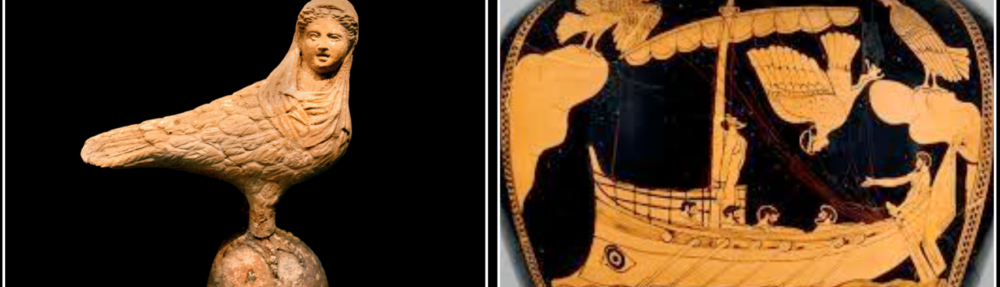
For many people, writing is an outlet to convey emotions and gives writers the opportunity to combine their subconscious thoughts with their creativity. Reading stories that were written centuries ago gives readers the opportunity to see what the writer was going through at the time through the wording of their sentences, the imagery they choose to provide, and messages they leave for readers. By studying “Odysseus and the Sirens” which is a chapter in Homer’s “Odyssey”, Odysseus becomes infatuated with the siren song, and professes that he will tie himself to his ship, and be the only one in his crew to refrain from protecting his ears. Odysseus speaks in the form of a poem, which gives the reader a much better understanding of what he is going through, and also gives the reader the opportunity to relate to him by the way he conveys his feelings. As he is facing death, this passage hints at the idea that Odysseus is overcome with existential wonder that he shares with humanity as he enters the opening moments of the experience he has been longing for for years. The demonic imagery induces fear in Odysseus, but this is counteracted by the calming personification of the ocean, which leaves Odysseus with a relatable feeling of acceptance to whatever his fate may be.

The conflicting imagery in this passage is extremely important because it gives an idea as to how unsure Odysseus is made to feel in that moment. His initial reaction to meeting the Sirens makes him recall how the “waves below, at once forgot to move. Some demon calm’d the air and smooth’d the deep, Hush’d the loud winds, and charm’d the waves to sleep.” (43). The text makes it clear that through all the impending chaos, he is able to take in the nature around him as a natural coping mechanism. In reality, this may have only induced more fear in him. Such calmness caused by what he believes to be evil creatures juxtaposes what humans are conditioned to believe should happen when faced with danger. Did Odysseus see massive waves that threatened the safety of the boat? Did he see large, brainless brutes that could rip him apart? No. He experienced tranquility in his environment. The passage breaks down an experience that most people can relate to, that being the moment where people lose all power, and can do absolutely nothing but accept whatever fate is in store.

Odysseus has lived his life believing that these beautiful creatures are ultimately demonic and deadly, yet he is still willing to try to outsmart them in order to hear their song, which could prove to be fatal to not only him but his entire crew. By asking for only he “alone, with fetters firmly bound, The gods allow to hear the dangerous sound” (41). Odysseus emits a natural human response by sacrificing safety for the sake of honoring his desire of knowledge. Sacrifice is a very normal aspect to humanity, especially when curiosity consumes people. Odysseus proclaims that the gods will let him hear what he desires to hear. This is important to the rest of the story because it shows that Odysseus believes in a higher power. Given that this was written before the beginning of Christianity, it not only predicts how people behave once Christianity is brought to life, but it also proves that fate and a belief in a higher power is a principle that has existed throughout the existence of humanity. People find themselves closest to a higher power when experiencing a life threatening event. By mentioning the fetters, which are essentially chains that are restraining him, he is displaying a sense of hope that he will survive this encounter with the Sirens. Odysseus portrays a longing for wisdom and excitement, yet he is granted the knowledge that is needed for a chance to survive. People act similarly in the modern age in forms such as adrenaline rushes. There are people who risk their lives jumping out of planes, surviving in the woods alone, or deep sea diving who search for enticing experiences for the sake of pleasure. Similarly to Odysseus, the people that crave adrenaline accept their fates in order to slightly scratch the large itch that is meant to satisfy existential wonder.

As Odysseus prepares to encounter the Sirens, he further shows his animalistic wonder by making an effort to cover the ears of his crew. With “every sail [they] furl, each oar [they] ply; Lash’d by the stroke, the frothy waters fly. The ductile wax, with busy hands” Odysseus molds. The effort that is put into preparation for their encounter is treated like a space mission: Both require a lot of thought and knowledge, both are extremely dangerous, and both are not completely necessary. The world is big enough to provide those with the necessities they need. Despite people being programmed to value their lives, they have beat the natural world by being conscious enough to fight their primal instincts of survival for the sake of desire. Through his writings, Homer unintentionally shows us that human instincts have not changed from how they were thousands of years ago.

When Odysseus finally encounters the Sirens, they make an effort to make him succumb to his temptations. The Sirens sing their beautiful song, but instead of providing direct knowledge and wisdom, they use their voices to “instruct the soul, and charm the ear.” If Odysseus chooses to “Approach, [his] soul will shall into raptures rise” (43). Resisting temptation is a completely unnatural human response to a situation. Temptation is a concept that was constructed along with religion and society. Fighting temptation is what separates humans from animals, as humans are able to come together and think not only for themselves, but for those around them as well. Odysseus uses all of his strength to resist the urge to join the Sirens. 

One of the most impactful aspects of this story is the fact that the readers do not get to find out how Odysseus felt about the Siren song. The story ends abruptly after they simply sail past the Sirens. The readers should see this and rethink what the point of the entire text was. Homer leads people to believe that there will be a rewarding payoff to all of Odysseus’ work and desire. Instead, readers spend time learning about Odysseus’s battle against temptation. One could look at this and relate it to an experience they could have where the struggle of completing a task completely overshadows the feeling of success or satisfaction that they expected. Through Odysseus’ poem, he provides a relatable experience that can be related to universally, where he honors desire beyond what he knows is right, despite being at the hands of death.
The Little Mermaid

This week, we finally read an all-time classic, “The Little Mermaid” by Hans Christian Anderson. Some of the main themes I wanted to focus on in this blog post are the ideas of pain being normalized in feminism and also the idea of belonging to a group or place.

The little mermaid is told by an older, wiser mermaid that “pain must suffer pride” because she was wearing uncomfortable clothing. The little mermaid, being youngest of her sisters, grew up watching her siblings enter womanhood feeling equally uncomfortable. This is something that I feel a lot of young women see growing up, which in a way could be conditioning them to accept a life of pain because it’s “normal”. But why is it normal? The little mermaid feels immense pain in her legs every time she takes a step. It is almost as if she is being punished for being curious, in the same way Raymondin was. I’ve noticed that in a lot of the stories we have read in class, people who are curious tend to be punished.

Another interesting thing from the reading is the idea that Mermaids do not have souls while humans do, and they are aware of this. Mermaids are only given souls if “a priest lay his right hand” (pg 144) on them in order to officiate a marriage. This idea taps into the subconscious beliefs that Christianity has planted in both men and women that marriage is a necessity to have a completed life. But there is really nothing natural about marriage, it is a man-made concept. I love this idea because if souls exist, they have absolutely nothing to do with man-made concepts, they’d be natural and work in natural ways. Meanwhile, people are reading these popular stories, and while they may not necessarily believe they need matrimony in order to have a soul, they could potentially unintentionally develop the need to find a partner for marriage in order to truly feel complete.

This reading caught me off guard. I did not expect to enjoy this chapter as much as I did, and I feel that the reason for this is because the ideas of feminism and the symbolism are extremely telling of how society was at the time. It’s interesting to see how much yet how little has changed since then.

Week 6: Undine, Huldbrand, and Christianity

In this weeks reading of “The Penguin Book of Mermaids” by Cristina Baccheliga, I was mainly interested in the idea of Undine, a water goddess, needing to marry a powerless mortal man in order to gain a soul. The reason I was fixated on this idea is because the story seems to create this logic that women are soulless beings that absolutely require a man in order to be complete. I don’t know if I interpreted the reading correctly, but it almost feels like Undine’s significant power was being undermined and overshadowed by the need for a man. This story was written by a man in 1811, and that context tells me that this was a subconscious thought that was shared by men in these decades. True feminist movements wouldn’t begin until about 150 years after this was written.

Despite the unfortunate context of the story, I did appreciate the overall happy ending, as those have not been very common so far. Huldbrand fully “embraced her with the most heartfelt emotion and love” after she revealed that she was not human. Undine was able to keep her new soul but gave up her power as a body of water. While I will admit that the pretext confused me a bit as it seems to contradict the contents of the story, it was an interesting parallel to see how this semi-human entity reacted to a man compared to the sirens with Oddyseus or Melusine with Raymondin. One difference that I found between this story and the others is that Huldbrand seems to be a completely well rounded man, whereas Raymondin was unintentionally a murderer that did not pay the price for his wrongdoings. My theory is that God, or the universe, made an effort for Raymondin to pay for his sins by making him ruin his relationship with Melusine. Huldbrand, on the other hand, has committed no wrongdoings and so he gets to live happily with his wife who shares similar characteristics as Melusine. This would make sense as Christianity was huge in the 1800s and the idea of sinning was taken a lot more seriously than it is today.

Week 5: Melusina

In this weeks reading of “The Penguin: Book of Mermaids” by Cristina Bacchilega and “The Romance of Faery Melusine”, we read the tragic story about Melusina. Although I did not fully understand it during my first read through, I couldn’t help but notice that this was essentially a cautionary tale about Karma. When her step-father broke his promise to Melusina’s mother and laid eyes on her when he was not supposed to, Melusina opted for revenge. She took her step-fathers money and charm and imprisoned him. This made her mother angry, resulting in Melusina being cursed in a similar way to how Melusina’s mother was originally cursed. Melusina went out, got married to a charming man named Raymond (or Raymondin), but was eventually met with a terrible fate when Raymond saw her in her serpent form when he wasn’t supposed to.

I found a lot of symbolism in the story of Melusina. The most obvious one was the fact that Melusina becomes a serpent from the waist down on Saturdays. I am not sure if this is relevant, but Saturday is the holy day for a lot of religions. In a lot of religions also, serpents are great symbols of evil, deception, and demonic creatures. The idea of Melusina being half serpent is also interesting because she claims she is “as faithful a Christian” (25) as Raymond. Turning into a serpent as a result of her wrongdoings is an excellent example of karma. She eventually had a happy life with the exception of her curse, which ultimately ruined her life in the same way the curse ruined her mothers marriage.

There seemed to be a strong theme regarding beauty and chivalry/masculinity as well. The story of the hunter shows a connection to chivalry and masculinity, which is interesting to read after the story of Melusina. Noble men are drawn to “things that lead them further into unknown… [seeking] in all directions the extension of their physical and spiritual power” (12). It is chivalrous to seek knowledge of the unknown, similar to how Odysseus longed to hear the siren song. Raymond was a chivalrous man who unintentionally committed a horrible act. Karma got him for his actions the same way karma got Melusina. He had a mostly happy life with a beautiful woman after his wrongdoing, but his wife ended up being cursed.

Week 4: Ancient Origin Myths – Rigo De Leon

In this weeks readings, I couldn’t help but notice how respectful and optimistic myths were towards nature. In the story about Oannes, Oannes is a fish and human hybrid that is well respected by the people of Chaldea. He shares his knowledge with people in order to “soften manners and humanize mankind” (Bacchilega 34), which is interesting because his actions imply that humans are not civil beings, but are animalistic and hostile. People respect Oannes and he respects them back, despite potentially being a fish god. This type of respect is again seen in Kaliya, the Snakes story, which takes place in a completely different part of the world. Despite being an evil snake, Kaliya is given another chance after being defeated. He genuinely reforms, pleading that it is his proper nature as a snake, which he was born into (Bacchilega 39). Meanwhile, Krishna receives love and praise from the cowherders and their wives. I found it really interesting how Krishna was able to unite everybody while giving Kaliya the opportunity to seek redemption.

The story of “The Tuna of Lake Vaihiria” differs from the previous two stories by showing a different side of nature and beasts. The Eel that wants to marry Hina is evil, unlike the two dieties in the other stories. I found it incredibly interesting that the only story with a female protagonist showed the protagonist going through a lot of trauma, such as being forced to marry the evil eel, and accidentally setting down the Eels head. I am not sure if this is intentional to add to mermaids symbolism towards feminism, or if it is just a coincidence. Although she experiences a lot of trauma, she still has a happy ending and grows old with her coconut tree. Overall, these stories were extremely insightful as to how nature and the ocean were tied to Gods and other powerful beings. It is fascinating to see how different cultures respected nature so similarly despite being so different.

Week 2 – Reading Post

In this weeks reading of “Merpeople: A Human History” by Vaughn Scribner, I was completely fascinated by the Catholic Church’s involvement in the use of mermaids to manipulate the general public. When I began reading, I mostly expected the reading material to mainly feature the evolution of mermaids throughout different cultures. I had no idea that mermaids were instruments of manipulation for the Catholic Church, which intended to use mermaid imagery to “dethrone femininity” (Scribner 12). Painting mermaids in an overly sexual light, the church used mermaids to symbolize seductive beings that made men fall into their lustful desires. Ultimately, the Church was using these creatures to spread their propaganda about sinning.

The Catholic Church benefited from the globalization of mermaids in Western, Eastern, and African folklore, because it further pushed their agendas. Sailors across the world would make claims about interacting with mermaids, and their “encounters resonated with the Christian Church’s imagery” and further pushed the Church’s “efforts to denigrate the feminine” (Scribner 56). My focus on the Catholic Church with these chapters comes from the idea that mermaids could not possibly be the only things that the Catholic Church used to manipulate people. By studying how effective the use of mermaids was, it gives me the ambition to look into what else the Church has used to maintain relevancy. Science has only been a generally accepted concept for a couple centuries, yet society has existed for thousands of years. Even in modern media that I can recall, mermaids are still commonly sexualized, which could still subconsciously push the old agendas of the Church.

I grew up going to Catholic Church, and I cannot recall ever seeing any mermaids, or any mythical creatures besides angels and demons in paintings inside of the church. It is extremely fascinating to me to see how the same Church I grew up attending used manipulation tactics to push their agenda. It is also interesting to me to see what the church’s agendas were as the church was developing. It makes me wonder if this type of behavior is still happening in the Church, but with more modern methods.

Introduction

My name is Rigo De Leon, I am a transfer (junior) here at San Diego State, and I am originally from the Bay Area. I am an economics major, but I love reading and writing as well. Economics was not something I initially wanted to major in, but once I started taking economics classes, I was very happy I ended up with that. Even though I like reading and writing, it is something I only really do when I have to. This is why I am taking this class, but I am working on getting into the habit of reading and writing more on my own. I have only been in San Diego for a few months, but I am loving it so far.

Back in the Bay, I was working full time. Since I have arrived, I have not needed to find a job just yet, which has given me a lot of time for my hobbies. I like making and listening to music, training, cooking, and exploring. My main goals for this semester are landing an internship for the summer and reading at least 2 books a month. I look forward to meeting you all!