Final Essay Proposal

I don’t have a set thesis statement, but it will discuss literatures use of mermaids as a lens to discuss the environment. This will be a culmination of my two essays about Sedna to further my analysis. It will dive into the way literature is a way of understanding the culture from which it comes from, and also how Sedna’s entangled hair is symbolism for pollution and how highlights a close relationship between human actions and the health of the environment. I may also include some exploration of the Shaman and close read/ analyze that area more. My goal for this final essay is to emphasize that literature is powerful by exploring how in this class, it helps with understanding humans’ relationship to the Ocean.

What I learned in this class…

One of the biggest things I learned in this class is to appreciate the Ocean and see it as a multifaceted body rather than a dark abyss. Growing up, a lot of media associated the Ocean to darkness, being lost, scary, dangerous, unknown, unexplored, which framed the way I viewed it. This class was a change in perspective, it allowed for the exploration of the Ocean in various ways through poetry, art, literature, scenography, and more. These new lenses removed the limitations I felt towards the Ocean, and I am amazed at how much the close reading we practiced in class unveiled about literature, mermaids, and the environment. Some of the elements that stood out the most were: the ocean as an archive, mermaids as a metaphor and lens, everything can be read (paintings, videos, etc) as literature, the Ocean is and gives life, and perspective is key,

“The salt of the ocean is the salt of tears” – Stephanie Burt

This week’s poem “We are Mermaids” by Stephanie Burt was an interesting read. There’s a lot to dissect from the poem, but one main theme I found was human connection to nature. The first stanza makes a clear comparison between humans and the Ocean, it reads, “The salt of the ocean is always the salt of tears, melancholy but at the right dilution, or concentration, life giving.” In this quote, salt serves as a commonality between the Ocean and human tears. Both are bodies of water, and this suggests they both carry sadness that can fruit new opportunities. I found this very interesting, if I had read this quote before this class I would have wondered “how is the Ocean melancholy?” I knew the ocean had power; I see it in the crashing waves when I visit the beach, but I had never associated it with having feelings. Now having the context of this class, I understand the Ocean not only as an archive that holds history but also emotions. Overall, Burt prompts a reevaluation of human relationship to nature to recognize the symmetry between the two.

The Water Will Carry Us Home

In the video “The Water Will Carry Us Home” by Gabrielle Tesfaye, we are presented to a story of “stolen Africans being thrown off the slave ship whilst sailing through the Middle Passage” (Tesfaye). This story was heart breaking because it was a lived reality by Africans, and the video beautifully captured the saving of their spirits. A lot of emotions went through me when watching this video, especially because of the music that was being played through such tragic scenes. The music was peaceful and giving a sense of hope, a feeling of “everything will be ok, I’ll take care of you.” And this feeling goes alongside the transformation of those who were thrown overboard into Merpeople. This transformation happens as fish swim around them, nurturing them as they become spirits. Which further allows for the exploration of water and the significance it has. In this video, water served as an avenue for rebirth, where what is assumed to be lost at sea is instead tranformed into an immortal spirit. I saw the ending as a form of reclaiming not only the spirits but the souls of the individuals who suffered because of this. It demonstrates resilience and empowerment.

Sirenomelia

I watched the video at least 5 times trying to understand its purpose and meaning. What I saw was a NATO base in the Arctic with scenes of melting ice and no signs of life other than the Sirenomelia. The video description says “… Sirenomelia—named after a rare congenital deformity called Mermaid Syndrome— sees a mermaid explore a decommissioned NATO base in Arctic Norway.” With this intel, I interpret the video to be a call for action for humans to address climate change. I went ahead and researched what a NATO base was, and it was intended to protect humans against “a variety of threats” but now the challenge is “from human actions against the natural environment” (Bennet). With this context, the video shows the failed mission of humans to protect the environment, and this is further interpreted due to the Sirenomelia shown in the video. As mentioned above, Sirenomelia is a congenital deformity which can symbolize how humans’ relationship to the environment is distorted. 

Bennet, Maddy. “NATO’s Role in Securing a Changing Arctic.” The Henry M. Jackson School of International Studies, University of Washington, 6 May 2020, jsis.washington.edu/news/natos-role-in-securing-a-changing-arctic/#:~:text=NATO%E2%80%99s%20involvement%20in%20the%20Arctic%20to,long%20term%20due%20to%20environmental%20damage.&text=NATO%E2%80%99s%20involvement%20in%20the,due%20to%20environmental%20damage.&text=in%20the%20Arctic%20to,long%20term%20due%20to. 

Reflection on “The Blue Humanities” by John R. Gillis

The article discusses many aspects of humans’ understanding about the ocean. It begins by stating that humans know more about the moon than the depth of the ocean, which is amusing considering we live alongside it. Because of it being unknown, the article explains the ocean was feared before the 19th century. It was perceived as “dangerous and repellant, ugly and unfit for literary or artistic representation” (Gillis). However, in the 19th century it was through literary and artistic representation that humans began to connect with the ocean and use it to reflect their own lives. I thought this was fascinating because it became a sort of trend for people and even those who didn’t associate with the ocean, still represented traces of it in their daily lives, the article quotes, “the ocean entered the minds, homes, dreams, and conversation of ordinary people.” It was in the 19th and 20th century that the sea was finally associated with life rather than death as a “three-dimensional living thing with a history, geography, and a life of its own.” In relation, Writers and painters turned their attention to the ocean when nations turned away and allowed for the ocean to be a place for metaphors. Another big part of this cultural shift is archeology and anthropology because it brought us more knowledge about the history of the ocean through scientific studies. The ocean began to shift from a lifeless place to a place filled with life. Today, we are able to explore the history of the ocean and its characteristics, “ocean currents, tides, and waves.” Overall, blue humanities, as mentioned in the article, “recognizes the close relationship between modern western culture and the sea” which highlights the cultural shift humans have had and continue to have with the sea.

Midterm/ Essay Analysis: The Legend of Sedna the Sea Goddess

At first glance, “ The Legend of Sedna the Sea Goddess” appears to be a cautionary tale which warns about the consequences of deviating from the traditional norms of marriage. Sedna didn’t want to marry and when she finally does she is betrayed and ends up with the “ head and torso of a woman and the tail of a fish.” Yet, upon deeper analysis, the story allows for the exploration of Inuit culture through the hybrid body of Sedna in order to explore what this story entails about Inuits’ relationship to sacrifice, spirituality, and nature. 

To start, Sedna allows for the exploration of sacrifice in Inuits culture. Fearing the unsteady nature of their kayak during a storm, Sedna’s father makes the choice to sever her fingers, joint by joint. On one hand, it symbolizes the sacrifice made to restore equilibrium to the kayak, emphasizing the immediate need for balance in the face of danger. However, the story takes a turn as each severed finger transforms into sea creatures like “fish, seals, walruses, and whales,” Sedna’s sacrifice ultimately becomes a resource for the entire Inuit community and she beholds the power over them. The emergence of varied sea creatures therefore shows that sacrifices, no matter how painful, contribute to the balance of nature and the prosperity of the community. 

In addition, Spirituality is a crucial part of Inuit culture that is further explored through Sedna. After being thrown from the kayak, Sedna is described as having transformed into a spirit, “Sedna sank to the bottom of the ocean and there became a powerful spirit.” In this sense, spirits transcend life and are depicted as something eternal. They believe this spirit has power over the animals in the sea which is an important resource to them. This goes to show how strong their belief in spiritual powers are. Their belief in this spirit is so deep that they even have taboos they follow to show their respect for her, like “when a seal is killed it must be given a drink of fresh water, not salt water” giving the seal fresh water adds to this respect and the appreciation of the sacrifice of the seals life. To add onto this, it is said that “ If the hunters do not catch anything for a long time, the Shaman will transform himself into a fish” and “appease Sedna.” The idea that the Shaman can transform themselves to meet Sedna in the case she becomes upset and their access to sea creatures becomes threatened, strengthens the belief that having a good spirit and following taboos and rituals are crucial and can affect the balance of nature. 

Furthermore, the harmonious relationship that the Inuit have with Sedna serves as a reflection of the relationship they have with nature, specifically with the sea. As detailed in the story, “The Inuit who rely on these animals want to maintain a good relationship with Sedna, so that she will continue to allow her animals to make themselves available to the hunters.” Since Sedna is what stands in between the Inuits and their access to the sea creatures, a harmonious relationship is important. The sea creatures Sedna controls is a crucial resource to Inuit hunters as it provides them with “food, clothes, and shelter.” As mentioned in the previous paragraph, the Shaman transforms themselves to make Sedna happy which is interesting and adds to the relationship between the Inuit and nature, “ The Shaman will comb the tangles out of Sedna’s hair and put it into braids.” Rather than approaching Sedna with fear, the Inuit have respect, nurturing, and care for her. On the same note, this also depicts the Inuits relationship to the sea and how they don’t exploit it for its resources but instead appreciate it and have gratitude. 

Overall,  “ The Legend of Sedna the Sea Goddess” transcends its initial appearance as a cautionary tale and becomes an in-depth examination of Inuit culture, particularly when it comes to sacrifice, spirituality, and nature. Sednas sacrifice reinforces the Inuits belief that sacrifice can contribute to the greater good, spirituality shows how a good spirit can have an influence towards the natural world, and the Inuits harmonic relationship with Sedna embodies their relationship with nature. 

Works Cited

Lindeman, Lenore. “The Legend of Sedna the Sea Goddess.” Sedna or Sanna the Sea Goddess of the Inuit, www.palomar.edu/users/scrouthamel/ais100/sedna.htm. Accessed 1 Mar. 2024. 
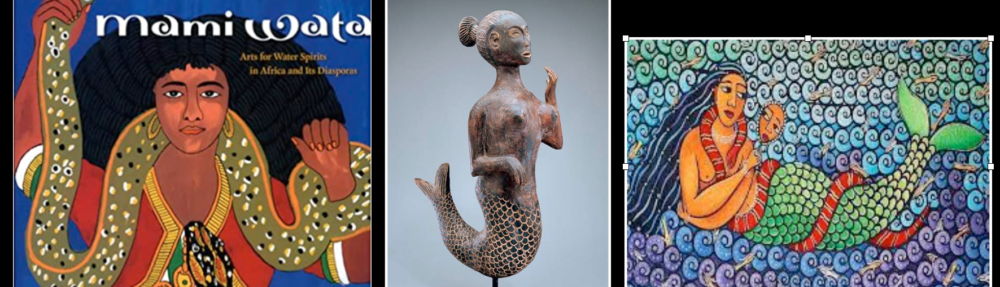
Week 4: Oannes and Sedna

How were both readings relevant to the course? Well we are learning about Mermaids and what it entails about the environment. In the Readings about Oannes and Sedna we see how their stories play a role in their environments. For Sedna, it’s said she has control over the animals of the sea and the hunters depend on those animals as a source of food. So in this story, Sedna affects the environment because the people believe the sea animals appear when Sedna is happy and disappear when she is upset. This belief leads people to try and make Sedna happy and even feed the animals fresh water before eating them. In comparison, Oannes comes from the water onto earth to help the human environment progress. He helped around with food, infrastructure, and other helpful knowledge for further advancements. So both Sedna and Oannes are sea creatures (merpeople) with human and fish features who affect their environment. 

Introduction

Hello! I’m Kim and my major is English and Comparative Literature. I am a second semester transfer student from San Diego City College and proud to be at SDSU! I’m also born and raised in San Diego. Although my knowledge about mermaids extends to the Disney version of The Little Mermaid, I’m excited to learn through a different and more intellectual perspective. I’m also enthusiastic to learn what relation mermaids have to the environment!