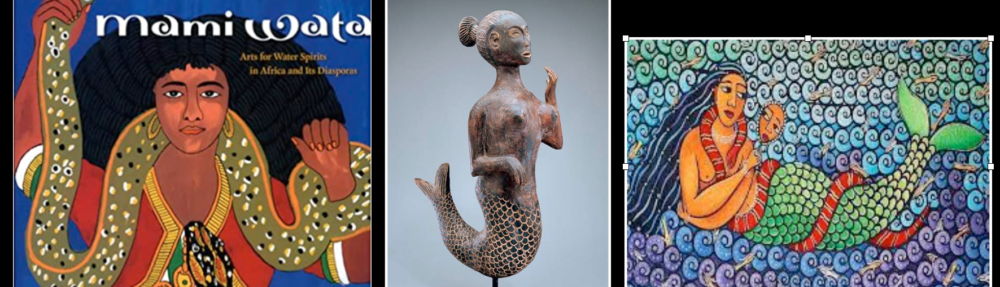
When reading the Emergence of the environmental humanities, it was very interesting to hear more about the effects we humans have on the environment. As the first section we read discusses the human effects on the earth and environment, and how the way we are living is not sustainable for the earth to thrive. I like how this article points out the fact that researchers and scientists can help identify the problems of o overconsumption and human affects on the earth, but they alone can not change it. This is a very important point a lot of people miss, because a small group of the population cannot solve this crisis, the article states “Solutions will require political and cultural expertise as well” (pg. 1). Not only do political and cultural changes need to be made, but other people need to make this effort to change and adapt as well. When trying to make these solutions in our cities and homes, the public, scientists, and excerpts need to be consulted before big cooperations try to be “eco-friendly.” This is a point that is talked about numerous times in this article, as efficient change cannot be made without efficient resources and consults, in order to do the job right. It states in the article “That brings us to a final strongly held position across the environmental humanities: that humanists use offer constructive knowledge as well as criticism” (pg. 2). This is the point of the article, they are not saying they have the solutions but they are saying that if more people consult humanists for solutions and criticism, progress could be made. I really liked the display of knowledge in this article, after every statement or argument the authors made we’re backed up with facts. Not only was this beneficial to their claim, but also to help me better understand the humanists too. The evolution of ecologists, scientists, and humanist’s is how we have gotten to where we are today, and society needs to turn to them for assistance. This goes through the 1970s, 80s, 90s, and etc, which helps paint a picture on the evolution of their knowledge. The environmental humanities was shaped postcolonial and feminist studies, shaping the ideas that have evolved today. These new ideas challenged some of the older ones, about the environment and such, shaping the way people think today. I found this evolution and aspect very interesting the read about. and see how it has effected new ideas today.
When doing this weeks reading, The Trouble with Wilderness was quite interesting. It discussed not only the human impact on our environment today, but also how the wilderness connects to our relationships with the non-human world. On page 8 it says “Remember the feelings of such moments, and you will know as well as I do that you were in the presence of something irreducibly nonhuman, something profoundly Other than yourself. Wilderness is made of that too.” This comparison between the Wilderness and us is distinct here, as we get a description of a feeling we get when we are in nature, something non-human. This is what connects us to nature and the wilderness, our awe of it, the feelings we get when we are in beautiful scenery. I thought this really helped the articles voice of the importance of Nature, and why we need to protect it. Where would we get these feelings of awe if not for the natural beauty around us? I am not sure, and this felt like a reminder of that. Not only is this feeling of awe surrounded by the idea of Wilderness, but also the feeling of terror. This article uses examples of 18th century English literature, and its descriptions of the Wilderness or the Wild. It states “To be a wilderness then was to be ‘deserted’, ‘savage’, ‘desolate’, ‘barren’ – In short, a ‘waste’, the word’s nearest synonym. Its connotations were anything but positive, and the emotion one was most likely to feel in its presence was ‘bewilderment’ or terror.” This is one of the many examples in this article used to describe past connotations of the Wilderness, that it was something to be afraid of. As the wilderness is still something people are wary of, it is less looked at in that way now, or at least for some people. For me, I would like to say I am not afraid of the Wilderness, sure when I think of it I usually think of it as Nature or something beautiful. The unknown is scary, which is why these connotations for the Wilderness are still used today. People hate the unknown, they hate the undiscovered. I think this article really painted the picture of that fear, and how we should try to celebrate and protect it, not destroy it our of fear and greed.
Kiersten Brown ECL 305 Professor Pressman 3/3/24 Close Reading:Undine
Undine’s story is still important today because of how it shows the impact of the patriarchy on women’s lives and the depiction of women in our society. When closely reading Undine’s story, not only do I observe the effects of the partiracy on her life, but also how being a woman affected the outcome of her storyline. This story brings up many ideas and questions to mind, but the relevance of a man-made society is prevalent here. Undine’s tale is quite interesting, as it discusses the storyline of a young woman/mermaid, who is looking for the love of a human man. My first observation of this: Why is Undine so set on finding a Human man to love her, to make her complete? Well, first of all this can be answered quite easily: A patriarchal society and its norms. This applies to when the first tale of Undine was written and even now in our society. Women have always been expected to marry a man, reproduce, and look over the home. Although this has quite changed in the 21st century, those societal norms are still prevalent today. We still see those traditional norms pushed on women, and whether or not we have progressed as a society some people still see the world this way. Undine’s tale is one of the many like this, where a woman is expected to find pure happiness with a man. In this folklore I can see how this affects the course of her life, and her overall demise/loss of happiness. Undine is a half woman-half mermaid (or water princess) and her story portrays these ideals of a patriarchal society. When Undine is first introduced, I learned about how mermaids have no souls, and they only move through the elements. This is a big aspect as to why Undine “needed” her Knight Huldbrand, in order for her to have a soul. She needed a human man to have a soul, it was not enough for her to exist on her own, but she had to co-exist in order to be whole. This concept was not only because she is a mermaid, but also because she is a woman. On page 105 it says “Thus my father, who is a powerful water-prince in the Mediterranean Sea, desired that his only daughter should become possessed of a soul, even though she must endure many of the sufferings of those thus endowed.” This quote stood out to me because of the significance of a soul, not necessarily to her, but to her father. It was her father who desired her to obtain a soul. A man desired her to find a soul, no matter the sufferings, when Undine could have probably found another mermaid or water creature that would fulfill her just as much, or even then no one. In order to obtain a soul her human lover would have to accept her for what she is. This comes to show how the course of Undine’s life was changed because of the patriarchal wishes of her father, his desires for her life, not her own. If she had not followed his wishes and searched long and hard for a human husband, she could have done a lot more with her life. The social structure of status then (and even now) were men above women, and the opinions of the men around Undine in her life significantly affected her. Not only do the men in Undine’s life have a say in her future, but it was not her own wish to obtain a soul. This brings out the questions as to why she needed one in the first place. In the depiction of her story, and many other mermaid-like folklores we have read, they all desire the same thing. The Human experience. They are all described as longing to have legs, be on land, love a human, and be able to do human things. We can see this in Undine’s tale, as all she desires is to be accepted by her husband and his people. She wants to have the human experience, and the book states “If you do not make my whole life miserable. For what is to become of me, if you avoid and reject me?” (page 106) Undine is speaking here as she beares herself and her true form to Huldbrand. She quite literally says she doesn’t know what she will do if he rejects her, she’d go home and wallow in her sadness. This is not her fault that she feels this way, it is the patriarchal society she grew up in and how she was molded to act and feel. Her life was not really ever her own, and her husband ended up betraying her for another human woman. The society she was born into, back when this was written in the 1800s, was even more patriarchal than now. Undine definitely had to follow her fathers wishes and desires for her life, for her to find a soul, which led to her later heartbreak and betrayal from her husband. Her life was viewed as basically worthless, without a soul or husband. To me, Undine’s marriage to Huldbrand, her human husband, felt more like a business deal. This is what the basis of marriage was built upon, it was built upon a business transaction and deal between families and wealth. In Undine’s case she was gaining a soul from this “business transaction.” Even though she claims to love him, at the end of the day their relationship was built on a business deal and the obsession or lust Huldbrand felt for her. He was under her spell, entranced by her beauty that she radiated, an otherworldly beauty. Was he even in love with her? Did he desire her or love her? I believe that it was lust, for her beauty and his obsession with her. When thinking about how Undine’s story connected to the effects of the patriarchy on her life, we see this with the downfall of her marriage when he later betrays her. She relied all her happiness on him, because that’s what women were expected to do, rely on other men for their happiness. They were not allowed to hold jobs, worth, or hobbies really outside of the marriage and the family. Not only is the patriarchal society what affected Undines life, but it is still prevalent today in other folklore stories and real life. In our society today we can still see how women do not have the same opportunities as men, there is still that traditional stigma there, as we see in Undine’s story. The idea of needing a partner to be full, is still an idea we see in the media today, not only mermaid stories or depictions. Every Disney princess movie, romantic comedies, the Little Mermaid, are all examples of this patriarchal society. Even if it is not the intent, we can see how the stereotypes of women and their happiness are still depicted as needing a man, even in the 21at century. People will argue this is not true, and yes we have really made changes and women have lots of opportunities, more than before. But we cannot ignore that these stereotypes still exist and still affect women and their lives. It’s what happened to Undine. Overall, when close- reading this text, not only do I see this depiction of Undines worth being connected to a man, but also the affect the patriarchal society held on her life.
Works Cited Bacchilega and Brown, The Penguin Book of Mermaids, Penguin books, 2019 Friedrich de la Motte Fouqué, Undine, 1811
After reading Hans Christian Andersons version of the Little Mermaid, I was very intrigued with the similarities and differences of the Disney movie. I would say that most of the plot was pretty similar, minus the ending and other small details. One concept that intrigued me a lot was the relationship between the Prince and the Little Mermaid. In Hans depiction of it, as the mermaid had no voice or song, she was mute, and the Prince looked at her more as a pet than a lover. One line in the story states “The prince declared that he would never part with her, and she obtained leave to sleep on a velvet cushion before his door.” (page 144) I thought this description was quite interesting, as he gives her permission to sleep outside his door basically on a fancy dog bed. This takes away the little mermaids morality and quite literally turns her into his pet. Their relationship is quite interesting in the story, as he views her as his “little foundling” and pet, but says if he was inclined to marriage it would be with her. This dynamic threw me off just because of how he refers to her in adoration but also disrespect. As he says he never wants her to leave his side, yet he called her his little foundling and his “dumb child.” This could be his way of showing his affection, but it is also clear that he has romanic feeling for the girl who saved him form his death, and even though the mermaid is she, he could never love her. Another aspect of this version of the Little Mermaid that surprised me was how it ended with her death, and her becoming sea foam. The witch didn’t become the new bride, nor did the mermaid end up with the prince. It was a bittersweet ending, as instead of saving herself and killing the prince, she sacrificed herself to the Ocean, sort of facing the consequences she got herself into. I appreciated the non-cliche ending, but it was also sad to see how the prince ended up happy and the little mermaid did not because he didn’t love her or give her his immortal soul. This goes back to the question: Why did she need a man for her happiness and life? This is a repeating question I find myself asking almost after every story or tale we read. Almost all the women depicted in these stories long for a human man and a human love, to save them. I think this goes back to show the idea of the patriarchy even now, and the stereotypes put on love and happiness. Not only do women have the expectation of sacrificing earthing for a husband or family, but also the idea of how the Little mermaid was looked at as a pet, not another human being.
When doing this weeks reading, I was very interested in the deception of Undine and her knight suitor Huldbrand. When the tale begins we get background into their relationships, and how it ends with Huldbrand leaving Undine for Bertalda, another human. This is the ending we get from the other version of the tale, but as I went on to read the start of the story it was different. Undine and Huldbrand did get married, he did not quite betray her in the same way. Except in this depiction of the tale Undine tells her new husband what she is, a mermaid adopted by humans, and he accepts her. One line that stood out to me was “All rose to meet her, and all stood with surprise, for the young wife seemed so strange to them and yet the same” (102). This quote is referring to Undine meeting her knew husbands friends and family- it seems- after they are married, so they were taken aback by her appearance. It is unclear why, but I believe that maybe it’s because of her being a mermaid and they can somehow sense or feel that she is different from them. It might not be apparent to the eye, but they can feel that Undine is the same as them but different as the same time. This stood out to me just because I think that if they had seen her mermaid form, they might be more astonished than repulsed. Another aspect of Undines story that intrigues me is her description of not having a soul because she is a mermaid. “Our condition would be far superior to that of other human beings – for human beings we call ourselves, being similar to them in form and culture,- but there is one evil peculiar to us……Hence we have no souls” (105). This was Undine describing why mermaids feel a connection to humans, or sometimes group themselves in the same categories. I thought this was an interesting connection between the two and how humans and mermaids have similarities. Undine describes her desire to have human experiences, a big part of why she fell in love with her human husband. the struggles she describes how the elements move her – mermaids- and they have no souls, is why she desires so much to have a connection with a human soul, like Huldbrand. Overall, I found her story to be quite sad, and I pity that her affection she craves so badly from the human world. Although she gained a soul by marrying and falling in love with her husband, it still seems bittersweet to me.
When looking over the reading from this week, the ‘Legend of Melusina’ chapter was quite interesting to read. The depiction of the relationship in between Elinas and Fay was quite interesting. When Elinas first sees her at the fountain, he is dealing with the grief of losing his wife. He is taken by her beauty and she had made him promise to never never see her at the time of her “lying-in”. When he did she left and took her three daughters will her, to a high mountain in Albania. I found it so interesting that when her daughter Melunisa came of age, she asked what her father had did, and then he pledged vengeance against him, which is where the story really begins. Melunisa then proceeds to get her sisters to join her in vengeance and they go to his castle to take him and all of his wealth, and inclose him with a charm. When her mother discovers this, she sentences Melunisa to become a serpent every Saturday for the rest of her being, and could find a husband who wouldn’t see her on Saturdays. In my head, I would have thought that the mother might be glad that Melunisa had done this to the King, but instead she is punished. I feel as this really shows the character of the mother, as she did not want revenge, unlike her daughter Melunisa. When she finds Raymond, he is so taken with her he agrees to these terms, until he breaks them. On page 88 when it says “But it was not the horror that seized him at the sight, it was the infinite anguish at the reflection that through his breach of faith he might lose his lovely wife for ever.” I found this quote to be specially sad and contribute to the story line. Raymond was not disturbed by the sight of his wife with a tail, but he was in pain over the fact that he knew he was going to lose her. This took me by surprise, because so far in all the readings, people have only ever been disturbed by the sight of something like this, something un-human. Raymond was different, he loved his wife so much that even though he might’ve been “un-human” at times, it didn’t matter to him. He knew he breached the trust and the oath between them on Saturdays, and he died. He would’ve rather been dead than without her, and call me crazy but I thought this story was beautifully romantic.
When reading more of the Penguin Book of Mermaids, I found it quite intriguing once I got past the introduction. The first story I read was Oannes, which was an interesting perspective from Babylonia where they discussed a Merman. I thought the relationship between the Merman and the people of Babylon was intriguing given it seemed to be such a peaceful relationship between the humans and Merman. He brought them insight into the letters/sciences, and other types of artwork that were unknown to them. It was a dual benefitting relationship. The story describes the merman as conversing with humans in a normal and beneficial way, which is not usually the narrative set in place when talking about the relationships between Mermen/Mermaids and humans. When moving on further into the book The Tuna of Lake Vaihiria, was one of my favorite stories for this weeks reading. When the princess Hina had found out that she was the be engaged to the Eel King, she immediately went to look for help from the Sun God. As the sun god was able to kill the Eel King he told her “He chopped off his great head, which he wrapped in tapa, and presented it to Hina,saying: Hold this and put it not down an instant until you arrive home; then take and plant it in the center of your mare ground. This eels head contains great treasures…” (16) As this continues we realize the significance of the eels head, and when Hina accidentally puts it down to swim, it sprouts the tree and its treasures. As the story goes on an Hina settles in this area, she meets the two sons, one which she marries. It seems is tragedy is connected with Hina, since she lost her first husband, married the other, and then lost a daughter. It was interesting to hear the story with the significance of the eel head, and how it affected the rest of Hina’s life. It also intrigued me because of the difference in stories, and how this one didn’t include a mermaid, but a different kind of “Monster.” Overall, I really enjoyed getting more into this reading and learning about the different cultures and the myths/stories that they share with us.
After this weeks reading, in the Penguin Book of mermaids, I noticed the different types of representation of Mermaids in different cultures. I noticed this when reading about sirens versus mermaids, and how they used to be two different distinct creatures that now are sometimes meshed as one. Specifically I can see this difference when they were talking about how the British saw mermaids, and were compared sometimes to prostitutes and sexual symbols instead of monsters. Mermaids had anew definition of what it was to be feminine or sexual, instead of a monster, which what other cultures had seen them as. We can see this with the Greek, who saw them more as Sirens and monsters, who lured men to their death and demise with their song. When contrasting how these two different cultures saw Mermaids/Sirens, I can clearly see the distinction between monsters and humans. Mermaids innately are human-like, human upper body and fish tail, which is why they are seen as creatures. A lot of different cultures have different representations, but most of them are sexualized and objectified in some way. This was quite interesting to read about, and how Mermaids/Sirens are the same and different all at once. There are stories about Mermaids being tamed, mainly in British culture, where they have been more objectified as sex symbols than other cultures. They have been seen as monstrous and sexual at the same time. I found these different cultural representations of the Mermaid to be quite interesting, since I had only really seen the girlish version of the Mermaid, like in Emily Windsnap, which I read as a child, so seeing these more monstrous and sexual representations was quite a different perspective. This view on mermaids and how gender and sexuality comes into the perspective also was an interesting take, and how in different cultures some tired to “tame” mermaids, while some could not. Humans have always had a fascination with mermaids, but different cultures have different takes on this.