Week 5 Melusine/Great Old Hunter

What I found interesting about Tuesday’s readings is that all three texts are intertwined. “The Legend of Melusine” and “The Faery at the Fountain” are the same story with “The Legend of Melusine” providing more of a general overview of the tale. Both stories mention that Raymond and his uncle (The Count of Poiters) were on a boar hunting trip in Colombier which accidentally ended in The Count dying by the hand of Raymond. This relates to “The Great Old Hunter” who is, Aimery the Count of Poiters, and ends with him giving his intent to go boar hunting in Colombier the following day, possibly the day he dies (pg 15). It was fun piecing these together in chronological order and building almost a movie in my head.

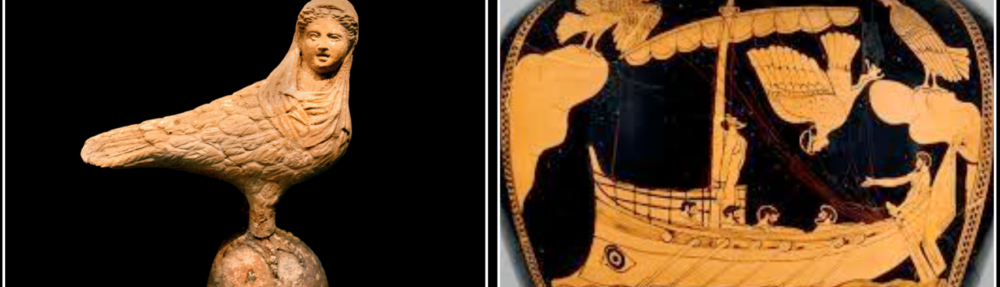
Although these texts don’t mention it, there are a few ways they relate to the character traits of mermaids/sirens. “The Legend of Melusine” and “The Faery at the Fountain” both describe Melusine as extremely beautiful, to the point where it’s “love at first sight” for Raymond and even lessens his guilt of killing of his uncle, “His former sadness, his remorse, even his exhaustion he threw off in exasperation.” (The Faery at the Fountain pg 27). “The Faery at the Fountain” describes Raymond possibly being deceived by Melusine, “If some of this was inclined towards deception, he did not notice but followed her willingly” (pg 28). Going back to “The Great Old Hunter” it says “She sang a lay so beautiful and sweet That birds who came to hear her song Soon after sang it too… Whose eyes, wide open, great and singular, are the best rulers of a bird” (pg 13). This relates to Sirens as we know are a hybrid between woman and bird and sing beautiful “lays” as mentioned in “Odysseus and the Sirens”.

One thing I found interesting was how Melusine is depicted as being involved in some sort of sorcery, “Dear friend, I give you these two wands whose stones have special virtue…preserves from accidental death by weapons…gives victory in any dispute or combat” (The Faery at the Fountain pg 28). In the same text she says, “you must promise not only to take me as your wife, but never again to doubt – you understand, never, sir knight – that I would conduct myself honestly and in a Christian manner, beyond any sorcery” (pg26). Even though she denies her involvement in sorcery, it sounds like sorcery to me.

Ancient Mythology

After reading the story about Oannes, I found him to have good moral and extremely helpful to the human population at Babylon. It sounded like he actually brought peace to the city since the book described Babylon as, “a great resort of people of various nations an lived without rule and order, like the beasts in the field.” Teaching these “beasts” about letters, science, construction, and how to gather food sounds like he helped civilize the population. The book also says he didn’t accept food and went back to his home (ocean) at nightfall, meaning he didn’t want anything in return for his teachings, signaling he did it out of the kindness of his heart.

The comparison between Oannes and the mermaid described in “Merpeople” is very different. Where Oannes seemed like a peace bringing and insightful figure, the mermaids are depicted as evil, deceiving, and sinful. I was not surprised because I remembered reading how misogynistic times were long ago and how mermaids were another tool used to degrade the image of feminism. One thing I found interesting was that although I was aware the Christian Church spent many years degrading a woman’s image that even Greek mythology followed the same practice, this can be seen with the Greek figure Scylla who was a female sea monster.

Week 3: Merpeople Reflecton

While reading through the assigned chapters in Merpeople, I was continuously making connections with last class discussion about the image that was presented. A few things I remember that were brought up about the image were the comb and mirror the mermaid was holding and the vegetation the mermaid was surrounded in. In the book Merpeople, it states, “A mermaid’s accessories also revealed deeper symbolism, with her mirror and comb representing vanity…” (pg 13). As for the surrounding vegetation, it wasn’t uncommon for Pagan artwork to include foliage (pg 33, 42), I remember the image was pulled from a religious text so I assess that the religious text had some Pagan background.

Another topic I found interesting were the difference of views between mermaid/merman.  “Westerners, from their very origins, have looked to mermen as arbiters of knowledge, civilization and religion.” (pg 30) While mermaids were viewed as “…hideous beasts who only intended to bring man to destruction through his own lust for sex and power” (pg 11). I was curious as to why they kept denigrating mermaids even though the mermen were of the same species, at least have the mermen possess their own negative traits. Obviously, this was a jab towards the feminine population. I found it funny how in one illustration they even depicted a merman as a monk where instead of having an exposed upperbody, he was wearing a monks robe, “demonstrating men’s proclivity for piety and religious self-control” (pg 51).

One thing I find interesting was how something so prominent that was included in Church’s decor, bestiaries, folklore all around the world, and even charts used for navigation is rarely spoke about today. Sure there are films being made like The Little Mermaid, but I feel like now it has just become a childhood fantasy. It will be interesting to learn at what time in history did the “hype” around merpeople begin to dissolve and why.

Introduction

Hello class! My name is Jonah and this is my first year at SDSU. I transferred from Southwestern Community College and am studying Information Systems. I was born and raised here in San Diego, so if anyone needs recommendations on good restaurants, bars, clubs, etc. feel free to reach out. My hobbies are traveling, trying new things (especially food), and hitting the gym. A fun fact about me is I have 9 pets, no cats thankfully, and have a soft spot for animals, though not soft enough to turn vegetarian. When I found out this class was about mermaids I thought, “What did I get myself in to?”, but now I think it’s something new and interesting to learn. I’m looking forward to working with you all!