Mermaids and Marketing: Final Essay

Casey Meyer

Professor Pressman 

9 May 2024

Literature and the Environment: Mermaids

Mermaids and Marketing

The study of mermaids over various cultures and histories provides a brilliant perspective to analyze the interconnection between Marketing and Literature. Christian allegories of mermaids have served as a physical embodiment of lust and temptation as Scribner shows in Merpeople: A Human History, and later, Barnum capitalized on the Feejee mermaid as a source of exotic entertainment through strategic marketing. Furthermore, ‘The Little Mermaid’ shaped social norms and values in young American girls, while Starbucks utilizes a mermaid as its brand image to symbolize indulgence and desire.  Considered together, these case studies highlight the intertwined nature of storytelling and persuasion influencing societal norms and cultural values. 

Merfolk–and more-specifically mermaids–have been hypersexualized throughout Western Literature. Before the conception of science, humans believed and had faith in much of the mythical and unknown as it was presented in the media. This was further exploited through the invention of the printing press, as people could study the unknown and unexplored lands through mass-produced news and published papers (Scribner, 59). Scribner questioned the exponential boom in mermaid stories as to, “whether such obsession fueled, or was fuelled by, Westerners’ push into unknown worlds in the fifteenth century,” (Scribner, 59). As these lands were unknown, it was a fair assumption that mermaids and other beings could exist in untraveled and ‘unconquered’ lands. “Europeans thus found merpeople in every new land they explored, thereby fuelling the Christian Church’s centuries-old narrative surrounding these monstrosities, while also validating Westerners’ interest in them” (Scribner, 60). The fact that mermaids were considered monstrous capitalizes on the idea that they are something wrong, scary, and evil. The term “monster” has always been used negatively, and its origin in the Latin roots monstrum, bares the idea that it is a deformity or made wrong. In Chrisian tales, merfolk were predominantly baring female characteristics, and hypersexualized with bare breasts and long, luscious hair. Considering the time period of these works, in western cultures, women were expected to be entirely covered with clothing from head to toe, and mermaids were depicted in the exact opposite light with much visible skin and nudity. Scribner even says that in the sixteenth-century, prostitutes were referred to as ‘mermaids’ or ‘sirens’ (Scribner, 61), further exemplifying the idea that these women were considered monsters and horrific, and surely something to be avoided. Continuing on the narrative of gender norms, the Christian Church was determined to market the concept that women were less important than men and simply there to bear and raise children, limiting their roles in society. In Scribner’s words, “the Christian Church had spent the last ten centuries equating femininity with inferiority,” (Scribner, 60) making it the norm that women were useless and ultimately something one might not wish to identify as. Although blatantly ignorant and disrespectful, the Christian Church used stories and symbols of mermaids to represent temptation, which is generally related to sin. Temptation is an inherent part of life, thus making mermaids a powerful attraction to men at the time. Furthermore, it is important to draw attention to the fact that the typical ideation of a mermaid is a white, possessing blonde hair, and female. Mermaids of color have been marginalized across Western literature and cultures. This goes to show that the church used mermaids to frame ideas about women and how they should behave and be portrayed, influencing social norms which reflected in the way that women were treated and how they dressed. 

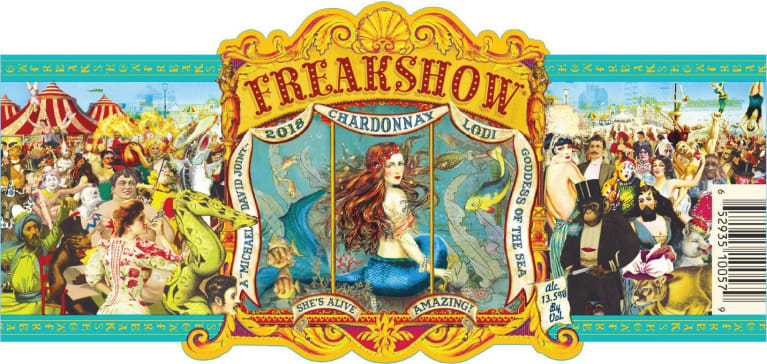
Mermaids have been economically capitalized on for various marketing purposes over the years, but one particular and direct example comes from Barnum’s Feejee Mermaid. In 1842, Phineas Taylor Barnum created a scheme to monetize what was presented to him as the first and only captured mermaid (Bacchilega and Brown, 239). Barnum wrote various letters to numerous publishing companies detailing that he had possession of a mummified mermaid and that he had the renowned, Dr. Griffin, confirm that Barnum did indeed have a real mermaid (although it was simply a lie and his friend pretended to be Dr. Griffin). Barnum’s message soon made it into a plethora of news publications, reaching many audiences and gaining widespread awareness. From there, many visitors came to see the mermaid, willing to pay top dollar for just a simple glimpse. Upon arrival, most visitors found themselves distraught at its sight being that it was the top-half of a monkey attached to the tail-end of a fish by metal wiring. One news publication about the Feejee Mermaid stated that, “some naturalists have declared that there is too much evidence of the existence of these animals to warrant them in pronouncing the mermaid to be a mere creature of fancy” (Bacchilega and Brown, 241). This is one example of how far this fabrication got out of hand in that Barnum had reputable sources declaring this hoax legitimate. After inaccurately describing the mermaid, most articles proceeded to detail many other mermaid sightings with the intent of convincing the audience that this mermaid was indeed real. This mass-production of media from what people believed to be honest sources was all a scheme created by Phineas Barnum to create hype and generate money for himself. He ultimately used deceptive marketing techniques to draw in consumers with the utilization of a mermaid for his own personal benefit. To further advance this point, Barnum’s idea of the Feejee Mermaid has been further extrapolated into marketing methods like the Michael David Freakshow Chardonnay. This wine label depicts a mermaid in a display case, with labels stating, “SHE’S ALIVE” and “AMAZING!” directly connecting this image to the Feejee mermaid with the concept of false advertising in mermaids. To continue this idea, similar advertisements and verbage was used to draw consumers into Barnum’s scheme, comparative to the way that consumers are attracted to the statements on the wine bottles. Even more interesting is the thought that had Barnum been alive today, his advertisements for his mermaid might look something similar to this label. The Michael David Winery marketing team deliberately made these references to increase wine sales by embodying the concepts of differentiation and freakishness as a tourist attraction. 
Another narrative that has shaped societal norms and a way of thought is Hans Christian Andersen’s The Little Mermaid published in 1837. Although similar to the Disney version, this story is much darker and lays the groundwork for the way in which young women were ‘supposed’ to behave in Western societies. This story conveys a coming of age, a loss of innocence, and obedience in young girls. The story opens with an explanation that once a mermaid turns fifteen, they are allowed to go to the surface. After the little mermaid turns fifteen in one of her visits to the surface, she saves a young prince from certain death and soon falls in love with him, making her strive to be human so she can have his hand in marriage. In order to become human, the Sea Witch says she must give up her voice. For starters, the fact that she is only allowed to go to the surface after she turns fifteen is important because this is the average age of puberty, establishing her potential ability to bear children which reflects her coming of age. Another aspect reinforcing this is that at the age of fifteen in Mexican culture, this is the age at which a girl transitions into womanhood, celebrated in what is referred to as a Quincenera. During the Little Mermaid’s celebration, her mother pins large oyster shells to her tail which bring pain to the mermaid. Her grandmother responds saying, “‘Pride must suffer pain,’” (Bacchilega and Brown 113), which bears a similar ring and meaning to the saying “beauty is pain”. This quote indicates that girls have to act and portray themselves in a particular way, reflecting obedience and creating an idea for how girls should see themselves and act in order to fit into society. Another aspect of this story that promotes and advertises the way girls should behave is that in order for her to gain a soul, she must be chosen by the prince for marriage, further adding to the idea that she has to portray herself in a certain demeanor in order to be presentable and accepted by her potential future husband. This again adds to the subliminal message advocating that young girls must behave a certain way, and with it being such a mass-produced book and film, this message has shaped and influenced societal norms and gender roles. 

Lastly, another example of a mermaid in marketing is the well-known logo of Starbucks coffee. The logo, if looked at closely, is a mermaid with long hair, a crown, and holding her split tail in each hand. Referring to some of the above claims, this logo is relatively subductive. The crown, which is universally understood as a symbol of royalty, created the idea in the consumer’s mind that perhaps if they consume their products, they too might be of an upper-echelon and high class. Considering some of their high prices of coffee, this concept is again reinforced because it sure isn’t sustainable to purchase coffee from here on a day-to-day basis. Being that it is a female, it makes it relatable to women and serves as an attraction towards the male audience. Looking at her split tail is a sign of suggestion, prompting the question of what might be below the cutoff of the picture. This concept plays on some of the topics discussed earlier in this essay in that it can be perceived as temptation. Being that coffee possesses caffeine, an addictive chemical, many people believe that they need their daily dose, and without it some can experience headaches, irritability, and other withdrawals. The split tail suggests that consumers should indulge in their addictions and give into their temptations for their needs. However, at the end of the day, one can very easily live without caffeine in their life. Overall, this logo is convincing and plays on consumers’ subconscious wants and desires that are reflected through the image of a mermaid. 


In conclusion, there are many different meanings and interpretations of what the symbol of a mermaid is and can be that vary across cultures and time. Many authors and professional marketers have found that this symbol and heuristic can be utilized to convey a particular message or convince consumers into purchasing something. These examples are highlighted in ancient Christian allegories described in Scribner’s writings, Phineas Taylor Barnum’s monetary capitalization of the Feejee Mermaid (which is reflected in modern times with Michael David’s Chardonnay wine label), Hans Christian Andersen’s story, The Little Mermaid, and through the subliminal marketing in the universally understood logo of Starbucks coffee. Together, these symbols and heuristics are able to convince audiences to think or purchase something. After reading this essay, consider all of the locations that you see mermaids, and ask yourself: what is the reasoning behind this mermaid in this particular location? Reflect upon what a mermaid is to you, and whether or not the message you are viewing aligns with or contradicts your mental vision of a mermaid.

Works Cited

Bacchilega, Cristina, and Marie Alohalani Brown. The Penguin Book of Mermaids. Penguin Books, 2019. 

Scribner, Vaughn. Merpeople: A Human History. REAKTION BOOKS, 2024. 

Week 15 — We Are Mermaids

This week’s poem, ‘We Are Mermaids’ by Stephanie Burt was super epic. Upon my first reading, I believe the author is trying to say to simply live your life on your own terms and do what makes you happy. In the first stanza, Burt compares the salt of human tears to the salt of the ocean, and in the second line relates both to the concept of sadness, but without sadness there would be no space for happiness. The third line goes on to relate the ocean to birth, which is typically a pretty incredible and happy time in someones life. On top of that, if we trace back the origin of the human race, it came out of the water a long time ago. And to further that, animals are constantly being birthed in the ocean every second of every day. To really hammer in this comparison, the ocean is often referred to as mother nature, which again relates back to the idea of birthing and motherhood. One part that got me super stoked was the part about the thermophiles. Although not entirely the same, it made me think of the extremophiles that we saw living in the radioactive waters in Sirenomelia. The introduction of thermophiles in this poem relates to the idea of being different, and being different does not mean bad, it really just means different. It goes on to say that these thermophiles live in the ocean too, and inhabit the same big old Ocean that mermaids, sharks, and all other aquatic beings do as well. “They are both predators and prey” (Burt, Line 19) means although they are different, they still fit in and actively participate in the food chain. And to be completely honest, if they didn’t exist it would throw off the balance of the food chain in the ocean. “You don’t have to be useful. You are not required to come up with something to say” (Burt, Lines 21-23) reinforces the original claim I made that this poem is about being you for the sake of being you and being happy with that decision. I think she is trying to say that you don’t have to conform or always have an idea, it’s simply okay to be who you are.

Final Proposal — Essay Thesis

Studying mermaids in Christian Literature, Barnum’s Feejee Mermaid attraction, the cultural influence of ‘The Little Mermaid,’ and Starbucks’ marketing tactics exemplifies the concept that marketing and Literature are one and the same. Christian allegories of mermaids resembled a physical embodiment of lust and temptation, while Barnum capitalized on the Feejee mermaid as a source of exotic entertainment. Similarly, ‘The Little Mermaid’ shaped social norms and values in young American girls, while Starbucks utilizes a mermaid as its brand image to symbolize indulgence and desire, all of which reflect the blurred line between marketing and Literature.

I think I kind of say the same thing twice but struggled to do it all in one sentence without it being a crazy run-on sentence, not sure if I should remove the first sentence or find a better way to combine it all.

Blog Post Week 14 — Chapter 5

This week I was drawn to chapter 5 of The Deep. I think it was interesting seeing Yetu’s interaction with humans, or as she calls them, “two-legs”. I found it intriguing the way that Yetu described the humans, however considering that she is an aquatic being, it makes sense that it is an ocean-centric vision. She described their hair as “large chunks of coral” (Soloman, 71). I believe this is important to note because it fully shifts the perspective of the reader outside of their human, terracentric perspectives of the world. The next part that stood out to me was the part about a war between the wajinru and humans. The book states, “Water erupted from the sea and flowed onto the surface. A war? The ocean war? The wave war?” (Solomon, 72) I believe it alluded to a huge tsunami, but claimed that it was intentionally caused by the wajinru as an act of sabotage. I’d be curious to know more about what sparked the war between them; could it be a sustainability related topic, like pollution or overfishing? Nonetheless, I am curious and hope we find out later in the story. 

The next part that stood out to me was when Yetu thinks, “Everything would be all right now that she was free” (75, Solomon). I think this is almost funny because it sounds like a foreshadowing of the trouble on the horizon. I can’t necessarily relate to being physically freed from somewhere, but whenever I think something like that or that everything will be alright, it is usually the start of utter chaos for me. I feel like it’s one of those things you don’t say as to not jynx it, but who knows we will find out as the story unfolds. Kinda going back to the first part I mentioned her describing people in terms of the ocean is that she too views the ocean differently from above. The book states, “the vastness of the ocean looked so different from above, so much less comprehensible. […] Cut off from them, she had trouble making sense of who or what she was” (Solomon, 76). It literally goes as far as saying that her separation from the ocean has flipped her identity, which we also see her get into at the end of the chapter with her expression of what she feels her role as historian was. Another point is that she can recognize that from above the ocean can seem disinviting, and that her perspective from below looking up is an entirely different relationship with the water that most humans might have. 

Blogpost Week 13 – Aganju and Yemaja 

The reading I wanted to write about this week was ‘Aganju and Yemaja’. I found it particularly interesting and quite frankly depressing. The first part that stood out to me was in the first line that, “[t]he name Aganju means uninhabited tract of country, wilderness, plain, or forest” (Penguin, 168). This reminds me of our class discussion around the definition of nature, but again it is something that we have made up and created through the use of literature. I think it is something important to recognize, but at the end of the day each and every part of the world has been inhabited by some person or animal at one point in time; everything has been habited. However, I do find a large amount of beauty in the name, it resembles a sense of purity and beauty in the natural world. The second part of the story that I found interesting was the fact that Orungan means, “[i]n the height of the sky” (168, Penguin), which typically resembles a higher power similar to the Christian/Catholic belief in God being in the sky, or Zeus the god of the sky being the most powerful as well. However, Orungan commits a serious and awful crime in sexually advancing on his own mother. This is quite contrary to what I would believe a god of the sky would be portrayed as, but might serve as a reflection of different perspectives that I have grown up and understood in the west. What I also found to be particularly disturbing is that after the fact, he unveiled some weird Oedipus complex towards his mom, which is rather weird from my perspective. However, this might have been a bit more ‘typical’ in historic times as the idea of an Oedipus complex is quite old and to my knowledge, not necessarily socially acceptable in today’s day and age. The next part that I found a bit confusing was how if she was running away from her son, she fell backwards. I have fallen a million times while running and never have I been able to fall backwards, your momentum typically drives you forward and hence the idea of ‘eating concrete’. My confusion lies around the fact as to whether she stopped and fell backwards, or perhaps as he reached out he pulled his mother backwards, but either way I am a bit confused and curious as to if that confusion might mean or symbol something as I have realized it typically does. Although maybe this is just a simple misunderstanding or perhaps something that got confused in translation. 

Changing the Narrative Around Sharks

Casey Meyer

14 April 2024

Professor Pressman

Literature and the Environment: Mermaids

Changing the Narrative Around Sharks

Following the publication of the movie ‘Jaws’ in 1975 directed by Steven Spielberg, sharks have been notoriously known for their bloody, gruesome, and intimidating presence in the ocean. In recent years, scientific and statistical research has proven quite the contrary, with one beautiful piece of media by Hannah Fraser standing as one of the most influential works of art on the topic. The short film, Tigress, released in 2020 on YouTube and various news channels, depicts a mermaid dancing and swimming alongside the most deadly sharks in the world. This video was released in an attempt to bring an end to shark hunting and convince scared ocean-goers that sharks are not the threat that they have been made out to be through the use of costume choice, setting, and physical movements. This video encourages viewers that sharks can be friendly and in some cases, even cuddly and attention-hungry. 

Being that sharks can’t speak the human language, Hannah Fraser and her team have taken it upon themselves to fight on their behalf to protest shark culling in their community. Dressed like a mermaid and painted blue with an airbrush, Hannah demonstrates a respectful infiltration to the sharks home and habitat while maintaining a peaceful energy towards and from the sharks. In a setting unnatural to humans, Hannah demonstrates a lighthearted and positive attitude. This is done with the intention of demonstrating harmony with these beasts, and her sense of coolness simply reinforces the fact that they do not aspire to kill and hunt humans, and that shark attacks are rare and truly are unfortunate accidents. Another interesting aspect pertaining to clothing choice is the fact that she is wearing a black wig, airbrushed blue, and possessing mermaid paint strokes prompts the idea to step away from a terracentric perspective. This embodies a hybrid view, that although underwater it is still half-human which makes it more relatable to humans while still giving half of the respect to the ocean, and more importantly the sharks. Combined, the overall clothing choice was strategically selected to invoke feelings of unity and relatability in the viewers, ultimately with the hopes of swaying consumers into the concept that sharks are not as scary as they have been portrayed previously. 

With the use of six pound leaded boots, she dances alongside these great beasts. Had Hannah even wanted to, she would not be able to swim towards the surface, demonstrating her undoubted faith and belief that they were not attempting to hunt and eat her. To further reinforce that point, she is without a mask nor any protective gear, relying entirely on her team and trust in the process running smoothly as can be–without being bitten. In ABC news’s behind the scenes video, they mention that even one small nudging bite would result in death before they could even make it back to the boat. With such intense repercussions following one slight error, it makes the viewer wonder whether it was calculated beyond belief, or if sharks just might not be the human frenzy-eating monsters they have been depicted as for so many years in the past. Another important aspect of the setting in this video is that it could have been filmed in an aquarium or more controlled atmosphere where they could ensure full safety and have amenities for a bite had something gone wrong. Instead it is filmed at the bottom of the ocean in an area in which they chummed to draw as many sharks as possible. This means that the amount of sharks that showed up that day was unknown until they started filming, and that these sharks are as real as it gets. These aspects combined translate the idea that Hannah and her team’s faith in the sharks being harmless should be translated to the viewers as to lessen their fears around these animals. 

Another important aspect of this video is that Hannah Fraser–who on stage name is Hannah Mermaid–is underwater performing various dancing maneuvers. When one typically thinks of humans and sharks interacting, the humans are normally in full dive gear and very brief in their contact if they even touch the sharks at all. Another common way humans interact with sharks is with the utilization of cages or tanks, something the shark would not be able to penetrate with if a shark indeed were to attack. To further this, humans rarely interact with sharks at the bottom of the ocean floor, and especially not while they are dancing. Both chum and humans float, meaning that to perform this protest dance both would need to be weighted as to sink to the bottom of the ocean. To further this, the way that Hannah performed would not be possible on the surface nor somewhere in between the seafloor and surface. This again reinforces that she is in shark territory, and has full faith in not being attacked. Another important aspect of her doing an underwater dance performance is that sharks sense movement through their lateral line, and dance movements similar to hers would most certainly be detected by all of the sharks. Originally, Hannah had intended to wear a mermaid fin, but the day of the shoot decided against it as to not appear like shark prey and make an excuse for the sharks to eat her, ultimately disproving their overarching goal. Although lacking a tail, Hannah still resembled a mermaid, again proving that this was methodical and done with the intent of being fair to the sharks and proving that humans should have little to no fear of their presence in the Ocean that we share together. 

In conclusion, Hannah Fraser and her team have gone to extreme lengths to stop the misinformation being spread around sharks. Through the use of costumes, location, and dance routines, Hannah and her team have used the video ‘Tigress’ to convince consumers that sharks are not the threat they are perceived as, and to put an end to shark culling across the globe. In the years to come, it is important that sharks are treated with a new level of respect and appreciation in our oceans, similar to the way mindsets around whales have been shifted. Without sharks in our ecosystems, the entire balance could be thrown off, resulting in consequences mankind does not have the technology or ability to deal with. 

Blogpost Week 12 – The Water Will Carry Us Home

To be quite frank I totally blanked on work coming out of break but more importantly I wanted to still be able to understand what was happening in class tomorrow and I am glad I still decided to watch the video. Although I lack complete understanding of the short story, I thought that it was brilliantly put together and tells one incredibly powerful and dark story of our history. The eye displayed on the hand of the man with the key is a typical sign of wisdom, and the fact that he has a key attached to it (which unlocks the door) resembles the concept of unlocking hidden wisdom. In my personal opinion, I believe that knowledge is power, and the man with the hat possesses much of it. Furthermore, merpeople (and more specifically sirens) have been known to hold the secrets of the world, which tend to lead sailors off course. The idea that Omambala, the water spirit, will still serve as a guide and source of hope along this horrific journey is something to take note of. I am not sure if Omambala represents an afterlife, and an afterlife of wisdom, power, and understanding due to being killed along the journey or if instead, she resembles a choice to subject oneself to that alternative lifestyle, and as other merpeople convince others of the same fate that might have been better than what was waiting on the other side. In a nutshell I really have no idea but I am very fascinated by the entire video all around and am excited to hear other people’s opinions. Something else I found that spoke to me was the quote at 1 minute and 21 seconds, “[t]he water spirit Omambala brought us here. The water spirit Omambala will bring us home” (Tesfaye). I find this to be beautiful because it resembles something huge of hope. It seems to me like a resounding, unquestionable sense of faith and hope, something that I think I personally lack and envy; and the pure fact that it is a water goddess with wisdom and power makes it that much more attractive to me. I think I am probably at a similar level of confusion as the Sirenomelia video, but after having learned so much I have high hopes for the discussions we have about this one. Lastly, I think it was super cool that when the music stopped, the lady (maybe Omambala?), started building an earthy headset, and the second she put it on the music continued. 

Week 11 — Sirenomelia

After watching Sirernomelia for the first time I was thoroughly confused and remotely scared to be honest. I had a wide variety of mixed feelings and was surprised it didn’t show a mermaid until the latter half of the video. I wasn’t quite sure what I was looking at during the kaleidoscope scene, but I would imagine it was a satellite or a telescope of some sorts. This made me question what it has to do with mermaids or the video in general, which made me realize that the same level of fear and confusion I am feeling about these above-water shots of manmade structures is similar to how many people feel about the ocean. This goes back to what we were talking about last week in that so much of the ocean is unexplored and unknown, it is a foreign entity in our backyard that we don’t know much about. I believe this video was trying to instill this same mindset in the viewers, while at the same time relating that feeling to random man made structures that are above water; simply because it is unknown does not mean that it has to be intimidating. On the other hand, I felt like the ocean was portrayed as a bit scary, especially with the scene where all the water went black and looked like oil spilled (although I believe it was just editing). This reminds me of some of the old and original paintings we saw in class of the ocean being a scary mess that did not appear inviting. Being that I try to get in the water everyday I like to think of the ocean in a bit different light, but all things considered I am normally in much warmer water with more people and more marine life around me. Another thing to consider too is that although it’s cold, dark, and scary, there is obviously plant life existing along the structures there. I can’t confidently say whether it’s kelp or a type of algae, but either of those typically serve as the bottom of the food chain for larger fish and animals. This means that as barren as this undisclosed location seems, there is probably a much larger ecosystem at play that is not being captured in the film.

Week 10 Blog — Stepping Away from Terracentrism

This week I found both readings to be pretty interesting because I feel like I have taken classes on a variety of the oceanic topics pertaining to the currents, winds, the amount of energy each possess, and how together they can impact food chains, coastlines, and much more. The main points of these papers are to shift away from our land-oriented/terracentric perspective of history to be inclusive of (if not centered around) our oceans. I personally like this idea and mindset because when thinking of the past it prompts consideration for the future. As stated in the reading, this perspective shift has already started to reinforce and make way for trends promoting responsibility towards our oceans and impacts on climate. What was both reinforcing of this concept and personally empowering was when the author says, “[t]o capitalize Ocean is to challenge the conventional wisdom that the seas can be taken for granted. They cannot.” (Roorda, page 4).  When we take a step back and consider everything that has been happening with the history of our oceans we can see some incredible correlations relating to climate change. The ocean holds a vast amount of the carbon we emit and is supposed to to an extent, but when it captures too much it starts impacting the shells of many animals and creatures at the bottom of the food chain. This can then throw off what balance there is in the food chain and is all rather visible through studying oceanic patterns/trends. If we can encourage and pass on this perspective change to future generations, we can start proactively making amends to our lifestyles that are not conducive of a sustainable future which is what I believe the author might have been trying to prompt in the readers. One way or the other, I am on board and support this view!

Week 9 — AI Modeling an Eco-Friendly World

This week’s reading was super interesting to me and I found that I enjoyed the author’s approach in that they basically say here are the ways that we think are best to view/treat the environment and here are their drawbacks. They clearly stated in the beginning too that they are not out to destroy or dissect any bad ideas, it’s really just pooling what they believe are some of the best approaches. For my blog post, I want to talk about something that my roommate sent me off of reddit the other day and how it relates to this reading. I liked their introduction to explaining how environmental humanities will become a prevalent study in the near future. It reads, “Carolyn Merchant has argued that “a partnership ethic would bring humans and non-human nature into a dynamically balanced, more nearly equal relationship.” Such a new ethic requires a new narrative. This new story “would not accept the idea of sub-duing the earth, or even dressing and keeping the garden, since both entail total domestication and control by human beings. Instead, each earthly place would be a home, or community, to be shared with other living and non-living things” (Emerret, page 6). The other day my roommate sent me this link where someone asked Chat-GPT to “describe a world where the power structures are reversed. Add descriptions for images to accompany the text”. If you click on the link I would hope you are as baffled and interested as I am. It’s interesting to see in this world that we cohabit the environment with nature, opposed to the typical western approach of conquering the environment. Seeing cities and houses that look equally modern as they do ‘nature-ish’ is a wild sight, and in my opinion would be a sick world to live in. My only contingencies in this world is that for starters, I think it would be nearly impossible to get each and every person on earth on this same level of understanding and appreciation towards the environment, especially losing the emphasis on monetary growth in large corporations. Secondly, and what scares me the most, is a world that is predominantly run by AI. I think the concept of AI having no biases is super cool and could be extremely powerful, but in a nutshell someone has to create and train that AI model, and if fed with some level of bias it will inevitably surface in its decision making. But who knows, AI will continue to develop, peoples opinions around: money, positions of power, and environmental relationship could also be subject to change allowing room for this type of society in our world at some point in our future. If anyone checks out the link, let me know what you think! Is it a world you would want to live in? Is it a realistic future?