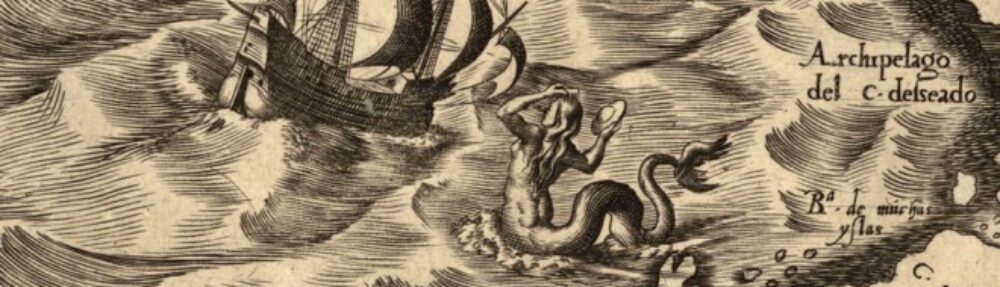
I appreciate how this reading defines wilderness and the environment. It helped to enrich my understanding of these concepts when considering them in conversation with mermaid mythology. The idea of wilderness had always seemed to be a naturally occurring thing. Something that simply existed and humans affected. To realize that wilderness is but a human construct and a rather narrow and exclusionary point of view is fascinating.
Whilst reading, it was interesting to notice the how the ideas of wilderness and mermaids shift over time. By this I mean that as the wilderness becomes less and less a place of evil and more a place to consume recreationally, so too do the attitudes about Mermaids shift. She becomes less of an evil monster and is commercialized in the 19th century. This also gives me a better understanding of why she is often used as a representation of nature and wilderness. On page 17 Cronon describes wilderness as a “siren song of escape.” I find this particularly interesting because we are learning that wilderness in many ways is a social construct that is a product of myth. The idea that nature and civilization operate on separate spheres is likewise a myth. We see this even in the story of Melusine. The beginning of the story describes that nature is in many ways a man’s domain, it is for a man to find adventure and prove their bravery by conquering it. Constantly humans infringe upon nature but so many stories show the mermaid as being the invader. Many years later we see these same sentiments still being echoed in the figurehead of The Virginian. I appreciated that the text also does away with the Christian idea of wilderness as untouched and “virgin” first because it denies the presence of natives that were forcibly removed from their homes; Second because to say that wilderness is virginal and that it is the environment in which the individual man can enforce their freedom and masculinity is deeply troublesome. When gender is considered as these elements of power, it is not difficult to understand how we end up with so much history of misogyny. It further reinforces the texts claim that to think of the wilderness through such a narrow scope also influences who we view as human and worthier of protection. If the point is to save the environment by keeping it pristine and untouched then what of the people that live in constant relation to the land and see themselves also affected by the same environmental issues affecting the natural world. Does that mean that these humans are not worth protecting? Again, we are put into the conversation of defining who is human who is not and what and who is worth saving.
You certainly understand this reading and why we are reading it in this class! Great points/questions: “The idea that nature and civilization operate on separate spheres is likewise a myth. We see this even in the story of Melusine” and “if the point is to save the environment by keeping it pristine and untouched then what of the people that live in constant relation to the land and see themselves also affected by the same environmental issues affecting the natural world. ” I hope you will lead us today!