When doing this weeks reading, The Trouble with Wilderness was quite interesting. It discussed not only the human impact on our environment today, but also how the wilderness connects to our relationships with the non-human world. On page 8 it says “Remember the feelings of such moments, and you will know as well as I do that you were in the presence of something irreducibly nonhuman, something profoundly Other than yourself. Wilderness is made of that too.” This comparison between the Wilderness and us is distinct here, as we get a description of a feeling we get when we are in nature, something non-human. This is what connects us to nature and the wilderness, our awe of it, the feelings we get when we are in beautiful scenery. I thought this really helped the articles voice of the importance of Nature, and why we need to protect it. Where would we get these feelings of awe if not for the natural beauty around us? I am not sure, and this felt like a reminder of that.
Not only is this feeling of awe surrounded by the idea of Wilderness, but also the feeling of terror. This article uses examples of 18th century English literature, and its descriptions of the Wilderness or the Wild. It states “To be a wilderness then was to be ‘deserted’, ‘savage’, ‘desolate’, ‘barren’ – In short, a ‘waste’, the word’s nearest synonym. Its connotations were anything but positive, and the emotion one was most likely to feel in its presence was ‘bewilderment’ or terror.” This is one of the many examples in this article used to describe past connotations of the Wilderness, that it was something to be afraid of. As the wilderness is still something people are wary of, it is less looked at in that way now, or at least for some people. For me, I would like to say I am not afraid of the Wilderness, sure when I think of it I usually think of it as Nature or something beautiful. The unknown is scary, which is why these connotations for the Wilderness are still used today. People hate the unknown, they hate the undiscovered. I think this article really painted the picture of that fear, and how we should try to celebrate and protect it, not destroy it our of fear and greed.
Literature and the Environment: Mermaids
Professor Jessica Pressman. Spring 2024
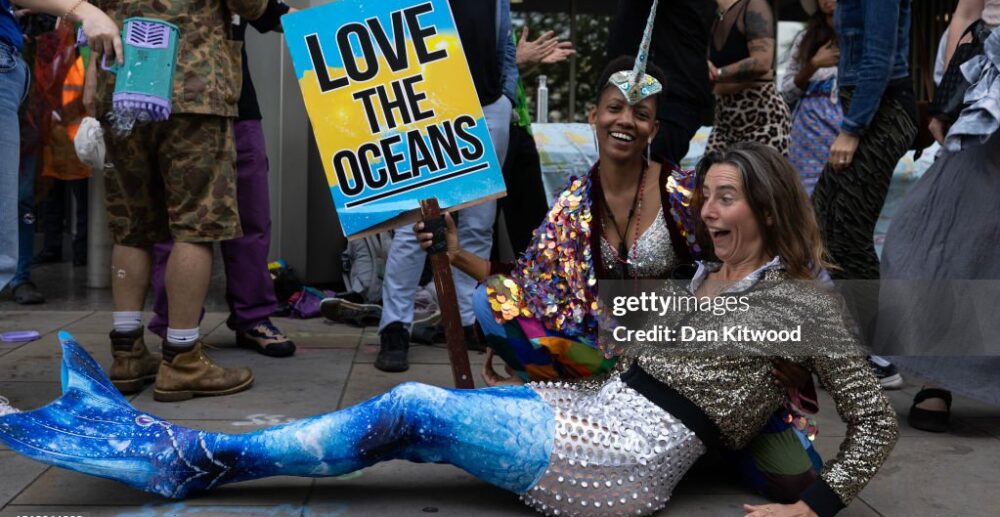
I am eager to pick up on your concluding point in class tomorrow. You write, “I think this article really painted the picture of that fear, and how we should try to celebrate and protect it, not destroy it our of fear and greed.” Let’s talk fear, monsters, and more!
Also, be sure not to forget to add your Category to the weekly post.