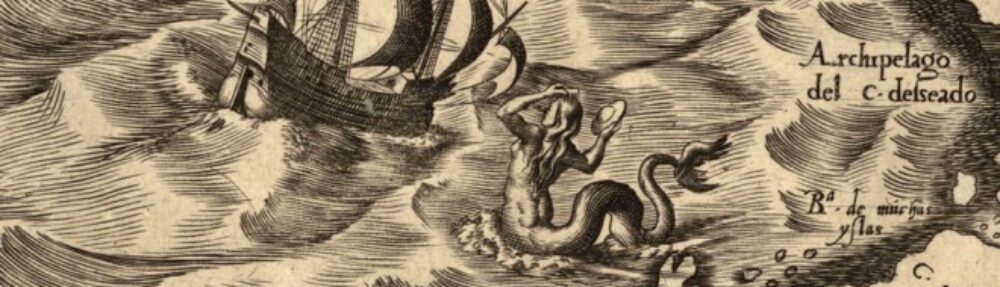
In this weeks reading of “The Penguin: Book of Mermaids” by Cristina Bacchilega and “The Romance of Faery Melusine”, we read the tragic story about Melusina. Although I did not fully understand it during my first read through, I couldn’t help but notice that this was essentially a cautionary tale about Karma. When her step-father broke his promise to Melusina’s mother and laid eyes on her when he was not supposed to, Melusina opted for revenge. She took her step-fathers money and charm and imprisoned him. This made her mother angry, resulting in Melusina being cursed in a similar way to how Melusina’s mother was originally cursed. Melusina went out, got married to a charming man named Raymond (or Raymondin), but was eventually met with a terrible fate when Raymond saw her in her serpent form when he wasn’t supposed to.
I found a lot of symbolism in the story of Melusina. The most obvious one was the fact that Melusina becomes a serpent from the waist down on Saturdays. I am not sure if this is relevant, but Saturday is the holy day for a lot of religions. In a lot of religions also, serpents are great symbols of evil, deception, and demonic creatures. The idea of Melusina being half serpent is also interesting because she claims she is “as faithful a Christian” (25) as Raymond. Turning into a serpent as a result of her wrongdoings is an excellent example of karma. She eventually had a happy life with the exception of her curse, which ultimately ruined her life in the same way the curse ruined her mothers marriage.
There seemed to be a strong theme regarding beauty and chivalry/masculinity as well. The story of the hunter shows a connection to chivalry and masculinity, which is interesting to read after the story of Melusina. Noble men are drawn to “things that lead them further into unknown… [seeking] in all directions the extension of their physical and spiritual power” (12). It is chivalrous to seek knowledge of the unknown, similar to how Odysseus longed to hear the siren song. Raymond was a chivalrous man who unintentionally committed a horrible act. Karma got him for his actions the same way karma got Melusina. He had a mostly happy life with a beautiful woman after his wrongdoing, but his wife ended up being cursed.
Hi! I really enjoyed your description of the symbolism in Melusina’s story. I also thought that the Christian view of serpents was true, which is why I was also confused about the depiction of her being a serpent on Sundays. Why would she be punished like that if she was a so and so “faithful Christian.” It is quite interesting to think about how religion plays a lot of significance in these myths, stories, and books.
Hey Rigo, I found your analysis of Melusine having a serpent tail in conjunction with being hidden on Saturdays (holy day) very interesting. I do recall Melusine repeatedly claiming that she was a Christian woman and for Raymond to not think otherwise. However, her possessing two wands seems like a non Christian practice and maybe her having a serpent’s tail suggests she’s a liar (because serpents are a symbol for evil and deceit). The connection you made between chivalry, noble men seeking knowledge of the unknown, and Odysseus hearing the siren song all suggests that it’s men who voluntarily seek knowledge even if forbidden. This contradicts the biblical story of Adam & Eve where Eve (female) was the one who bit into the apple of knowledge, when in theory based of your connection, should’ve been Adam. Good post!
Hi Rigo,
I liked your connections at the end about men wanting to know more about the unknown with Odysseus wanting to hear the siren song. Im not sure when these books were written but I feel like it’d make sense for them to be written during the Romantic Era. This era inspired a lot of intellectual movements so essentially everyone was curious and more creative. You really had my gears turning with that so great post!