Hello everyone,
For my final assignment, I wrote a short story inspired by the numerous readings we explored this semester, which primarily focused on environmental ethics and the human-nature relationship. My story, “Finding Oannes,” was mainly inspired by the following quote from William Cronom’s “The Trouble with the Wilderness,” a text that critically examines the concept of wilderness and its implications for our culture’s relationship with the nonhuman world.
“we mistake ourselves when we suppose that wilderness can solve our culture’s problematic relationships with the nonhuman world, for wilderness is no small part of the problem.”
The idea of “the wild” being a man-made concept really opened my eyes to the bleak reality that everything humanity touches MUST produce some sort of monetary value. This realization has deeply impacted my understanding of our role in the world, and I came to the conclusion that we, as human beings, have become an invasive species. It made me question the value we place on nature and the extent to which we exploit it for our own gain.
This realization didn’t shatter my world or anything like that; I still enjoy camping and hiking with friends. There is still plenty of pleasure to be had in these types of activities, and by no means am I suggesting we should abandon our attachments to the concept of nature – but one thing needs to be made clear: human order does not belong in the natural world.
The concept of ‘the wild’ and its implications have been a recurring theme throughout the semester, and I’ve grappled with articulating my insights accurately. This struggle continues, but ‘Finding Oannes’ has provided a fantastic platform for me to delve deeper into this complex and thought-provoking topic.
Thank you all for such a wonderful semester!
In “Finding Oannes,” I investigate human ambition, exploration, myth, truth, and the effects of these endeavors on nature. The story begins with a detailed description of a world where human civilization has reached a point of stasis on land, with all available resources methodically mapped out and used. This creates the conditions for the formation of a desire for adventure and wonder, prompting humanity to look to the undiscovered depths of the ocean. On this last frontier, the spirit of exploration still appears to be alive. The story also delves into the ethical implications of human exploration and the potential consequences for the natural world.
The majestic vessel Oannes is central to the plot, depicted as a marvel of ivory and gold that represents human intellect and the peak of marine exploration. The protagonist, Captain Jonathan Glanton, exemplifies the spirit of discovery and intellectual quest, similar to legendary heroes such as Einstein and Galileo. Glanton’s thorough research and documentation of the ocean’s contents illustrate the pursuit of knowledge and the desire to discover hidden truths about our planet. His character also serves as a reflection of the human ambition and curiosity that drives our exploration of the natural world.
I made an attempt to make the narrator untrustworthy because he is too enamored with the ship and its captain to realize how their exploitation of the sea could be detrimental. Making the ship out of ivory and gold was intended to reflect both the beauty of seeking an understanding of the natural world and the aggressive attitude with which we shape the natural world to work in ways we can comprehend and profit from. The Captain’s name, John Glanton, is a reference to the same-named infamous person from the old American West – best known for his merciless exploits as a scalp hunter during battles in the American West, representing a darker side of human desire and conquest.
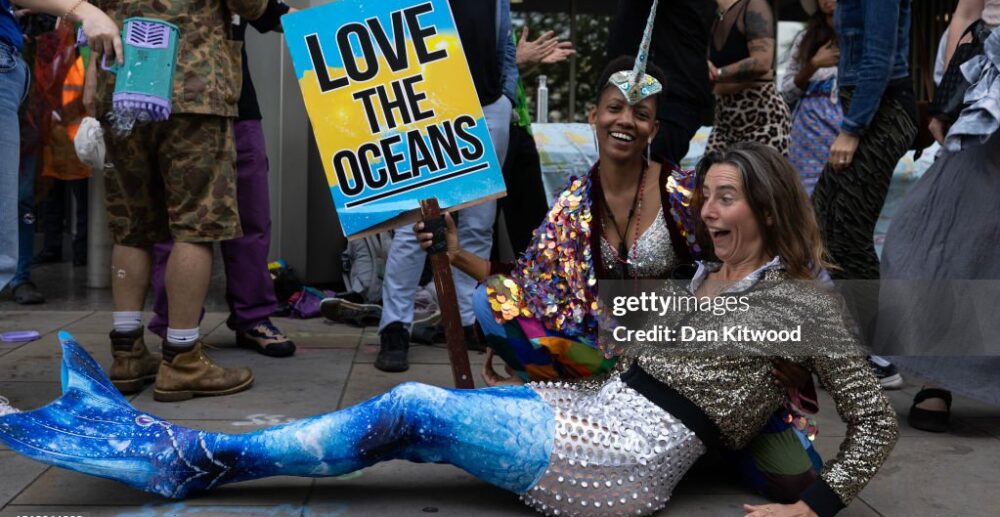
The story takes a poignant turn when the protagonist discovers Oannes, fifteen years after its departure, sunken on the ocean floor. This finding, combined with the tragic destiny of a mermaid crushed beneath the ship, provides a compelling metaphor for the repercussions of human ambition. The mermaid, once a symbol of mythological wonder, now represents the neglected and shattered portions of nature that we ignore in our never-ending search for knowledge and advancement.
The image of the mermaid trapped beneath Oannes provokes a mixture of awe and grief, emphasizing the fragile balance between human enterprise and its unintended effects on the natural world. The author’s undersea picture delivers a profound contemplation on the beauty and sorrow that come with our pursuit of enlightenment.
The narrative’s complexity is found in its investigation of human ambition and its consequences on nature and in its depiction of the interaction of myth and reality. The mermaid, a mythological creature, becomes a palpable emblem of the hidden costs of exploration, encouraging readers to consider the impact of their actions on the environment.
To summarize, “Finding Oannes” is a thought-provoking investigation of human ambition, exploration, myth, reality, and their effects on nature. The story goes into the depths of human curiosity and the drive for knowledge, pitted against the potential consequences of our persistent pursuit of discovery. The terrible fate of the mermaid beneath Oannes serves as a devastating metaphor for the natural qualities that we neglect and destroy on our voyage of exploration. Finally, the story encourages readers to explore the difficult balance between human advancement and environmental stewardship, demanding a deeper examination of the ethical consequences of our acts in the pursuit of enlightenment.
Scratch cards are such a fun, quick thrill! Thinking about online options now – saw Ninong Gaming offers lots of choices, even fishing games! Easy deposit with GCash too. Check out the ninong gaming app download for a quick game! Seems legit with verification steps. 👍
Really enjoying this article! Quick, easy access to games is key, and I saw 777pnl slot download offers that with fast registration & deposits – even crypto options! Seems like a fun, legit platform for Filipino players. 👍
Comment: Your exploration of the “wild” as a human construct resonates deeply. In my work analyzing user behavior across digital platforms, I’ve observed how we similarly commodify natural experiences. Just as we seek authentic moments outdoors, many turn to spentime apk for entertainment balance. The key is mindfulness in how we interact with both worlds.
Just finished my weekend poker grind; this new AI-driven ecosystem from casinoplusph app feels like a legit upgrade for PH players, blending blockchain speed with familiar slots and live dealer vibes seamlessly.
This reflection on commodification is profound. It highlights how all human systems, even those valuing ‘the wild,’ are inherently built on exchange mechanisms. Analyzing these complex value flows-whether ecological or digital-requires robust infrastructure, much like the secure platforms seen here: ph 799 link.
I’m hunting for that seamless mobile experience in PH casinos; Nimo Gaming’s secure app and fast payments look perfect, so I’ll check out nimo gaming download now!
This reflection on commodification is profound. It highlights how the impulse to quantify value-whether ecological or recreational-is a deeply ingrained human system. From analyzing market trends to optimizing user engagement, understanding these value structures is key, much like analyzing systems at 99wim com. Excellent piece!
This reflection on humanity as an “invasive species” is profoundly challenging. It forces us to rethink resource valuation-how do we assign non-monetary worth to natural systems? The concept of inherent value versus market value is critical in modern ESG frameworks. Understanding these complex systems of exchange, whether in conservation or even in digital resource allocation like 56jl ph, requires deep ethical modeling. Excellent work!
That’s a great point about balancing accessibility with depth in shooting games! Seeing platforms like ninogaming ph legit prioritize localized payment options (like GCash!) is smart – makes getting into the game easier for everyone. 👍
Honestly, the focus on a smooth user journey is what really stands out here. It feels less like just listing games and more like designing an actual experience. For newcomers, understanding everything can be tricky, but this structure helps! Check out shbest slot download for a smooth start.
This is a profound exploration of value systems. Your point about everything being monetized speaks to how economic models permeate even our concepts of ‘wildness.’ It’s a fascinating intersection of ecology and market dynamics. Understanding these value flows is key, whether analyzing natural resources or optimizing digital experiences, like accessing resources via the sg77 app download apk. Keep writing!
This reflection on humanity as an “invasive species” is deeply thought-provoking. The challenge lies in translating such profound ethical realizations into actionable, resonant narratives. Effective advocacy today requires powerful, visually compelling communication, which tools like the AI Social Media Assistant can help amplify across platforms.
Dude, this whole setup sounds legit. The payment stuff they mention is actually key, not just the games. Check out 1bet casino for the real lowdown. Super useful tip!
Honestly, the platform’s compliance angle is what matters most, not just the slots. Thinking critically about access rules is key. For anyone looking deeper, check out 30jili live app; it’s more about due diligence than just the hype.
Basic strategy really shifts your mindset at the blackjack table! Seeing how platforms like jilli ph online casino cater to local preferences with Peso transactions is smart – makes gaming so much easier & accessible! 👍
The structure of Game Zon seems thoughtfully curated for mobile users. Understanding the platform’s flow is key; check out the game zon promotions to see how they guide entry. It streamlines the experience well.
Hmm, this analysis is deep! Makes me think about consistent betting strategies vs. just clicking around. Check out pinas77 vip login club for more info; it’s interesting how online gaming taps into local vibes.
Love this community vibe! Saklagame truly supports Filipino players with fair play and fun. Start your journey today at saklagame vip for a safe, welcoming gaming experience where everyone celebrates wins together.
Your focus on value extraction is incredibly insightful. It highlights how human systems, whether economic or digital, are constantly optimized for yield. The engineered nature of value, from natural resources to complex platforms like the Nustar Casino APK club, is a fascinating study in human ingenuity. Nustar Casino APK club