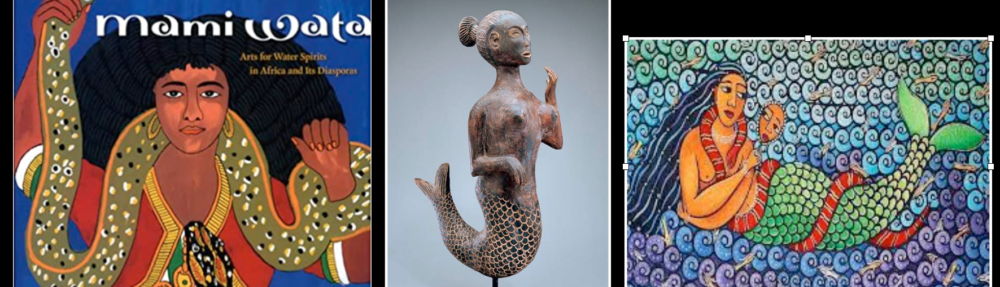
The stories of Ti Jeanne, Ma Dolly, and their relationships with Maman Dlo greatly intrigued me. Both stories have a heavy emphasis on sound, and the way the protagonists navigate it elicits different reactions from Maman Dlo. This reminds me of the issue of sound pollution, and how it is just as ecologically disturbing to biodiversity as other forms of tangible pollution—though many neglect to recognize it. Sound pollution interferes with individuals of a species communicating with one another, disturbs reproductive and migratory patters, and overall chases terrified species out of their home. Maman Dlo’s response to the different girls in her habitat reflects lessons in creating disturbances where you do not belong, and warns readers/listeners to be careful of their impact when visiting ecosystems.
In TI Jeanne’s story, Maman Dlo turns her into a mermaid servant because she heard her singing and splashing in the river. TI Jeanne’s loud singing is an act of irreverence, and her splashing shows a lack of care for the ecosystem she is a guest of. The disturbance of the water and human voice mixing with the cacophony of forest sounds, notably interfering with birdsong, draws the attention of the water deity, who witnesses TI Jeanne’s celebration of her own vanity. Upon being caught, TI Jeanne states “I haven’t hurt anything”, which shows a grave misunderstanding of the impact her play has had. The price for her invasion is a life spent in service to the ecosystem she disturbed—a fair means of making reparations.
Mama Dolly, unlike TI Jeanne, was always careful to be quiet when visiting Mama Dlo’s forest, even before she knew the water deity inhabited the river. She recognizes nature as something greater than herself, something to learn from and appreciate without imposing. For her respect, Maman Dlo welcomes her presence with a gift, and allows the girl in her youth to be a returning visitor.
These stories in combination teach the conduct with which humans should act while in the natural world. Local fear of Mama Dlo’s power incites those who know these tales to be careful not to draw her anger; not to make a sound or a splash. The mantra “leave no trace” comes to mind, as that is the rule all ecologists and visitors to ecosystems are taught before they enter. This is in order to preserve the natural state of the ecosystem and not alter it by leaving “traces” we were there. Mama Dlo enforces the rule of “leave no trace”, as anyone whose presence creates a ruckus in her habitat will have to answer for it.
Great point: “These stories in combination teach the conduct with which humans should act while in the natural world.” You do a nice job seeing the relevance and role of these stories and of showing how we can read them carefully. Eager to hear more from you in class!