Eric Paul Roorda’s introduction to The Ocean Reader advocates for a more holistic understanding of the ocean, challenging the notion of “separate bodies of water named as different Oceans” (2). Roorda continues our discussion of the Blue Humanities by arguing that the challenges facing the ocean can be addressed with an interdisciplinary approach–incorporating history and culture into marine science. A major reason why most of our ocean has gone unexplored is due to “terracentrism,” a term referring to “people’s tendency to consider the world and human activity mainly in the context of land and events that take place on land” (1). Terracentrism has deep roots in our history and has heavily influenced how knowledge is constructed and perceived. This bias limits our understanding of interconnected ecosystems and marginalizes the study of the ocean.
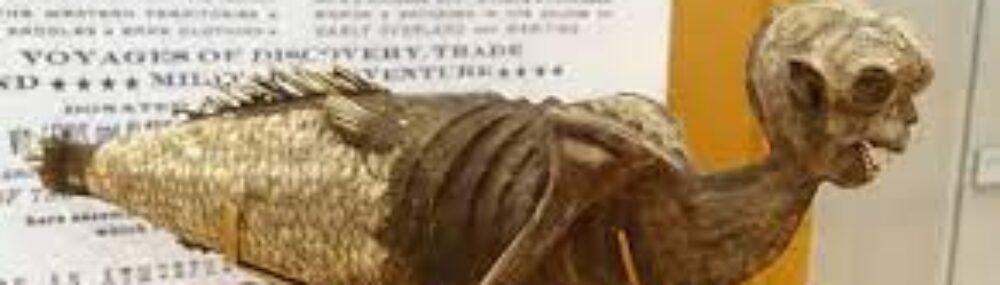
Terracentrism influences how humans interact and perceive marine environments, including the creatures that inhabit them. This skewed understanding of ocean life can be seen in our study of mermaids. Most of the mermaid stories we have discussed thus far have portrayed mermaids as half-human. These depictions accentuate a deeper bias ingrained in Western culture. By portraying mermaids as half-human, these stories inherently suggest that only beings with human-like features can possess intelligence, emotions, and agency. This perspective not only reflects a limited understanding of marine life, but also perpetuates a hierarchical view of the natural world. Additionally, half-human mermaids reflect the tendency to project human traits and experiences on non-human entities. This lens reinforces terracentrism, which creates the risk of overlooking the complex and diverse ocean habitats.
Overall, I found Roorda’s introduction powerful as it highlights the “natural bias” (1) humans have when discussing the ocean. As Roorda says, “we all depend on the ocean” (4), and actively recognizing this bias may lead to a deeper and more empathetic understanding of aquatic life.
Wonderfully smart and well-written blog. Thank you for illuminating the relationship between the BH readings and our mermaid stories. You write, “Terracentrism influences how humans interact and perceive marine environments, including the creatures that inhabit them. This skewed understanding of ocean life can be seen in our study of mermaids. Most of the mermaid stories we have discussed thus far have portrayed mermaids as half-human. These depictions accentuate a deeper bias ingrained in Western culture.” I hope you will share more about these insights in class this week!
Hey Elise, I really enjoyed your blog post! Looking at and understanding terracentrism through the mermaid stories we read was really smart. It’s fascinating how we, as humans center ourselves in everything, even possibly fictional stories. But by doing so, we limit our knowledge and understanding of the ocean which is such a large and important aspect of nature.
Hi Elise,
This analysis of our reading was so smart and a pleasure to read! I appreciate how you linked this article to our study of mermaids; your claim that, “By portraying mermaids as half-human, these stories inherently suggest that only beings with human-like features can possess intelligence, emotions, and agency.” really brought into perspective the deep-rooted impact terracentrism has on our understanding of the natural world. This claim makes me think of how Octopi have beautiful minds, full of intelligence and the ability to innovate, and yet, we hunt and eat them. Same with elephants, which we have found mourn their deceased kin, and can recognize themselves in mirrors, and yet we abuse them. All without remorse, because they do not look like us, so we do not empathize with them or believe they can feel or think like we do.
Thank you so much for bringing this idea to our discussion!