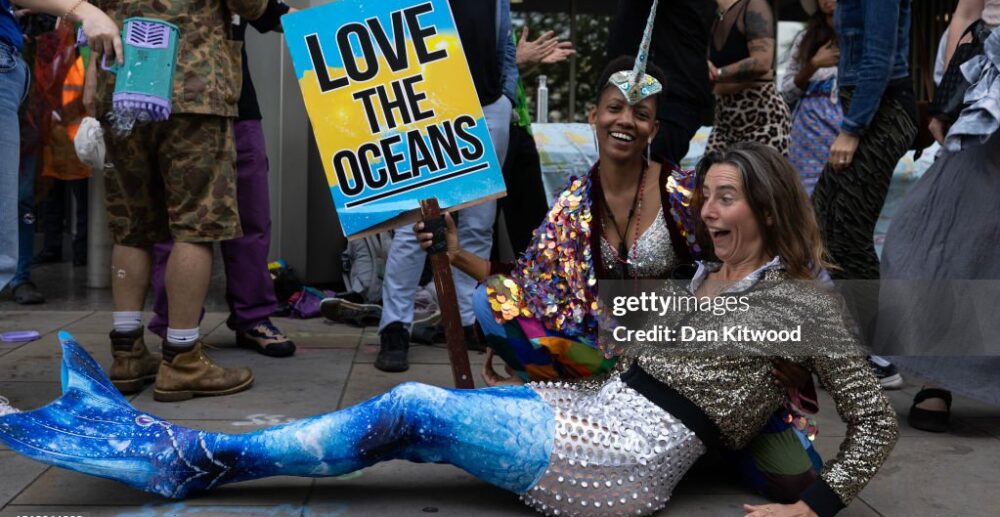
The introduction of “The Ocean Reader” had me thinking a lot about how we really don’t practically anything about the ocean nor do we care about the problems going on inside of it. I took Oceanography last semester and it was covered one of my GE requirements which is so interesting because how can you consider learning about the ocean general education when we really know nothing about it? It seems like we’re just scratching the surface of what is really going on. I wish we knew more about the oceans as there is so many unknowns as to what is truly in the depths. I think that’s why so many myths and legends about sea monsters and mythical creatures are stemmed from the ocean. They originate from our innate curiosity and even fear of the unknown depths. These not only reflect our fascination with the ocean but also serve as a reminder of the impact it has on our collective consciousness. And I hope as we continue to explore the possibilities of the oceans, more species will be discovered and phenomena that may inspire more myths and legends in the future.
It is also perplexing to me that the ocean covers more than half of our planet and it hasn’t been a priority to explore it. I think we often just overlook what goes on in the ocean because we can’t see what’s happening so we pretend it’s not in trouble. I like how in the text the author made the decision to capitalise Ocean as it gives it more of an emphasis and significance. I think it’s crucial for people to understand how much of an impact our ocean has on our lives.I also like how convincing this introduction is written as it draws you in to want to read more about how crucial the seas are to our survival.
These are all great thoughts. I’d like to see you incorporate quotes into your writing so that you can practice close reading. In particular, here; you write, “I like how in the text the author made the decision to capitalise Ocean as it gives it more of an emphasis and significance.” If you quote the author, you might be able to do more than offer a personal view (“I like”) and instead present an analytical interpretation.