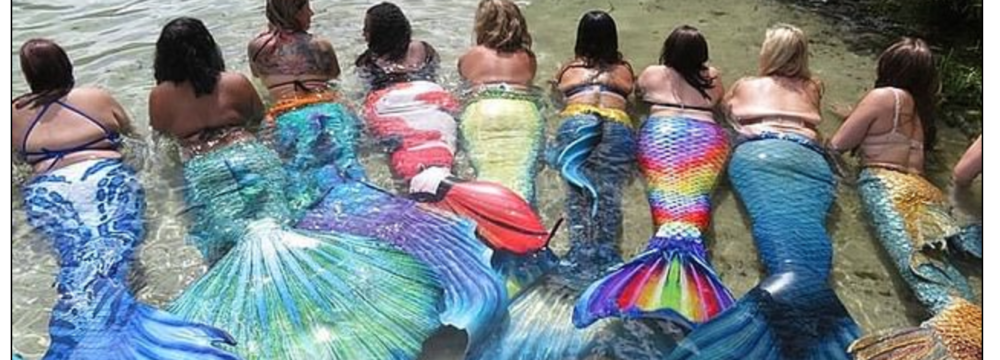
Week 6: Interconnectedness between humanity and the natural world

While reading “The Day after the Wedding” from Undine, I noticed how Undine is described as a “bubbly beauty” (101) that is “as mild and gentle as an angel” (103). Undine’s characterization differs greatly from the stories we discussed earlier this semester. Similar to Melsuine, she is loving and passionate— remaining loyal and kind to her husband. I interpreted Melsuine’s story as a cautionary tale highlighting the consequences of human’s disconnection from nature. Undine’s story seems to parallel this idea.

Despite Undine and Huldbrand’s differences in origin and essence, they remain utmostly devoted to one another. While Undine’s origin may be considered “strange” (104) to humans, Huldbrand continues to embrace his “sweet wife” with “the most heartfelt emotion and love” (106). Their marriage may symbolize the potential harmony between humans and nature. Huldbrand’s deep affection for Undine remains steadfast, illustrating his willingness to embrace her despite her supernatural nature. The natural world is still unknown to humans, but the couple’s love shows that there is an opportunity for cooperation and understanding.

Undine and Huldbrand’s relationship highlights the need for humans to reconsider their relationship with the natural world. Rather than viewing nature as something to be conquered or controlled, perhaps we should learn to accept and embrace its mysteries. As Undine says, “all beings aspire to be higher than they are” (105). Inherent with all beings, whether humans or otherwise, is the inclination to strive for betterment and advancement. Historically, humans have attempted betterment through conquering the natural world. Undine’s quote suggests that all natural and human beings are, in a sense, the same— always looking for more. “The Day after the Wedding” may advise humans to recognize this similarity and urge us to cultivate a deeper connection with nature. Doing so may lead to a greater sense of interconnectedness and fulfillment.

Week 6

The Feejee Mermaid hoax showcases how mass communication like the newspaper can shift a cultural belief from being accepted as fact to being seen as fabricated. Oral narrations have been used for thousands of years and have been used to communicate ideas and stories across time and space. Another way that ideas have been communicated has been through the written word. Both are effective at spreading information, but with the development of the press, written communication has become much faster at communicating ideas with the public. In a previous class discussion, Professor Pressman mentioned that the act of writing and the information written down was seen as true and unshakeable. If we apply this knowledge to how the press wrote about mermaids in the early and midcentury 1800s, we can see why mermaids fell from scientific grace so quickly. Scribner states that within this time frame, a Westerner would read about merpeople in their newspaper around 4 times a year (Scribner 126). This consistency for several decades would help cement mermaids as a tangible part of the world, something to be seen and studied. Had stories about mermaids continued to have been spread by oral narration, mermaids might not have been treated with such scientific interest. Communication theorist Marshall McLuhan stated that “the medium is the message.” Written word is more likely to be treated more scholarly, which would communicate to the readers that the existence of mermaids is fact. The widespread discovery and publishing of the Feejee mermaid’s origins helped to dethrone mermaids from their spot as a scientific wonder. In both instances, media in the form of the press helped to shape the public’s perception of mermaids. Despite Western society implying that the written word is something unchangeable, it’s not stagnant and can bring about change towards previously cemented cultural beliefs.

“The Mermaid” article.

While reading the article published, “The Mermaid” I was interested in how the depictions of the mermaid change so radically when race is added to the mythology. The mermaid stories we have read so far are always explicit in stating the beauty of the mermaid’s human half. So beautiful as to seem ethereal and other worldly. The source of evil and ugliness is always relegated to their animalistic lower half. On Page 234 of the text we get two completely different depictions of non-white/western mermaids. On the first one the article says, “It was a female with, with ugly negro features. The skin was harsh, the ears very large, and the back parts and tail were covered with scales.” This stands in such stark contrast with the previous descriptions we have previously encountered. The text explicitly state that this mermaid is not beautiful because of its ethnic features. Where the mermaid’s skin was previously pearlescent and so transparently white as to almost seem spirit like, this mermaid is described as having harsh skin. Though the description is brief it also gives the sense that it focuses more on how far from humanity this creature is. It struck me that it mentions the position of the mermaid when at rest. The text says “It’s position, when at rest, is always erect”. I don’t know if this is intended to be sexually suggestive but I am also considering that there is a history of Black bodies, particularly women’s bodies, being highly sexualized by the western world.

The second mermaid description that I noted is on the same page and it is describing a mermaid found in the Archipelagos of the Aegan Sea. This mermaid is described in fuller detail and it the text immediately zeroes in on its similarity to a young female human. Already this mermaid is placed in closer relation to humanity than the first mermaid. That being said she still has enough of that “exoticism” that the western world was so fascinated by in relation of Asian countries. She is not afforded the mythical flowing hair of western mermaids. Instead this one has “gills for respiration, which appear like curls… this one only has rolls which, at a distance, might be mistaken for short curls.” After this the article also mentions that she seems to have fins and her temples as if she was wearing a headdress. Here we see that this mermaid does not have the typical human head and torso and fish tail. It’s animal-like properties are distributed across her entire body.

Week 6: Undine

In this week’s reading: The Day After the Wedding, from Undine, I though the connection between the natural world and humans was a powerful theme. There is a passage on page 104, that reads, “There are beings in the elements which almost appear like mortals, and which rarely allow themselves to become visible to your race.” This suggests the presence of mystical and supernatural forces intertwined with the natural humans. It highlights the ever longing idea of a hidden realm that is populated by beings that are not within human perception, but are existing alongside our reality. Undine mentions that there are spirits that exist within the air and bodies of water, as well as in creatures such as salamanders and gnomes. The mention of these mythical beings expands the mythological world that mermaids and sirens exist. This also makes Huldbrand question his own perception of reality and he must question Undine’s existence. He is forced to reflect on the boundaries between these two worlds as well as his complex relationship with a non human.

I also found the quote, “His only daughter should become possessed of a soul, even though she must then endure many of the sufferings of those thus endowed.” I found this really intriguing because it first indicated that she now possesses the soul of a human which makes her different from her father and the rest in the supernatural realm. In a religious context, having a soul is often associated with consciousness, morality, and having the capacity for deeper emotions and experiences. Souls may experience joys and sorrows, pleasures and pains, love and loss, in ways that are uniquely human. So, in this case, Undine having a soul makes her more vulnerable to the struggles of human existence, including having the capacity to love someone. This duality in her nature contributes to her sense of otherness and her struggle to find her place in the world.

Week 6: Undine, Huldbrand, and Christianity

In this weeks reading of “The Penguin Book of Mermaids” by Cristina Baccheliga, I was mainly interested in the idea of Undine, a water goddess, needing to marry a powerless mortal man in order to gain a soul. The reason I was fixated on this idea is because the story seems to create this logic that women are soulless beings that absolutely require a man in order to be complete. I don’t know if I interpreted the reading correctly, but it almost feels like Undine’s significant power was being undermined and overshadowed by the need for a man. This story was written by a man in 1811, and that context tells me that this was a subconscious thought that was shared by men in these decades. True feminist movements wouldn’t begin until about 150 years after this was written.

Despite the unfortunate context of the story, I did appreciate the overall happy ending, as those have not been very common so far. Huldbrand fully “embraced her with the most heartfelt emotion and love” after she revealed that she was not human. Undine was able to keep her new soul but gave up her power as a body of water. While I will admit that the pretext confused me a bit as it seems to contradict the contents of the story, it was an interesting parallel to see how this semi-human entity reacted to a man compared to the sirens with Oddyseus or Melusine with Raymondin. One difference that I found between this story and the others is that Huldbrand seems to be a completely well rounded man, whereas Raymondin was unintentionally a murderer that did not pay the price for his wrongdoings. My theory is that God, or the universe, made an effort for Raymondin to pay for his sins by making him ruin his relationship with Melusine. Huldbrand, on the other hand, has committed no wrongdoings and so he gets to live happily with his wife who shares similar characteristics as Melusine. This would make sense as Christianity was huge in the 1800s and the idea of sinning was taken a lot more seriously than it is today.

Week 6: Freakshows and Fantasies

“The Feejee Mermaid Hoax” and “Freakshows and Fantasies” both demonstrate the Western obsession with mermaids and the efforts at “ordering the natural world and its creatures” that continued from the Enlightenment period (Scribner, 129). In Barnum’s autobiography from 1854, he discusses the Feejee Mermaid Hoax, but also outlines a historical account of mermaid sightings and displays. Barnum describes the mermaid as a “fabulous animal”, and yet, continually applies Western beauty standards to the mermaid sightings and displays. He views the mermaid as animal or other, but not enough for them to be free of our judgment.

While almost every recorded mermaid sighting occurred in the British Isles or America, both readings pointed at “the ‘Oriental’ allure of Asia (that) still held sway of the Western masses” (Scribner, 126). In 1758 a mermaid exhibited at the fair of St. Germaine’s in France was described as “female, with ugly negro features. The skin was harsh, the ears very large…” (Penguin, 243). Here, Western beauty standards, and clear racism, is being applied to the mermaid, even though they are viewed as animal or other. However, in London in 1775, a mermaid exhibited was determined to be an “Asiastic mermaid… young female- its eyes a fine light blue- its nose small and handsome- its mouth small- its lips thin- its chin well shaped- its breasts are fair and fall… the belly is round and swelling, but there is no navel…” (Penguin, 243). The mermaid that was suspected to come from the Archipelago seems to meet the Western standard of human beauty.

Also, the detail of the rounded belly lacking a navel points out the ongoing question of how mermaids reproduce. If there is no navel, it must widely differ from the human birthing process. I find it interesting that this detail was included in the 1775 exhibit.

In mermaid sighting and captures from earlier in 1187 and 1430, they both appeared close to human, but were said to not be able to speak, Barnum states “that nothing seem wanting to it (the mermaid) but speech” (Penguin, 242). The mermaids lack of speech seems to be another separating factor between us or other, as well as if the mermaid was even deemed satisfactory.

Week 6: from Undine

A close study of this chapter reveals that Fouqué employs a variety of literary approaches to illustrate the psychological complexities of his characters and to examine the tension that develops between them. The characterization of Undine, the water sprite who marries the knight Huldbrand, is a key aspect in Fouqué’s portrayal of jealousy. Undine’s jealousy is obvious as she deals with the presence of Bertalda, a human lady who causes problems in her marriage. Undine’s actions and language reveal her envy, as she strives to reconcile her otherworldly origins with the human feelings she feels. For example, when Bertalda expresses admiration for Huldbrand, Undine reacts with a mix of uneasiness and possessiveness, indicating the depth of her mental anguish. Furthermore, Fouqué uses subtle narrative tactics to create a sense of uncertainty around Undine’s motivations, confusing the reader’s understanding of her character. Fouqué uses unreliable narration and subtle foreshadowing to suggest Undine’s capacity for both compassion and malevolence, blurring the distinctions between protagonist and adversary. This ambiguity gives dimension to Undine’s character, prompting readers to consider the nature of her jealousy and its ramifications for the story.

Week 6: Thoughts about Undine

I found the story of Undine entertaining. I am starting to notice some similarities between these mermaid tales, especially between this one and Melusine. First, both stories mention that the mermaids are under some spell or evil, for Undine it was having no soul and Melusine a serpents tail. Second, both women are required to find a man to marry them in order to break the “curse”. Third, both stories end in some tragedy stemming from the man betraying the woman in some way, haven’t read a tale where the woman betrays the man, yet. Fourth, both women lead the man to a body of water. I find the requirement of a man marrying a woman to save her quite interesting because it kind of shows that a woman is dependent and needs to be saved. I can see how this relates to Christianity because I know marriage is a big thing in religion, (weddings are often held in churches with a pastor) not to mention that Undine was written by Christian minister, George Macdonald. In Undine, a part that caught my attention was Huldbrand’s foreshadowing dream, “…disguise themselves as beautiful women, and from beautiful women, they all at once assumed the faces of dragons…” (pg102). I get that this piece was a foreshadow to Undine’s true nature, what I don’t get is why in every one of these tales it’s beautiful women who are seen as evil. I’ve never read a woman who’s described as “unappealing” of committing these acts of deceit. If I were to live in those days, these tales would have me question every beautiful woman’s intentions/nature, I wonder what the reasoning behind this is. 

Week 6: Freakshows and Fantasies – The Confirmation of Merpeople

I found great interest in this week’s reading in “Merpeople: A Human History”, Freakshows and Fantasies. I was very intrigued by how the belief of merpeople spread throughout the United States and London. Most of the stories we have covered so far take place on different continents, such as France (Melusine) and Tamriel (sirens), which has led me to believe that the merpeople did not have an origin in a place like the United States. The ideas and beliefs of merpeople were spread widely through newspapers. Cities such as New York and London used newspapers as the primary way to spread news throughout their area. This intrigues me because most people during this time were learning about mermaids through the news. This led these people to believe in mermaids before they were even given any proof of their existence. Newspapers were publishing many hoaxes when it came to mermaids but also featured sightings. I am wondering how readers distinguished what they believed with such contradictory stories coming out at the same time. This has also brought me to connect this time with the period we are currently living in. The media has always had a large effect on people and what they believe.

I have also found great interest in P.T. Barnum’s influence on mermaid confirmation. Barnum was known for taking “freaks”, or non-conventional people, and putting them in a show. I find it interesting that he “imploded belief in merpeople” (128) when he was such a believer in the unknown. I would like to do further research on Barnum’s belief and interest in mermaids and learn about the effects that had on people during the time.

Week Six: The Fejee Mermaid Hoax

This week I decided to focus more on The Fejee Mermaid Hoax (Penguin Book of Mermaids) and it made almost a guide to how I would want to structure my discovery assignment to go. The way in which this one story has let so many other mermaid discoveries come to light was impactful but also made me wonder if there are so many people claiming what they have seen, why would it still be a debate? Throughout the pages we were supposed to read it was giving clear examples from different years and locations in which mermaid sightings took place and somewhat of a description of how exactly it happened. The last paragraph on page 243 in which there is a description of a Asiastic mermaid in London 1775 was able to describe them but in the way they didn’t want the mermaid to look human and even though she had clear human characteristics I felt as if they were almost trying to portray her as ugly so society can still feel fearful and possibly not confide in what was being said? They would describe her characteristics she held which all sounded human but made sure to incorporate her fishlike features just like “It’s ears are like those of the eel, but placed like those of human species,..” (page 243) which was strange because if they were originally being described as creatures who are human from the waist up and fish from the bottom down, how is it that these features are able to mix together if there has been a divide in their physical traits?

One of the important questions that resonated with me was the way in which there were connections between different species of animals which led to the question of, “…why may we not supposed that there is also a connecting link between fish and the human species?” (page 241). This was the point that made me even question and realize the similarities between so many animals and why is it that I couldn’t make those connections between humans and mermaids? My entire life the only mermaid figure I knew and loved was Ariel from The Little Mermaid but the Disney version which I don’t think truly represents the entire mermaid culture from what I have learned from this course. Knowing the picture of Ariel I have always had in my head and us as humans I was never able to piece how we are both similar in many ways because I felt an important point I learned as a kid through this movie was almost to fear the ocean since mermaids or other creatures that appeared from this movie live there and can cause problems, which almost delayed my realization that humans and mermaids are more connected to each other than society cares to acknowledge. This one section has sparked my interest to truly find or hopefully find any sort of bigger connections that human and mermaids but also the ocean have in common with each other, or even how it forms a cycle between each other.