Post Human Entanglements in Contemporary Poetry

Dr. Antje Schmidt’s talk on post-human entanglements in contemporary poetry taught me several things. Still, one of the things I felt was most relevant to me and our class was regarding the importance of political and cultural situations occurring at the time certain things are written and published. During her presentation, she focuses on the work of Carla Cerda who is a biologist, poet and author of Loops. Loops is a series of poems all connected and intertwined with one another, where both the author and reader are included in this sort of journey up and down an elevator which seem to represent many different scenarios.

In one instance, Dr. Antje Schmidt pointed out the relevance of one poem and how Cerda took a real life issue that occured regarding lithium mining, and how it affected flamingos. In the poem, there is a line where she talks about the lithium shining on the feathers of flamingos. I felt its important because if I would’ve read this poem it might hav caught me off guard to see her talking about flamingos, but when looking at the context in which the world was in at the time it makes a lot of sense.

In learning this, so far it has helped me think and do some research on other literature I may be consuming, especially in our class. Since a lot of the texts we read, are not modern, i think this was helpful in showing me how important it is to look at the background of literature and see what important events were happening at the time to understand the relevance of said literature.

Extra credit: Antje Schmidt

Dr. Antje Schmidt’s talk focused on close readings of the book written by Carla Cerda, which was filled with poems. These poems all related to each other, but stepped in and out of each other. Some of the main ideas in these poems were the effects of the lithium industry on the environment, the effects of the lithium industry on Chile, and human interaction with technology. 

This talk relates to our course through the commentary on the environment. Our class is focused on “literature and the environment”, as it is named. This book, written by Carla Cerda, often discusses the interactions of humans with the environment, and being a collection of poems, it is literature. The poems speak on how humans have caused destruction in the environment through lithium mining (disturbing flamingo populations, local populations, indigenous populations), which is similar to how we discuss human interactions with the environment through use of the mermaid as a symbol of the environment. Also similar to our class, this book uses a story to make commentary about the environment. The poems loosely follow the story of a tour group on an elevator, which stops at different floors.

Another important part of this talk that is relevant to our class was how it exposes the current society. Often, in class, we talk about the influence of historical society or historical events on the writing (themes of Christianity, attitudes toward the environment, marriage). This collection of poems reflects the technological times of this decade through random inserts of technology related words or graphics. It also reflects current political times by making commentary on the lithium industry in Chile and its effects on the people and environment. 

Week 7: The Little Mermaid

Reading The Little Mermaid this week has been intriguing. (I haven’t actually seen the Disney version either so this is my first impression of the “Original” Little Mermaid before I invest time in watching the Disney twist).

I am really intrigued by the imagery and descriptive words used by the author to describe this “underground” water-world. Various aspects of the text foster the idea that the human world is very glorious. Furthermore, the princesses described their initial response to visually seeing the human world in a way that encourages an appreciation for our world. For example, one of the princesses compared the sunset sky to “gold” to create a visual for the other princesses of how different and more fantastic our world is than the water-world. This is important because it highlights the humanity that exists amongst these creatures. The aspect of their humanity is significant because it creates an element of relatability to our temptations and curiosity. It is natural for us humans to be curious, to want to explore different countries and learn about different cultures. Similarly, these mermaids had the same curiosity.

Week 7: Hans Christian Andersen’s The Little Mermaid

I remember being about ten years old when I first read Hans Christian Andersen’s The Little Mermaid. Needless to say, I was horrified by how different it was from the lighthearted 1989 Disney adaptation so many kids grew up with. It was more graphic, more painful, and, for lack of a better word, more sad.

Andersen’s mermaid does not have a name, whereas I wished to be named Ariel after my favorite Disney princess. The rules of going to the surface are also less restrictive than in the Disney adaptation, as a merperson’s journey to the surface is seen as a coming-of-age ceremony, and after that point, could go to the surface whenever they want rather than being forbidden from ever going up. Ariel’s tail becomes two legs from flashes of light and swirls of smoke, while Andersen’s mermaid mutilates herself by cutting off her tongue to pay the price for her transformation. The presence of the little mermaid’s grandmother and her sisters is noticeably absent from the Disney adaptation, which, in some ways, enhances the little mermaid’s loneliness rather than detracts from it. It’s also notable that the little mermaid experiences pain with every step she takes on her human legs, while Ariel does not seem to suffer any adverse effects of her transformation other than being unable to use her words. The most notable difference between Andersen’s story and the Disney adaptation is that Andersen’s little mermaid does not get her prince charming in the end; all of her sacrifices are rendered useless and go unappreciated because they are unsaid.

Rereading this story as an adult almost made me cry in my living room, especially knowing what I know now about Hans Christian Andersen and his rocky romantic relationships. Because of that, it’s no wonder that mermaids and many mermaid stories are often read through a queer lens, and no wonder that this story is so full of yearning and suffering.

Week 7: The Little Mermaid and the Hardships of Maturity

In this week’s assigned reading, The Little Mermaid, written by Hans Christian Andersen, the story of a young mermaid’s desire to discover a new world is told. Andersen presents his main character, the little mermaid, whose name is never mentioned, as the youngest of six sisters. All under the care of their grandmother, the king’s mother. The grandmother carries in her tail twelve oyster shells that represent not only her mature age and knowledge but also her rank. It is revealed by her that mermaids are given the chance of a lifetime to witness human life above the waters once they turn the age of fifteen. When I read this I thought about my Mexican culture that holds special events for fifteen-year-olds called Quinceañeras; the celebration of a girl’s 15th birthday, marking her passage from girlhood to womanhood. At that moment I realized The Little Mermaid is not only a story of innocent romance but of a mermaid coming of age.

From the moment the story begins, the six mermaid sisters are presented, all of them having plots of garden to plant whatever they please. All of them plant flowers that take the forms of sea creatures, however, the youngest plants her red flowers in the shape of the sun, which points to her child-like fascination with what is above the waters (that also foreshadows her ending as a daughter of the air). After all of her five siblings get to experience the human world it has come to be the little mermaid’s turn and her grandmother dresses her granddaughter’s tail with eight oyster shells, “Well now you are grown up…so let me dress you like your sisters…and the old dame ordered eight large oyster shells to be fastened to the princess’s tail, to denote her high rank.” (Bacchilega & Brown 113) To this, the little mermaid lets her grandmother know that the decoration hurt her, and her grandmother responds with “Pride must suffer pain,” (Bacchilega & Brown 113) this reminds me of “beauty is pain”, a well-known saying that is told to women the moment they enter adolescence. According to the history of corsets, a young woman would start wearing corsets at the age of fifteen, a neat parallel to what is happening in the story.

After being told by the sea witch that she would turn into sea foam if the prince didn’t end up loving her and marrying her at the hands of a priest to acquire a soul and be able to have a soul that’ll live for eternity she took the impulsive risk, confiding that she would be successful. It is no secret that some young women fall under the belief that they’ll get to marry their first love, some do, and some don’t. The moment the prince lets the little mermaid know about his marriage to another princess even though heartbroken this is where she starts to see life differently, she starts maturing, and it shows when she chooses to not murder the prince to transform back into a mermaid. This, fortunately, transforms her into a daughter of the air, with the opportunity to experience human life and get to heaven.

The nature elements in this story play their part in representing the innocence and curiosity of the little mermaid, from saving the prince around the end of winter and acquiring her maturity by spring, it all points to a wholesome new beginning for our main character.
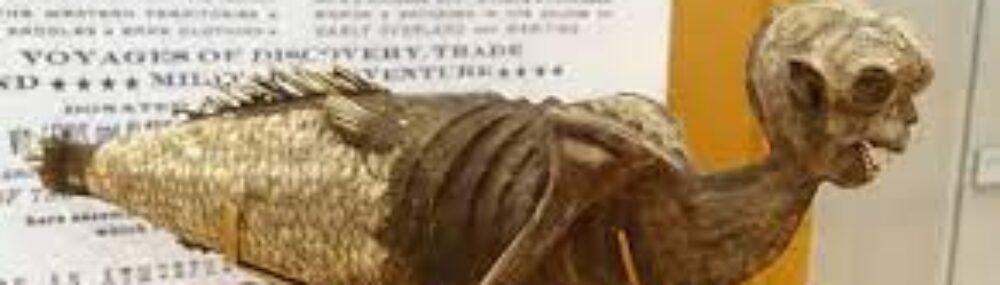
Little Mermaid

If I’m being entirely honest, I’ve never been introduced to any adaptation or version of The Little Mermaid, so reading this without any assumptions or biases makes me wonder if my interpretation is any different from that of those who have already seen the movie. Because I haven’t seen the Disney adaptation, I don’t know what is different about the story and the characters. However, I can assume that the Disney version is modernized and may exclude some of the details on death and immortality.

Anderson is a Danish writer, but when I looked him up it seems like many people have questioned his faith because of his views on life and death. After reading the story, I sense that there is definitely some Catholic values of the time showing through. The Catholic Church says that the human soul is immortal. It also preaches that animals are unlike humans because they do not have immortal rational souls. To me, this story really brings out those ideas that Anderson has about the soul and what it means to be alive. In the story, the old dame tells the little mermaid that humans “have a soul that lives eternally”, unlike the soul of the mermaids that just “chamg[es] into foam.” This reveals to readers that Anderson has at least some Catholic values, and he’s letting it show through in the story. Even more than the other stories I see many biblical allusions throughout the story. The Kingdom of Heaven is referenced, among other allusions.

This story also reminds me of an interesting issue that wasn’t as prevalent when the story was written. The little mermaid joins the human world only to feel out of place and like she doesn’t belong but still doesn’t feel accepted in the sea. It’s as if she’s alone and alienated by both sides. This is an issue that I’ve seen (not experienced myself) many times with immigrants the the US. We look at people with ethnic backgrounds and say, “He’s Mexican, she’s Vietnamese”, even when that person may have never been to those countries. Then, when that person goes to the country of their ethnic background, they also don’t feel at home because they’re American. I find this parallel particularly interesting because I doubt it was intended by the author.

Week 7: The Little Mermaid

When reading Hans Christian Anderson’s The Little Mermaid I couldn’t help but notice the recurring use of the the color red. Aerial plants red flowers and “a bright red weeping willow” in her garden (Anderson 109). The sunsets are described as having “red and violet clouds” (Anderson 111) and the storm seen by Aerial’s sister had “red flashes of lightning” (Anderson 112). One consistency between the use of red is its relation to the human world. The flora, sun, and sky are all key components of life above water. This is a stark contrast to the atmosphere of Aerial’s world, which is described as having a perpetual “blue tint” (Anderson 109). Anderson uses these colors to highlight the difference between Aerial’s life underwater and the human world she longs to be a part of.

While Anderson’s use of blue and red helps contrast the human world from ocean life, I believe he also intended to use these colors to carry a symbolic meaning that foreshadows Aerial’s fate. Blue is cool-toned and, in literature, often associated with calmness or even isolation. It is the complete opposite of red, which is warm and typically suggests passion and danger. By consistently linking red with elements of life on land, Anderson emphasizes the allure of the unknown and hints at the challenges Aerial will soon face. Aerial is drawn to red because that is how “the sun [appears] to her” (Anderson 109). She is often observing the sun as she attempts to get glimpses of the prince’s life. This makes her transformation into sea foam all the more symbolic as Anderson writes, “the sun now rose out of the sea; its beams threw a kindly warmth upon the cold foam” (Anderson 129). Despite her physical dissolution into sea foam, there is a sense of tenderness and compassion in the sun’s rays— almost an acceptance. Aerial willingly sacrificed herself for the prince. Therefore, I believe Anderson’s decision to describe the sun as red was intentional, as it foreshadows the passion Aerial has for the prince and the imminent transformation she will undergo.

Week 7: The little Mermaid

This week’s reading focused on Hans Christian Anderson’s “Little Mermaid” folktale. I have never read the original story of the little mermaid and found so many similarities to the Disney adaptation of it. What I found that Disney kept the most similar in the adaptation was the fact that this is sort of a coming of age story. It seems like there’s always a theme to each of these mermaid stories that the mermaid is just a symbol for something larger; they’re always meant to teach us, and that brings me back to the roots of the word monster having meanings of teaching. In this folktale specifically, it seemed like a coming of age story mostly, sprinkled in with Christian values and expected gender roles. The grandmother in the story makes this tradition around the 15th birthday as when “[they] have accomplished your 15th year” (page 109), they were able to go up and see the world above. The 15th birthday held much significance in this story as that was the age the young mermaids were allowed see the entire world for the first time. This tradition reminds me of the Mexican tradition, where on your 15th birthday you’re basically seen as an adult as a young woman, and have a Quinceañera. I can see a lot of history, sort of repeating itself within the stories and everyone as a society having the similar culture just in different fonts. I think that significant because it really shows how similar we are as human beings, regardless of where we come from and when we came from. This notion of you vs the unknown really goes away when you realize our similarities even when it is portrayed through something so different, such as a mermaid.

(posted before 6pm, just edited a typo)

The Little Foundling

I found the story of The Little Mermaid by Han Chistian Anderson very intriguing, although I cannot compare it to the Disney film because I have never watched it. While reading through the story, I found it had some religious and environmental relevance.

A major religious connection was towards the ending when Ariel became an air entity. At first, I thought she may have been turned in to a Siren, but after reading, “…your own good works may obtain you an immortal soul…thus we shall glide into the Kingdom of Heaven…” I though different (Anderson 130). Although, the “daughters of the air” do not possess an immortal soul like humans, they can obtain one and enter heaven by doing good deeds, similar to what we are taught in Christianity. The story describes the daughters of the air by the following, “Their language was melody, but too ethereal to be heard by human ears, just as no human eye can discern their forms. Though without wings, their lightness poised them into the air.” (129). This description is comparable to that of a ghost’s and given she is in neither heaven nor hell can mean Ariel may be in Purgatory which is present in Catholicism.

The connection I made from the story to the environment is also towards the end. One line that caught my attention was, “We fly to warm countries, and fan the burning atmosphere, laden with pestilence, that destroys the sons of man.” (129). During the 19th century, when The Little Mermaid was published (1837), there were many deaths caused by illnesses including Smallpox, Typhus, and Yellow Fever, I’m assessing this would be connected to the “pestilence” mentioned in the quote. Also, the Industrial Revolution was in motion during the time of this publication and had harsh effects on the environment due to the pollution which can be connected to the “burning atmosphere” description. If my assessments are correct, I wonder why Anderson decided to include this in his story, where these wingless air entities that can neither be seen nor heard seems very different than that of a mermaid and human.

The Little Mermaid

I remember reading the Hans Christian Andersen story of the little mermaid when I was quite young. I remember being surprised by the darker tone of this story compared to the Disney version that I knew. It wasn’t until the casting of the live action adaptation of the little mermaid that I started to hear more insight about the original story. Through social media I learned it that it is widely believed that the story is meant to be an allegory of queerness and particularly of a failed love of Andersen’s. I set off to re-read this story again with this in mind.

Immediately I noticed how different the point of view of the story is. It is still third person point of view but it seems that it is limited to the experience of the Little Mermaid. This makes it so that we can see the story through her experience rather than our known human experience. It is important to point this out because I do not believe we see this within any of our other assigned readings. Due to this we are able to see the Little Mermaid as closer to human than to the unknown. As I was reading this I was interested by what her grandmother tells her as she is asking about human lives. The grandmother says, “Your fish’s tail, which is a beauty amongst us sea-folk, is thought a deformity on earth, because they know no better.” (Page 119). It seems to me like Andersen could just as easily be talking about how society perceives queerness. Queerness, especially throughout the history of Christianity has been heavily stigmatized much like the mermaid. Here then, we see a story that is not necessarily meant to influence the reader into Christianity. Rather we start seeing the use of the mermaid to examine the other as being queer. It’s a fascinating shift on mermaid lore and one that applies to its time. This is also the century in which Oscar Wilde produces literature that goes on to become part of the literary cannon while at the same time we know he was incarcerated and eventually ostracized for his sexuality.