The Little Mermaid Reading Response

Sophia Raya

ECL 305

Professor Pressman

March 3rd, 2024 

The Search for a Soul

In many stories involving mermaids and other aquatic creatures, the mermaid’s monstrous nature is highlighted by their lack of a soul and aversion to Christianity. During the 19th century, many people were concerned about the welfare of their souls and were still largely devoted to Christianity. In Hans Christan Andersen’s The Little Mermaid, the little mermaid yearns to have an immortal soul and will do anything in her power to obtain one. She decides to leave her watery home behind and rises onto land in search of a soul. As the story progresses, the little mermaid eventually transforms into an air spirit that inhabits the sky and will be eligible to obtain a soul in three hundred years. Within the structure of the text,  Andersen uses each section of the story to represent three different planes on the vertical scale: the aquatic plane, the terrestrial plane, and the aerial plane. This vertical ascension maps onto the biblical ascension of the soul to heaven. As the little mermaid travels through these different planes, she comes one step closer to obtaining a soul. 

Andersen begins the tale of the little mermaid in the depths of the ocean, far below any human development. This introduction is purposeful and places emphasis on where the initial physical setting occurs, and shows the placement of the mermaid world beneath that of the human world.  “Many church steeples need to be piled upon one another to reach the bottom to the surface. It is there where the sea folks dwell…” (Andersen, pg. 108). The use of church steeples as a unit of measurement adds a Christian layer to the setting, and the direction of these church steeples is purposeful as well. Instead of going from the surface of the ocean to the bottom of the sea, they are heading upwards. This upward motion paired with the steeples suggests that as one moves further away from the bottom of the ocean, they are getting closer to God which mirrors a soul’s upward motion to heaven. In some literary texts involving mermaids, the area below humanity’s domain is considered to be hell or the underworld. It is here in this place furthest from God’s reach where the little mermaid first inquires about obtaining an immortal soul. The little mermaid’s grandmother reveals that the only way to gain an immortal soul is to forfeit her life beneath the ocean and have a human fall in love with her (Andersen pg. 118-119). This information reveals that the direction that the little mermaid needs to go in order to obtain her soul is up which reflects in her transition from the aquatic plane to the terrestrial plane. 

When the little mermaid reaches the prince’s castle and undergoes a painful transformation to become human, she finally has the potential to gain a soul but she is not guaranteed it. In finally meeting the prince, there are only two directions she can potentially move to. If she wins the love of the prince and becomes his queen, she would be able to secure a soul and eventually move upwards to heaven when she died. If she didn’t win his affection, she would melt into sea foam where she would go down the vertical plane and forfeit any chance of eternal life. With these two options facing her, she attempts to win the princes favor and exists as a human being on land for some unspecified time. The prince and the little mermaid form a bond together and on one occasion, he takes her to the top of a mountain where they could see clouds rolling beneath them (Andersen, pg. 124). In this event, the little mermaid is still connected to the earth but she is also located in the sky due to how high up they are in the mountain, inhabiting both planes. At this point in the story, her potential for a soul is high due to the princes favor, and she is in arms reach of the heavens. As the story progresses, the prince and the little mermaid never go back to that high point together which marks the downturn of her probability of obtaining a soul through matrimony. 

The little mermaid’s transition from the terrestrial plane to the aerial plane did not go as smoothly as one would have hoped. Because she was unable to secure the princes love and by extension her immortal soul, she is faced with the choice of either killing the prince and remaining on the terrestrial plane, or sacrificing herself and dissolving into foam, leaving behind all possibilities of entering heaven. Because her love for the prince overpowers her desire to exist as a human, she decides to jump overboard and go back down to the aquatic plane, which would be akin to descending into hell. After this scene occurs on page 129, there is a large blank space before the scene continues, which is a point of transition for both the little mermaid and the text itself. This pause is purposeful and jolts the reader out of the story and may cause them to ponder the direction that their own soul is heading towards. After this space occurs, the little mermaid rises out of the water and slowly ascends high into the air like a soul going to heaven. It is here where she finally enters the aerial plane and becomes an aerial spirit. As an aerial spirit, it is here where her form more closely resembles a soul. In the Christian religion, souls are intangible and have no physical form despite being connected to the body. Once the body dies the soul is judged and may rise into heaven or descend into hell depending on the outcome of the soul’s judgment. This judgment depends on a number of factors including how closely one follows Christian values. One of these values includes loving one’s neighbor and doing good unto others. As an aerial spirit, the little mermaid has an actual shot at entering heaven by spreading good deeds across the world and following Christian teachings for the next three hundred years (Andersen pg. 130).  Despite the increased length of time it will take the little mermaid to gain a soul, her spot in heaven is essentially guaranteed. As an aerial spirit, the terrestrial plane and the aerial plane blend into one, there are no harsh boundaries that separate the two. As long as she continues to perform good deeds, she will not run the risk of losing her spot in heaven. Near the end of the story, the little mermaid mentions gliding into heaven (Andersen pg. 130). By using the phrase gliding, it implies that heaven is in the same plane as them. Because she’s an aerial spirit, she is already at the highest level vertically and doesn’t need to rise any higher to reach the Kingdom of God. 

Just as the soul ascends upward, so does the little mermaid herself also rise to the heavens. Despite some setbacks, the little mermaid rises into the aerial plane from the terrestrial and aquatic planes beneath her. Each vertical plane builds upon the previous one in both a textual sense and as a place where the little mermaid has learned to inhabit and explore. As she goes up through the ocean, terrestrial, and aerial planes, she displays care towards others and embodies Christian values which help to gain her a position in heaven in the future. 

Works Cited:

Andersen, Hans Christian. “The Little Mermaid.” The Penguin Book of Mermaids, edited by Christina Bacchilega and Marie Alohalani Brown, Penguin Books, 2019, pp 107-130.

Midterm: Close Read Essay

Carina Virto

ECL 305

Professor Pressman

03, March 2024

How to get into Heaven: Womens’ Edition 

Hans Christian Anderson’s The Little Mermaid is a religious, Christian,  how-to in terms of being accepted in the kingdom of Heaven. The story centers on a young mermaid, at the coming of age, who sacrifices everything, including her life, in order to win the affections of a mortal man, and consequently a soul. In Christian norms, it is traditional for a woman to marry a man, become a mother, and serve her husband and family to the fullest extent. Religion plays a substantial role in how those who follow its faith behave in society. In The Little Mermaid the emphasis placed on a woman marrying a man, or devoting her life to God, serves as a Chrstian allegory for the low value women possess on their own, further perpetuating harmful gender roles and overall treatment of women in society.

The little mermaid gives up her princess life, natural form, and family and chooses to undergo mutilation to her natural form, risking her life, and the loss of her voice for the chance to gain the affections of her male interest and an immortal soul. At the age of 15, the little mermaid was able to swim up to the surface of the ocean and view the human world above. One of her many visits to the surface sparked a deep, romantic, interest in a prince whose ship sank and that she had saved. Ultimately, her love interest furthered her fascination with the human world, inclining her to ask her grandmother about the life cycle of humans. Through this conversation, the little mermaid learns that humans possess an immortal soul that grants them ascension into “… favored regions, that [merpeople] shall never be privileged to see. (Anderson, 118)” These supposed regions are a direct reference to the Kingdom of Heaven in Christianity. In the Christian religion it is humans who may ascend into Heaven, not animals, spirits of nature, sinners, or non-believers. In this case, the little mermaid is still in the form not of man, therefore it is vital that she does something in order to change herself to gain the opportunity to ascend in her afterlife. Her grandmother then goes on to detail how the only way to acquire an immortal soul is to be loved by a human “so dearly that you were more to him than either father or mother–”. This caveat is an obvious ode to the idea that if a Christian woman wishes to gain access to the kingdom of heaven, she must follow through with her expected role as a woman in this society: to be wed to a man. If she fails to do so, her duties will have not been fulfilled as God intended. This ideology screams the notion that women are second class citizens to men, and were simply put on this earth to appease a man. This type of theme has been spun many times, especially in Genesis 2:18 which reads, “The LORD God said, ‘It is not good for the man to be alone. I will make a helper suitable for him.’” Eve was then created from one of the ribs of Adam, made solely for his benefit. Eve was not created when Adam was, but instead she was created to perfectly suit Adam’s needs and along with his own personal timeline, and for no other reason. Therefore it would seem that a woman’s sole purpose is to find their own Adams and contort themselves by whatever means possible to be able to serve him, as it was why she was created in the first place. To fail at this duty is to defy God’s intentions and to be denied access to Heaven.  With these ideologies in mind, the little mermaid eventually finds herself making a trade with a sea witch. The sea witch agrees to help the little mermaid for the price of  “the best of all [she] possesses in exchange for [the] valuable potion. (122)” These attributes include her tail, which shall be split into two and will condemn her to excruciating pain every time she walks, but not when she dances, and her voice. After learning the price of her desire to become human, the little mermaid asks, “But if you take away my voice– what have I left?” To which the sea witch replies, “Your lovely form– your buoyant carriage, and your expressive eyes.” The entire exchange not only expresses to the reader the sacrifices women are expected to make in order to be loved by a man and appease God’s intention for her, but it degrades her to simply a vessel of a person. The little mermaid will be a dancing monkey with no voice or value, just her body and beauty to give to her potential husband. She will not be able to express herself through words, because womens’ emotions cease to matter, she will not be able to feel comfortable unless entertaining her male counterpart as she has no other duty, and she will not be able to continue on physically living if she is denied by him. This degradation of women further reinforces the hierarchical gender roles perpetuated in Christianity, which is highly damaging to the perceived female value among society. 

Although the little mermaid is ultimately rejected by her love interest, all is not lost as there will always be another man to be devoted to– God. After the little mermaid turns into seafoam, having failed to capture the unrequited love of her love interest, Anderson writes an extension of the story to explain what other option a woman has if she is to fail her Christian duty of marrying a man: devoting your life to God. As the little mermaid floats as seafoam she then transforms and her body begins to rise out of the foam and high into the sky. When she inquires those around her where she may be they respond, “Amongst the daughters of the air!” (129). The daughters of the air also lacked an immortal soul but could “obtain one by their good deeds.” The little mermaid learns that after three hundred years of good deeds she may obtain an immortal soul after all. The daughters of the air are essentially aerial spirits, in which no human being can see. In Christianity there are a group of women who devote themselves to the Lord, abstain from sin, and are hardly seen by the public: Nuns. It would seem that Anderson is telling his readers that if you pursue your duty of deviating yourself to a man in holy matrimony and come out unsuccessful, after one try of course, you may then switch your course to instead serve God himself for the rest of your lifetime. The spirits then go on to confirm that indeed “[they] shall glide into the Kingdom of Heaven, after the lapse of three hundred years.” It is customary that Christains act in good deeds and abstain from sinning in order to be deemed worthy of a Heavenly afterlife, therefore it would make sense that this route was the next best thing for the little mermaid to pursue. Despite the idea that the little mermaid is still getting her immortal soul after all, the idea that she herself still needs to endure three hundred years as a daughter of the air in order to be granted access into heaven whereas men simply have to abstain from sin, is a clear representation of the pedestal men stand on in which women reside below. It is important to note that there are no “sons of the air” but that they are daughters, women. This sort of path is not necessary for the man, just as it was not necessary for Adam to require a purpose to be created. 

Men were created by God as a representation of his love and to spread love, whereas women were created as an afterthought, so that men would not live alone. It is clear, through the depiction of the little mermaid’s life, that according to Christainty, the widest followed religion in the world, that women lack value if she is not to be serving a man or serving the Lord. Notions of this substance attack the value of a woman and her importance as a human being, and give society an excuse to treat them as less than. Moreover, it is imperative to dissect texts like these to avoid being misled into thinking that if you are a woman then you’re insubordinate or that if you are a man that you may treat her as such. Literature is powerful in its ability to spread ideologies and influence society, therefore stories like these need not be blindly accepted as truths, but rather critically analyzed to understand societal biases against women and unveiling the absurdity gender roles confine them to in their pursuit for happiness.  

Works Cited

Anderson, Hans Christian. “The Little Mermaid.” The Penguin Book of Mermaids, ‎Penguin Classics , Westminster, London, 2019, pp. 107–129. 

“God Made Eve and Ordained Marriage .” The Elegant Farmer, www.elegantfarmer.com/wp-content/uploads/2014/08/God-Made-Eve-and-Ordained-Marriage.pdf. Accessed 4 Mar. 2024. 

Midterm (The Reel Deal, as they say)

Giselle Lee Hosler

March 3rd, 2024

ECL 305

Prof Pressman

Many different cultures have different mermaid mythology, representing their relationships with themselves and nature. Oannes the fish man in particular represents the developing relationship between humanity and nature, through his contributions of developing the civilized society of Babylonia. Throughout the text, Oannes continuously shows society concepts such as science, architecture, the arts, etc., manmade concepts that aren’t found in nature. Therefore, there is a positive connection between humanity and nature, given how much Oannes seems to want it to succeed, because humans are a part of nature, even if some of their concepts are not. 

To begin, Oannes is presented as a being that isn’t quite human. “(According to the account of Apollodorus) the whole body of the animal was like that of a fish; and had under a fish’s head another head, and also feet below, similar to those of a man, subjoined to the fish’s tail. His voice, too, and language was articulate and human; and a representation of him is preserved even to this day.” (Penguin Book, 4) While he has human characteristics, he isn’t quite human. Yet, he isn’t quite all a monster in the sense of being completely divorced from humanity. His physical appearance blends in the natural world, and humanity, by allowing both of them to coexist within him. Not to mention, both the human parts of him and the fish parts of him meld together in harmony, a subtle nod to humanity’s place alongside nature.

Perhaps it is this sort of ethereal and uncanny balance that allows for the people of Babylonia to trust him with the information he gives them regarding humans. The text says that “This Being, in the day-time, used to converse with men, but took no food at that season…” (4) The time of day being mentioned is important, because it shows that there is a pattern. Day-time, being that when the sun is out. The sun has the archetype of knowledge, and enlightenment, which is very relevant to Oannes’s character and his actions. It frames this creature as intelligent, easy to trust (as he presents himself in broad daylight for everyone to see), and above all, not hostile. 

His actions are then described as benevolent in nature- his teaching of civilization to the humans. “…and he gave them an insight into letters, and sciences, and every kind of art. He taught them to construct houses, to found temples, to compile laws, and explained to them the principles of geometrical knowledge…” (4) Oannes has all of this knowledge at his disposal, which he seems to readily give to the human population of Babylonia. Knowledge that is relevant to many developed civilizations, societies that have to coexist with each other. This knowledge would elevate these people out of nature, and yet he gives it to them. Houses, laws, temples, geometry, these are not natural concepts- they are manmade. 

It doesn’t just stop at human concepts- Oannes also teaches them lessons from nature itself. “He made them distinguish the seeds of the earth, and showed them how to collect fruits.” (4) These lessons are the humans learning directly from nature, to be able to survive within it. Oannes having this knowledge despite being a creature of water shows his connection towards nature. He is all-encompassing, representing not just the realm of water, but also the realm of land. And through his knowledge and human characteristics, Oannes represents humanity, as well. Therefore, his connection to humanity seems more positive and well meaning. 

Oannes’s role for humanity is to act as a sort of guide, leading them into higher development and evolution. “In short, he instructed them in everything which could tend to soften manners and humanize mankind.” (4) What does a fish monster man need to humanize mankind before, if it would go against nature? Oannes seems very aware of the balance needed to maintain nature, as well as the information necessary to elevate humans into society. He must believe that these things are not mutually exclusive, therefore it justifies why he teaches humanity about the things necessary for more societal living. 

This is the final part of the text, which reestablishes Oannes’s connection to nature, and affirms his other-ness. “When the sun set it was the custom of this Being to plunge again into the sea, and abide all night in the deep; for he was amphibious.” (4) This is a reminder of what sets Oannes apart, as well as provides the mysterious vibe of nature. Oannes leaves humanity to go and reunite with nature, which is also where he presumably lives, eats, sleeps, and gathers his own information. Not to mention, it is the opposite of day-time, which has elements of knowledge. When the sun goes down, the knowledge ends, and plunges the world into darkness. Things become unknown to people. This can be interpreted as Oannes plunging into the unknown to discover more, or returning to whence he came. 

Throughout the whole text, Oannes is seen as nothing but benevolent, never seeming to punish, lie, or betray mankind as he leads them from simple life into the complex. While one could argue that Oannes is leading humanity away from nature through the introduction of manmade concepts of law, government and religion, it would be as simple as ignoring the thought placed in his actions. Why would he teach the humans all of these concepts which would have to borrow from nature if he intended for them to be detached from it?

Oannes taught humanity how to balance both themselves and nature while also elevating humanity above nature. It feels like a positive relationship, given how he interacts with humans. He could have taught them that nature was something to be feared, left alone, something terrifying and dangerous and not to be mingled with. Yet he has taught them that they can exist alongside it. They’re already doing so with him- Oannes is a representation of nature, and especially of nature and humanity being a part of one another. He wanted the people to succeed in becoming more in sync with nature. 

It’s definitely important to show that the people of the past had a positive relationship with nature, given how we as a collective take from it to survive. Without it, we would be nowhere, which is what Oannes proves. Without him, the people of Babylonia wouldn’t have developed beyond whatever they had without him (which was without science, art, culture, houses, temples and laws). Part of the text implies that Oannes had tamed the people of Babylonia, yes, but it can also be seen as them evolving away from their old roles. Being able to work with nature allowed for more development amongst humanity. Working alongside nature, being guided from it, is the only way humanity can continue to flourish. 

These things matter, because humanity NOW only has this one planet, with all its natural beauty and wonder, and it’s being squandered and ruined. In the past, we could live within nature, take only what we needed to survive and be happy with the result. We learned from nature, learned what to eat, how to eat it, how to grow things from it. It may have been Oannes who taught the people of Babylonia specifically, but his presence can only mean that it was Nature guiding humanity. Without it, mankind, humanity, what have you, would be lost and underdeveloped. Not to mention, we can still learn from nature itself. What Oannes taught was merely just the building block.

Midterm Discovery Assignment

Ana Dilan 

ECL 305 

Professor Pressman

3 March 2024 

“Poor Things”: Your New Favorite Mermaid Movie 

Satirical black comedy, a Victorian Gothic fairy tale, or a loose and surrealist retelling of Frankenstein–Yorgos Lanthimos’s “Poor Things” (2023), a film adaptation of Alasdair Gray’s novel of the same name, is a multifaceted story with an equally multi-faceted protagonist. Played by Emma Stone, Bella Baxter, though blatantly marketed as a Frankenstein’s-monster type of creature, possesses the curiosity and wisdom akin to the mermaids of mermaid folklore. As such, the character herself and the projection of her arc adds the film to the expansive shelf of mermaid folklore and makes “Poor Things” a mermaid movie. 

Like mermaids, Bella is a hybrid creature of sorts. She is a reanimated corpse composed of the body of an adult woman and the brain of an infant. The doctor who reassembles and reanimates her and acts as her father figure tells Bella that he pulled her body from the river, a body of water and what would be a mermaid’s dwelling place. This state of hybridity exposes not just Bella’s multifaceted nature but the nature of the men around her. Bella’s naivete is exploited by a corrupt attorney named Duncan Wedderburn, but this same character detests her curiosity and thirst for knowledge while appreciated by her father and the friends she makes. 

Bella’s appearance has very mermaid-like characteristics. The most obvious characteristic is her long black hair, reminiscent of the portrayal of many mermaids before her. Her fashion and clothing choices also set her apart from the rigid Victorian-era fashions she is surrounded by. Holly Waddington, the film’s costume designer, chose to forego the use of the corset for Bella and instead decided to dress the character in “a constant state of deconstruction,” akin to “a child dressing from a parent’s wardrobe.” (Whistles, 2024) One of the costume pieces Bella wears earlier in the film is called a lobster bustle, a piece which she wears over her clothes instead of under. This undergarment was used to give the wearer the archetypal Victorian silhouette but in this case, makes Bella look off-putting because of the order in which she wears it and because it gives her bottom half the appearance of a sea creature rather than a human’s. 

Bella takes on both a physical and symbolic journey towards self-discovery as she is taken on a cruise ship headed for Athens, a city known for its philosophers, and befriends two passengers who introduce her to philosophy. It is on the sea where she becomes more conscious of herself, the world, and its people around her. She questions societal norms and the roles of individuals in enforcing these norms, seeking to improve society by improving herself through knowledge and sharing said knowledge. Later on in the film, she also decides to follow in her father’s/creator’s footsteps to become a surgeon and even joins a socialist club. Through this, Bella invokes the traits of the Babylonian myth of Oannes and his ability to share his knowledge towards the ancient Babylonians. (Bacchilega, et. al., 3)

Works Cited

Bacchilega, Cristina. Penguin Book of Mermaids. Penguin Publishing Group, 2019. 

“In Conversation with Holly Waddington: Costume Designer of the New Film ‘Poor Things,’ on Working with Yorgos Lanthimos and the Concept behind the Captivating Costumes: Inspiration: Whistles |.” Whistles, 26 Feb. 2024, www.whistles.com/inspiration/interviews/in-conversation-with-holly-waddington-costume-designer-of-the-new-film-poor-things-on-working-with-yorgos-lanthimos-and-exploring-the-concept-behind-the-captivating-costumes.html. 

Close Reading Assignment: Melusine

Thavanh Pais

ECL 305

3/03/2024

The Romance of the Faery Melusine

The Faery at the Fountain’

In ‘The Romance of the Faery Melusine,’ the story revolves around a critical encounter between Melusine and Raymond as she visits a hidden fountain. This passage not only progresses the plot, but it also goes into deeper themes and character dynamics, providing insight into the complexity of the supernatural world and its relationship to human affairs.  In Chapter 3, titled ‘The Faery at the Fountain,’ the depiction of Raymond’s reiterated promise to Melusine symbolizes the delicate balance between trust and curiosity, highlighting the theme of secrecy within their relationship. Through Raymond’s oath to refrain from prying into Melusine’s mysterious absences, the text subtly explores the vulnerability inherent in maintaining secrets, particularly in the context of their intermingling human and supernatural realms. This pivotal moment not only underscores the consequences of transgression, but also serves as a place of broader societal anxieties surrounding gender roles and familial expectations.

Towards the end of the chapter, Raymond reaffirms his commitment to Melusine, pledging, “On my life, I swear that never on that evening or that night will I do anything that might be to your detriment, and that I will, in all goodwill and honor, seek to know nothing about your absence.” This declaration, placed at the heart of the story, represents the delicate balance of trust and curiosity in their relationship.

The author’s phrasing in this line is critical for grasping the intricacies of Raymond’s promise. The repetition of terms like “on my life” and “in all goodwill and honor” emphasizes the solemnity and gravity of Raymond’s promise, while also highlighting the intensity of his concern for Melusine’s well-being. In this sense, the author’s phrase not only adds to our comprehension of Raymond’s character, but it also emphasizes the value of trust and integrity in interpersonal interactions. Through a careful examination of these linguistic choices, we can determine the level of Raymond’s devotion to Melusine and the significance of his vow in their relationship.

Furthermore, Raymond’s promise not to inquire into Melusine’s strange absences highlights the idea of secrecy that pervades their encounters. Raymond not only exhibits his trust in Melusine by acknowledging the presence of her secrets and declaring his desire to respect her boundaries, but he also tackles the vulnerability that comes with keeping such secrets. This sensitivity is heightened by the magical factors at play, as Melusine’s supernatural nature adds another degree of intricacy to their connection. The presence of magic in their relationship adds a layer of uncertainty and risk, as Raymond wrestles with the ramifications of Melusine’s supernatural nature and the mysteries it entails. The magical factors in play heighten the stakes of their connection, as Raymond navigates the complexities of loving someone whose identity is veiled in mystery and whose nature is bound by concealment.

Examining the passage’s broader societal implications reveals echoes of contemporary concerns about gender roles and home obligations. Melusine and Raymond’s relationship follows traditional gender norms, with Melusine embodying the archetype of the enigmatic, enticing woman whose secrets must be kept at all costs. This picture reflects firmly held societal expectations about women’s behavior and the preservation of their virtue. Raymond’s promise to comply with Melusine’s request can be read as a symbol of patriarchal notions of care and guardianship, in which women are frequently reduced to the role of passive beneficiaries of masculine compassion. The language used in Raymond’s pledge, with its focus on safety and honor, supports this view by emphasizing the power dynamics at work in their relationship.

Melusine’s reaction to Raymond’s commitment reveals the complexities of her character and the psychological turmoil she experiences as a result of her magical nature. Melusine appreciates Raymond’s vow to safeguard her secrets, but she is also well aware of the dangers of divulging her true identity. Her reluctance to truly trust Raymond stems not just from a fear of betrayal, but also from a profound sense of loneliness and otherness that comes with her exceptional existence. This internal conflict deepens and enriches Melusine’s character, underlining the psychological toll of living a covert and dishonest life. Melusine’s fear may also derive from centuries of societal conditioning, in which women were frequently ostracized or prosecuted for breaking from social norms. Thus, her apprehension about exposing her actual self reflects a larger struggle for acceptance and belonging in a culture that fears and misunderstands the supernatural.

Finally, the consequences of transgression are prominent in this section, serving as a warning about the hazards of surrendering to curiosity and crossing boundaries. Raymond’s promise to Melusine is more than just a gesture of goodwill; it marks a watershed moment in his life, a moral reckoning that forces him to confront the consequences of his actions. Raymond’s desire to unravel Melusine’s mysteries exemplifies a fundamental human impulse: the intrinsic curiosity that drives us to seek out the unknown. Nonetheless, his determination to keep his promise demonstrates the value of integrity and self-control in the face of temptation. Also the consequences of transgression transcend beyond Raymond’s personal relationship with Melusine; they resonate throughout the story, affecting the course of events that follow. Raymond’s decision to keep his pledge sets off a series of events that will eventually decide the fate of their relationship and the lives of others around them. In this way, the repercussions of transgression serve as a potent reminder of the interconnectivity of our acts and the impact they can have on ourselves and others.

In the intricate weave of “The Romance of the Faery Melusine,” Chapter 3, titled “The Faery at the Fountain,” is a profound investigation of trust, curiosity, and concealment in the magical realm. Through a detailed investigation of Raymond’s promise to Melusine, we uncover levels of complexity that go beyond the storyline, diving into deeper cultural fears about gender roles and familial expectations. As we explore the complexities of Raymond and Melusine’s relationship, we are reminded of language and narrative’s enormous ability to explain the human experience. The delicate interplay between trust and curiosity highlights the complexities of human dynamics, while the issue of concealment deepens our understanding of vulnerability and the consequences of transgression. Beyond the story, this attentive reading challenges us to consider the lasting relevance of issues like trust, secrecy, and vulnerability in our own lives. Through the prism of Raymond and Melusine’s journey, we are urged to evaluate the influence of our actions on ourselves and others, as well as the value of integrity and self-control when faced with temptation.

CRA Odysseus and the Sirens


Odysseus and the Sirens

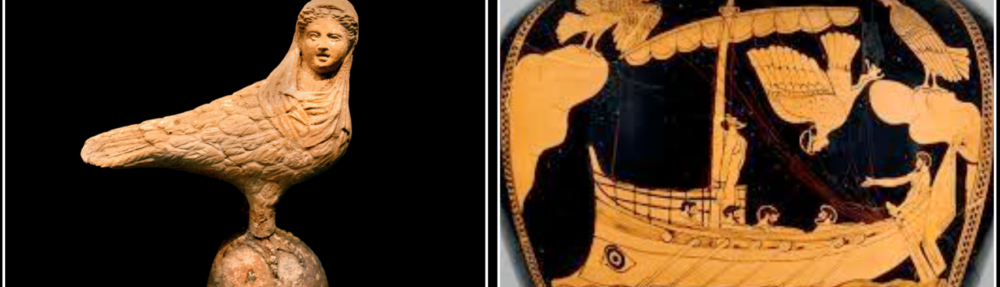
The tale of Odysseus and the Sirens portrays a message that is still relevant today. Through Ulysses’ encounter with the Sirens, the tale illustrates the human relationship between desire and self-control, arguing that pursuing your desires and curiosities with lack of self-discipline may come with consequences in order to persuade the audience to be weary of temptation and reconsider giving in. A close reading will be conducted on the following text to support this argument, “In flowery meads the sportive Sirens play, Touch the soft lyre, and tine the vocal lay; Me, me alone, with fetters firmly bound, The gods allow to hear the dangerous sound. Hear and obey; if freedom I demand, Be every fetter strain’d, be added band to band. While yet I speak the winged galley flies, And lo! the Siren shores like mists arise. Sunk were at once the winds; the air above, And waves below, at once forgot to move; Some demon calm’d the air and smooth’d the deep, Hush’d the loud winds, and charm’d the waves to sleep.” (Penguin 10,11)           

The passage begins with describing the Sirens as being “sportive” or lighthearted beings that play soothing music in flowery meadows, depicting them as being quite the opposite of evil and rather innocent and peaceful. The next line immediately changes tone where the peaceful scene of flowery meadows abruptly switches to Ulysses himself alone being “fettered” or shackled firmly in exchange for the Gods to allow him to discover the “dangerous” sound, highlighting Ulysses’ strong desire to hear the Siren’s music which even the Gods acknowledge as perilous.

Next, Ulysses commands his men, that if he demands to be freed from his shackles, to instead tighten them and add more restraints. The reasoning behind this is the men know that the Siren’s song influences them to act irrational, the Siren’s influence on other objects is described later in the excerpt. Ulysses knows that when he hears the “dangerous” sound he will lack self-control that can potentially be fatal; forcing him to rely more on physical restraints than his own words.

The remaining text displays the scene when the “galley” or ship “flies” through the waterway and when the men finally encounter the Sirens. The word “flies” in the text indicates the ship was moving at an incredibly fast pace suggesting there were high and powerful winds at this exact place and time. When the men are met with the Sirens, the weather is described as calm, forgetting, sunk, quiet, and sleeping. These adjectives personify nature by giving it descriptions as “forgot to move” and “charm’d the waves to sleep” emphasizing the strength of merely the Sirens’ presence. The description of the Sirens written as, “Some demon calm’d the air and smooth’d the deep, Hush’d the loud winds, and charm’d the waves to sleep” solidifies their image that these beings have no good intentions, which no “demon” has. Beings that were earlier described as playing in the flowery meadows is now described as unhuman evil entities that possess power strong enough to alter the forces of nature. Yet, Ulysses knew what he and his men were up against and still, his eagerness to satisfy his curiosities was greater than his fear of facing death.

 Although this story suggests that the mortals, Ulysses and his men, outsmarted these powerful demons, they had received the advice to restrain Ulysses and plug their ears with wax to avoid the Siren’s melody, from the goddess Circe. It is almost certain that without the help from the goddess, this voyage would have been the end for them. However, even though the end of this chapter of Homer’s Odyssey is positive, it can leave the audience skeptical to pursue their own curiosities and to think twice about surrendering to temptation, probably because they wouldn’t be as fortunate to receive advice from a god like Ulysses did.

Diving even deeper, although this story was composed in the 8th century B.C. it has been translated, passed down through generations, and depicted in several artworks possibly to impose religious influence on the audience. Aside from its mention of gods (Circe) and demons (Sirens), it reveals Ulysses’ temptation to seek out knowledge which is a prominent theme in religious stories including the Christian story of Adam and Eve and the Greek mythology of Prometheus stealing God’s fire for humankind, both resulting in serious consequences or punishments. Sirens having the reputation of singing ethereal songs filled with knowledge and accompanied by death could’ve discouraged the audience at the time from pursuing advanced knowledge (possibly science) in general. Why is this important? Throughout history religion has played a major role and even had its place of power in some governments, with the obtaining of advanced knowledge, works of nature once credited to God could now be given a logical explanation, ruling God out as a factor.

Obviously in today’s world, religion is not as “hardcore” as it was before. Now that we live in a society of advanced technology and logic, we rarely if not at all attribute works of nature or unknown explanations to God, and our hunger for knowledge is only expanding. One could argue that a prominent topic throughout the world now are natural resources and with our advanced technology we have learned to use these natural resources to our advantage in forms of paper, oil, lithium, coal, etc. When influencing natural forces was depicted as an unhuman power in Ulysses and the Sirens, society now seems to slightly possess the ability to do that as shown through the exploitation of natural resources. However, the desire and temptation to harvest these resources for our advantage may result in consequences in the form of pollution having a detrimental affect on climate change which poses a severe risk to all living organisms. Except unlike Ulysses, we don’t have a Circe to grant us some lifesaving wisdom.

Works Cited:

Odysseus and the Sirens, The Penguin Book of Mermaids, Penguin Books, 2019

Close-Reading Midterm: Oannes


Hiba Aljawad

“Oannes” And Human Development

To progress as a human civilization, we must look beyond ourselves for progress and future development. Earth and its non-human attributes existed before humans did, and there is a lot to be learned from non-human creations that would significantly impact human existence. “Oannes” teaches us to view and respect nonhuman creatures to gain knowledge and wisdom that is necessary for human existence, progress, and development. 

As a society, it has been instilled in us to be fearing of non-human creatures. Looking at human civilizations, order and progress have been necessary to further the expansion of human development. The role that nature plays in this expansion is vital to the progress of our societies. This is significant because nature is what pushes order and progress in our universe. Furthermore, we define nonhuman creatures as part of the natural ecosystem that keeps the “order” in our universe. By learning from nonhuman creatures instead of fearing them, we can gain further knowledge and wisdom that will broaden our understanding and advance our learning in the world. 

“Oannes” expands on the idea that humans are in need of help from nature to advance and improve the world. In the introduction to “Oannes”, The Book of Mermaids reports that Oannes, as well as other hybrid creatures, are characterized as “holders of knowledge” (pg. 3). This emphasizes the point that nonhuman creatures are a source for a deeper understanding of the world. This concept is significant because by respecting nonhuman creatures as “holders of knowledge”, we gain a deeper understanding of how our world is connected which fosters the acceptance of wisdom that is present in nonhuman creatures. Moreover, “Oannes” makes it apparent that people need guidance by pointing out that in Bayblon there was” a great resort of people… who inhabited Chaldea, and lived without rule and order, like the beasts of the field” (pg. 3). This idea highlights that human nature is to act beastly. To be specific, we commonly fear nonhuman creatures for their animalistic behaviors and sporadic tendencies; however, through natural kingdoms, we learn a lot about the rule and order in our ecosystems which helps foster a better understanding of our environment. Through this understanding, these ecosystems are replicated to a certain extent to create a balance between humans and other nonhuman entities. We can derive wisdom from nonhuman creatures and “Oannes” illustrates this by noting that the appearance of “an animal endowed with reason” surfaced the land (pg. 3). This hybrid creature– Oannes, encompassed the body of a fish with a second head underneath the fish head and legs like that of man (pg. 4). This illustration draws the differences between the hybrid creature and humans which foreshadows the idea that despite the differences, this creature holds an abundance of knowledge. To expand on this, Oannes would “converse with men, but took no food at that season; and he gave them an insight into letters, sciences, and every kind of art” (pg. 4). This example highlights the selflessness of Oannes as a teacher of valuable knowledge that does not ask for anything in return. This is significant because it teaches humans that through empathy, collaboration is fostered which enables growth and societal progress. Furthermore, Oannes taught many things that would help push a society forward such as to “construct houses, to found temples, to compile laws…” and “everything which could tend to soften manners and humanise mankind” (pg. 4). This example suggests that without nature being our teacher and source of knowledge, humans would not have been able to shape human civility. This notion is significant because it molds the idea that through valuing and respecting nonhuman creatures, we progress as a society through compassion and esteemed civility. To highlight the respect that is deserved to Oannes, the writer notes that “when the sun set it was the custom of this Being to plunge into the sea… for he was amphibious” (pg. 4). This emphasizes his nonhuman nature to demonstrate that nature is a human ally, working with us and shares the common goal of progression and advancement in this world. This encourages the suppression of fear in nonhuman creatures and fosters trust to be built to expand the goal of seeking knowledge. 

To conclude, the myth of “Oannes” teaches us that human progression and the craving for knowledge and wisdom can be accomplished by learning from nonhuman creatures, which is possible through respect and value. Our fear of anything nonhuman sets us back as a civilization and prevents our growth. In other words, the wisdom gained from nature could outweigh the fears we have. 

Works Cited 

Bacchilega and Brown, The Penguin Book of Mermaids, Penguin books, 2019

Oannes

Midterm Discovery Essay: Analyzing humanism in Disney’s Luca

Lina Rau

Jessica Pressman

ECL 305: Literature in the Environment

3 March 2024 II Discovery Essay on Disney’s Luca

Analyzing humanism in Disney’s Luca

Disney’s Luca is an animated movie set in the seaside of the Italian town of Portorosso at the end of the 1950’s. The sea monster Luca, whose parents forbid him to approach human surface in fear of their son being hunted, one day gets to know another sea monster child called Alberto. The boys soon start to sneak out of their natural environment to travel around the world with a Vespa. On their journey the two young sea monsters meet the young and compassionate human called Giulia, who they soon get friends with. In fear of Giulia having prejudices, too, the two young boys hide their identity. However, Giulia uncovers their secret and responds with empathy and understanding. All together they continue their journey, showing that them looking differently does not make a difference in their friendship. At the end of the movie the townspeople discover the sea monsters’ secret and their former perception on them change. They start to live together and allow the sea monsters to be on land.

In the movie one scene that is crucial to analyze is the situation where the townspeople discover that Luca and Alberto change into sea monsters after it starts raining (Disney’s Luca 1:14h – 1:17h). Alberto first decided to sacrifice himself because Luca did not touch water yet and still looked like a human. When the townspeople saw Alberto in his fish form, they started to hunt him and wanted to catch him, having in mind that they can receive a prize as a reward for catching a sea monster. Even though the sea monsters are not humans they seem to portray different human like emotions and characteristics the townspeople cannot. The question one must ask is, what it exactly means to be human. Are the sea monsters just any beasts that do not have anything in common with humans? Or can we actually see the monsters as creatures that resemble humans and even have better characteristics than humans? Although we as humans are attributing non-human characteristics onto monsters, they should be more seen as being human-like creatures whom humans have something in common with. In the case of “Luca”, the monsters are showing more human like emotions than the townspeople do. Disney’s Luca thus teaches on humanism.

Before analyzing the lack of the townspeople’s humanism, a closer look should be taken on how the sea monsters are perceived in the movie. In the town a lot of rumors have spread that there are sea monsters in the water lurking out. The townspeople are suspicious about their existence and therefore have negative perceptions on anything which they do not portray as being humans. They are gossiping around the sea monsters and have many negative stereotypes connected to the creatures. When the Townspeople see Alberto’s and later Luca’s real form, they initially start a mob with torches and pitchforks in their hand, signalizing that they feel threatened by the sea monster’s existence. Even though Giulia and Luca try to educate the townspeople that sea monsters are not dangerous, they first remain unwilled to listen.

As shown above the townspeople have a deep fear against the unknown. Throughout our classes we have seen that humans have always feared the unknown- especially the unknown sea. The sea was always seen as an environment that poses unforeseeable threats to humans as it has mystical features. The same attributions are put onto monsters. The definition of monster is, apart from that, a creature that deviates from social norms. Furthermore, the word derives from the Latin word “monstrare” meaning to demonstrate or to warn, which means that monsters have a demonstrative quality. Keeping that in mind, a bigger “so what?” of the movie and a lot of interesting aspects can be pointed out.

The first aspect that can be pointed out is the establishment of a class system. The townspeople see themselves as the elite and, compared to that, see the sea monsters as creatures that should be hunted. If the townspeople catch a sea monster they would be celebrated like kings and would keep the dead body of the monster as a trophy, in belief that they have the right to do so and dominate not only the living beings on land but also the living beings in the sea. Similar things can be seen in society up to today where people or animals are exploited or hunted for the benefit of others. One similar example to the one in “Luca” in the real world is e.g. the poaching of big animals such as lions or elephants in African countries just for people’s pleasure. The movie thus deliberately confronts the viewers with the topic of marginalization.

The next point is how the townspeople actually treat their surroundings and especially the environment. Most of the townspeople are fishermen, which shows that they are exploiting the sea without taking care of it. The young sea monster Luca in comparison is taking care of his surroundings and he does not try to violate the nature on land. Him being respectful towards a place on earth he did not really know before makes him be a person that has better morals than the townspeople do.

Referring that back to the pivotal scene mentioned earlier similar results can be found. The most interesting fact is that the townspeople’s fear of the unknown is used as an excuse for them not being open minded. The townspeople more or less believe that it justifies them having prejudices and unreasonable hate against the sea monsters. Apart from that both Luca and Alberto possess emotions or relationships (e.g. their friendship) that are similar to the ones humans have. Alberto even considers sacrificing himself for the safety of Luca. When Luca’s and Alberto’s real identity is discovered, the townspeople instantly start to objectify the young boys as something they want to hunt and to capture, even though they got along with them before the boys transformed into their natural skin. With their weapons in their hand, the townspeople are quite literally the monsters of society: their willingness to destroy, to murder and to being ignorant, is more monster like than anything else.

The movie in general therefore uses the figure of the sea monster to show (just like in “monstrare”) that it covers more humanism than humans do. In reality, the real monster in the movie is the human that destroys and exploits the environment or other living beings. The scene in the movie must thus be seen as a self-reflection of society today. We humans need to be aware of the importance of ecosystems in the sea again and need to work on the problems society has today (greed, hate, egoism…). Instead of thinking about the difference between sea monster and humans, sea monsters should be seen as an extension of humans that could possibly portray what humans do wrong.

Close Read

Kiersten Brown
ECL 305
Professor Pressman
3/3/24
Close Reading:Undine

Undine’s story is still important today because of how it shows the impact of the patriarchy on women’s lives and the depiction of women in our society. When closely reading Undine’s story, not only do I observe the effects of the partiracy on her life, but also how being a woman affected the outcome of her storyline. This story brings up many ideas and questions to mind, but the relevance of a man-made society is prevalent here.
Undine’s tale is quite interesting, as it discusses the storyline of a young woman/mermaid, who is looking for the love of a human man. My first observation of this: Why is Undine so set on finding a Human man to love her, to make her complete? Well, first of all this can be answered quite easily: A patriarchal society and its norms. This applies to when the first tale of Undine was written and even now in our society. Women have always been expected to marry a man, reproduce, and look over the home. Although this has quite changed in the 21st century, those societal norms are still prevalent today. We still see those traditional norms pushed on women, and whether or not we have progressed as a society some people still see the world this way. Undine’s tale is one of the many like this, where a woman is expected to find pure happiness with a man. In this folklore I can see how this affects the course of her life, and her overall demise/loss of happiness.
Undine is a half woman-half mermaid (or water princess) and her story portrays these ideals of a patriarchal society. When Undine is first introduced, I learned about how mermaids have no souls, and they only move through the elements. This is a big aspect as to why Undine “needed” her Knight Huldbrand, in order for her to have a soul. She needed a human man to have a soul, it was not enough for her to exist on her own, but she had to co-exist in order to be whole. This concept was not only because she is a mermaid, but also because she is a woman. On page 105 it says “Thus my father, who is a powerful water-prince in the Mediterranean Sea, desired that his only daughter should become possessed of a soul, even though she must endure many of the sufferings of those thus endowed.” This quote stood out to me because of the significance of a soul, not necessarily to her, but to her father. It was her father who desired her to obtain a soul. A man desired her to find a soul, no matter the sufferings, when Undine could have probably found another mermaid or water creature that would fulfill her just as much, or even then no one. In order to obtain a soul her human lover would have to accept her for what she is. This comes to show how the course of Undine’s life was changed because of the patriarchal wishes of her father, his desires for her life, not her own. If she had not followed his wishes and searched long and hard for a human husband, she could have done a lot more with her life. The social structure of status then (and even now) were men above women, and the opinions of the men around Undine in her life significantly affected her. Not only do the men in Undine’s life have a say in her future, but it was not her own wish to obtain a soul.
This brings out the questions as to why she needed one in the first place. In the depiction of her story, and many other mermaid-like folklores we have read, they all desire the same thing. The Human experience. They are all described as longing to have legs, be on land, love a human, and be able to do human things. We can see this in Undine’s tale, as all she desires is to be accepted by her husband and his people. She wants to have the human experience, and the book states “If you do not make my whole life miserable. For what is to become of me, if you avoid and reject me?” (page 106) Undine is speaking here as she beares herself and her true form to Huldbrand. She quite literally says she doesn’t know what she will do if he rejects her, she’d go home and wallow in her sadness. This is not her fault that she feels this way, it is the patriarchal society she grew up in and how she was molded to act and feel. Her life was not really ever her own, and her husband ended up betraying her for another human woman. The society she was born into, back when this was written in the 1800s, was even more patriarchal than now. Undine definitely had to follow her fathers wishes and desires for her life, for her to find a soul, which led to her later heartbreak and betrayal from her husband. Her life was viewed as basically worthless, without a soul or husband. To me, Undine’s marriage to Huldbrand, her human husband, felt more like a business deal. This is what the basis of marriage was built upon, it was built upon a business transaction and deal between families and wealth. In Undine’s case she was gaining a soul from this “business transaction.” Even though she claims to love him, at the end of the day their relationship was built on a business deal and the obsession or lust Huldbrand felt for her. He was under her spell, entranced by her beauty that she radiated, an otherworldly beauty. Was he even in love with her? Did he desire her or love her? I believe that it was lust, for her beauty and his obsession with her. When thinking about how Undine’s story connected to the effects of the patriarchy on her life, we see this with the downfall of her marriage when he later betrays her. She relied all her happiness on him, because that’s what women were expected to do, rely on other men for their happiness. They were not allowed to hold jobs, worth, or hobbies really outside of the marriage and the family.
Not only is the patriarchal society what affected Undines life, but it is still prevalent today in other folklore stories and real life. In our society today we can still see how women do not have the same opportunities as men, there is still that traditional stigma there, as we see in Undine’s story. The idea of needing a partner to be full, is still an idea we see in the media today, not only mermaid stories or depictions. Every Disney princess movie, romantic comedies, the Little Mermaid, are all examples of this patriarchal society. Even if it is not the intent, we can see how the stereotypes of women and their happiness are still depicted as needing a man, even in the 21at century. People will argue this is not true, and yes we have really made changes and women have lots of opportunities, more than before. But we cannot ignore that these stereotypes still exist and still affect women and their lives. It’s what happened to Undine. Overall, when close- reading this text, not only do I see this depiction of Undines worth being connected to a man, but also the affect the patriarchal society held on her life.


Works Cited
Bacchilega and Brown, The Penguin Book of Mermaids, Penguin books, 2019
Friedrich de la Motte Fouqué, Undine, 1811