Mortal Animals

The Emergence of Environmental Humanities was not eye-opening because it was their first time reading about our environmental crisis, nor will it be the last time. What did catch my attention was a point made towards the middle of the text. We have all been experiencing this concept in this class, the idea and question of whether or not we are apart or a part of nature. “Human beings are not independent of the natural world but are part of it.” (p9). There is an interaction between the environment and humans, which leads me to lean towards humans being apart and dependent on nature, in accordance with what the text says. Others of course can feel differently, and there’s no right or wrong answer but it is important, at least I think so to see where certain beliefs come from and how they have developed, or not developed.
Another point in the text is “Human beings are animals and are mortal.” (p10). My first reaction to this line was confusion, mainly because of all our in-class discussions on the line between human and animal, or human and monster. So when I initially read this I was caught a little off guard. When continuing the reading I realized the text was referring to evolution, but I think it plays a bigger role than just that.

The last thing I would like to touch on is the use of the word “interconnectedness,” throughout the reading. The use of it reminds me a lot of the discourse on whether we are or are not a part of the natural world. In a way, it reassures me or leans me even forward to the idea that we are, especially today because of how our actions can and have heavily impacted our environment.

Week 9: Environmental Humanities

I found the reading on environmental humanities extremely interesting because it brings up a lot of the themes that we have been discussing in class and has also introduced me to some new ideas. An idea that enlgihtened me was that in order to solve the climate issue, multiple disciplines need to come together to create a solution. I have heard a variation of this idea before, but it was a more political version. The idea was that scientists needed to come together with community members in order to create specific solutions for that city, state, etc because community members know what they need and what would work in their specific area better than politicians or scientists who’ve never been to that area. But this reading is a lot more inclusive because instead of just limiting it to scientists coming up with a solution, it suggests that a wide variety of people from different academic backgrounds need to come together. I find this fascinating because it seems like such a simple recommendation, but is so revolutionary because of how Western culture separates academic disciplines in order to make it much harder for them to mix. 

Another topic I found fascinating was that recognizing humans as being a part of nature could help with establishing a solution to the environmental crisis. A portion of the text mentions how humans play an active role in nature and that needs to be recognized if we are ever going to come up with any sort of solution or make any progress. This reminded me of the conversations we’ve been having in class the past few weeks because we tend to think that we are above nature but that way of thinking is what has allowed humans to harm the environment in the first place. Emmett and Nye explain that humans need to have a mindset shift so that instead of viewing “animals and plants in terms of their usefulness to humanity, we can see them as having an intrinsic right to exist” (2017, p.11). Thinking of the environment in this way changes our perception of the world from revolving around humans and instead places us on the same level as animals and plants. As much as we have a right to exist in this world, so does every other living organism and that is what makes our world function properly. I wonder if keeping this idea in mind when thinking about solutions for the climate and environmental crisis will produce more effective or safer results for the environment and us. 

Week 9: The Blue Humanities

This week reading was interesting and something that I was fond over because it showed the variety of ways in which the ocean/sea is used. Not in just a personal way, but to learn history, in other fields of study, also in literature and arts. There were several points that were made that had caught my attention but one that resonated the most would have to be in the last paragraph. “The manner in which this occurred and the significance it holds for modern culture and society is only just beginning to dawn on us.”. I thought the word “beginning” was impactful as it is implying that we do not know as much as we think we do, there is still millions and probably billions of things we don’t know about the ocean, but the curiosity of humans has caused this start to learn all those little bits of information that make up the ocean. I also believe the word “beginning” is being used to show the shift in which society has taken to the view they have of the ocean; we went from being fearful and almost terrified of the unknown water, to now finding a comfort of the ocean even just by viewing it from a distance.

Another point that stood out to me was, “people began to come back to the sea in search for a quality they felt to be missing in the new industrial environment, that something called wilderness.” (paragraph 10). Speaking from a personal perspective, I never truly saw the ocean as wilderness or nature since it has always just been classified as a separate but special place in my mind. When I think of nature, I automatically start to imagine the forest with trees, wild animals, in almost isolated places to be nature as it provides a reflection area for humans to reconnect to themselves. Being able to reflect and read that the ocean provides the same feelings and purpose as a forest does, in my head does classify it as nature. It is a space that provides us with more than what we need to be able to regain our own self-identity back when our day to day lives are drowning us and not allowing a simple break.

Overall, I do believe that our attitude change towards the ocean is what has caused us to be able to create career fields in subjects like marine biology, led to the knowledge of what we have now of the ocean, given us more opportunities to study the ocean further, gives us what we need for everyday living like food, but also are a significant factor of the personal comfort we gain that does not compare to other forms of comfort. There is more to thank the ocean for than we realize as it has always been a home for many in the times that we longed somewhere we felt like we belonged.

Week 9: Environmental Humanities

For this week’s reading I found it to be quite interesting and thought provoking to be able to have perspectives on environmental humanities. I have often heard this term of environmental humanities but I have not known much of what it is about and throughout the reading I was able to get the general idea of their purpose. They “Show how humanists are improving our understanding of the problems and contributing to their solution … humanists must offer constructive knowledge as well as criticism” (Emmet & Nye page 2). It is more about just giving the public data and numbers to display the negative effects humans have caused to the Earth and about global warming. We all know that the Earth is damaged but they focus more on deepening the public’s understanding of the issue of the negative impacts humans have on the environment. I noticed as well the influence of gender in the reading and the idea that nature, similar to women, have suffered in the hands of men’s desire to control others and everything; “They pointed out that the very idea of humans standing outside of and controlling nature was based on a conception of the natural world that was passive and feminized … Apparently neutral terms such as “man and nature,” though they still appear in policy discussions of climate change, often have masked unequal social relations and exploitation of resources” (Emmet & Nye page 4). Also I noticed that the main theme of the reading and thus connects to the purpose of the class is the idea that man and nature need to live in harmony with one another, cause in the end we are sharing this land with “non-humans” as well, and maybe shifting our ideas and tactics to a more “feminine” and nurturing nature; “Such a new ethic requires a new narrative. This new story, “would not accept the idea of subduing the earth, or even dressing and keeping the garden, since both entail total domestication and control by human beings. Instead, each earthly place would be a home, or community, to be shared with other living and no-living things” (Emmet & Nye page 6). 

My question is, how do we incorporate these new ideologies into the school curriculum, and change years of past ideologies from others?

Week 9: Environmental Humanities

“Human beings are not independent of the natural world, but are part of it” (pp 10). We’ve been exploring this topic a lot in our readings and it is so interesting to me the different perspectives people have about it. I think it is important to recognize our interconnectedness to nature in order to have a good relationship with it. We ultimately rely on natural processes to support our lifestyles, but still choose to disrespect the world around us. The mindset that we are separate from nature has led to pollution, the exploitation of natural resources, and habitat destruction. These impacts effects not just the environment but also human lives, which seems ironic to say considering they’re both interconnected parts of the same system.

The concept of human mortality and our place in the natural world is viewed differently from groups, as some ideas don’t align with their beliefs. In the reading, it talks about how some conservative Christians don’t accept the theory of evolution, so their viewpoint is more from the idea that animals are a separate entity of the natural world than humans. According to this perspective, humans are not simply products of evolution but are intentionally created with a divine purpose. They possess rationality, morality, and free will, which are seen as reflections of God’s nature. This view emphasizes the special relationship between humans and God, which may suggest that humans have a higher status and purpose than other creatures. Although some viewpoints may be different between religious teachings and the environmental humanities, I like how the reading points out that they can and are still in support of environmental humanities. Using the Garden of Eden as an example is insightful, as it has traditionally been viewed as Adam and Eve having dominion over the land. In the reading, it suggests that we can instead view it as an ecological system that they were responsible for. This aligns with the idea that we have a responsibility to coexist with other species and ecosystems. By reframing the relationship between Adam, Eve, and the Garden of Eden in ecological terms, the perspective switches to a more conscientious approach where we are not separate from nature, but a part of it. I think if people were able to think about these traditional stories from their original interpretations, it could invite them to think about our role in caring for Earth and can help promote ecological health.

From STEM to STEAM

¨STEM be expanded to STEAM to recognize how the arts contribute to inventiveness in science, technology, engineering, and mathematics.¨ This is a direct quote from the “The Emergence of Environmental Humanities” article by Robert S. Emmett and David E. Tying it back to the quote, something that I found interesting about this week’s reading was the concept of STEM being transitioned to STEAM due to the importance of arts in science, technology, engineering, and medical fields. The arts include additions such as ¨humanities, language arts, dance, drama, music, visual arts, design, and new media¨” which are claimed to all add to the value of the concepts within STEM.

This is a widely debated topic yet has been granted a lot of support as STEAM adds to the ¨problem-based learning methods used in the creative process.¨ This is a topic and change that I agree with because I believe the arts are extremely important in contributing to scientific knowledge and participation. In this class, we discuss heavily the topic of art and the different variations of art in the media and society. I wanted to use this post as a way of focusing on art and focusing on the exact quote stated at the beginning of this blog post. The word ¨inventiveness¨ is key to recognize because the arts play a crucial and pivotal role in our study of science, technology, and medicine because it is how we as a society communicate our relationship with the environment. Currently, we use the media to demonstrate our understanding of our position in the environment and the changes that we need to make, not make, etc. We see art in the form of design, graphics, language, etc. that demonstrate these positions, which is why it is important to have art as a standout in the STEM field and be recognized as a crucial role.

https://theconversation.com/explainer-whats-the-difference-between-stem-and-steam-95713#:~:text=STEM%20represents%20science%2C%20technology%2C%20engineering,using%20STEAM%20to%20make%20discoveries.

Discovery Assignment: “The Crane Wife”

Myles Wright

ECL 305

Professor Pressman

6 March, 2024

The Crane Wife

The Crane Wife is an ancient Japanese folktale, which tells the story of a marriage between a supernatural, shapeshifting crane and a man. Although there are variations of the story, in most, a man witnesses a white crane shot down from the sky by hunters. When he helps it recover, the crane flies away. The next day, a beautiful woman appears on this doorstep, offering herself to be his wife. Unbeknownst to him, she is the crane he rescued. He tells her he has no money to support them, but the woman vows this will not be an issue, and they marry. However, she makes her husband promise that while she is weaving in the closed room, he must not enter. The crane wife creates beautiful woven fabrics that the husband sells, making them rich, but the husband grows greedy, urging his wife into the closed room to weave more and more. Eventually, his curiosity overcomes him and he opens the door to the closed room only to find the crane at the loom, plucking her own feathers from her body to create the fabrics. Upon seeing how the man has broken his promise, the crane flies away and never returns. 

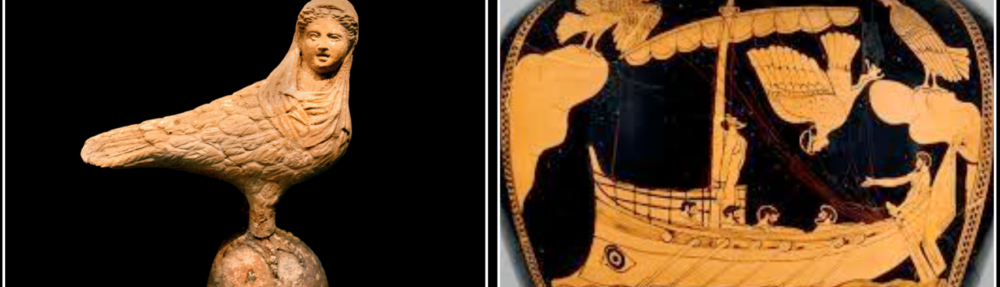
“The Crane Wife 1 & 2” and “The Crane Wife 3” appear on the album The Crane Wife, debuted in 2006, by the band The Decemberists. The songs retell the Japanese folktale through a three part song. Part 1 of the man helping the injured crane, part 2 of the marriage and discovery, and part 3 of the man’s remorse over his broken promise. Across many countries and cultures we see recurring stories of supernatural or shapeshifting women marrying human men. One of the most popular, the medieval French legend of Melusine, closely resembles the story of The Crane Wife. Why is this narrative so common? What ideas might these stories across lands, seas, and cultures share? Through diction and imagery, “The Crane Wife 1 & 2” and “The Crane Wife 3” reveal the ways in which marriage for a woman is essentially a loss of self. 

Similar to many other countries, in early Japan women had few rights in marriage.The two songs express this struggle for women through the crane wife’s story, but from the perspective of the man. It should be considered that both the original folktale and song are from the perspective of the husband, though the story is titled after her and she is the one to endure suffering. The first line of the song introduces the setting, both literal and figurative, “It was a cold night, And the snow lay ‘round”, he is in the midst of a snowy winter season (The Decemberists). He later states he has neither wealth nor fame; his life seems empty until the appearance of the crane. After the white crane falls from the sky, the chorus repeats “And all the stars were crashing ’round, As I laid eyes on what I’d found” (The Decemberists). Now with the crane in the man’s life, the stars are around him, signifying light, hope, and good fortune. In Japanese culture, the white crane is a symbol of long life, prosperity, and happiness. The crane wife provides all of these before the man is overtaken by greed and curiosity. Upon seeing the crane, he describes it as a “helpless thing” (The Decemberists). In early culture, women were viewed as helpless, incapable creatures. In early Japan, the decision of who they were to marry was left to their families, and after marriage their lives were dictated by the husband. 

The crane appears at the man’s doorstep as a beautiful woman and offers herself to him. The two “were married and bells rang sweet for our wedding” (The Decemberists). The bells ring as a sign of joy in the marriage for the newlyweds. After the discovery, the bells ring again, but signify a different meaning. Though the man is poor, the crane wife vows to make him prosperous. As the man’s wealth grows, so does his greed as he “forced her to weaving, On a cold loom, in a closed room” (The Decemberists). Though the man recognized how “she grew thin” from the weaving, he overlooked her appearance. He knows she is losing herself in her room weaving, but does nothing about it. After his discovery and her departure, the chorus repeats “Sound the keening bell, And see it’s painted red, Soft as fontanel, The feathers in the thread” (The Decemberists). The Oxford English Dictionary defines Keen as “An Irish funeral song accompanied with wailing in lamentation for the dead”. The motif of the bell appears again, only this time not only for the man’s loss of his wife, but for the crane’s loss of self. The crane used her feathers, though bloodied and weakened, to provide for her husband, yet he still broke his promise. The Decemberists use the line “Soft as fontanel”, fontanel being the membranous gaps between the bones of the skull in infants. Fontanel represents the fragility of a woman’s position in a marriage, dangerous and easily damaged. 

In “The Crane Wife 3”, the man is remorseful as he realizes he has taken advantage of his wife and driven her away. He reflects “And under the boughs unbowed, All clothed in a snowy shroud” (The Decemberists). Boughs are the limbs of trees which are often stripped off, similar to the crane wife who has stripped parts of herself. This further reveals how marriage for a woman is a form of self-annihilation. As for “clothed in a snowy shroud”, a shroud is a white cloth or sheet which a corpse is covered in for burial. This line could represent a few things. From the man’s perspective, it could be interpreted as a shroud for the death of their love and marriage, or a shroud for the crane wife as she has lost herself to their marriage. It is important to note that a shroud holds some resemblance to a wedding veil. This shows how the crane wife was doomed from the beginning, her wedding was the beginning of her end. 

Across cultures, women have endured loss of self in the face of marriage. This could be one possible explanation for the recurring supernatural bride across a variety of cultures. These stories are so common because they reflect a shared sense of loss of oneself for women throughout various histories. 

Works Citied:

The Decemberists. “The Crane Wife 1 & 2”, “The Crane Wife 3”. Genius. https://genius.com/The-decemberists-the-crane-wife-1-2-and-3-lyrics

“The Great Old Hunter” and Evil Nature

Humanity’s connection to the natural world has always been complicated. On the one hand, people make significant efforts to protect and regenerate natural ecosystems and resources. On the other hand, several of humankind’s advances toward technological progress and solidifying its spot on top of the food chain have resulted in the displacement and extinction of hundreds of species throughout humankind’s comparatively brief rule over Earth. It may seem that a steady population increase and a strong dependence on an industrialized lifestyle are the primary reasons humans have had such a negative influence on the environment. Still, it might be more significant than that. In a chapter of The Romance of the Faery Melusine titled “The Great Old Hunter,” a depiction of man’s ideals implies that humanity’s connection with nature is influenced by a desire to demonstrate supremacy.

The story points out that, in the time of the Great Hunter, Aimery, humans and nature lived close together. The chapter describes nature as a sort of hidden threat, stating, “In hamlets and villages wild animals in their lairs could watch unseen all that went on around human dwellings” (Lebey and Knight 11). The wording in this sentence gives off the impression that humanity was surrounded by nature in an almost malevolent way. This notion of impending violence is further supported by the next sentence, “Foxes and wolves knew just when to raid” (Lebey and Knight 11). In this section of the story, humans feel more like the wildlife, while animals seem to be the hunters. It shows us that humans were fearful of their bestial neighbors. In describing the aftermath of one of these canine raids, the author makes a direct reference to the Devil, writing, “A strange wild smell, something like sulphur, hung in the frozen air, stinging the nostrils, as in a room where a fire, smoking before going out, has left a scorched smell like He of the cloven hoof” (Lebey and Knight 11). Cloven hooves are found in animals like sheep, deer, and goats. The personal pronoun “He” infers that these cloven hooves belong to a human, as any other reference to nature is met with the pronouns “they,” “them,” and “it”. All this suggests that this simile is an easily understood comparison between nature and the Devil. This just further proves that humanity was scared of nature, and it helps justify their rationale for hunting.

The forest itself is described as “…stretched beyond, menacing and dangerous, full of the unknown, concealing the surprising and the supernatural” (Lebey and Knight 11). Describing the forest as “stretched beyond” gives the audience a good idea of how surrounded early humans felt. The word “beyond” suggests that the forest’s reach had no visible end. It’s hard not to imagine a raft in the middle of an endless ocean. Both the hypothetical raft and the aforementioned hamlets and villages are stranded, encircled by a not-so-obvious danger. The audience knows that the forest is dangerous because the first two paragraphs describe the animals who come from the woods to terrorize people – but also because the text uses the words “menacing and dangerous” to personify the woods. Writing that the forest is “full of the unknown” is important, as the word “unknown” will be repeated later in the text to explain what drives Man to be brave. To say that the forest conceals “the supernatural” indicates that not only is nature frightening to humankind, but it is almost incomprehensible – it doesn’t follow humanity’s rules; therefore, it is mystical and fantastical.

The story then shows us that humanity is able to defeat these evils – the story says, “…evil reigned only if heroes failed to confront its dangers” (Lebey and Knight 12). This sentence reveals a lot of information to the audience about humanity’s values. Saying that “evil reigned” strengthens the prior implications of mankind’s stranded identity. To reign over something is to predominantly rule something. The idea of nature (AKA evil) predominantly ruling over the world is an alien concept to modern humans, as the tables seemingly turned millennia ago. The text continues, stating, “It seemed that the one existed to give rise to the other,” (Lebey and Knight 12). The nonspecific nature of this sentence fragment is purposeful. Its obvious implication is that evil exists to make humans stronger, but it also implies that the existence of humans makes the surrounding evil more powerful. This one fragment opens up the possibility of an infinite cycle where humanity and nature progressively become more and more impactful on each other. With melting ice caps and other adverse effects of climate change, it’s safe to say that this relationship between man and the natural world is still in effect. The sentence ends by saying, “for humans do not show their mettle if left to themselves.” (Lebey and Knight 12). A rough translation into simpler terms would be that humans do not show their tenacity if there is no evil to brave against. 

The word “unknown” returns in the sentence, “In those days men identified with things that could lead them further into the unknown;” (Lebey and Knight 12). The last time the word “unknown” was used, it described the “menacing and dangerous” essence of the forest. Using a phrase as vague as “the unknown” in this sentence works great; it describes that humanity has an instinctual fascination with things it does not understand, as well as further exploring humanity’s association with forests and nature in particular. The story continues with, “they sought in all directions the extension of their physical and spiritual power” (Lebey and Knight 12). It seems humans have always been determined to take over everything, as demonstrated by the phrase “in all directions.” The sentence mentions both physical and spiritual power, and this is like saying violence and understanding. The order in the wording is crucial to understanding the implicit attitude humans have towards the unknown – destroy first, understand later. Since nature is akin to evil in this story, it would be fair to think that these early humans would try to defeat nature before they try to observe and reason with it.

All this is not to say that Man never tried to understand nature; in the next paragraph, the narrator says, “Man developed without dissociating or abstracting himself from the world,” (Lebey and Knight 12). When one dissociates or abstracts oneself, one removes oneself from one’s own existence and lets go of any attachments that are associated with one’s sense of identity. This remark demonstrates to the audience that whatever information that humans have accumulated about nature has been done so on a level that is ultimately trivial. If one wants to have a complete understanding of anything, one must put oneself in that thing’s position and make an effort to see the world from the perspective of that thing. In the absence of the dissociation and abstraction processes, no attempt is made to fully understand anything. 

Finally, the narrator discusses hunting, saying, “Hunting, so different from our own… maintained the extension of human power” (Lebey and Knight 12). To get better at killing something, one must learn its behaviors and use them to one’s advantage. This is the “spiritual” power mentioned before. Through hunting, people can demonstrate their spiritual power through the act of tracking and the use of animal calls. The kill itself is the obvious demonstration of the physical power humans crave. This sentence paints hunting as a necessary activity for humans to partake in to maintain balance in the natural world – but it seems like hunting is necessary to keep human beings secure in themselves, which is a lot less valiant than the former.

In conclusion, “The Great Old Hunter” illuminates the intricate dance between humanity and the natural world, revealing a timeless struggle for supremacy. The text suggests that humans understand nature as evil, but humanity’s view of the wild seems to be a lot more positive in the contemporary era. If the ideals presented by the text were widespread, then this could explain why humans still tend to negatively impact the natural world. But it’s important to remember that the relationship between Man and nature is complex and changes over time. Stories from the past like this one teach about how people thought and felt in earlier times, but they also make us consider how humans think and act now when it comes to the environment. In order to try to solve the environmental problems of today, it’s important to understand how complicated our relationship with nature is and work toward a peaceful union that respects both humans and the environment. Understanding where we fit in the environment as a whole is important, should we want to face the difficulties of the future with knowledge and kindness.
Week 8: The Trouble with Wilderness

The reading for this week was the first reading to really pinpoint and dissect the notion that perhaps humans and nature are one and if so why is it that we feel separate from it. It seems no matter what text you read in this class, a Christian value can be spotted somewhere in its interpretation. In this particular case, I felt the religious aspect added to not only the awe and beauty of nature, but also the fear and otherness it gives off. Cronin pointed out that in “—early Christian saints and mystics had often emulated Christ’s desert retreat as they sought to experience for themselves the visions and spiritual testing He had endured. (Cronin, 10)” I think this urge to go into the unknown and truly immerse yourself into something natural. Like the desert, to experience something supernatural or unnatural, pulls on the idea that we as a human race knew very little of the natural world around us during this Romantic period, but it was this era of curiosity that gave these natural environments a sort of mysterious personification. It was no longer supposed that nature was simply a desolate plot of land, but when given meaning by the Bible, nature began to warrant respect from its human counterparts. I also thought this idea showed through in the quote “[God] would most often be found in those vast, powerful landscapes where one could not help feeling insignificant and being reminded of one’s own mortality. (Cronon, 10)” It would seem that in order for humans to respect nature and view/understand its value, a hierarchical mindset must be employed. Since God was above all, of course he would chose places that remind you, you are but one single human he has created in this vast world he has crafted. It would seem that for humans to give value to anything, they must see themselves below it, which may warrant the question why humans respect things they feel powerless to? I’m not sure exactly what it all means but I thought these ideas were striking in the reading so hopefully one of my fellow classmates can further elaborate my thoughts.

The Trouble with Wildness

“Satan’s home had become God’s own temple” (Cronon 9). Cronon outlines the transition from wilderness being seen as a dangerous and unloveable place to becoming a cherished land for Americans to visit. I think it’s interesting how Cronon highlights the change from wilderness being a place that the poor were forced to be into a place that the wealthy sought out. In my experience with the wilderness, I have certainly sought it out as a haven from the urban world. This transition from most of the world being wilderness to most of the world we see being developed and covered in concrete has certainly contributed to this desire to travel into nature.

Thoreau’s book about a simple life in the natural world is one of the drivers for this craze to seek a simple life outside the confines of society. This lifestyle and the gifts of the wilderness are referred to as the “sacred sublime” by Cronon.

I like that he is challenging the arguments of deep ecologists that environmental destruction started as soon as agriculture began. Cronon claims that it is silly because we would essentially be reversing society back into becoming hunter-gatherers if we wanted to reverse environmental destruction and become one with nature again. I agree that this is unlikely because humans are constantly driven to progress in science and technology. On the other hand, there is a major connection between the early agricultural areas in the Middle East / Mesopotamia and the disconnect from nature. I would say that Cronon’s arguments are a little far-fetched because the anthropological standpoint is that the agricultural societies consumed way more than the hunter-gatherers. I think that it is impossible to achieve this, but in hunter-gatherer societies, there was no wealth and no belongings. Without trade and merchandising, a separation between classes was impossible. Communities were based on sharing and helping each other. The disconnect we have from transactions we make every day is what drives the continuous environmental degradation. If I cannot directly see the consequences of my consumption, or feel them right away, then I will not change my behavior.