Hands/Fingers as a Symbol of Female Defiance and Strength- Final Essay

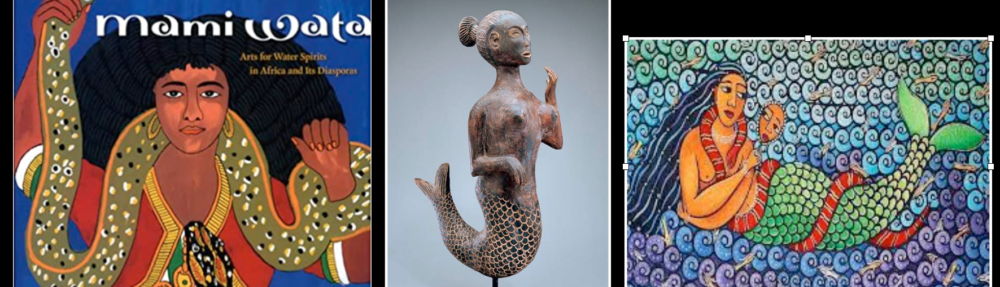
Hands are a way of producing action, they are the way we grasp, fight, endure, etc. without the full capabilities of one’s hands productivity and functionality decrease as these actions cannot be performed to the fullest extent or to no extent at all. The Legend of Sedna the Sea Goddess, by Lenore Lindeman, 1999, is an Inuit origin/creation tale that details the story of a young girl’s trials after promising herself a marriage. When she later discovers that her husband is not who he says he is, she flees with her father, who murders her husband out of anger. While Sedna and her father attempt to escape on the boat, this action causes the husband´s friends to seek revenge and Sedna´s father throws her off the boat in hopes that they will stop their pursuit but they do not. Sedna clings to the boat side for her life after being thrown overboard, yet her father cuts off her fingers one by one to prevent himself from drowning. She sinks to the bottom of the sea where the segments of her fingers turn into sea mammals, and she becomes the Sea Goddess, who has the power to control these animals and their abundance to man. In correlation, The Water Will Carry Us Home by  Gabrielle Tesfaye is a 2018 stop-motion animation and film that reveals the stories of impregnated African slaves being thrown off slave ships by seamen whilst sailing through the Middle Passage. While these women are sentenced to drowning through tied hands, they are rescued by Yoruba Orishas, a divine water spirit that transforms them into powerful water entities. Freed from their past traumas, they embrace their newfound existence in the ocean with their children.  By delving into the thematic significance of hands/fingers as a focal point of trauma, The Legend of Sedna the Sea Goddess and The Water Will Carry Us Home demonstrates the transformation of women after painful and constraining experiences. Despite the assumption that removal or restraint of hands would prevent survival, both tales reveal how trauma to the woman at the will of a man is a detachment from victimhood. The analysis of the symbolic role of women’s hands/fingers in these stories, challenges conventional notions of female weakness, illustrating the enduring strength of the female spirit. In these tales, the severance or constraint of hands serves as a defiance against the expectation of women’s weakness in the face of male power. Rather than victims, these women emerge as their own saviors, empowered by their resilience and determination.

The symbol of a man is a consistent and central aspect in both of these storylines, specifically the initial physical power and control that the men have over Sedna and the African woman. Focusing on the theme of “the Man” in relation to the constricting of the hands,  further allows the storyline to emphasize the focus of the women’s physical transformations. First, in Sedna’s story there is constant mention of men in association with fulfillment and commitment., “…men desired,…”, “…he provided…”, and “…man promised…”, where the men are participating in acts revolving around committing to Sedna. The father’s boat represents her family as a whole and is the sole controller of her fate, just as he was in her life. In Inuit culture fathers are modeled as family protectors, and it is their role to dedicate themselves to the safekeeping of their family’s well-being, yet the situation is entirely upside down in this scenario. It is important to recognize that it is her father who sacrifices her fingers and sentences him to drown in order to protect himself. Sedna is victimized by the deception and lies of her husband, the control of her father, and the unwilling sacrifice that is forced upon her, although she does not allow it to drag her down. The Water Will Carry Us Home follows a similar male focus as the males as the aggressors and deciders of the woman’s fate. At 3 minutes and 47 seconds, the white men can be seen dangling a woman over the crashing water, after grabbing the woman with ropes and binding their hands together. These powerful men are central to this very moment in the story and are not showcased during other scenes, which is important because it directly correlates to the woman’s hands being tied and sentencing them to the waters. At the beginning of both of these stories, dominating male figures contribute to the notion of women being weak and less than men, as they are initially perceived as having no power. This stature of no power may be seen through the representation of the woman as being controlled by the men and following the rules of the men around them.

The actions being performed on these women’s hands, in the form of severing or constraining, serve as a defiance against the expectation of women’s weakness in the face of male power, and demonstrate strength in the face of trauma. The trauma represents both Sedna and the slaves’ unwilling sacrifice by male counterparts, who intentionally use the woman’s hands to prevent their survival. The defiance against expectations may be seen in the woman’s strength to persevere, as slaves at the time were not seen in a prevailing light and princesses were taught to obey the laws of their father rather than to seek their own lives.  

Diving directly into the hands and how they are handled differently/similarly in each story reveals how the hands/fingers are used as a defiance of man and a lesson of woman’s strength. For the Inuit Sedna, there is a strong importance in the fact that he does not simply push her off, but chooses to cut each one of her fingers off individually,  ¨one joint at a time.¨ This action would inflict the most physical and emotional pain on her body and mind, brutally detaching her from recovery. The cutting of her fingers prevents her from reaching back to grab onto the boat where she is unable to save herself and is forced to the very bottom of the ocean to transform herself. This action is extreme and inflicts the ultimate amount of powerlessness onto an individual as it permanently disables Sedna’s ability to carry on through life to the full extent of her hands. The details are very brief, ¨ the father cut her fingers off, one joint at a time,¨ where the father is the main focal point of inflicting this quick yet everlasting pain upon Sedna’s life.  She is permanently incapacitated by her father where the text specifically states that Sedna ¨sank to the bottom of the ocean ̈ and established her new self and home on the ¨ocean floor.¨ At the bottom of the Ocean, she transforms and becomes a powerful sea goddess in defiance of the man who sentenced her to her death and the belief that she would drown. The roles are reversed as Sedna is now in charge of how much the men eat through her production of animals and their abundance to man. She is now the controller and is no longer controlled, all because of this literal detachment that was intended to drown her. The Water Will Carry Us Home is an African story beginning with a woman performing rituals with her hands, using her hands to guide the audience’s attention and focus on the acts she is performing. When the story begins, the women have tied hands and cannot perform the actions/rituals of their cultures, until the end when they become free. Their hands bound around their bodies prevent them from swimming, as they are limited in motion and are shown with no movement once they hit the water. Slaves at the time of the Middle Passage were thrown overboard to establish insurance claims for their owners, pregnant women would be of less value as they could not work or produce more children at the time they were bought. These women were at the hands of man and man’s wishes, in particular their owners and traders, who sought the worst for them, and for these women, the traders sought death. These women’s hands are constrained which forces an inability to resist, yet provides a chance for escape. The sense of tying provides a claustrophobic death and causes an emotional death, as even with the chance of releasing the hands, swimming forever is not an option. The women appear to drown during this scene, yet they defy the men who have manipulated them and the notion that they are victims to these men, instead they are survivors. The binding of their hands presents a symbol of male grip, when they are freed they are released from the men who figuratively and literally tied them down during the slave trade and would do so thereafter. These female entities free themselves from a state of complete despair and hopelessness, defying the initial assumption of death, and transforming into a future of power and control of their bodies and male bodies. These females transitioned from male-dominated positions as a princess and slaves, into goddesses and controllers, where they have the potential to not only control their own fate but to control those who attempt to control them or others.  


The examination of the finger-cutting scene from The Legend of Sedna the Sea Goddess in conjunction with the binding of the hands from The Water Will Carry Us Home presents defiance against the expectations of women in relation to men’s power. These stories showcase women who men control but they do not let this control take over their lives and allow them to become powerless. It is interesting to note that both of these women come from different backgrounds and positions in society, yet they meet the same successful end and the same journey of control away from men. For some reason hands have been a really interesting concept for me this year and understanding what hands can tell us when they are manipulated in different ways has been an interesting topic to explore.

Final Paper

Ana Dilan

ECL 305

Professor Pressman

9 May 2024 

The Little Mermaid/Ang Munting Sirena

As a child, one of my favorite stories was Hans Christian Andersen’s The Little Mermaid. I didn’t mind that the original contents of the story and its ending were sadder than the Disney adaptation. All I really cared about was the fact that there were mermaids in the story and, coming from a culture that depended on the ocean and rivers for much of its commerce and ways of life, that this story meant mermaids exist. Now that I’m older, I can see the tragedy of the little mermaid and how her pain reflects a generational wound that goes beyond her identity as a figment of a European fairytale and my own as a first-generation Filipino immigrant. I was born, raised, and educated in the Philippines until I was 10 years old. A large part of my education was the country’s history, which, from what I can remember, mostly focused on the Spanish colonial era which lasted till the 19th century, the Japanese occupation during World War II, and the American occupation into the 1950s. There was an egregious gap in my education on the identity of a Filipino before its many eras of colonization and before the country and its people were called the Philippines and Filipinos, respectively. Through the little mermaid’s story, I saw how the generational wound of a colonized identity revealed itself through the loss of the little mermaid’s voice and tail and saw how it reflected on my understanding of pre-colonial Philippine identity through the loss of crucial parts of our national identity and change in our country’s history. 

Viewing The Little Mermaid as a story of colonization adds a facet to the story through the concept of transactions, the changes and exchanges that occur during colonization. By recontextualizing The Little Mermaid through the context of Philippine colonization, we can see how Hans Christian Andersen’s story itself is as much a process as well as a product of colonization, its origins and associated images altered over and over again in the same way that the people and their identities are altered over and over again. Using Helen Stratton’s illustrations as a base for these redrawn illustrations, as well as adding color to the originally-colorless illustrations and referencing clothing from a specific time period, challenges the universality and “timelessness” of the story. Altering these images to a specific place and time period adds a new intersection to the little mermaid’s identity; she is not oppressed just because she is a woman, but she is also oppressed as an individual–an indigenous person–who must assimilate by altering not just her body but her identity to fit into the colonizing culture in order to avoid persecution.

To reframe the story of The Little Mermaid through the lens of colonization, we must first see the little mermaid’s rescue of the prince as an instance of first contact. In anthropology, the term ‘first contact’ refers to the meeting or the meetings that take place between two cultures that have never come in contact yet. (Evers) The prince lying unconscious on the shore is dressed in 16th-century Spanish clothing while the woman who discovers the prince after the little mermaid’s rescue is already dressed in the colonial fashion of the Philippines worn during the 16th to 18th century. The crucifix around her neck also aligns with her counterpart in Andersen’s story, as she takes up residence in a church. (Bacchilega, et. al. 114) The presence of a church on land also carries the implication that the Spanish colonization of the Philippine islands and the spread of Christianity amongst the native Filipinos is well underway. Setting the story during the beginning of the Philippines’ colonization creates historical context and the consequences that will inevitably follow. 

The second illustration is meant to portray a Filipino value that has still carried over from the pre-colonial days: filial piety and responsibility and respect for elders. (Stanford Medicine Ethnogeriatrics) In this story, the little mermaid’s grandmother acts not just as a matriarch or a motherly figure but also as a babaylan, a shaman who presides over customary ceremonies and healing rites and acts as a medium and guide to the spirit world. (Babaylan Studies) In Andersen’s story, the little mermaid’s grandmother also acts as a sort of shaman, dressing her granddaughters on their fifteenth birthdays for their first times visiting the surface and possessing much knowledge about humans and the transference of human souls to them. (Bacchilega, et. al. 117) The little mermaid’s dependence on her grandmother’s advice and knowledge is a reflection not just of Filipino family values and dynamics, but also of the roles of women and the elderly not just as disposable members of Filipino society but as central to society’s knowledge and wisdom. The little mermaid risks leaving behind the well of knowledge and wisdom her grandmother possesses, should she choose to become a human and pursue knowledge of the human world.

In this illustration, the little mermaid has already changed significantly. The little mermaid bears two legs instead of a tail and her clothing has drastically changed to Spanish colonial clothing, wearing a three-piece variation consisting of the camisa, tapis, and saya instead of the simple baro’t saya that her pre-colonial counterparts wear. Her purple tapis and her green saya reflect her former royal status as a princess of the sea.The moment illustrated in the book references her nightly ritual of dipping her feet in the water to ease the pain she feels whenever she takes a step, at one point spotting her father and grandmother looking out at her amongst the waves. (Bacchilega, et. al. 123) The pain that the little mermaid feels with every step she takes acts as a reminder of what she left behind because of her decision to leave her underwater kingdom. The loss of her voice also acts as salt to the wound. Historically, the priests that settled in the Philippines decided against teaching native Filipinos Spanish, believing that they were superior to them and that teaching them these languages would cause them to rebel. (Stevens) The loss of her voice can be interpreted as the loss of the little mermaid’s ability to speak her native language and to speak for herself, as well as her inability to even learn the colonizing language that would enable her to communicate with anyone, a crucial part of her identity or her ability to form it taken away from her.  

In the fourth and final illustration, we see the scene where the little mermaids’ sisters beg for the little mermaid to kill the prince after his wedding to the princess, their hair cut short in exchange for the dagger that will turn their sister back into a mermaid once she stabs him in the heart with it. (Bacchilega, et. al. 127) The sisters are dressed in an array of pre-colonial Filipino clothing, particularly inspired by Tagalog, Ilokano, and Visayan groups recorded in the Boxer Codex, the same groups of people that have mermaid stories within their respective mythologies. (Bacchilega, et. al. 213) The sisters begging for the little mermaid to kill the prince, in a colonial story, acts as a plea for the little mermaid to get rid of the colonizing power in order to return to her original form. By killing the prince, there is a sort of misguided hope that killing the person in charge will end the system and return the country to its pre-colonial roots. However, as the little mermaid comes to know, the transformation that occurs during colonization is irreversible. In the same way that the country itself cannot return to its previous glory before colonization, the little mermaid herself cannot return to her previous identity as a mermaid. 

Works Cited

Andersen, Hans Christian. “Fairy Tales of Hans Andersen : Andersen, H. C. (Hans Christian), 1805-

1875 : Free Download, Borrow, and Streaming.” Internet Archive, Philadelphia : Lippincott,

archive.org/details/fairytalesofhans00ande2/page/258/mode/2up. Accessed 9 May 2024.

Bacchilega, Cristina, and Marie Alohalani Brown. The Penguin Book of Mermaids. Penguin 

Books, 2019. 

“Cultural Values.” Geriatrics, Stanford Medicine Ethnogeriatrics, 6 Jan. 2024, 

geriatrics.stanford.edu/ethnomed/filipino/fund/cultural_values.html. Accessed 9 May 

2024.

Herrera, Dana  R. “The Philippines: An Overview of the Colonial Era.” Education About Asia: 

Online Archives, Association for Asian Studies, 23 June 2023, 

www.asianstudies.org/publications/eaa/archives/the-philippines-an-overview-of-the-colonial-era/

National Geographic Society. Edited by Jeannie Evers, First Contact in the Americas, National 

Geographic Society , 22 Jan. 2024, 

education.nationalgeographic.org/resource/first-contact-americas/. Accessed 9 May 2024. 

Stevens, J. Nicole. “ The History of the Filipino Languages.” The History of the Filipino 

Languages, 30 June 1999, linguistics.byu.edu/classes/Ling450ch/reports/filipino.html. 

“What Is Babaylan?” Babaylan Studies

www.centerforbabaylanstudies.org/history#:~:text=Philippine%20indigenous%20commu

nities%20recognize%20a,therapies%20such%20as%20hilot%2C%20arbularyo. Accessed 

9 May 2024. 

Redrawn llustrations made on ProCreate with Apple Pencil and iPad. Original illustrations illustrated by Helen Stratton for ‘Fairy Tales of Hans Christian Andersen.’

Final

Hello everyone,

For my final assignment, I wrote a short story inspired by the numerous readings we explored this semester, which primarily focused on environmental ethics and the human-nature relationship. My story, “Finding Oannes,” was mainly inspired by the following quote from William Cronom’s “The Trouble with the Wilderness,” a text that critically examines the concept of wilderness and its implications for our culture’s relationship with the nonhuman world. 

“we mistake ourselves when we suppose that wilderness can solve our culture’s problematic relationships with the nonhuman world, for wilderness is no small part of the problem.” 

The idea of “the wild” being a man-made concept really opened my eyes to the bleak reality that everything humanity touches MUST produce some sort of monetary value. This realization has deeply impacted my understanding of our role in the world, and I came to the conclusion that we, as human beings, have become an invasive species. It made me question the value we place on nature and the extent to which we exploit it for our own gain.

This realization didn’t shatter my world or anything like that; I still enjoy camping and hiking with friends. There is still plenty of pleasure to be had in these types of activities, and by no means am I suggesting we should abandon our attachments to the concept of nature – but one thing needs to be made clear: human order does not belong in the natural world.

The concept of ‘the wild’ and its implications have been a recurring theme throughout the semester, and I’ve grappled with articulating my insights accurately. This struggle continues, but ‘Finding Oannes’ has provided a fantastic platform for me to delve deeper into this complex and thought-provoking topic. 

Thank you all for such a wonderful semester!

In “Finding Oannes,” I investigate human ambition, exploration, myth, truth, and the effects of these endeavors on nature. The story begins with a detailed description of a world where human civilization has reached a point of stasis on land, with all available resources methodically mapped out and used. This creates the conditions for the formation of a desire for adventure and wonder, prompting humanity to look to the undiscovered depths of the ocean. On this last frontier, the spirit of exploration still appears to be alive. The story also delves into the ethical implications of human exploration and the potential consequences for the natural world.

The majestic vessel Oannes is central to the plot, depicted as a marvel of ivory and gold that represents human intellect and the peak of marine exploration. The protagonist, Captain Jonathan Glanton, exemplifies the spirit of discovery and intellectual quest, similar to legendary heroes such as Einstein and Galileo. Glanton’s thorough research and documentation of the ocean’s contents illustrate the pursuit of knowledge and the desire to discover hidden truths about our planet. His character also serves as a reflection of the human ambition and curiosity that drives our exploration of the natural world.

I made an attempt to make the narrator untrustworthy because he is too enamored with the ship and its captain to realize how their exploitation of the sea could be detrimental. Making the ship out of ivory and gold was intended to reflect both the beauty of seeking an understanding of the natural world and the aggressive attitude with which we shape the natural world to work in ways we can comprehend and profit from. The Captain’s name, John Glanton, is a reference to the same-named infamous person from the old American West – best known for his merciless exploits as a scalp hunter during battles in the American West, representing a darker side of human desire and conquest. 

The story takes a poignant turn when the protagonist discovers Oannes, fifteen years after its departure, sunken on the ocean floor. This finding, combined with the tragic destiny of a mermaid crushed beneath the ship, provides a compelling metaphor for the repercussions of human ambition. The mermaid, once a symbol of mythological wonder, now represents the neglected and shattered portions of nature that we ignore in our never-ending search for knowledge and advancement.

The image of the mermaid trapped beneath Oannes provokes a mixture of awe and grief, emphasizing the fragile balance between human enterprise and its unintended effects on the natural world. The author’s undersea picture delivers a profound contemplation on the beauty and sorrow that come with our pursuit of enlightenment.

The narrative’s complexity is found in its investigation of human ambition and its consequences on nature and in its depiction of the interaction of myth and reality. The mermaid, a mythological creature, becomes a palpable emblem of the hidden costs of exploration, encouraging readers to consider the impact of their actions on the environment.

To summarize, “Finding Oannes” is a thought-provoking investigation of human ambition, exploration, myth, reality, and their effects on nature. The story goes into the depths of human curiosity and the drive for knowledge, pitted against the potential consequences of our persistent pursuit of discovery. The terrible fate of the mermaid beneath Oannes serves as a devastating metaphor for the natural qualities that we neglect and destroy on our voyage of exploration. Finally, the story encourages readers to explore the difficult balance between human advancement and environmental stewardship, demanding a deeper examination of the ethical consequences of our acts in the pursuit of enlightenment.

Final Essay

Sophia Raya

ECL 305

Professor Pressman

May 9th, 2024

The Verticality of the Little Mermaid

In The Little Mermaid (1837), written by Hans Christain Andersen, the high and low design of the story’s landscape maps onto the vertical ascension of Christianity associated with hell, earth, and heaven. Each ascension correlates to its respective vertical plane and leads the mermaid closer to a heavenly life. The little mermaid first appears within the ocean, a place located furthest away from the heavens which she seeks. As she moves upwards and makes her way onto land, she gains legs and can move through the realm of humanity where both God and earthly desires reside. By sacrificing her life, the little mermaid’s body transforms into an air spirit and resides in the aerial plane where she has the possibility of entering heaven in 300 years. This transition from plane to plane involves sacrifice and encompasses the Christian tenet that the body may die but the soul lives on. Within the frame of Christianity and the religious sentiments of the little mermaid, sacrificing one’s own life in the name of a higher power is noble, and elevates your position in the spiritual world.  

In The Little Mermaid, the setting of ocean sets the story up for the vertical journey that the little mermaid is about to embark on. The kingdom is far out at sea and located at an unimaginable depth, where not even a rope could fathom it; and many church steeples need to be piled on top of each other to breach the surface (Andersen 108). The exclusion of rope as a unit of measurement is deliberate. Rope is a common tool used by sea farers and others who regularly traverse the ocean. Church steeples, on the other hand, are not commonly found within the ocean but instead are largely found on land. This addition of steeples reinforces verticality within the narrative as they are located on top of a church’s physical foundation, and serve as a focal point for the gaze of a worshipper. Their height fills the viewer with a sense of awe towards the Church as a religious institution and as a source of spiritual power. By placing these steeples beneath the waves, the texts illuminates the spiritual defiency of the ocean and by extension its inhabitants. The direction of the placement of these steeples also implies a direct upwards  movement away from the ocean which weaves in the importance of verticality within the narrative. If these steeples had descended instead of ascended, this would have implied a movement away from the Church and mimicked a descent into hell. 

Within Christian theology, hell is a place where God’s light does not reach and where souls go to die, which denies them a heavenly afterlife. Even though hell is never explicitly mentioned within the little mermaid, heaven as a place can only exist as a reward if there is a location that opposes it. On the vertical scale, hell is the lowest spiritual realm while earth and heaven are located directly above it. This also maps onto the vertical scale of the mermaid’s physical world with the ocean on the lowest level while the land and air are above it. Because the mermaid seeks a heavenly life, she needs to ascend onto land in order to fulfill this goal. 

This change from the aquatic realm to the terrestrial realm also requires a change in form. Her tail, which distinctly marks her as a mermaid, would be viewed as demonic and unholy by the Church. In order to be accepted onto land, she would have to give up her tail and obtain two legs to fit into human society. This rejection of her initial form mimics the spiritual sacrifices that Christians must enagage in to enter the kingdom of heaven. Splitting her legs into a tail involves both a physical sacrifice and a cultural sacrifice, without a tail the little mermaid will never be able to fully inhabit the ocean and its realm. Before this can even occur, the little mermaid seeks out the sea witch for a spell to transform her into a human. Besides the physical splitting of her tail, the mermaid’s voice and tongue are physically cut out of her. In the essay, “The Merciless Tragedy of Desire: An Interpretation of H.C. Andersen’s “Den lille Havfrue’” by Jørgen Dines Johansen, Johansen points out that by cutting off the little mermaid’s tongue, she is unable to emotionally live through and act out inner conflicts (Johansen pg. 211). As soon as she cuts off her tongue, she cuts herself off from the rest of the mermaid and obtains the status of other despite her outwards appearance as a mermaid. Although she never runs into another mermaid who can categorize her as other, her body is in the midst of a change. 

The little mermaid’s second act of bodily transformation occurs on the marble steps where the ocean and land meet. These steps help to connect these lower and higher levels to each other, bridging this vertical distance in an upward manner. By taking the potion on the marble steps after she crawls out of the water, she is separating herself from the oceanic and by extension the demonic realm. This second transformation continues to emphasizes the element of bodily sacrifice as the little mermaid felt as if a double-edged sword was run through her (Andersen pg. 123). The inclusion of a double edged sword emphasizes the physical duality of the little mermaid as her more human top half remains unaffected while her bottom more demonic half splits into human legs. This taxing physical agony that the little mermaid endures for a soul is also found within the bible. Philippians 1:29 states that in order to follow God, an individual is required to both believe in him and suffer on his behalf (Philippians 1:29, BibleHub). Although the little mermaid suffers physically from this transformation, she does not suffer emotionally nor spiritually. Instead, once she’s found by the prince, she bears this pain willingly and glides as she walks, making both the prince and others around her marvel at her gate (Andersen pg. 124). This bodily sacrifice isn’t just a one time feeling but instead it’s a constant reminder of what she has lost and what she stands to gain. 

On the terrestrial plane, the little mermaid’s transformations continue to be an obstacle in her path towards a soul.  Although the mermaid possess human legs instead of a tail, she is unable to verbalize her desires towards the prince and can only communicate through movement and facial expressions. When the little mermaid and the prince journey up the mountain, the pain that she experiences is physically seen by both the readers and other agents in the story by having her feet bleed (Andersen pg. 124). Despite this outward injury, she ignores the sensation and enters a physical space where she is high enough to reach the heavens but not holy enough to enter them. This physical space captures the crux of her current predicament: she longs for a soul but she experiences limitations that are imposed on her because of her initial sacrifice towards said soul. The pain that she experiences on a day to day basis from this transformation continues to serve as a test her desire for a soul through marriage. 

When the prince marries the princess, her marriage pathway and her route towards directly obtaining a soul is lost. This leaves the little mermaid with two choices: either kill the prince and save herself or sacrifice herself and save the prince (Andersen pg. 129). Had the little mermaid decided to save herself, she would have been able to reverse her transformation and live out her natural lifespan as a mermaid. However, as a mermaid and therefore a non-human creature, she would have to descend from the terrestrial plane into the aquatic realm, sliding down on the vertical scale back into hell. However, the mermaid would arrive at the same fate if she sacrificed herself, but at a much quicker rate. Because of her love for the prince, she prioritizes his life over hers and throws herself overboard, her human body dissolving into foam and transforming for a third time (Andersen pg. 129). The little mermaid’s path follows the biblical verse of Mark 8:35 where whoever decides to save his life shall lose it, but whoever loses his life for Christ shall also save it (Mark 8:35, BibleHub). Even though her human body dies, her form develops into that of an air spirit because of her good deeds and sacrifices made in the name of obtaining an eternal soul. As an air spirit, the little mermaid’s form is no longer bound to the terrestrial plane and rises into the aerial realm, which mimics the upwards movement of a Christian soul after death. This transformation from human to air spirit also undoes her first sacrifice as she is able to speak in a sweet and ethereal voice after an extended period of muteness (Andersen pg. 129). This conveys a sort of mercy and reward from God because the little mermaid had a very real possibility of experiencing a permanent death from her actions, but was instead saved and spiritually elevated for the choices she made. 

 The Little Mermaid is a story where religious themes of biblical sacrifice and obtaining a soul bleeds into each section of the text including the topographical settings, which directly correlate to the vertical arrangement of hell, earth, and heaven. Each terrain that the mermaid resides in requires a sacrifice in the form of transformation in order to exit and enter another terrain. These sacrifices comes at the cost of her physical wellbeing which reinforces the biblical influence through the form of bodily sacrifice. Because of the stories overt religious themes, self-sacrifice and pain endured in the name of a religious power will be rewarded. 

Works Cited 

Andersen, Hans Christian. “The Little Mermaid.” The Penguin Book of Mermaids, edited by Christina Bacchilega and Marie Alohalani Brown, Penguin Books, 2019, pp 107-130.

“Colossians 3:2-4.” Bible.Com, www.bible.com/bible/114/COL.3.2-4. 

Johansen, Jørgen Dines. “The Merciless Tragedy of Desire: An Interpretation of H.C. Andersen’s ‘Den Lille Havfrue.’” Scandinavian Studies, vol. 68, no. 2, 1996, pp. 203–41. JSTOR, http://www.jstor.org/stable/40919857. Accessed 14 Apr. 2024.

“Mark 8:35.” Bible.Com, www.bible.com/bible/1/MRK.8.35.KJV. 

“Philippians 1:29.” BibleHub, biblehub.com/philippians/1-29.htm. 

Industrialization Calls for the Final Siren Song

Jonah Mathewson

Dr. Pressman 

ECL 305 

09 May 2024

Throughout the 4.6 billion year old history of the World, there have been 5 great extinctions all from natural causes such as volcanic eruptions, meteor strikes, temperature changes, etc. When the humans first arrived some seven million years ago, so did the 6th great extinction, named the “Anthropocene extinction” Except this time, it is not from natural causes and is due solely to the unsustainable practices of humans beginning around the inception of Britain’s Industrial Revolution in the eighteenth century. Though this is the first instance a species has been the culprit of this crisis, it is also the first time they are conscious of it, and awareness has been spreading rapidly through various mediums via contemporary art and literature regarding the environment. In “Sirenomelia” (2017), Emilija Škarnulytė utilizes vivid visual imagery and the symbolic title referencing a genetic disorder to starkly illuminate the damaging impact of industrialization on the environment. Through meticulously crafted snapshots of various settings and using unique sounds, the film compellingly underscores the urgent need to reassess our relationship with industry and prioritize environmental sustainability. Furthermore, The Emergence of Environmental Humanities” (2017) by Robert S. Emmett and David E. Nye, provides additional support for this argument, revealing how industrialization has profoundly impacted the physical environment and the need to spread awareness.

Before we jump into the analysis, it is important to understand what industrialization and environment sustainability is. A few characteristics of industrialization are the mass production techniques, economic growth, technological advancement, and extraction/utilization of fossil fuels and natural resources. Though some of these traits may seem harmless and beneficial they often come with downsides to both the World and the human species directly. The second term, Environmental sustainability, is the ability to maintain an ecological balance in our planet’s natural environment and conserve natural resources to support the wellbeing of current and future generations. The key aspects of environmental sustainability are conserving biodiversity, using renewable energy, minimizing pollution, promoting recycling and reuse. These two traits work hand in hand because the detrimental effects of industrialization can be slowed or solved by implementing environmental sustainability practices, both of which are portrayed in these literature pieces.

Emilija Škarnulytė’s short art film “Sirenomelia” (2017) is named after a rare congenital deformity called Mermaid Syndrome (which we’ll discuss later) and takes place at a decommissioned NATO submarine base above the Arctic Circle. The beginning of the film opens with machinery and mechanical noises accompanied with scenic views of the surrounding natural environment. Then the mermaid takes us on a tour of the base swimming through its dark canals used for transporting the submarines and then finally escaping the fortress and into the open ocean. The film uses different noises that evoke certain emotions and implements sudden cutscenes to very distinct environments (arctic snow landscape, dark tunnels, open ocean) enabling the audience to critically think and analyze what is happening and the significance of every scene. Though there is a lot to digest throughout the six minute and eleven second video, there are several scenes that resonate with me and the topics they represent that we’ll dive in to.

The primary setting is a top-secret submarine military base that most likely housed nuclear material given the fact Western style submarines operate off nuclear power and certainly carry nuclear warheads onboard. This aligns with the technological advancement aspect of industrialization, as nuclear power remains relatively new and scientists are continually working to enhance its efficiency. However, we have seen its negative affects on the environment from disaster like Chernobyl where the people were forced to evacuate, and the animals forced to suffer the repercussions including genetic deformities. This ties in with the title of the film as well “Sirenomelia” is a genetic disorder where infants are born with partial or complete fusion of the legs suggesting the mermaid in this video represents the negative outcome of industrialization. Another note, the military interlinks with industrialism prior to nuclear fission because it’s readiness for war requires the mass production of guns, bullets, and uniforms.

One clip from the video (1:00-1:30) shows rotating satellite machinery and has a special effect where the satellite is spliced in to two and when it rotates becomes whole again. This is probably a reference of how mermaids have a partial split tail but are conjoined together at the legs. Throughout this clip you can’t ignore the loud whirring noise in the background. It sounds like its taken out of some alien horror movie and builds suspense up until the display of the film’s title (1:30) where it unleashes a piercing noise and the reveal of the conjoined satellite dish where it makes us judge these machines as scary and unfriendly. At (2:00) it cuts from an antenna to a still video of a body of water with blocks of ice melting away indicating that industrialization of the region with its outposts and satellites is the cause for the ice’s demise.

We are then cut to what appears to be the canal system the submarines use for transiting, it is extremely dark, our view is limited, and you hear the dull sound of metal grinding against each other, but at least we meet our beloved mermaid (2:50). The same body of water appears again but this time with less ice and with the environment appearing more lifeless (2:55), the back-and-forth cutscenes with the same body of water with a deteriorating state indicates that as we witness more industrialization from outposts (1:40) to underground submarine canal systems (2:50) we also witness its negative relationship with the ecosystem.

Further display of the military base with an outside point-of-view (3:35) and the mermaid’s tour of the submarine bay (4:13) reveal the base’s size and sophistication. This time, there is no cutscene to that previous body of water with the melting ice, instead it shows the mermaid leaving the base and swimming in an open ocean (5:00) showing that the damage has been done and all the ice is gone. During this time, the background noise switches up completely from eerie and loud to calm and peaceful because the mermaid is now fully surrounded by nature. However, we still hear the beeping of machines although it is more subtle, it is a reminder than even though the mermaid is not in the building, she is still experiencing its effects (5:00-5:10).

This artwork aims to bring awareness to the environmental crisis caused by industrialization by showing its effects on the environment and displaying that it can be stopped and even reversed. Although in the end there is an absence of ice, one scene shows that nature is beginning to heal by regrowing on what appears to be steel beams that are part of the base (3:15-3:25). Of course, in order for this to happen is for the base to become decommissioned or abandoned by humans. However, the absence of humans in the World doesn’t have to happen for nature to regrow, instead to be more mindful towards it. The film shows the human’s lack of mindfulness when we’re shown a very sophisticated facility capable of housing nuclear material only for it to be out-of-service. What a waste of resources… and taxpayer money. Additionally, the presence of a mermaid gives the audience emotion towards the crisis since mermaids are part human expanding the channel for sympathizing but is also animal bridging the gap between the two worlds of civilization and the wilderness.

In “The Emergence of Environmental Humanities” (2017), Robert S. Emmett and David E. Nye detail the negative impacts industrialization has brought on the World. They write, “industrialization and western imperialism, which together accelerated resource extraction, consumption, pollution, population growth, species extinction, and global warming” (Emmett and Nye pg.3).  Throughout the text Emmett and Nye give specific scenarios and statistics about these effects, but they explicitly say they do not have the solutions for them, rather they are set on spreading awareness of the issue, “we do not claim that we already know how to solve the many fundamental challenges to society. We seek, rather, to show how humanists are improving our understanding of the problems and contributing to their solution” (Emmett and Nye pg.2) It is known that the affects of the daily activities we partake in is not sustainable for the environment, if it was then there wouldn’t be, “…species extinction is occurring at an alarming rate…seas are overfished, the air is increasingly polluted, the oceans contain vast floating islands of plastic, and the amount of garbage produced by human consumption grows year by year” (Emmett and Nye pg.1). So to change our daily activities, which many people are reluctant to change their routine at all, then awareness of these issues must be spread effectively to capture the emotions of the population. Emmett and Nye make a great point of this when they say, “…scientists excel at identifying and explaining such problems, but they alone cannot solve them… One can build a self-sufficient solar house, for example, but that does not mean the average consumer will buy one” (Emmett and Nye pg.1). Meaning you can spread awareness of these issues, but if the message isn’t moving enough, how do you expect someone to willing move into a self-sufficient solar house.

In conclusion, for the first time in 4.6 billion years one species has become the conscious driver for mass extinction, humans. What is called the 6th great extinction or the Anthropocene extinction is cause by unsustainable practices of industrialization and threatens the global environment today. Emilija Škarnulytė’s art film “Sirenomelia” (2017) and the scholarly book, “The Emergence of Environmental Humanities” (2017) by Robert S. Emmett and David E. Nye are reminders of the need to not only improve the relationship between the industry and environmental sustainability, but to prioritize it. Through visual imagery and research these works highlight the detrimental impact of industrialization on the environment and stress the importance of spreading effective awareness. It is imperative that we acknowledge these issues and take steps to halt and reverse the negative effects of industrialization to ensure a sustainable future for generations to come.

Works Cited

Emmett, Robert and Nye, David. “The Emergence of Environmental Humanities” The Environemental Humanities: A Critical Introduction, eds. Robert S. Emmett and David E. Nye (MIT Press, 2017) (pgs. 1-21)

Škarnulytė, Emilija. “Video Art Visions: Sirenomelia.” Youtube, uploaded by NOWNESS, 02 August 2017, https://www.youtube.com/watch?v=foH0QGuC3kY.

Final Essay

Carina Virto 

ECL 305 

Professor Pressman 

09, May 2024 

Finding Your Balance: History and Self Identity Combined 

History is a collection of events that have already occurred, the present is the known, and the future is unknown; each of these ideologies rely on one another, without one there is not the other. The book The Deep, by River Soloman, presents a character named Yetu who is appointed the grand responsibility of maintaining and holding the entire history of her people. This responsibility poses a great threat to her own wellbeing; as it overcomes her, it becomes her losing her own sense of identity. In an attempt for self preservation, Yetu flees this responsibility and meets a two leg, meaning human, named Oori who contrasts Yetu in the way that Oori’s people are gone and with them her own sense of identity and feeling of belonging in the world. The novel The Deep presents the character contrast between Yetu and Oori to serve as a representation of the importance of balancing one’s’ history and ones’ present circumstances, emphasizing the preservation of self identity and safeguarding the continuation of ones’ culture for future generations. 

When the novel opens, the reader meets Yetu moments after her attempted suicide, one of the first of many negative occurrences caused by all of the pain and suffering she had endured as the Historian. A Historian is a single, carefully selected, Wajinru whose sole purpose is to remember the entire history of their people. Wajinru are mermaid-like creatures who communicate with each other through sensory measures. This fact creates the idea that Wajinru are interconnected with their emotions on a physical level making the role of a Historian to be a physically and emotionally demanding role. This responsibility overcame Yetu on many levels, especially attacking her own wellbeing as the “rememberings were always drawing her backward into the ancestors’ memories—that was what they were supposed to do—but not at the expense of her life” (Soloman, 2). When a responsibility becomes so taxing on one’s mind and body, regardless of its original purpose, the person will naturally begin to repel whatever is causing them harm as an instinctual response. Too much of one thing, in this case historical grievances placed upon a highly sensitive individual, will fail to prolong, and even more so if this thing negatively affects an individual. The purpose of history is to teach the present past mistakes, enrich the minds of future generations, and to maintain culture but none of that can be acknowledged by Yetu if her history becomes a mental and physical burden. Yetu is her own person and the history of her people is consuming her, so much so, that the preservation of the rememberings is placed above her own as it “had been plain to all for many years that Yetu was a creature on the precipice, and without a successor in place, [the history of the Wajinru would] be lost” (Soloman, 4). Her community was more concerned about the memories she held than who Yetu was or how she felt. At the end of the day all mammals are ruled by their instinctual need for survival and though Yetu’s life was not always in physical danger her role as a Historian became more regarded than herself as a living being. This dynamic between Yetu, her people, and history created a disconnect between each of these facets; causing Yetu to flee her responsibility, people, and culture. Too much history, living in the past and becoming absent in the present, began to threaten Yetu’s sense of identity when her history was supposed to help shape it, therefore evoking the outcome of her completely abandoning it; leaving the history of her people to be lost as she found herself.  

Contrastingly, the lack of connection Oori had with her own history and people created a profound absence of self identity and a pervasive sense of displacement within the world and her place within it.​​ The readers are introduced to Oori when one of the two legs, Suka, told Yetu it was Oori that had been supplying her the fish that were keeping her alive. When Yetu asked if Oori was one of Suka’s family members she had replied that she wasnt and that “[Oori’s] from an island off the northwestern coast. [Suka’s family were] inland mainland folk, and much farther south.” Although Oori had traded, usually giving more than taking, to Suka’s family for a while she was still not considered one of them; she was still an outsider from another land, one that was nearly nonexistent. In that same manner, Oori did her own thing and lived in her own way as Suka remarked that Oori did things as she wanted to. This way of life that seemed “other” to Suka could very well be the culture of her people which creates this disconnect between Oori and people like Suka. Oori fails to fit into a mold she was not cultivated for, therefore isolating herself from the people who inhabit the land she has found a home in. This sort of disconnect is poised to attack Oori’s understanding of her place in this society and may even push her to disregard her culture and history to assimilate to her new environment, further perpetuating the idea that a common history and way of life people share ground them. Oori was a part of a people called Oshuben and they had all died. With the passing of her people were also the loss of their stories, culture, and history. Due to these circumstances, as much as Suka’s people rejected her, she rejected them. Suka explained to Yetu that Oori did not like being thanked as it was “too close to kinship for her, which she doesn’t do” (Soloman, 82). Kinship to Oori was something she believed she did not have, and could not have, due to her people being deceased; she clung onto the few memories and traditions she still shared with her lost people. If Oori were to connect with a new people, she would feel as if she is further losing sight of her identity. Oori is the last of her people and without her constant mindfulness to keep her culture in mind when interacting with new people, traditions, and culture then the Oshuben will officially be lost. Her peoples’ history survives through her, presenting Oori as a historian for her own people; she will continue to reject all connection with other peoples as she feels she will have abandoned her people and be responsible for their loss. This will further isolate her and inadvertently attack her sense of belonging. 

Yetu and Oori pose as character foils and through this dynamic a balance of too much history and not enough can create just enough of each; a balance. When Oori first informs Yetu of the loss of her people, the two of them had varying perceptions of it being a positive or negative outcome within the grand scheme of things. Yetu felt it was not the worst thing to lose everything, that without a people to hold Oori to standards or expectations she “had room to think. To know what she wanted and believed”. Yetu felt that with her new found freedom she “[knew] who [she was]now” that she “-wasn’t Yetu. [She] was just a shell for their whims” (Soloman, 93). Yetu had too much pressure on her created by her ancestors and people that she had no room to be herself, to add her own mark on history, causing her to reject it. On the other hand, Oori responded to these ideologies saying she “would take any amount of pain in the world if it meant I could know all the memories of the Oshuben. [She] barely [knew] any stories from [her] parents’ generation,” (93). Oori is perplexed by the willingness of Yetu to leave her people asking, “How could [she] leave behind something like that? Doesn’t it hurt not to know who you are?”. Here the reader is presented with two opposite ends of a spectrum: Yetu with too much history where she cannot find a sense of self identity and importance, and Oori who has little to no history or connection with her people making it difficult for her to feel she has the permission to find herself. This is the reason that people must find a balance between their history and present. Though they posed as each other’s opposites, they craved each other. When Yetu found Oori sailing away from her lost home, she beckoned her to join her in the water saying, “Stay with me, and we will make a new thing. What’s behind us, it is done,” (Soloman, 153). The reader is seeing two worlds collide; the union of Oori and Yetu is a balance of too much history and not enough. They both will take what their past has taught them and implement it into their present lives, adding their own flair which further extends their peoples way of life that will too become history. Oori’s transformation into a “new thing” is the physical embodiment of history and the present creating a hybrid version of itself. The past offers lessons and answers of previous generations that may apply to the present generations; with this knowledge the current generation will feel free to take that knowledge and apply it to their current society, creating a “new thing”. 

Solomon was able to craft the idea that keeping ones’ history with them in the present while also adding their own ideals onto it, creating a future, is the way to preserve both culture and self identity. Yetu rejected her people and what they represented due to a sense of displacement within her own home; she had no room to be herself since she was living for everyone else in the past. Moreover, Oori had no people to rely on and when one has no real sense of belonging to something bigger than themselves, they tend to cling onto what little they do have, dissipating any room they had to belong anywhere else. The balance between these two dynamics is imperative and is what will ensure that people connect with their past, present and future. 

Works Cited 

Soloman, R. The Deep. Simon & Schuster, 2019      

Final Essay: The Ocean in Mermaid Myths

Sierra Suelzle

Dr. Pressman

ECL 305

9 May, 2024

The Ocean in European and Hawaiian Mermaid Myths

Mermaid stories have been around for thousands of years, but they have only recently been looked at as a way to understand the views of the environment individual cultures had at a given time. In the 1837 Danish story, The Little Mermaid, and the 1857 German story, The Nixie in the Pond, the use of terracentric language emphasizes the lack of cultural significance of the Ocean and other bodies of water in 19th century Europe. However, in the Hawaiian mermaid myths, The Mermaid of Honokawailani Pond (1979) and Kalamainuߵu, the Moߵo Who Seduced Punaߵaikoaߵe (1869), the Ocean is treated in the same manner as land, showing a deeper respect for it and other bodies of water. The way the Ocean and water are discussed in these stories is exemplary of the differing perspectives that Hawaiian culture and European cultures had of the Ocean in the 19th century. The ability to compare the views of the Ocean in different parts of the world in the same time period showcases the importance comparative literature has in understanding history. 

Terracentrism is a relatively new term that has been circulating in the academic field of blue humanities. Terracentrism is the act of centering the land in stories, verbal conversations, media, etc. This is an unconscious action that can be seen in all forms of media from “writers [who] have embedded a terrestrial bias in virtually all stories about the past” (Rodzadowski, 2018, p. 7). Examples of terracentric language include “field, ground, progress, state, and landscape” (Mentz, 2020, p. xv – xvii). The Ocean has been an important figure in all of history but goes unrecognized in favor of the seemingly important actions that happen on land. Blue Humanities is a new field under the umbrella of Environmental Humanities that aims to study and understand “the significance [the Ocean] holds for modern culture and society” (Gillis, 2013, para. 14). Blue Humanities encourages scholars to reframe their way of thinking to center the Ocean rather than the land. The most visible way to do this is to recognize the terracentric language used in everyday phrases, literature, and more. Recognizing the use of terracentric language allows people to understand the role that land and the Ocean play in our daily lives. This also encourages people to see the Ocean as a more prominent feature in culture and society rather than a secondary feature in the environment. 

Hans Christian Andersen’s The Little Mermaid (1837) uses clear terracentric language to assist 19th-century readers in understanding the setting of the Ocean. Readers at this time were not familiar with the Ocean because the depths of the Ocean had not been explored in any way. When choosing to write a story that takes place in the Ocean, Andersen had to use analogies that centered around land to ensure that readers could visualize the story. Andersen describes the location of the underwater world as being “so deep, indeed, that no rope can fathom it; and many church steeples need be piled one upon the other to reach from the bottom to the surface” (Andersen, 1837, p. 107). By using church steeples and ropes to explain the depths of the Ocean, Andersen is using land as an analogy for the Ocean, therefore using terracentric language. Church steeples only exist on land and would not be able to exist underwater as they would erode, but in 19th century Denmark, they were all over the nation. It was nearly impossible to enter a town and not see a church steeple as Christianity was the most prominent and official religion of Denmark at that time (Britannica, 2024). This description was made so that anyone who read the story would be able to have a vague idea of how deep in the Ocean this story takes place. Although Denmark itself is a peninsula and contains many islands, the Ocean is not seen as an important feature of the environment as land is because European culture at the time was not focused on water exploration. 

The Brothers Grimm’s story, The Nixie in the Pond (1857),  also employs terracentric language to clarify the setting and warn readers about unknown bodies of water. In the story, a man makes a deal with the water spirit who resides in the pond near his house to gain wealth in exchange for his son, who eventually gets taken by the water spirit. After the son is taken underwater by the water spirit, the pond is described as being “as calm as a mirror” (Grimm, 1857, p. 50) with “only the face of the half-moon” (Grimm, 1857, p. 50) reflecting off the water. The water cannot be described without using an object that people of the time would be familiar with and in this case, that would be a mirror. By using a land-based object to describe the pond, the Brothers Grimm show a preference and centering for land. The phrase “the water looks like glass” comes to mind when discussing this topic because that is essentially what the Brothers Grimm are saying when comparing the surface of the pond to a mirror. That phrase is an example of terracentrism because it places the body of water being described as secondary to the land.  In Germany at this time, there was a large shift to industrialization which drew people’s attention away from the natural world to technological advancements. The literature of this time showcases that as in The Nixie in the Pond, the natural world is shown as a challenge to overcome. 

Conversely, the Hawaiian myth, The Mermaid of Honokawailani Pond, exhibits a deeper respect for bodies of water by discussing the pond in the story in association with the Ocean rather than land. This myth was first published in Hawaiian in 1979 but was passed down orally for generations before it was written down. In the initial description of the pond, the features of the water are described in detail and are done so with no comparison to land. The pond is described as being “always full of water from beneath the earth” (Nākoa, 1979, p.247), and “when it was high tide, the freshwater of Honokawailani rose like that of the sea, and the water of the pond rose and became a stream” (Nākoa, 1979, p. 247). A description of the color of the water was even given: “The water was a dark blue-green until the sun hit it, and then made it transparent” (Nākoa, 1979, p. 247). The attention to detail of the tidal patterns of the pond, as well as the changing of colors shows how important bodies of water were to the Hawaiian people. Most land-based cultures do not pay that close attention to the changes of a pond because it is not seen as important as the land. When the pond is compared to anything, it’s to the Ocean, demonstrating the value and understanding of water in this culture. There is no need to compare ponds to anything other than water because Hawaii is comprised of islands, so the people of this culture are surrounded by water and understand its characteristics, unlike the European countries.  

Similarly, the story Kalamainuߵu, the Moߵo Who Seduced Punaߵaikoaߵe (1869) uses ocean-centered language to portray situations that display a culture centered around water. The story Kalamainuߵu, the Moߵo Who Seduced Punaߵaikoaߵe (1869) main goal in Hawaiian culture was to explain how two deities came to be but is a great example of how to decenter land in language. The main character of the story, Punaߵaikoaߵe, was a chief on Oߵahu who was lured away from his family and community by a “reptilian water deity” (Bacchilega & Brown, 2019, p. 246) named Kalamainuߵu. When Punaߵaikoaߵe discovers that Kalamainuߵu can shift between being a lizard and human, Kalamainuߵu yells at him. During this fight, it is described that Punaߵaikoaߵe “stood in the sea spray of her anger” ( ‘Ī‘ī, 1869, p. 252). The use of sea spray as a metaphor to describe the distance that Kalamainuߵu’s anger reaches reveals how integral the Ocean and water are to Hawaiian culture. The audience who hears this story does not have to guess how far that description means because they are well acquainted with the distance that sea spray can reach. A terracentric view of this phrase would be that of standing in the line of fire. The choice to not use a phrase based on land also showcases an understanding of fluidity. Sea spray never reaches the exact same spot, so measuring a distance using an ever-changing entity displays an acceptance of change in the environment. Living in a culture that depends on water means that there has to be an understanding of change and an ability to shift because of how often tides and the size and shape of the waves change. 

In the Danish and German stories, a clear preference for land was shown which signifies a land-based culture. The Little Mermaid (1837) and The Nixie in the Pond utilize land-based structures to describe the Ocean and other bodies of water while the Hawaiian story, The Mermaid of Honokawailani Pond, does not. The level of detail that was given in The Mermaid of Honokawailani Pond is unlike that of The Little Mermaid (1837) and The Nixie of the Pond where the basic features of the Ocean were explained, such as size, depth, and the environment surrounding it. The use of church steeples to explain depth is a constant measurement that showcases a lack of understanding of the Ocean because the depth of the Ocean is always changing. When the sand shifts and the tides change, the floor of the Ocean can become deeper or shallower. This understanding is shown in The Mermaid of Honokawailani Pond because the pond is described as having varying depths when the tides change. This is an example of how European cultures do not prioritize or respect the Ocean or bodies of water to the extent that Hawaiian cultures did at this time. Danish and German culture in the 19th century viewed the environment as something to conquer and fear, and since the Ocean is unconquerable, it was deemed as unworthy of attention. The Hawaiian story, Kalamainuߵu, the Moߵo Who Seduced Punaߵaikoaߵe, also demonstrates a deeper respect for the Ocean because it uses water as a way to measure distance even if it is done so figuratively. Danish and German cultures did not have this advanced knowledge of the Ocean but they had a lot of knowledge about land and the differences in soil composition, crops, etc. These descriptions bring to light what Hawaiian culture viewed as important information compared to what Danish and German cultures thought. European cultures held technological advancements as important, while Hawaiian culture held the environment in higher regard. 

Being able to read a variety of stories from the same time in different parts of the Earth showcases the importance of Comparative Literature. The awareness and knowledge that is gained from reading these stories is incomparable. Reading and comparing these stories promotes a better comprehension of history and how cultures view differing aspects of the environment than is gained from just reading a textbook. The Ocean has been a constant for all of history but has only recently been studied as history. Mermaid stories are a crucial aspect of learning how environmental humanities and perspectives of the Ocean have shifted and developed throughout the centuries. 

Works Cited 

Andersen, Hans Christian. “The Little Mermaid.” The Penguin Book of Mermaids, edited by Christina Bacchilega and Marie Alohalani Brown, Penguin Books, 2019, p. 107-130.

Bacchilega, Christina and Brown, Marie Alohalani. The Penguin Book of Mermaids. Penguin Books, 2019.

Encyclopædia Britannica, inc. (2024). Religion of denmark. Encyclopædia Britannica. https://www.britannica.com/place/Denmark/Religion 

Grimm, Jacob and Grimm, Wilhelm. “The Nixie in the Pond.” The Penguin Book of Mermaids, edited by Christina Bacchilega and Marie Alohalani Brown, Penguin Books, 2019, p. 49-53.

 ‘Ī‘ī, John Papa. “Kalamainuߵu, the Moߵo Who Seduced Punaߵaikoaߵe.” The Penguin Book of Mermaids, edited by Christina Bacchilega and Marie Alohalani Brown, Penguin Books, 2019, p. 250-259.

Nākoa, Sarah. “The Mermaid of Honokawailani Pond.” The Penguin Book of Mermaids, edited by Christina Bacchilega and Marie Alohalani Brown, Penguin Books, 2019, p. 246-249.

Mermaids and Marketing: Final Essay

Casey Meyer

Professor Pressman 

9 May 2024

Literature and the Environment: Mermaids

Mermaids and Marketing

The study of mermaids over various cultures and histories provides a brilliant perspective to analyze the interconnection between Marketing and Literature. Christian allegories of mermaids have served as a physical embodiment of lust and temptation as Scribner shows in Merpeople: A Human History, and later, Barnum capitalized on the Feejee mermaid as a source of exotic entertainment through strategic marketing. Furthermore, ‘The Little Mermaid’ shaped social norms and values in young American girls, while Starbucks utilizes a mermaid as its brand image to symbolize indulgence and desire.  Considered together, these case studies highlight the intertwined nature of storytelling and persuasion influencing societal norms and cultural values. 

Merfolk–and more-specifically mermaids–have been hypersexualized throughout Western Literature. Before the conception of science, humans believed and had faith in much of the mythical and unknown as it was presented in the media. This was further exploited through the invention of the printing press, as people could study the unknown and unexplored lands through mass-produced news and published papers (Scribner, 59). Scribner questioned the exponential boom in mermaid stories as to, “whether such obsession fueled, or was fuelled by, Westerners’ push into unknown worlds in the fifteenth century,” (Scribner, 59). As these lands were unknown, it was a fair assumption that mermaids and other beings could exist in untraveled and ‘unconquered’ lands. “Europeans thus found merpeople in every new land they explored, thereby fuelling the Christian Church’s centuries-old narrative surrounding these monstrosities, while also validating Westerners’ interest in them” (Scribner, 60). The fact that mermaids were considered monstrous capitalizes on the idea that they are something wrong, scary, and evil. The term “monster” has always been used negatively, and its origin in the Latin roots monstrum, bares the idea that it is a deformity or made wrong. In Chrisian tales, merfolk were predominantly baring female characteristics, and hypersexualized with bare breasts and long, luscious hair. Considering the time period of these works, in western cultures, women were expected to be entirely covered with clothing from head to toe, and mermaids were depicted in the exact opposite light with much visible skin and nudity. Scribner even says that in the sixteenth-century, prostitutes were referred to as ‘mermaids’ or ‘sirens’ (Scribner, 61), further exemplifying the idea that these women were considered monsters and horrific, and surely something to be avoided. Continuing on the narrative of gender norms, the Christian Church was determined to market the concept that women were less important than men and simply there to bear and raise children, limiting their roles in society. In Scribner’s words, “the Christian Church had spent the last ten centuries equating femininity with inferiority,” (Scribner, 60) making it the norm that women were useless and ultimately something one might not wish to identify as. Although blatantly ignorant and disrespectful, the Christian Church used stories and symbols of mermaids to represent temptation, which is generally related to sin. Temptation is an inherent part of life, thus making mermaids a powerful attraction to men at the time. Furthermore, it is important to draw attention to the fact that the typical ideation of a mermaid is a white, possessing blonde hair, and female. Mermaids of color have been marginalized across Western literature and cultures. This goes to show that the church used mermaids to frame ideas about women and how they should behave and be portrayed, influencing social norms which reflected in the way that women were treated and how they dressed. 

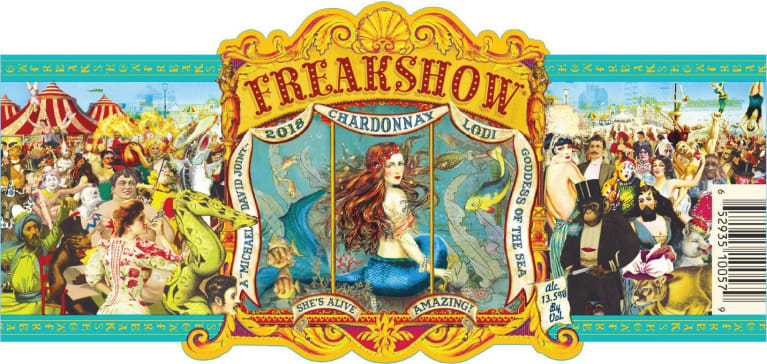
Mermaids have been economically capitalized on for various marketing purposes over the years, but one particular and direct example comes from Barnum’s Feejee Mermaid. In 1842, Phineas Taylor Barnum created a scheme to monetize what was presented to him as the first and only captured mermaid (Bacchilega and Brown, 239). Barnum wrote various letters to numerous publishing companies detailing that he had possession of a mummified mermaid and that he had the renowned, Dr. Griffin, confirm that Barnum did indeed have a real mermaid (although it was simply a lie and his friend pretended to be Dr. Griffin). Barnum’s message soon made it into a plethora of news publications, reaching many audiences and gaining widespread awareness. From there, many visitors came to see the mermaid, willing to pay top dollar for just a simple glimpse. Upon arrival, most visitors found themselves distraught at its sight being that it was the top-half of a monkey attached to the tail-end of a fish by metal wiring. One news publication about the Feejee Mermaid stated that, “some naturalists have declared that there is too much evidence of the existence of these animals to warrant them in pronouncing the mermaid to be a mere creature of fancy” (Bacchilega and Brown, 241). This is one example of how far this fabrication got out of hand in that Barnum had reputable sources declaring this hoax legitimate. After inaccurately describing the mermaid, most articles proceeded to detail many other mermaid sightings with the intent of convincing the audience that this mermaid was indeed real. This mass-production of media from what people believed to be honest sources was all a scheme created by Phineas Barnum to create hype and generate money for himself. He ultimately used deceptive marketing techniques to draw in consumers with the utilization of a mermaid for his own personal benefit. To further advance this point, Barnum’s idea of the Feejee Mermaid has been further extrapolated into marketing methods like the Michael David Freakshow Chardonnay. This wine label depicts a mermaid in a display case, with labels stating, “SHE’S ALIVE” and “AMAZING!” directly connecting this image to the Feejee mermaid with the concept of false advertising in mermaids. To continue this idea, similar advertisements and verbage was used to draw consumers into Barnum’s scheme, comparative to the way that consumers are attracted to the statements on the wine bottles. Even more interesting is the thought that had Barnum been alive today, his advertisements for his mermaid might look something similar to this label. The Michael David Winery marketing team deliberately made these references to increase wine sales by embodying the concepts of differentiation and freakishness as a tourist attraction. 

Another narrative that has shaped societal norms and a way of thought is Hans Christian Andersen’s The Little Mermaid published in 1837. Although similar to the Disney version, this story is much darker and lays the groundwork for the way in which young women were ‘supposed’ to behave in Western societies. This story conveys a coming of age, a loss of innocence, and obedience in young girls. The story opens with an explanation that once a mermaid turns fifteen, they are allowed to go to the surface. After the little mermaid turns fifteen in one of her visits to the surface, she saves a young prince from certain death and soon falls in love with him, making her strive to be human so she can have his hand in marriage. In order to become human, the Sea Witch says she must give up her voice. For starters, the fact that she is only allowed to go to the surface after she turns fifteen is important because this is the average age of puberty, establishing her potential ability to bear children which reflects her coming of age. Another aspect reinforcing this is that at the age of fifteen in Mexican culture, this is the age at which a girl transitions into womanhood, celebrated in what is referred to as a Quincenera. During the Little Mermaid’s celebration, her mother pins large oyster shells to her tail which bring pain to the mermaid. Her grandmother responds saying, “‘Pride must suffer pain,’” (Bacchilega and Brown 113), which bears a similar ring and meaning to the saying “beauty is pain”. This quote indicates that girls have to act and portray themselves in a particular way, reflecting obedience and creating an idea for how girls should see themselves and act in order to fit into society. Another aspect of this story that promotes and advertises the way girls should behave is that in order for her to gain a soul, she must be chosen by the prince for marriage, further adding to the idea that she has to portray herself in a certain demeanor in order to be presentable and accepted by her potential future husband. This again adds to the subliminal message advocating that young girls must behave a certain way, and with it being such a mass-produced book and film, this message has shaped and influenced societal norms and gender roles. 

Lastly, another example of a mermaid in marketing is the well-known logo of Starbucks coffee. The logo, if looked at closely, is a mermaid with long hair, a crown, and holding her split tail in each hand. Referring to some of the above claims, this logo is relatively subductive. The crown, which is universally understood as a symbol of royalty, created the idea in the consumer’s mind that perhaps if they consume their products, they too might be of an upper-echelon and high class. Considering some of their high prices of coffee, this concept is again reinforced because it sure isn’t sustainable to purchase coffee from here on a day-to-day basis. Being that it is a female, it makes it relatable to women and serves as an attraction towards the male audience. Looking at her split tail is a sign of suggestion, prompting the question of what might be below the cutoff of the picture. This concept plays on some of the topics discussed earlier in this essay in that it can be perceived as temptation. Being that coffee possesses caffeine, an addictive chemical, many people believe that they need their daily dose, and without it some can experience headaches, irritability, and other withdrawals. The split tail suggests that consumers should indulge in their addictions and give into their temptations for their needs. However, at the end of the day, one can very easily live without caffeine in their life. Overall, this logo is convincing and plays on consumers’ subconscious wants and desires that are reflected through the image of a mermaid. 


In conclusion, there are many different meanings and interpretations of what the symbol of a mermaid is and can be that vary across cultures and time. Many authors and professional marketers have found that this symbol and heuristic can be utilized to convey a particular message or convince consumers into purchasing something. These examples are highlighted in ancient Christian allegories described in Scribner’s writings, Phineas Taylor Barnum’s monetary capitalization of the Feejee Mermaid (which is reflected in modern times with Michael David’s Chardonnay wine label), Hans Christian Andersen’s story, The Little Mermaid, and through the subliminal marketing in the universally understood logo of Starbucks coffee. Together, these symbols and heuristics are able to convince audiences to think or purchase something. After reading this essay, consider all of the locations that you see mermaids, and ask yourself: what is the reasoning behind this mermaid in this particular location? Reflect upon what a mermaid is to you, and whether or not the message you are viewing aligns with or contradicts your mental vision of a mermaid.

Works Cited

Bacchilega, Cristina, and Marie Alohalani Brown. The Penguin Book of Mermaids. Penguin Books, 2019. 

Scribner, Vaughn. Merpeople: A Human History. REAKTION BOOKS, 2024. 

Final Essay

Sophia Fugazzotto 

ECL 305 

Professor Pressman 

May 7th, 2024 

The Contemporary Mermaid

Mermaids, although fantastical creatures, are created by humans, and can represent humans’ own struggle with the concept of gender. They are modern entities that are gender fluid, that do not assign roles or confine people, but are also like humans on their top half. Instead of being a foreign being of nature that is allowed to act differently than us, they are a hybrid that sits between human and nature. Mermaids of contemporary culture complicate gender roles with their refusal to conform to a gender, forcing us to reflect on our own need to categorize people into genders. In this essay, three different mediums of mermaids will be examined; Stephanie Burt’s “We Are Mermaids”, River Solomon’s The Deep, and my own photograph. 

Stephanie Burt’s poem “We Are Mermaids” is an example of a piece of work that encourages the reader to consider gender norms and roles by providing the perspective of a non terracentric world. Perhaps with this title, Burt is making the point that we ourselves are mermaids; we are gender fluid beings, and mermaids are a reflection of a part of us that does not need to be confined to gendering by genitalia. The poem focuses on a world in the water, one that seems constant, but is complex and full of choice. The water is a place of fluidity, freedom, lacking the pressures we feel on land: “You can spend your life benthic, or brackish, subsisting and even thriving where a fingertip comes away saline and still refreshing, exploring the estuary, the submerged lip, and congeries of overlapping shores on the green black water, the harbor, the bay” (Burt, lines 24-29). This gives a view into a world that is unconstrained by demands of human life, the aquatic world is allowed to be ever-changing and fluid–as contemporary mermaids are in their lack of gender conformity. The poem also constantly changes the point of view, through use of ‘we’, ‘they’, and ‘you’. By changing this point of view, it prevents the reader from creating a solid conception of a being, and allows for an interpretation of fluidity. Another relevant part of this poem is the author herself. Stephanie Burt is a transgender woman, and many of her poems in this collection focus on the transgender experience and activism. This perspective is important to gender fluidity because it shows that one can be fluid in expressing their gender. 

In addition, the poem also brings up the topic of purpose in our world, and the nature focused perspective allows us to see our society in a different light. “You don’t have to be useful, you are not required to come up with something to say” (Burt, lines 21-23). This stanza, by Burt, tells us that we don’t have to play by the rules of this industrial society; rather we can be whoever we want to be, we don’t have to meet the expectations of others. Sophia Raya discusses this stanza in her blog post, considering how our value as a person comes from the role we play in an industrialized world, and gender roles create social expectations within this world. She also says: “Being a mermaid, like more oceanic ways of thinking, is not constrained to rigid structures that have been imposed on them by society and other terracentric ways of thinking. Instead, mermaids and any other aquatic creatures can occupy any space or even become a part of that space where fluidity and water is found” (Raya, 2024). Without a society and the need to be useful, mermaids are allowed a free and fluid lifestyle, where they can choose to express themselves however they please.

Another text that represents contemporary, gender fluid mermaids is The Deep by Rivers Solomon. In this novel, the main character, Yetu, interacts with Oori. Yetu is a mermaid, who lives in the depths of the ocean, while Oori is a human, or ‘two-legs’ as the mermaids call them. The contrast between these two characters is important because it provides a perspective of our culture’s social norms from someone from a different culture, and even a different world. As Yetu and Oori converse, the topic of sex comes up. Yetu, being a mermaid, possesses a tail, as opposed to two legs, like humans. Yetu reflects on the perspective of gender of the wajinru: “Wajinru bodies didn’t tend to have differences along those lines, but like two legs, there were men, women, both, and neither. Such things were self determined, and Yetu wondered if two-legs had body determination too” (Solomon, 116). This passage illustrates the self determined nature of the wajinru. It opens the possibility of there being more than two genders, as well as the ability to choose for oneself. This presents a sharp contrast to our society, where gender is assigned at birth, based on the genitalia that one possesses. Rather than being determined by their orientation in a sexual relationship, their gender is chosen by themselves, which separates sex and gender. Although sex is determined by chromosomes, our culture associates gender with sex and the lines between the two are blurred. Gender often comes with roles and expectations as it is a social construction. Yetu adds later: “‘Wajinru have a place to envelope, and then there’s something else, and that is what gives sperm. Yet it is always tucked away until the time of mating’” (Solomon, 117). This quote is an important addition to the first because it emphasizes the point that wajinru are capable of taking on both ‘feminine’ and ‘masculine’ roles of sexual acts, yet their gender could be man, woman, both, or neither, regardless of whether they choose to envelope or to release sperm during mating. 

This part of this novel is an important example of how mermaids allow us to reflect on our cultural norms of gender through their lack of need to confine a mermaid to one, and through the innocence of Yetu. Yetu does not understand how our culture works, and how we choose to assign gender and categorize people, and this perspective can show us how unimportant our idea of gender is. 

Finally, this photograph, created by me, is intended to portray a gender fluid mermaid through the posing, model choice, and mermaid tail. The mermaid is a hybrid creature, and depictions of them often allow us to project ourselves into them because of their half human nature. In this photo, the model’s top half is human, with a piece of human clothing covering their chest. The bottom half, however, is in a mermaid tail. 

Posing was an important part of this shoot. I wanted to create a more masculine mermaid, since many depictions of mermaids tend to be feminine–even the name mermaid is feminine. In this photo, the mermaid is flexing their arm, which is a more traditionally masculine pose, since strength is often associated with men. Having masculine posing on a more feminine body creates a disruption in categorizing this mermaid into a gender, and allows us to rest in a place of fluidity. In addition, the choice to have the mermaid on a rock, and not in the water, represents mermaids’ ability to be part of our world. Even the rock on which the model sits is disrupted by a rusted pipe that is clearly manmade, showing the mix between two worlds. This photograph was taken on the beach, as it is a common place for mermaids to be across different mediums. 

The model for this shoot is also gender fluid, going by she/her, they/them, and he/him pronouns. This is particularly relevant to this topic, as contemporary mermaids represent a gender fluid entity through their intentional indecision on gender. Being able to work with a gender fluid model who was also comfortable moving between more feminine and masculine poses was an advantage in this shoot. 

And the mermaid tail, of course, contributes greatly to this photo. Mermaids do not have what we have; they possess tails on their bottom half. In this photo, the mermaid tail covers the bottom half of the model. Therefore, we cannot categorize them so easily, and although we may be tempted to, we do not need to. Representations of contemporary mermaids, such as this photo, and the wajinru in The Deep emphasize the point that we should perhaps reflect on our need to categorize and organize.  

These three contemporary works contain mermaid centered ideas that allow us to reflect on ourselves. These fantastical creatures can easily be seen as separate from us, part of nature, different, but the reality is that they can be used as a mirror to analyze ourselves, our social norms, and our history. They can show us how our norms, such as gender and gender roles, are not as significant or ‘correct’ as we think, with their own fluidity and lack of need to categorize themselves or each other. 

Works Cited 

Burt, Stephanie. We Are Mermaids, Graywolf Press, 2022.

Mermaid on Rock. 16 Apr. 2024. Windnsea Beach, San Diego.

Raya, Sophia. “We Are Mermaids .” Literature and the Environment: Mermaids, 29 Apr. 2024, 

https://spring2024-ecl305.jessicapressman.com/we-are-mermaids-2/.

Solomon, Rivers, et al. “Chapter 7.” The Deep, Saga Press, 2019, pp. 106–126. 

Final Essay

Paige Harrisberger

Professor Jessica Pressman

ECL 305: Literature & Environment

9 May 2024

Reimagining History Through the Ocean

In Derek Walcott’s poem “The Sea is History,” published in 1979, the sea serves as more than just a physical entity; it embodies an archive of collective memory, a symbol of both hope and tragedy, and a metaphor for the complex history and identity of the Caribbean people. The poem is an invitation to reconsider conventional narratives of history and to explore the sea as a storage of collective memory and untold stories. Reading the poem this way challenges the traditional modes of historical studies that often prioritize written records and official accounts. In the past, academic scholarship has shown an evident terrestrial bias, overlooking the deep-rooted influence the ocean realm has on the human experience. In “The Blue Humanities,” published in 2013, written by John Gillis, he writes about addressing the shift to recognize oceans as driving forces in shaping global history. 

Derek Walcott’s poem “The Sea is History” dives into the belief that the sea embodies more than just physicality; it represents a reservoir of collective memory and a repository of untold histories. The title of the poem itself suggests that the sea is an archive of history, challenging traditional methods of historical documentation and interpretation. The lines “there was the sound/like a rumour without any echo” from the poem evoke a sense of mystery and ambiguity, inviting his readers to contemplate the complicated nature of historical truth and the complex relationship between memory and silence. The metaphor of a rumour, with its implications of hearsay and uncertainty, reflects the idea that history is often shaped by subjective interpretations and selective recollections. Like a rumour that spreads through word of mouth, historical narratives can be distorted or manipulated over time, leading to a snowball effect of conflicting accounts and obscured truths. Rumours are often unsubstantiated, subject to distortion, and easily forgotten, mirroring the malleability and fragility that is mirrored by historical narratives. This metaphor holds a significance in terms of Walcott’s cultural context, particularly within the Carribbean context, where oral tradition plays a crucial role in shaping collective memory and identity. In Caribbean history, colonial powers exerted significant control over the narratives that shaped perceptions of the region and its people. European colonizers, such as the Spanish, Portuguese, British, French, and Dutch, sought to portray their colonization efforts as aimed at civilizing and uplifting indigenous populations. They imposed their cultural, economic, and political dominance over the Caribbean islands, shaping the collective understanding of the region’s history in accordance with their own interests. Colonial powers often depicted their colonization efforts as noble endeavors. However, beneath the false appearance lay a blunt reality of exploitation, oppression, and domination. Colonial powers systematically stripped the natural resources of the Caribbean, exploiting indigenous labor and forcibly displacing entire communities to work on plantations and in mines. The transatlantic slave trade further intensified the exploitation and dehumanization of African peoples, who were forcibly transported to the Caribbean to work under brutal conditions on sugar, cotton, and tobacco plantations. Moreover, colonial powers implemented systems of racial hierarchy and discrimination that sustained social, economic, and political inequalities long after the end of formal colonization. Indigenous peoples and Africans were marginalized, disenfranchised, and subjected to violence and discrimination, while European settlers and their descendants enjoyed privilege, wealth, and power. 

The second part of the line I mentioned earlier, “without any echo,” further reinforces the idea of silence and erasure, suggesting that certain voices and perspectives may be lost or disregarded in the retelling of history. In the context of the poem, this silence may represent the voices of marginalized or oppressed communities whose experiences have been overlooked or silenced by dominant historical narratives. Moreover, the comparison to an echoless rumour implies a sense of hopelessness in attempting to uncover the full extent of historical truth. Just as an echo fades into silence, leaving behind only traces of its existence, so do the voices and memories of the past gradually disappear over time, leaving behind fragmented and incomplete accounts of history.​​​ The final line of the poem reads, “of History, really beginning.” The capitalization of the “H” in History holds significance, signaling to the gravity and universality of the concept being referred to. Capitalizing “History” raises it to a proper noun, giving it a sense of importance and authority. It suggests that History is not simply just a series of events but a profound and meaningful entity that shapes the trajectory of human civilization. Walcott may also be implying that History is an ongoing and evolving process, with each moment of time contributing to the overall narrative. In this sense, History is not static but dynamic, constantly being written and unwritten by different generations.  

These lines from Derek Walcott’s poem draw parallels to John R. Gillis’s ideas from “The Blue Humanities” by proving there is an evolving perception of the sea in a historical context. Gillis’s statement, “The historicization of the oceans is one of the most striking trends in the blue humanities. History no longer stops at the water’s edge,” demonstrates the growing acknowledgement of the ocean’s significance on human experience and culture. This recognition challenges the traditional land-centric views that historians have had and expands the inquiry past land and into the ocean. Since previous narratives have often overlooked seeing the sea as history, it signifies a departure from these ideas. By saying, “History no longer stops at the water’s edge,” Gillis is suggesting a reconfiguration of historical boundaries because what really are boundaries? The expansion of these invented historical borders can encourage scholars to look at the interconnectedness between land and sea, and not as separate entities. There is a fluidity and permeability to the human experience. The ocean allows for the exchange and interaction between continents and countries across the globe. He mentions these are the trends in the blue humanities, where the focus is not just in one field, but combining knowledge from multiple different fields to form a more comprehensive understanding of the relationship between humans and the oceanic environment. 

The historization of the oceans is a shift being made in terms of scholarly perspectives, and it is equally important to recognize the cultural dimensions of the sea. As Gillis emphasizes, “Sea stories, chanties, and marine painting are by no means new, but it is only recently that they have been subject to academic scrutiny.” This quote shows the importance of examining the part that cultural expressions and artifacts play in connecting humans and the ocean. Sea stories, chanties, and marine paintings all have their individualistic way of retelling history and they are not simply just artistic expression. Just these serve as vessels of history, so does Derek Walcott’s poem, “The Sea is History.” His poem acts as a medium of retelling and reinterpreting the complex history and identity of the Caribbean people. It can be seen as a sea story where he pulls together the hardships of slavery and colonization with the sea as the backdrop setting. By subjecting cultural expressions, such as this poem, to academic scrutiny, scholars working in the blue humanities are able to uncover a richer, more inclusive history. They are able to trace back the perceptions of the ocean and the ways in which humans interacted and interpreted it throughout time. This fosters a deeper appreciation for human culture and our constant evolving relationship with the sea. 

Derek Walcott’s poem “The Sea is History” offers a deep reflection on the multifaceted role of the sea in shaping Caribbean history and identity. By doing this, we can open up space for alternative sources of knowledge and interpretation. Oral histories, folklore, art, and cultural practices can provide valuable insights into the lived experiences of marginalized communities and offer nuanced perspectives on historical events. Moreover, John Gillis’s ideas from “The Blue Humanities,” further the importance of recognizing the ocean as an archive of history. His observations about the historicization of the oceans challenge the traditional land-centric views and expand scholarly inquiry beyond terrestrial “boundaries.” By acknowledging the interconnectedness between humans and the oceanic environment, scholars in the blue humanities are able to develop a more comprehensive understanding of oceanic history and culture. By combining Walcott and Gillis’s work, it ultimately reminds us to listen to the stories that are held beneath the surface and to not be afraid to dive deeper. There is a significant value in hearing marginalized voices, alternative perspectives, and honoring those silenced voices. In doing so, scholars are able to create a comprehensive history that does not leave out the things we don’t want to hear, offering a chance to break the cycle of history’s repetition. 

Works Cited

Walcott, Derek. (1979). “The Sea is History.”

Gillis, John R. (2013). “The Blue Humanities.”